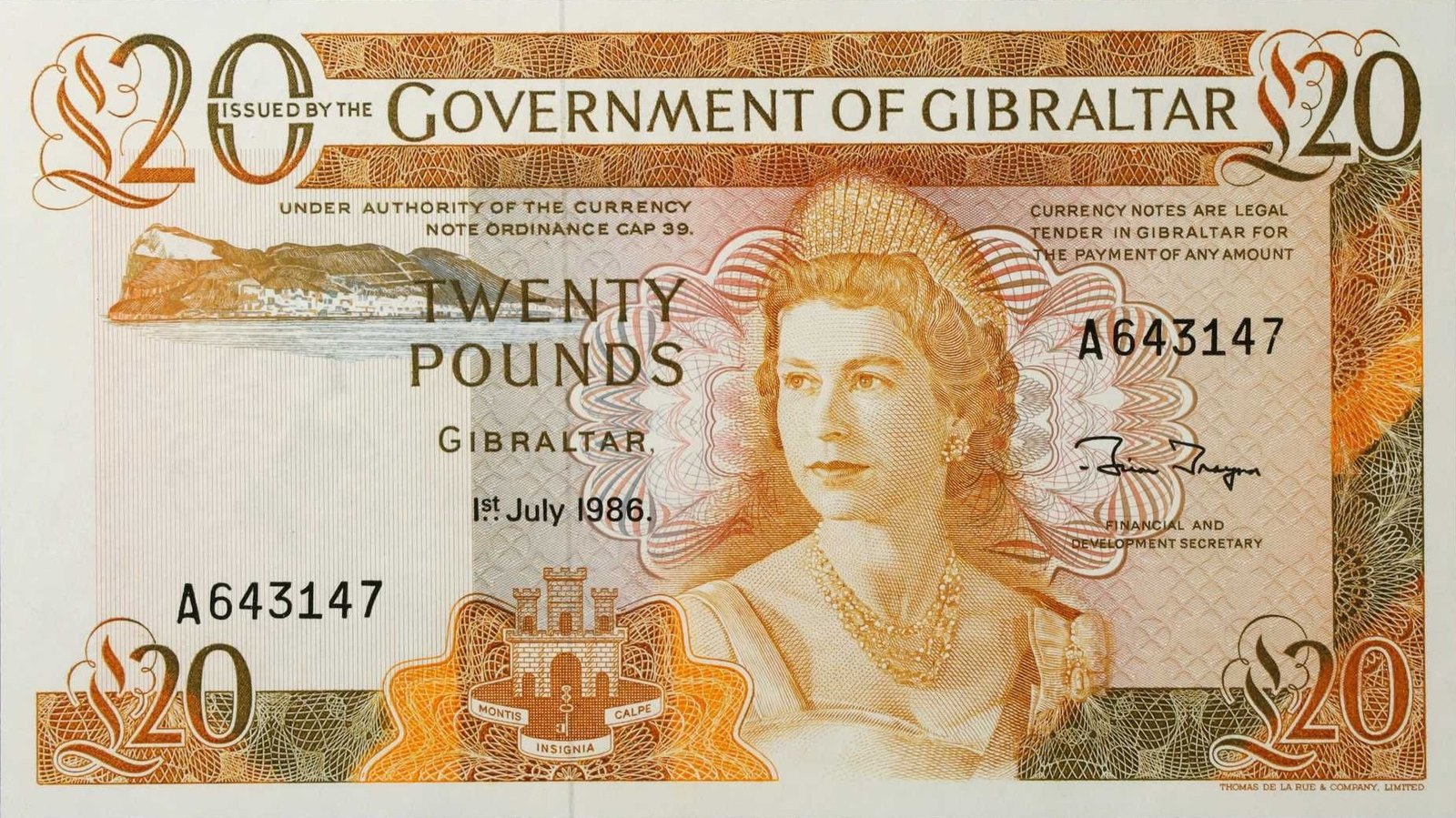
Gibraltar has withdrawn its notes series by series, each time by a proclamation or a rule that fixes the first day on which the notes are no longer legal tender. This article lists those instruments and sets beside them the figures for notes in circulation that the Colonial Reports and the House of Assembly give. The seven rules from 1976 to 2021, the Currency Notes Rules and the Act of 2011 were read in full for this catalogue, and fourteen sittings of the House were read at every page that mentions the notes.
The proclamations and rules
The two series of 1914 were demonetised by proclamation. D. C. Devenish, in the IBNS Journal of December 1969, gives the dates of the proclamations. From 1976 the instrument is a set of rules made under the currency notes law, and each rule names the notes by value and prefix letter, not by the date printed on them.
| Instrument | Notes | Not legal tender from | Pick pages |
|---|---|---|---|
| Proclamation of the Governor, 16th September 1921 | Series A of 1914 | 1 January 1922 | P-1 to P-5 |
| Proclamation of the Acting Governor, 25th August 1928 | Series B of 1914 | 1 January 1929 | P-6 to P-10 |
| Currency Notes (Demonetisation) Rules, 1976 (Legal Notice 136, in force 25 November 1976) | 10 shillings lettered C and D | 1st April 1977 | P-11, P-14, P-17 |
| Currency Note (Demonetisation) Rules, 1978 (Legal Notice 50, in force 1 June 1978) | 1 pound lettered C to H; 5 pounds lettered C and D | 1st September 1978 | P-12, P-13, P-15, P-16, P-18, P-19 |
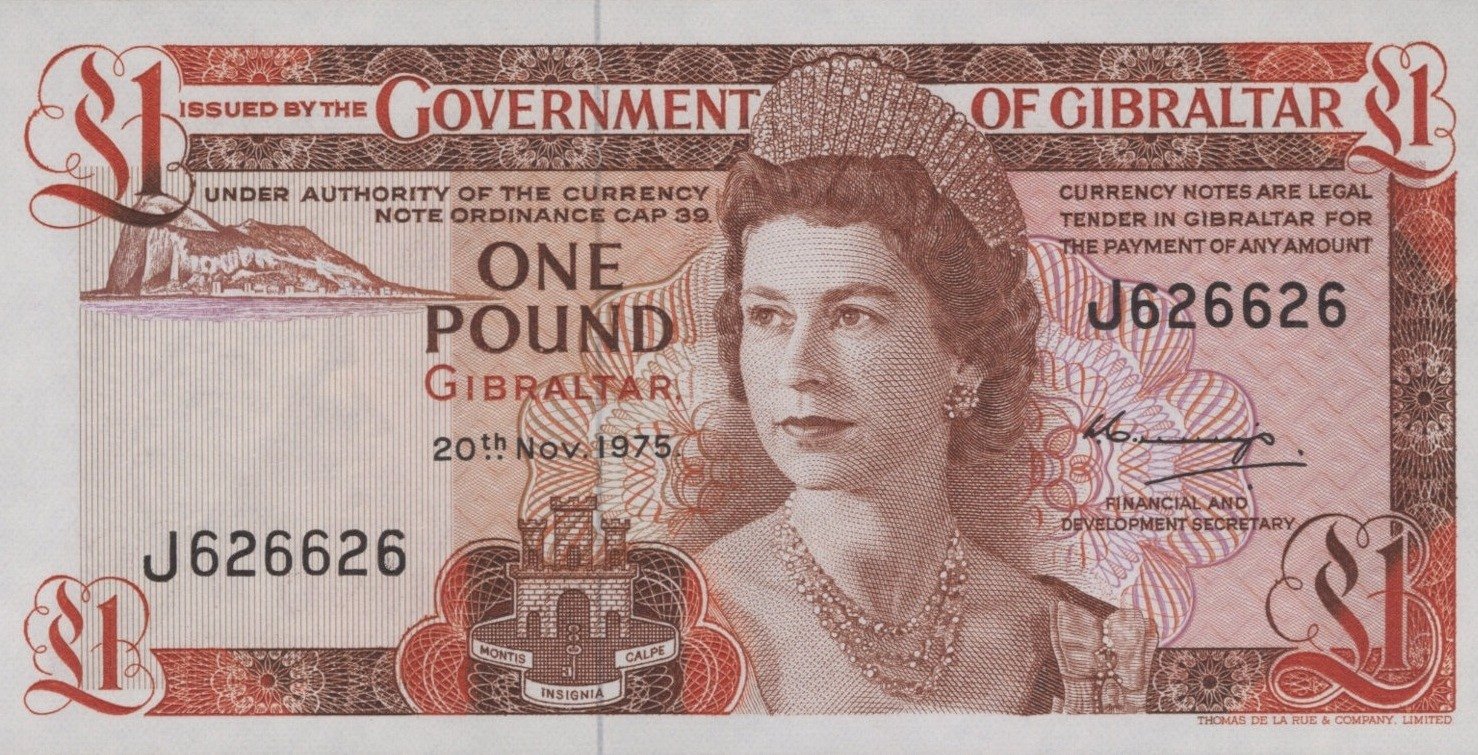
| Currency Notes (Demonetisation) Rules, 1995 (Legal Notice 151, in force 14 December 1995) | 1 pound lettered J, K and L | 1st January 1996 | P-20 |
| Currency Notes (Demonetisation) Rules 2000 (Legal Notice 77, in force 5 October 2000) | 5 pounds prefix E; 10, 20 and 50 pounds prefix A | 1st November 2000 | P-21, P-22, P-23, P-24 |
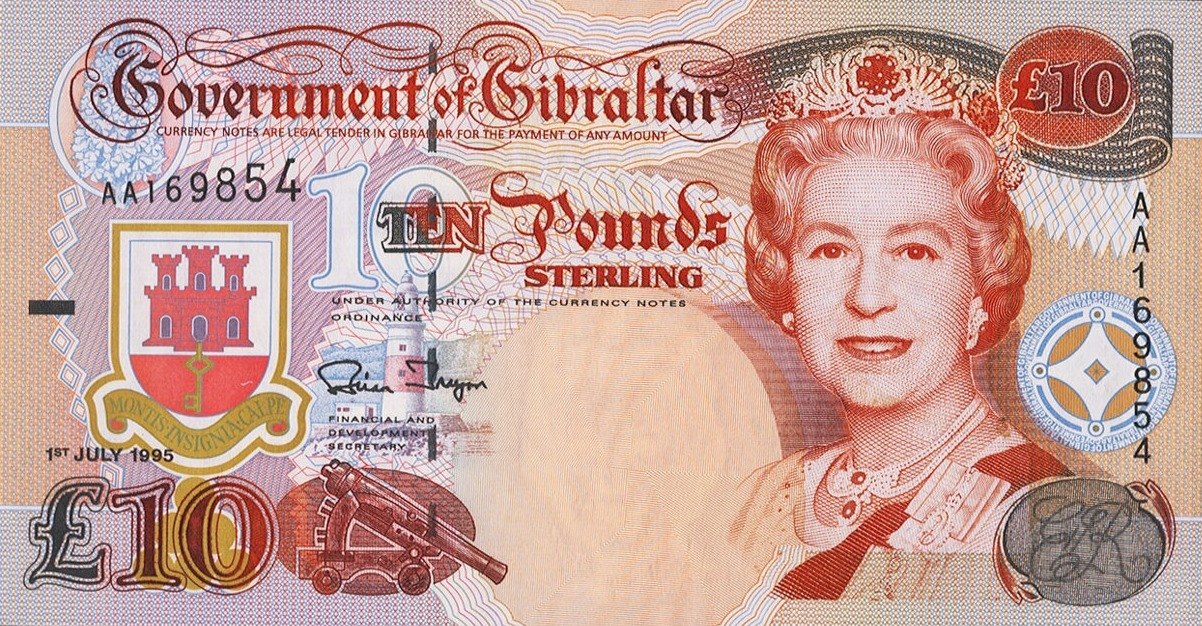
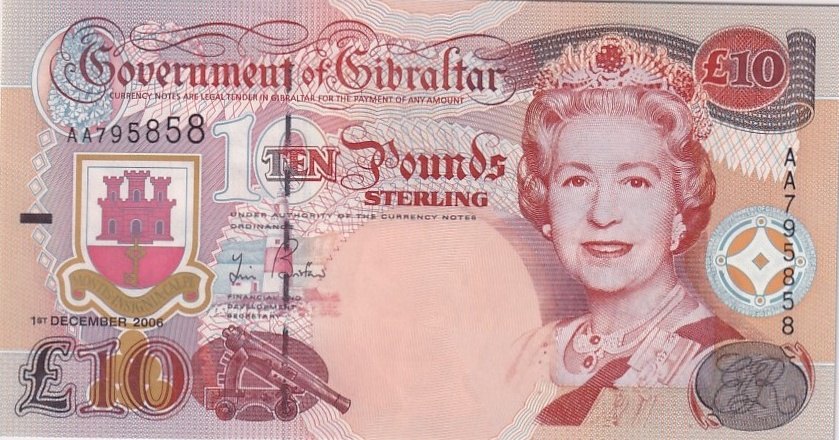
| Currency Notes (Demonetisation) Rules 2011 (Legal Notice 22, in force 17 March 2011) | 5 pounds prefix AA; 10 pounds prefixes AA and B; 50 pounds prefix AA | 1 September 2011 | P-25, P-26, P-28, P-30, P-32, P-34 |
| Currency Notes (Demonetisation) (No. 2) Rules 2011 (Legal Notice 73, in force 2 June 2011) | 5 pounds prefix MM; 20 pounds prefixes AA, AB and CCC | 1 December 2011 | P-27, P-29, P-31, P-33 |
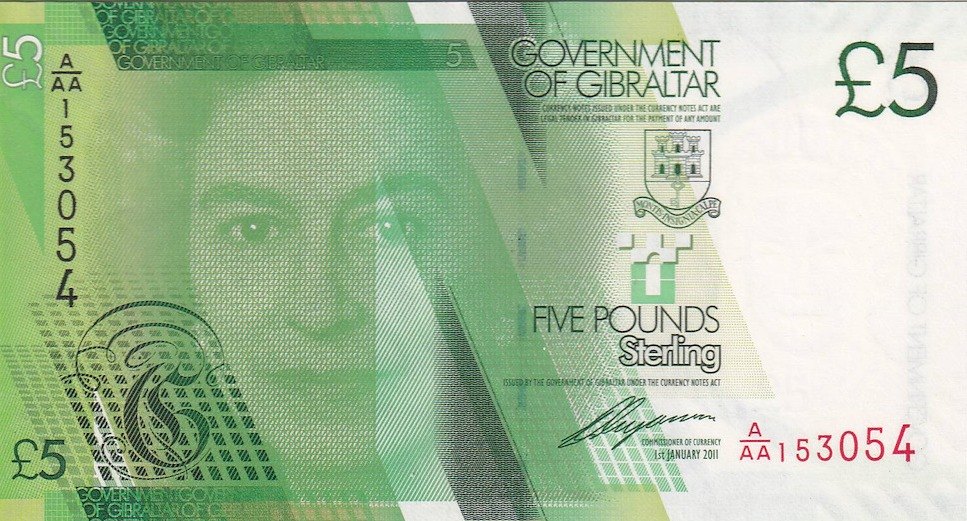
| Currency Notes (Demonetisation) Rules 2021 (Legal Notice 474, in force 1 December 2021) | 5 pounds prefix A/AA | 31 January 2022 | P-35 |
Three points on the table. Under the rule of 1976 the 10 shilling notes were to be redeemed at par by 31st March 1977. The rule of 1978 was laid before the House of Assembly on 24 October 1978. And the rule of 2021 says the 5 pounds ceases to be legal tender "from and after the 31st January 2022", the same form of words as the rules of 2011.
Because the rules go by letter, one rule can take notes of different dates. The rule of March 2011 names the 10 pounds with prefix AA, and so covers both the note dated 1995 and the note dated 2006. Every prefix letter in the seven rules agrees with a row of this catalogue, and no withdrawn row carries a letter that the rules leave out. The 1 pound never used the letter I.
The rule of 1976 as printed has a slip: it writes the value as "£10/- (ten shellings)". It means 10 shillings.
What happens to a demonetised note
The Government's press release 895/2021 of 1 December 2021, on the new 5 pounds, shows the practice. The banks would take the old notes with prefix A/AA until the end of January 2022. After that the demonetised notes continue to be accepted by the Treasury Department of the Ministry of Finance at 206/210 Main Street.
The Currency Notes Rules of 18 July 1939 govern the handling of the notes. In the consolidated text they require notes on first issue to be issued, so far as possible, in the order of their serial numbers, and each series of each value to be divided into groups of 10,000 notes for the control account. Withdrawn notes are cancelled by stamping, perforating or cutting, and then burnt. Legal Notice 137 of 1976, made with the first demonetisation rule, amended the rules on the registers of cancelled and destroyed notes. Only the consolidated text has been read. The wording of 1939 has not been seen.
Notes in circulation, 1922 to 1934
The Colonial Reports give the value of Government notes in circulation and, from 1928, how much of it was still in notes of the 1914 issue.
| Year of the report | Government notes in circulation | Of which old notes |
|---|---|---|
| 1922 | 159,763 pounds | all issued under the Bank Note Ordinance, 1914, as the report says |
| 1928 | 130,000 pounds | about 4,500 pounds |
| 1929 | 100,000 pounds | about 3,418 pounds |
| 1930 | not on the Pick pages | about 2,570 pounds |
| 1931 | 100,000 pounds | about 2,480 pounds |
| 1932 | 100,000 pounds | about 2,429 pounds |
| 1934 | not on the Pick pages | 2,324 pounds 10 shillings |

The report for 1922 lists the values then in use as 50 pounds, 5 pounds, 1 pound, 10 shillings and 2 shillings. The reports from 1928 say the new notes were issued under the Currency Note Ordinance, 1927, in values of 5 pounds, 1 pound and 10 shillings: the 10 shillings, 1 pound and 5 pounds dated 1st October 1927. The figure of 100,000 pounds is the same round sum in each of the three reports that give it.
Series A lost legal tender in 1922 and Series B in 1929, so the figures of old notes from 1929 count notes not yet handed in after the demonetisation. The reports do not say which of the two series they were. No figure for 1933 has been read on a page of the reports.
Notes in circulation, 1977 and 1978
The new series dated 1975 went into circulation between June and December 1977, as the Financial and Development Secretary told the House of Assembly on 3rd April 1978. Asked on 17th May 1977 (question 142) how many notes of each value had been ordered, the Financial and Development Secretary would not say, for security. The House was given the value in circulation, for all values together, in the budget speech and in answers of 1978:
| Date | Value in circulation | Where |
|---|---|---|
| March 1977 | 3.95 million pounds | budget speech, 3rd April 1978 |
| December 1977, the highest month | 4.8 million pounds | the same |
| 31 March 1978 | 4,325,274 pounds | question 91 of 1978 |
| 30 April 1978 | 4,225,274 pounds | the same |
| 31 May 1978 | 4,725,274 pounds | the same |
| 30 June 1978 | 4,775,274 pounds | question 161 of 1978 |
| 31 July and 31 August 1978 | 5,175,274 pounds | the same |
| 30 September 1978 | 6,511,410 pounds | the same |
| during October 1978 | fell to 5,611,410 pounds | the same |
| 31 October and 30 November 1978 | 5,711,410 pounds | question 234 of 1978 |
The speech gives the figure for 31 March 1978 as 4.34 million pounds, a little above the answer to question 91. The old 1 pound and 5 pound notes ceased to be legal tender on 1st September 1978, the month in which the table shows its highest figure. The answers do not explain the rise.
In the same speech the withdrawal of the old series was said to have gone smoothly and rapidly, and the Financial and Development Secretary expected about half a million pounds of the old 1 and 5 pound notes never to be handed in. On the new notes, the speech says the 20 pounds had been used considerably less than expected. An earlier sitting, on 3 March 1976, has one remark of use: the note circulation rose by about 400,000 pounds in the last months of 1974-75.
What these papers do not hold
- No serial number, no number printed or ordered for any note, and no picture of a note.
- Nothing on the notes in the sittings of 1975, 1995 and 2000.
- A corrigendum to the rules of 2011 (Legal Notice 99 of 2011) has not been read.
- The notes dated 2010 and later, other than the 5 pounds with prefix A/AA, have not been withdrawn by any rule read here.
Sources
- The seven Currency Notes (Demonetisation) Rules of 1976, 1978, 1995, 2000, 2011 (two) and 2021, the Currency Notes Rules of 18 July 1939 with Legal Notice 137 of 1976, and the Currency Notes Act 2011, from the Government of Gibraltar's law site.
- House of Assembly: sitting of 3 March 1976; question 142 of 1977 (17th May 1977); budget speech of 3rd April 1978 (printed pages 187 and 203); questions 91, 161 and 234 of 1978.
- Colonial Reports, Annual: No. 1173 (Gibraltar 1922), No. 1437 (1928), No. 1488 (1929), No. 1584 (1931), No. 1629 (1932), and the reports for 1930 and 1934 as the Pick pages give them.
- D. C. Devenish (Gibraltar Museum), "Currency Notes of Gibraltar", IBNS Journal, volume 9, number 2, December 1969, page 74.
- The Pick pages of this catalogue for Gibraltar.
- H.M. Government of Gibraltar, press release 895/2021 of 1 December 2021 (web).
- Laws of Gibraltar, entry for the Currency Notes Act 2011 (web).


Member comments
Log in or register to post a comment.