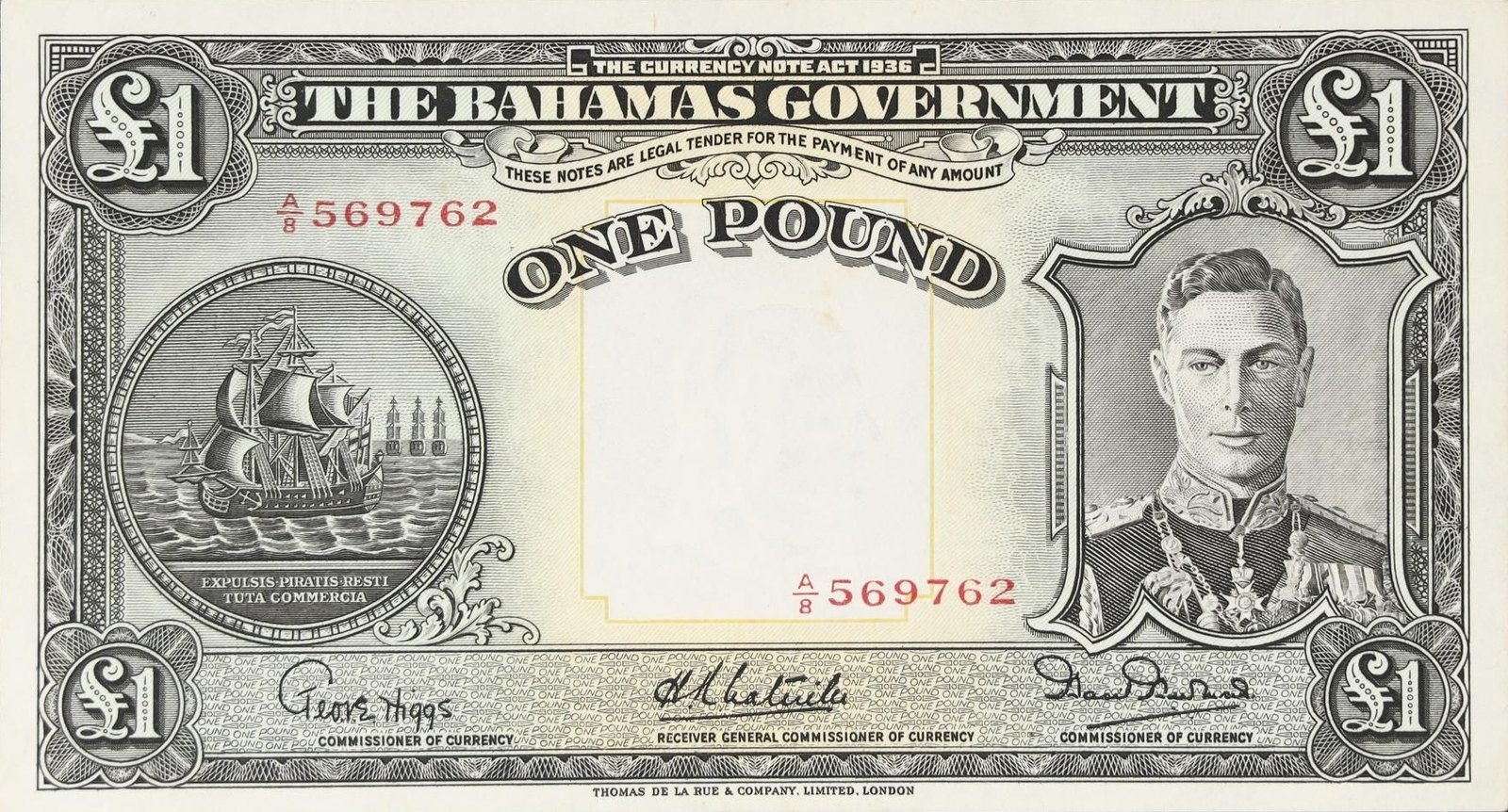
This article gathers the figures that the official papers print for the paper money of the Bahamas between 1911 and 1962. They come from three places: the yearly Colonial Reports on the Bahamas, the Bahamas Blue Books, and the abstracts and statements of the Commissioners of Currency in the Nassau Guardian and the Official Gazette. A shorter table to 1946 is in The Bahamas Government's sterling notes, 1919 to 1966; here every year found is given, with the words of the source, the security funds and the laws that touched the cover.
The yearly figures, 1911 to 1961
| Year | Government notes | The source's wording, or what it names | Source |
|---|---|---|---|
| 1911-12 | none | Bank of Nassau notes, 6,500 pounds | Colonial Reports, Annual No. 741, page 7 |
| 1913, the year to 31st March 1914 | Nil | private banks, 6,500 pounds | Blue Book for 1913; annual report for 1913-14 |
| 1915-16 | Nil | Bank of Nassau notes, 6,500 pounds | Blue Book for 1915-16 |
| 1916-17 | Nil | no bank of issue listed | Blue Book for 1916-17 |
| 1918-19 | Nil | coin supposed 45,000 pounds | Blue Book for 1918-19 |
| August 1920 to December 1922 | 3,200 pounds, then 3,800 pounds from October 1920 | notes in circulation | the Commissioners' monthly abstracts, Nassau Guardian |
| 1921-22, the year to 31st March 1922 | not named | only British currency notes of 1 pound and 10 shillings are named | Colonial Reports, Annual No. 1145, page 3 |
| 1924 | 60,000 pounds | "now in circulation"; 20s., 10s. and 4s. | annual report for 1924 |
| 1925 | 60,000 pounds | "now in circulation" | annual report for 1925 |
| 1927 | 110,000 pounds | "now in circulation"; 20s., 10s. and 4s. | Colonial Reports, Annual No. 1378, paragraph 16 |
| 1928 | 110,000 pounds | "to the total value of" | Colonial Reports, Annual No. 1426, paragraph 16 |
| 1929 | 110,000 pounds | "to the total value of" | Colonial Reports, Annual No. 1477, paragraph 15 |
| 1930 | 110,000 pounds | "to the total value of" | annual report for 1930, paragraph 15 |
| 1931 | 110,000 pounds | 4s., 10s. and 1 pound | Colonial Reports, Annual No. 1571 |
| 1932 | 110,000 pounds | 4s., 10s. and 1 pound | Colonial Reports, Annual No. 1614 |
| 1933 | 110,000 pounds | "is in circulation"; 4s., 10s. and 1 pound; the Economic Survey of the Colonial Empire for 1933 gives the same figure at 31st December 1933 | annual report for 1933, paragraph 62, page 16 |
| 1934 | 73,400 pounds | 4s., 10s. and 1 pound | annual report for 1934 |
| 1935 | 73,400 pounds | "is in circulation"; 4s., 10s. and 1 pound | Colonial Reports, Annual No. 1768, page 18 |
| 1936 | 73,400 pounds | in circulation | annual report for 1936 |
| 1937 | 74,400 pounds | estimated paper money in circulation at the end of the year; private banks Nil | Blue Book for 1937 |
| 1938 | 79,400 pounds | in circulation | annual report for 1938 |
| 1946 | 482,800 pounds | 4s., 10s., 1 pound and 5 pounds | Colonial Office annual reports on the Bahamas, 1946 to 1960-61, report for 1946 |
| 1947 | 596,500 pounds | Colonial Office annual reports on the Bahamas, 1946 to 1960-61 | |
| 1948 | 605,000 pounds | Colonial Office annual reports on the Bahamas, 1946 to 1960-61 | |
| 1949 | 637,400 pounds | Colonial Office annual reports on the Bahamas, 1946 to 1960-61 | |
| 1950 | 663,800 pounds | "in circulation at the end of 1950" | Colonial Office annual reports on the Bahamas, 1946 to 1960-61 |
| 1951 | 775,600 pounds | "at the end of 1951" | Colonial Office annual reports on the Bahamas, 1946 to 1960-61 |
| 1952 | 1,007,700 pounds | Colonial Office annual reports on the Bahamas, 1946 to 1960-61 | |
| 1953 | 1,019,000 pounds | Colonial Office annual reports on the Bahamas, 1946 to 1960-61 | |
| 1954 | 976,500 pounds | Colonial Office annual reports on the Bahamas, 1946 to 1960-61 | |
| 1955 | 1,126,500 pounds | Colonial Office annual reports on the Bahamas, 1946 to 1960-61 | |
| 1956 | 1,406,500 pounds | Colonial Office annual reports on the Bahamas, 1946 to 1960-61 | |
| 1957 | 1,651,500 pounds | Colonial Office annual reports on the Bahamas, 1946 to 1960-61 | |
| 1958 | 1,742,900 pounds | Colonial Office annual reports on the Bahamas, 1946 to 1960-61 | |
| 1959 | 2,106,800 pounds | Colonial Office annual reports on the Bahamas, 1946 to 1960-61 | |
| 1960 | 2,286,300 pounds | Colonial Office annual reports on the Bahamas, 1946 to 1960-61 | |
| 1961 | 2,497,800 pounds | Colonial Office annual reports on the Bahamas, 1946 to 1960-61 |
The figures of 1911-12, 1921-22, 1924, 1925, 1927, 1928, 1929, 1932, 1933, 1935, 1936 and 1938, and the annual report for 1913-14, were read on the image of the printed page. Those of the Blue Books for 1913, 1915-16, 1916-17, 1918-19 and 1937, and of 1930, 1931, 1934 and 1946 to 1961, were read in the text of the volumes only. Of the Commissioners' abstracts of 1920 to 1922, those of August and October 1920 were read on the image and the later ones in the text only. The table has no figure for 1923, 1926 or 1939 to 1945: none is in the papers that were read.
The Commissioners' statements in the Official Gazette, 1953 to 1962
From 1953 the Official Gazette printed the Commissioners' half-yearly abstract of the Note Security Fund and a statement of assets and liabilities at the end of each year.
| Date | Notes in circulation | Signed by |
|---|---|---|
| 30th June 1953 | 1,062,700 pounds | Latreille, Burnside, Higgs |
| 31st December 1953 | 1,019,000 pounds | Latreille, Burnside, Higgs |
| 30th June 1954 | 1,069,000 pounds | Latreille, Burnside, Higgs |
| 31st December 1954 | 976,500 pounds | Sweeting, Burnside, Higgs |
| 30th June 1958 | 1,555,500 pounds | Sweeting, Burnside, Higgs |
| 31st December 1958 | 1,742,900 pounds | Sweeting, Burnside, Higgs |
| 30th June 1959 | 1,742,900 pounds | Sweeting, Burnside, Higgs |
| 31st December 1959 | 2,106,800 pounds | Sweeting, Higgs, Bethel |
| 30th June 1960 | 2,008,600 pounds | Sweeting, Higgs, Bethel |
| 31st December 1960 | 2,286,300 pounds | Sweeting, Higgs, Bethel |
| 30th June 1961 | 2,146,300 pounds | Sweeting, Higgs, Bethel |
| 31st December 1961 | 2,497,800 pounds, headed Notes Issued | Sweeting, Higgs, Bethel |
| 30th June 1962 | 2,280,800 pounds | Sweeting, Higgs, Bethel |
The abstract for 30th June 1953 is in the Gazette of 1953, page 351; the statement for 31st December 1954 in that of 1955, page 161; the abstract for 31st December 1959 in that of 1960, page 820. All were read on the image of the page except that for 30th June 1962. The table has no statement between that for 31st December 1954 and that for 30th June 1958: none is among the pages held.
Where a year-end figure is given both by the Gazette and by the annual report (1953, 1954, 1958, 1959, 1960 and 1961) the two agree to the pound. The Gazette gives the same figure, 1,742,900 pounds, for 31st December 1958 and for 30th June 1959. The signers are treated in The Commissioners of Currency of the Bahamas, 1920 to 1962.
The 110,000 pounds of 1927 to 1933
The Currency Note Act 1919 allowed a total issue of not more than 10,000 pounds. The reports give 60,000 pounds in 1924 and 1925 and then 110,000 pounds in every year found from 1927 to 1933, before the figure falls to 73,400 pounds in the report for 1934. The wording changes: "now in circulation" in 1927, "to the total value of" in 1928, 1929 and 1930, and "is in circulation" in 1931, 1932 and 1933. The reports do not say whether 110,000 pounds was a count of notes outstanding or the amount authorised, and none names the law that raised the limit of 1919. An Act to amend the Currency Note Act 1919 was passed in 1920 (10 & 11 Geo. V, chapter 23); its contents are not on the pages that were read.
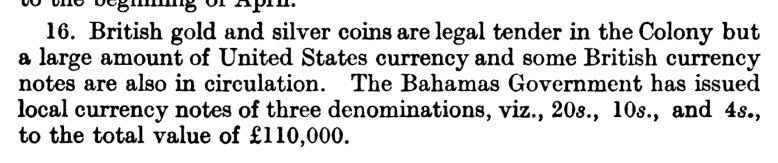
The reports for 1928 and 1929 add that "a large amount of United States currency and some British currency notes are also in circulation". The report for 1935 sets beside the 73,400 pounds of notes "about £23,000 in British silver coin".
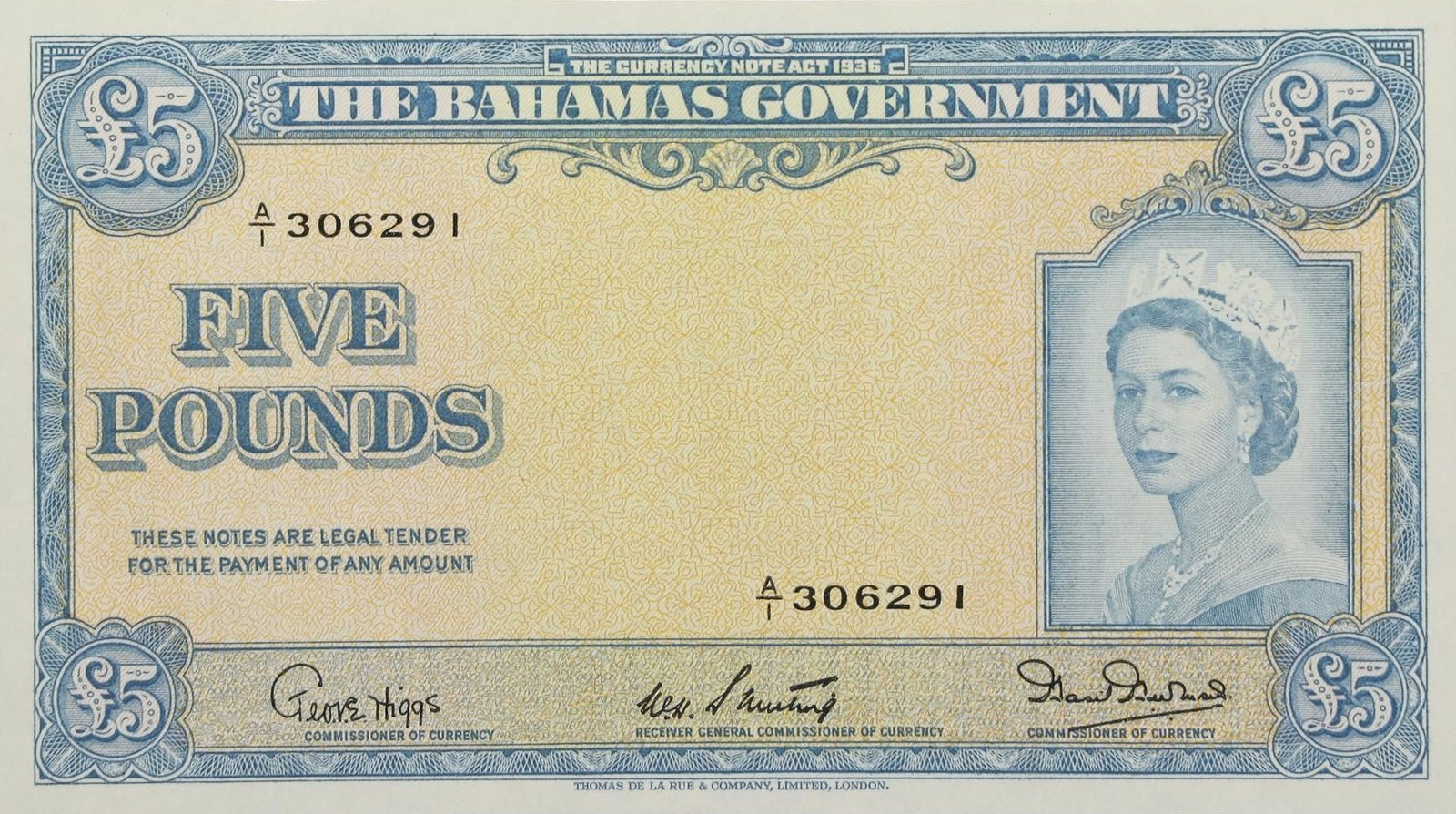
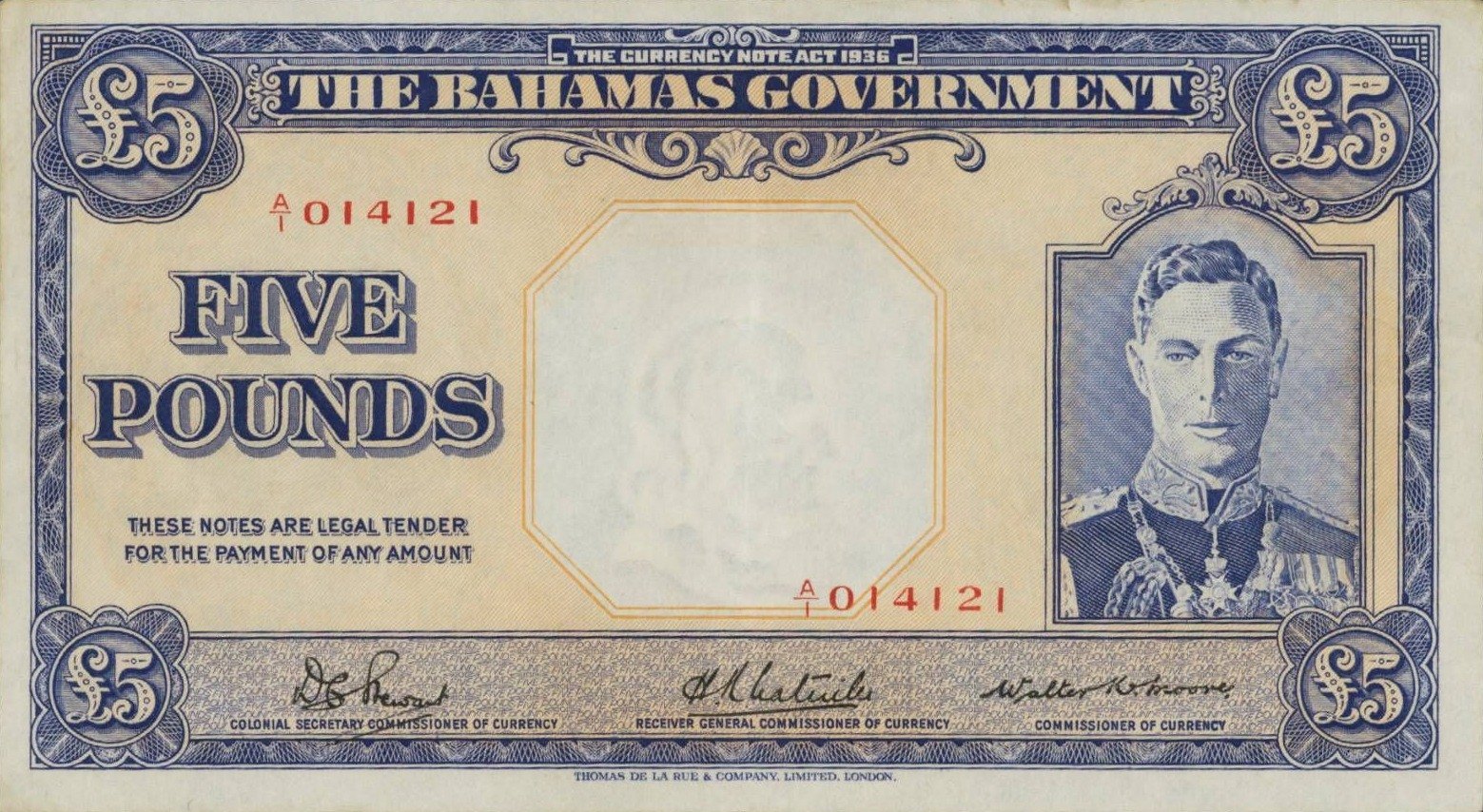
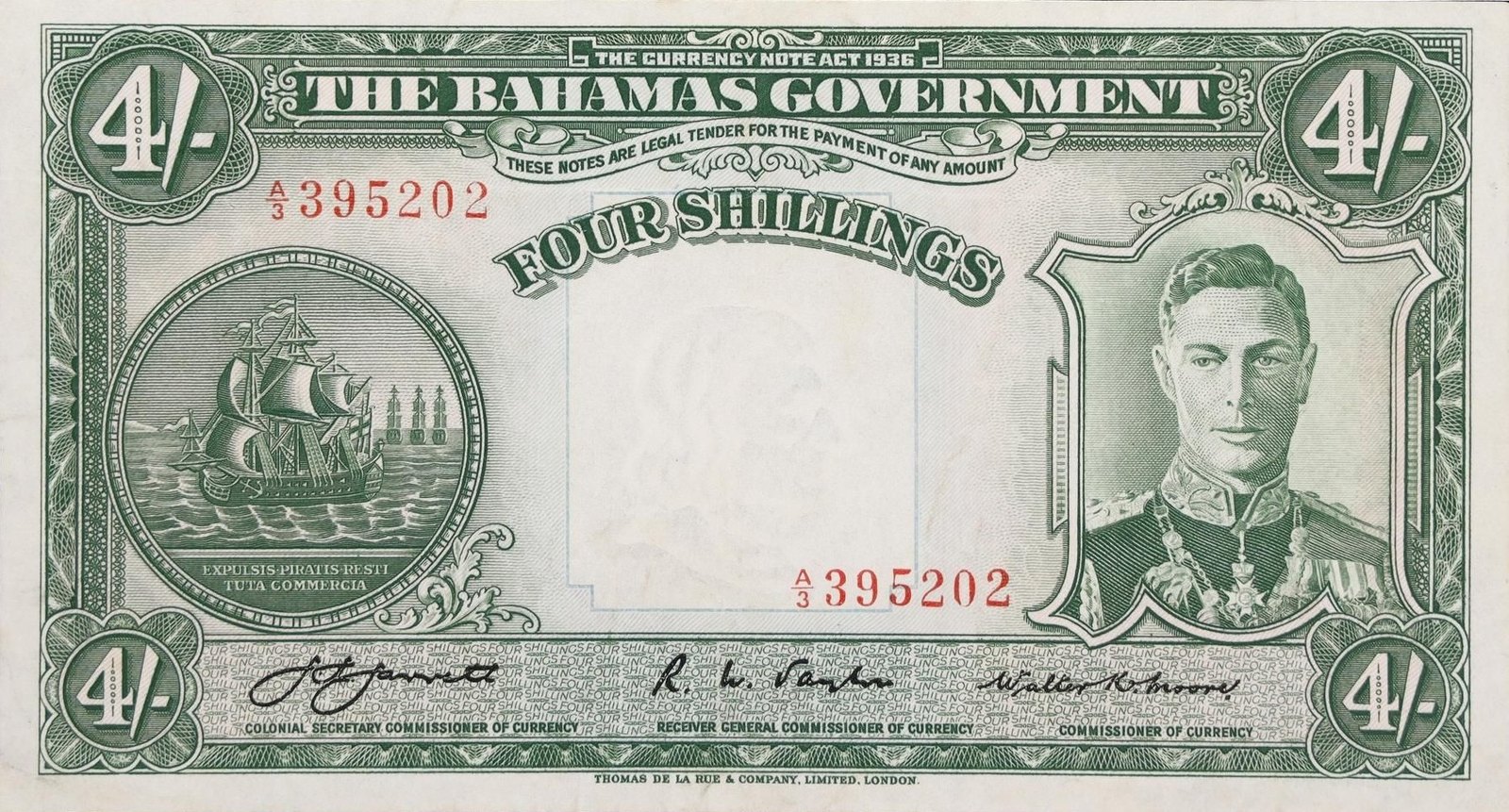
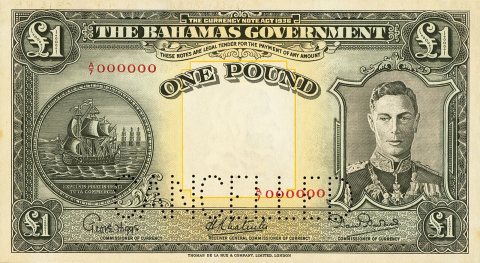
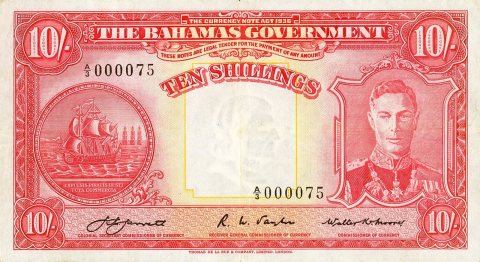
Through all these years the reports name notes of 4 shillings, 10 shillings and 1 pound only. That bears on the 5 pounds with the portrait of George V, of which no issued example is confirmed. The first report to name a 5 pounds is that for 1946, which says that notes of "4s., 10s., £1 and £5 denominations are issued by the Bahamas Government Currency Commissioners".
The funds behind the notes
| Date | Fund | Amount | Source |
|---|---|---|---|
| 10th August 1920 | coin portion of the Note Guarantee Fund | gold, 2,200 pounds | Commissioners' abstract, Nassau Guardian |
| 11th October 1920 | coin portion | 2,800 pounds, of which 20 pounds silver | Commissioners' abstract, Nassau Guardian |
| 31st March 1935 | Note Guarantee Fund | 76,692 pounds 9s 9d | annual report for 1935 |
| 31st March 1935 | Depreciation Fund | 8,087 pounds 1s 2d | annual report for 1935 |
| 31st December 1936 | Note Security Fund | 88,986 pounds 7s 9d | annual report for 1936 |
| 31st December 1936 | Depreciation Fund | 10,378 pounds 13s 0d | annual report for 1936 |
| 31st December 1937 | Bahamas Currency Note Security Fund, among the liabilities | 77,885 pounds 2s 7d, the shillings and pence not clear in the copy | Blue Book for 1937 |
| 31st December 1938 | Note Security Fund | 79,314 pounds 14s 2d | annual report for 1938 |
| 1957 | Currency Note Security Fund | securities 1,221,103 pounds 13s 6d and J.C.F. 402,993 pounds 3s 11d: 1,624,096 pounds 17s 5d | Colonial Office annual reports on the Bahamas, 1946 to 1960-61 |
| 1961 | Security Fund | securities 2,155,903 pounds 8s 2d and J.C.F. 341,896 pounds 11s 10d: 2,497,800 pounds | Colonial Office annual reports on the Bahamas, 1946 to 1960-61 |
The letters J.C.F. are given as the report prints them. The Blue Book for 1937 also shows that the Treasury took into revenue that year a "Surplus Investment Currency Note Security Fund" of 18,691 pounds and 2,721 pounds 1s 10d from the Currency Note Income Account.
The laws that touched the cover
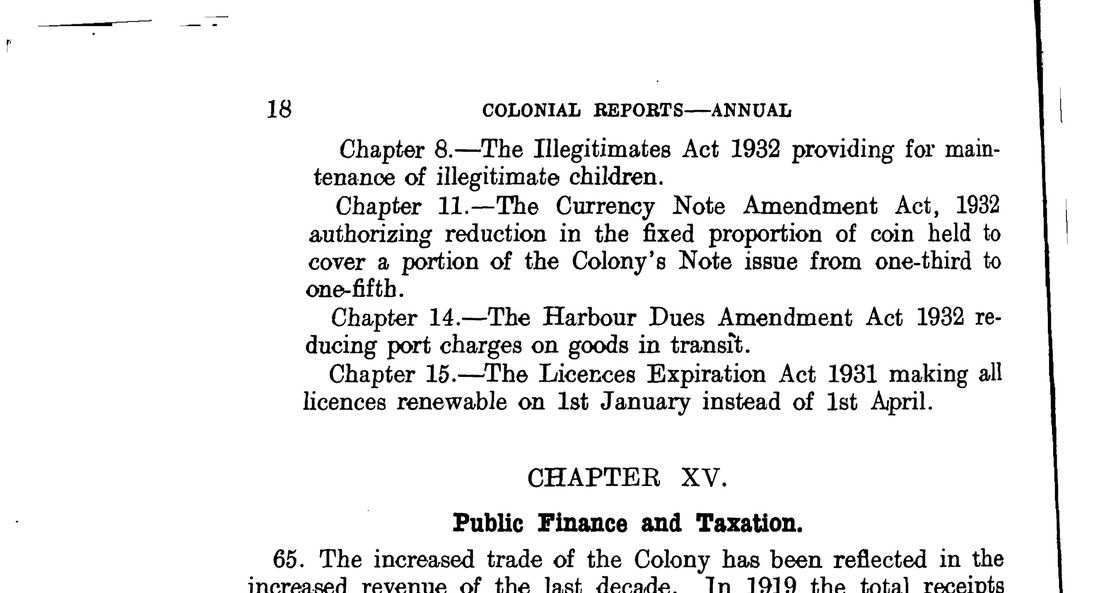
- 1932. The annual report for 1932 (Colonial Reports, Annual No. 1614, page 18) lists Chapter 11, the Currency Note Amendment Act, 1932, "authorizing reduction in the fixed proportion of coin held to cover a portion of the Colony's Note issue from one-third to one-fifth".
- 1936. The Currency Note Act 1936 is Chapter 27 of the Acts of 1936, dated 1st November 1936; an earlier print of the same Act shows it reserved for the King's pleasure in June 1936. The denominations, form, design, plates and paper were to be as the Secretary of State approved. The notes were legal tender for any amount and were issued at par against sterling lodged with the Crown Agents in London. The Blue Book for 1937 says the Act came into force on 1st November 1936 and that its notes "shall be deemed to be current coin of the Colony".
- The silver proclamation of 1936. From 1st November 1936 silver coin of the United Kingdom ceased to be legal tender in the colony for more than forty shillings. The Blue Book for 1937 dates the Proclamation of His Majesty in Council 27th October 1936; the annual reports of 1946 to 1948 date it 17th October 1936. Both were read in the text only.
- 1965. The Currency Act 1965 (No. 80 of 1965, assented to on 16th December 1965) made the Bahamian dollar of 100 cents equal to seven shillings sterling. Notes issued under the old Currency Note Act stayed legal tender until called in. The Commissioners could call in notes on one month's notice in the Gazette, after which the notes ceased to be legal tender, and could redeem them for ten years more. The law's title is the Currency Act 1965; the notes themselves are headed THE CURRENCY NOTE ACT 1965.
What the figures do not tell
- No report, Blue Book or statement gives the notes in circulation by value. All are totals.
- No source read gives the number of notes printed, issued or destroyed in any year.
- The day on which the notes of the Act of 1919 ceased to be current is in no source read.
- The Gazette pages read hold no notice of a lost or stolen Government note with its number.
Sources
- Colonial Reports, Annual, Bahamas: No. 741 (1911-12), No. 1145 (1921-22), the reports for 1924 and 1925, No. 1378 (1927), No. 1426 (1928), No. 1477 (1929), the report for 1930, No. 1571 (1931), No. 1614 (1932), the reports for 1933, 1934, 1936 and 1938, No. 1768 (1935).
- An Economic Survey of the Colonial Empire (1933), Colonial No. 109 (1935), Bahamas, Currency and Banking.
- Colonial Office annual reports on the Bahamas, 1946 to 1960 and 1961, chapter on currency and banking.
- Bahamas Blue Books for 1913, 1915-16, 1916-17, 1918-19 and 1937.
- Nassau Guardian: the Commissioners' monthly abstracts of the Currency Note Fund, August 1920 to December 1922; the list of Acts of 27th November 1920.
- Official Gazette, Bahamas, 1953 to 1962: the abstracts of the Note Security Fund and the Commissioners' statements of assets and liabilities.
- The Currency Note Act 1919 (Acts of 1919, Chapter 21); the Currency Note Act 1936 (Acts of 1936, Chapter 27); the Currency Act 1965 (Acts of 1965, No. 80, pages 315 to 324).
Member comments
Log in or register to post a comment.