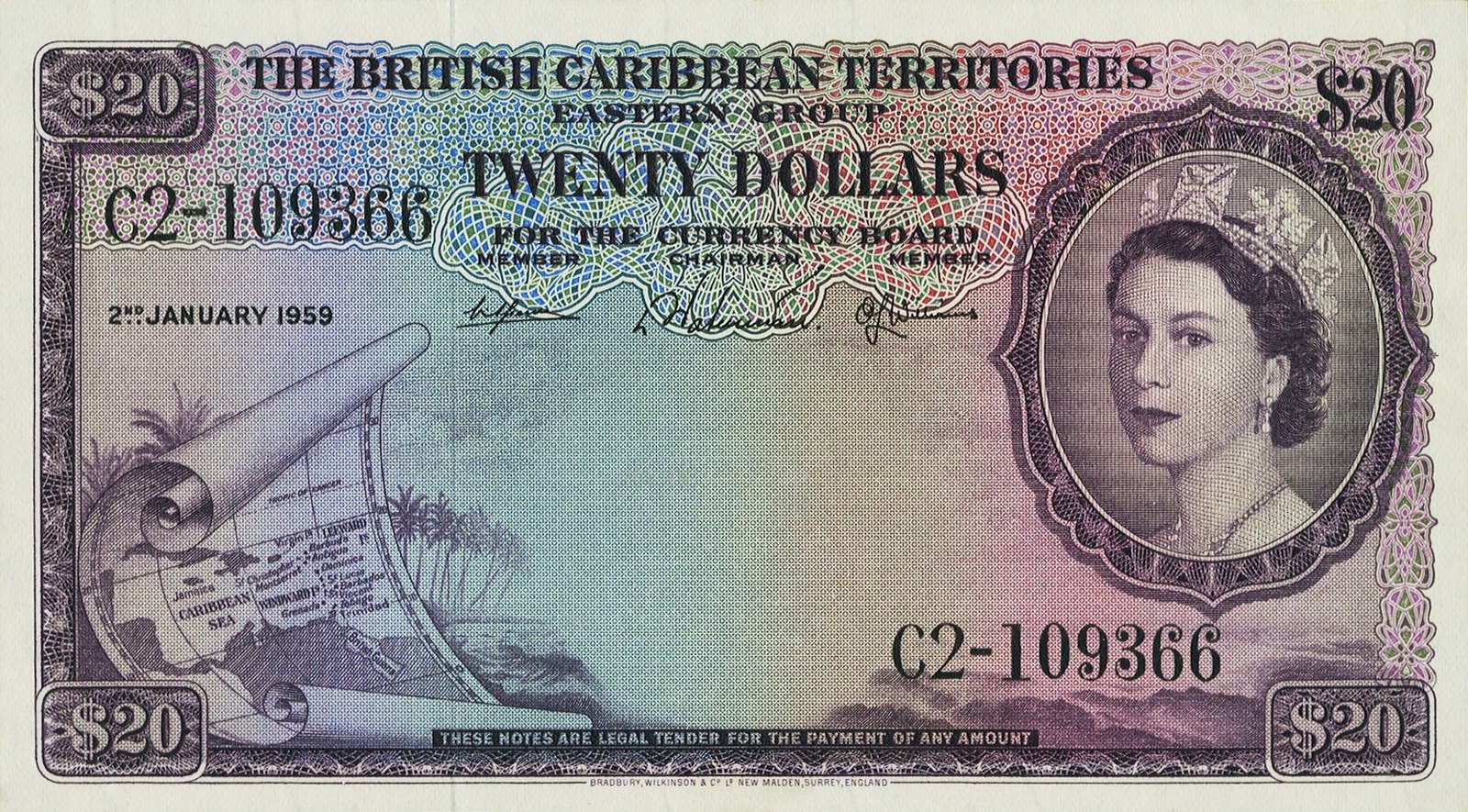
This article gathers what the papers read for the catalogue say about false and tampered notes in British Guiana: a newspaper paragraph of 1923, a notice in the Official Gazette of 1952, the reports of the Government Analyst for 1954 and 1958 to 1960, the reports of the Commissioner of Police for 1960 to 1963, and the reports of the British Caribbean Currency Board. Up to 1951 the notes in use were the Government's own; after 1951 they were mostly the Board's, and the reports seldom say which. No report gives a serial number, and none pictures a note. The Board's warnings for all its territories are in The British Caribbean Currency Board and its notes, 1950 to 1968.
1923: "spurious Colonial Currency Notes"
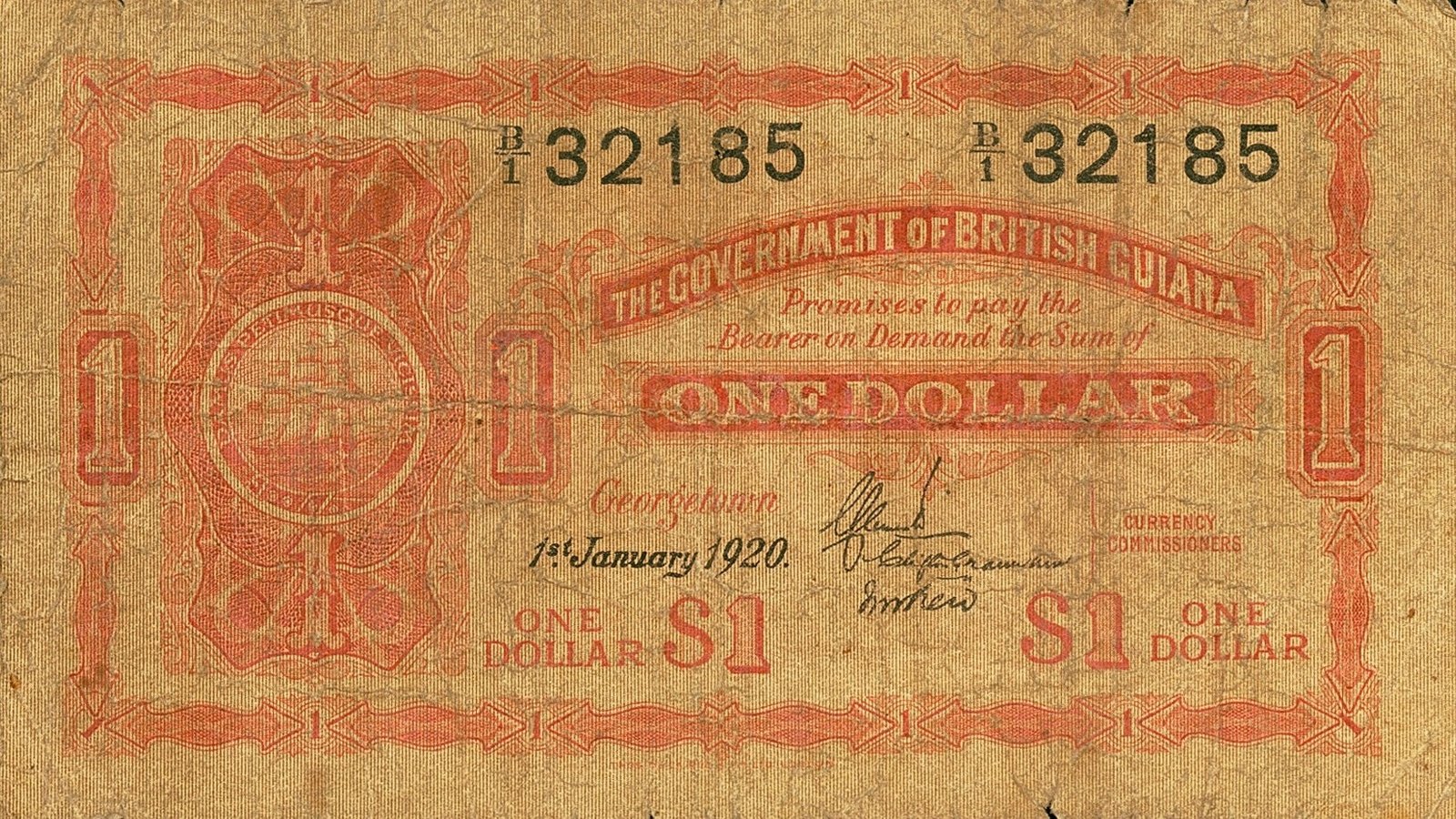
The only report found from the years of the Government's own notes is a paragraph in The Voice of Saint Lucia of 22nd August 1923, read on the page image: "It is alleged that for some time past spurious Colonial Currency Notes were being circulated in British Guiana." It goes on to say that a man named Bandhu was arrested for trying to pass a note "which proved to be counterfeit". The paper prints the value as $200. The Government had then no note above 2 dollars, so the figure may be a misprint; the paper does not say, and does not name the value of the note in words. By 1923 the Government's notes carried the dates 1st August 1916, 2nd January 1918 and 1st January 1920: the 1 dollar and 2 dollars of 1916 to 1918 and the 1 dollar and 2 dollars on the larger paper. Nothing more on the case was found.
1952: notes stamped with notices
The Official Gazette of British Guiana of 8th March 1952 (page 524, notice No. 440) warned that currency notes had lately been defaced by having information stamped on them. That, the notice said, was an offence under section 204 of the Summary Jurisdiction (Offences) Ordinance, which forbade mutilating, cutting, tearing, perforating or defacing a currency note. The notice does not say what was stamped or on which notes. Both the Government's notes and the Board's were then in use.
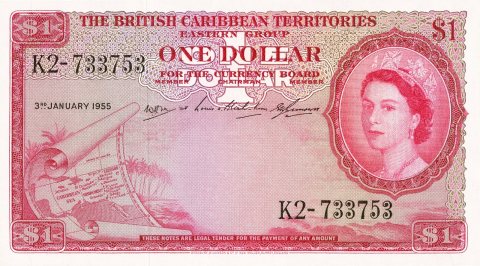
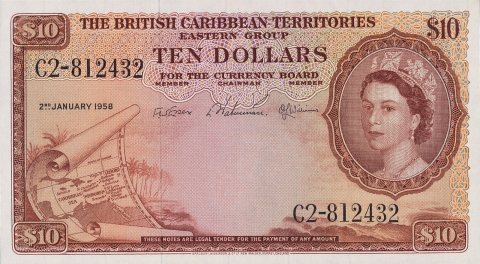
Forgeries of the Board's notes are on record from the same year. Krus and Schuler's Currency Board Financial Statements (2014), citing the Board's report for 1952 (page 4), say forgeries are first mentioned in that report. In August 1952 the Board warned of 1 dollars altered to pass as 10 dollars; that warning is told in the Board's article linked above.
1954: 88 notes before the Government Analyst
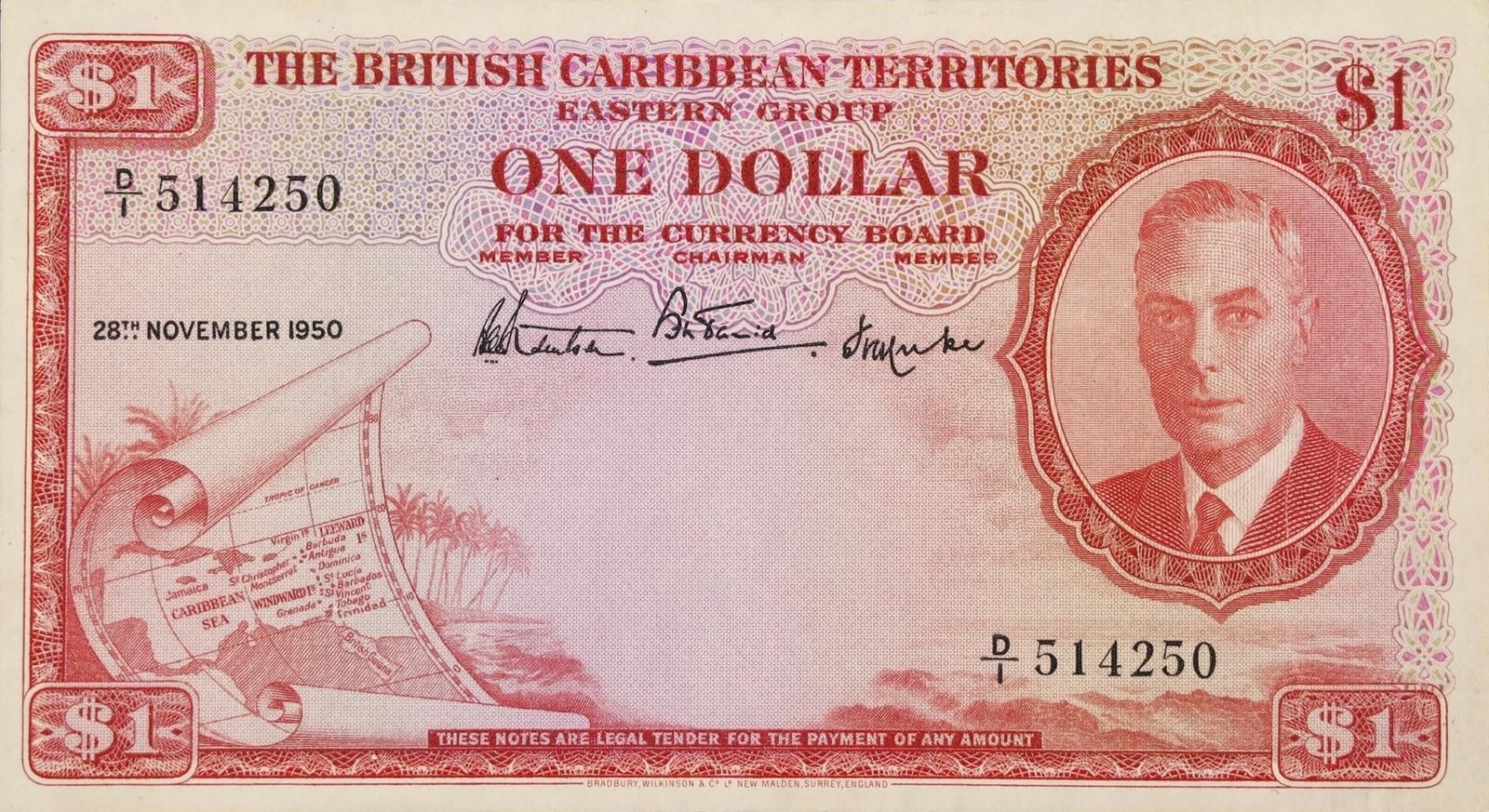
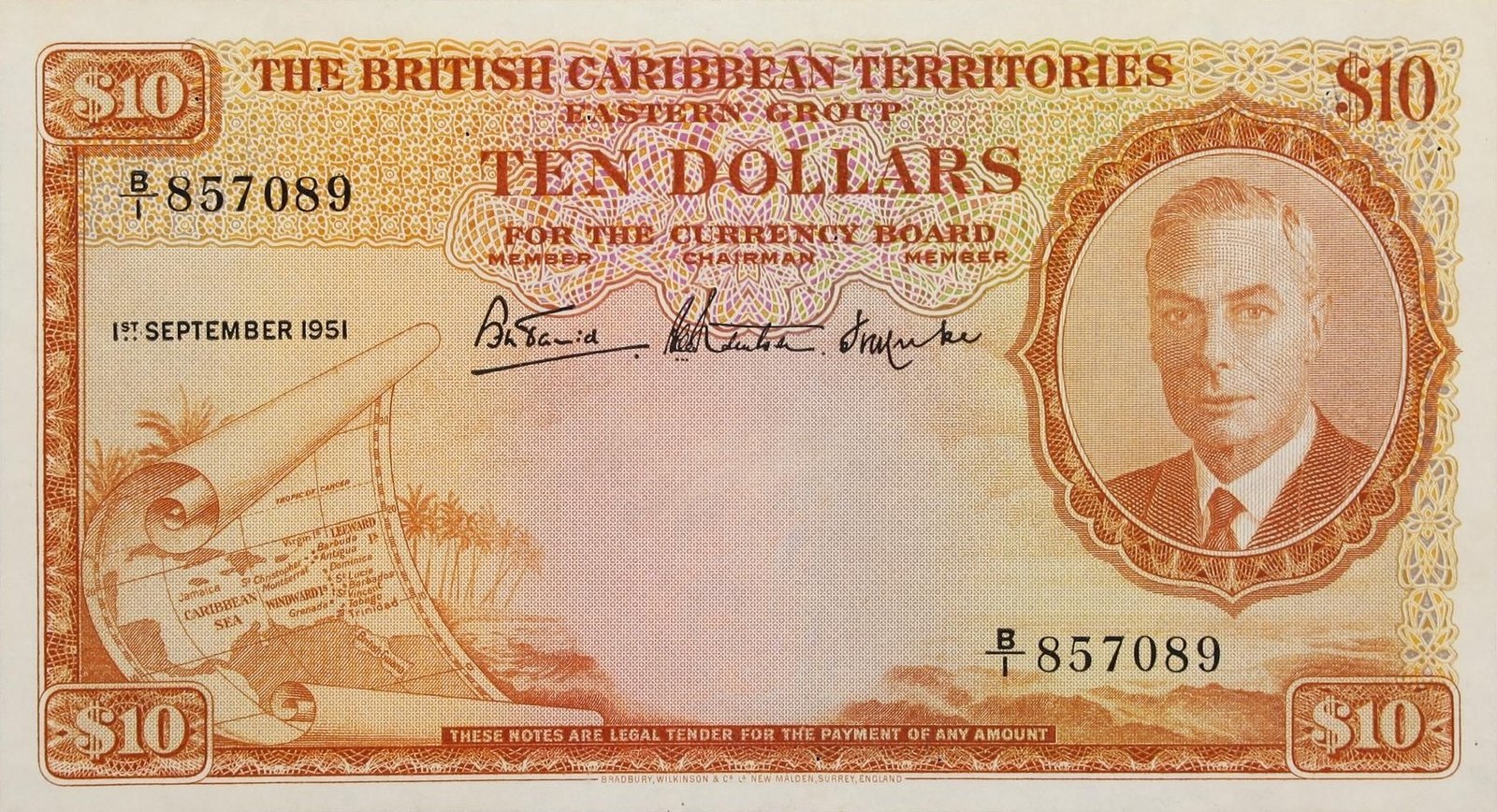
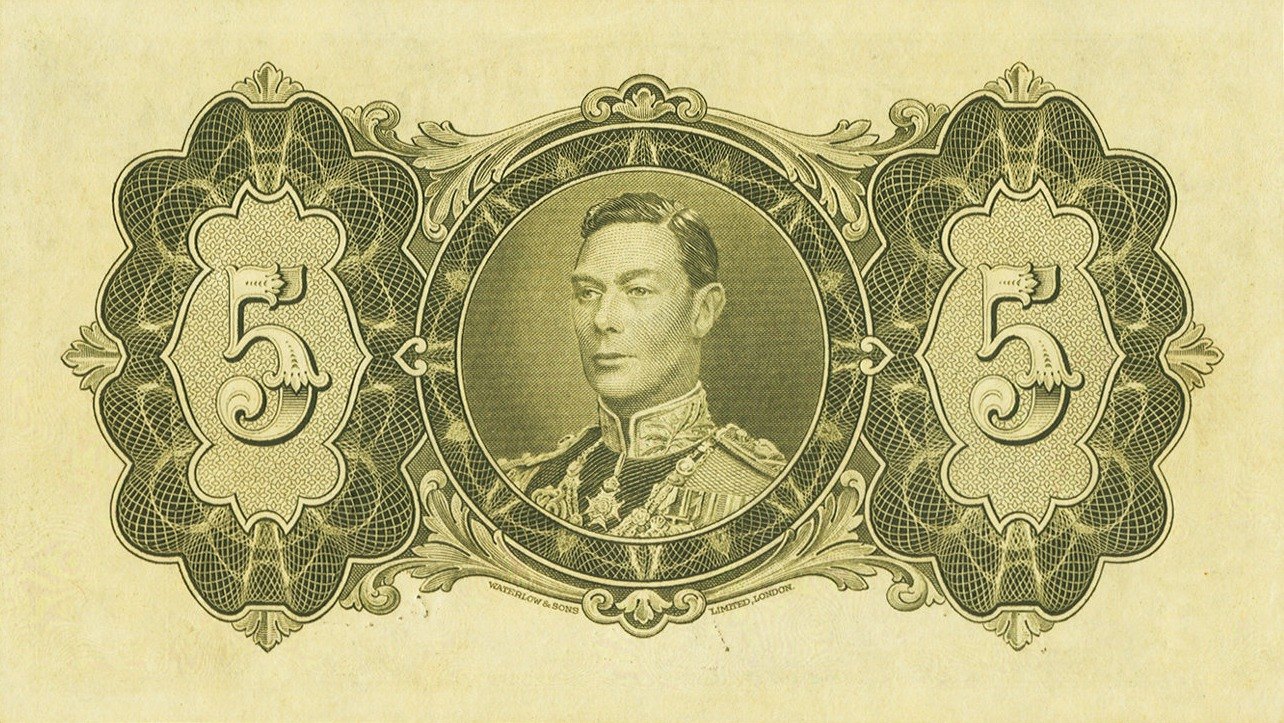
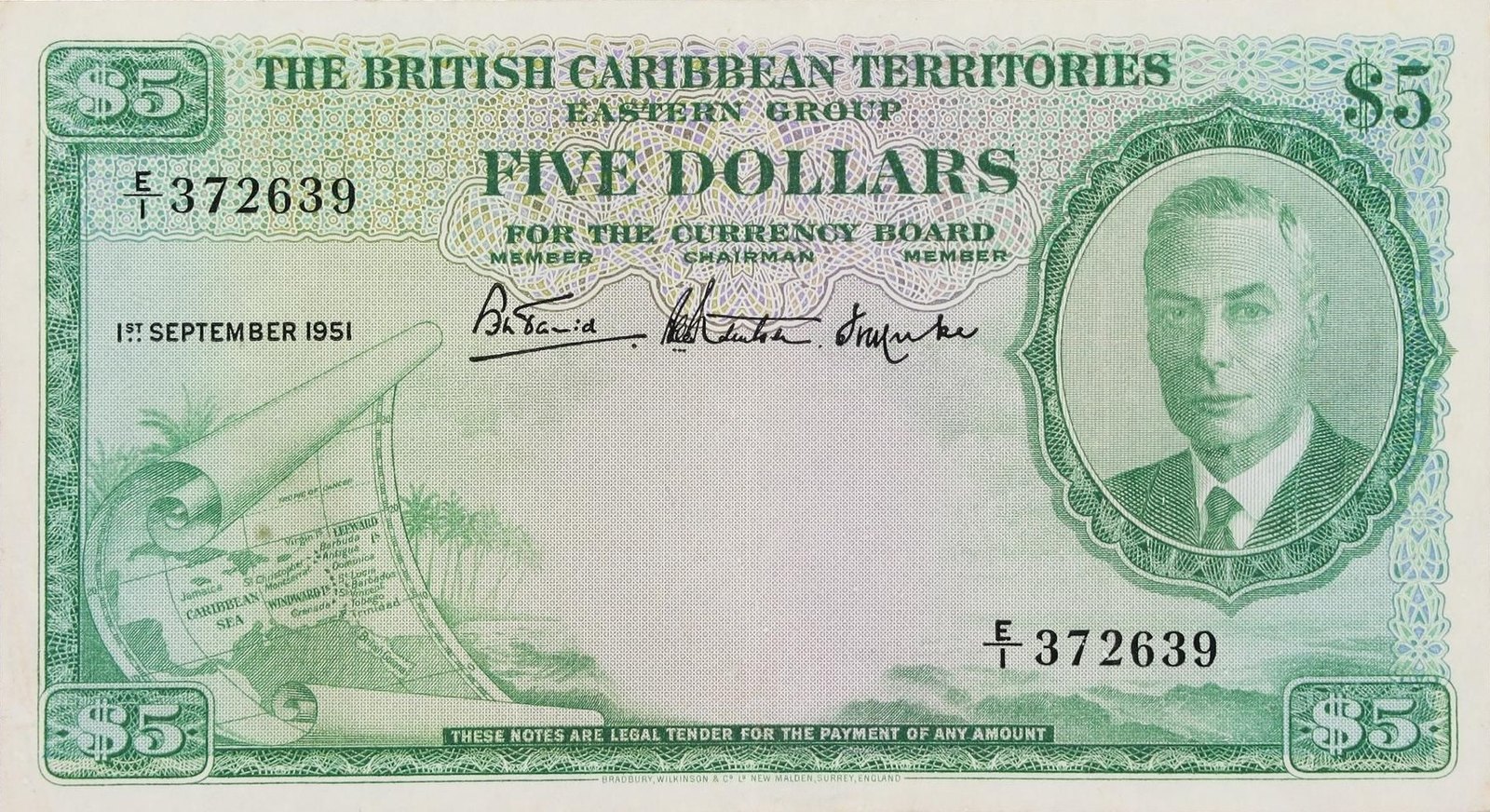
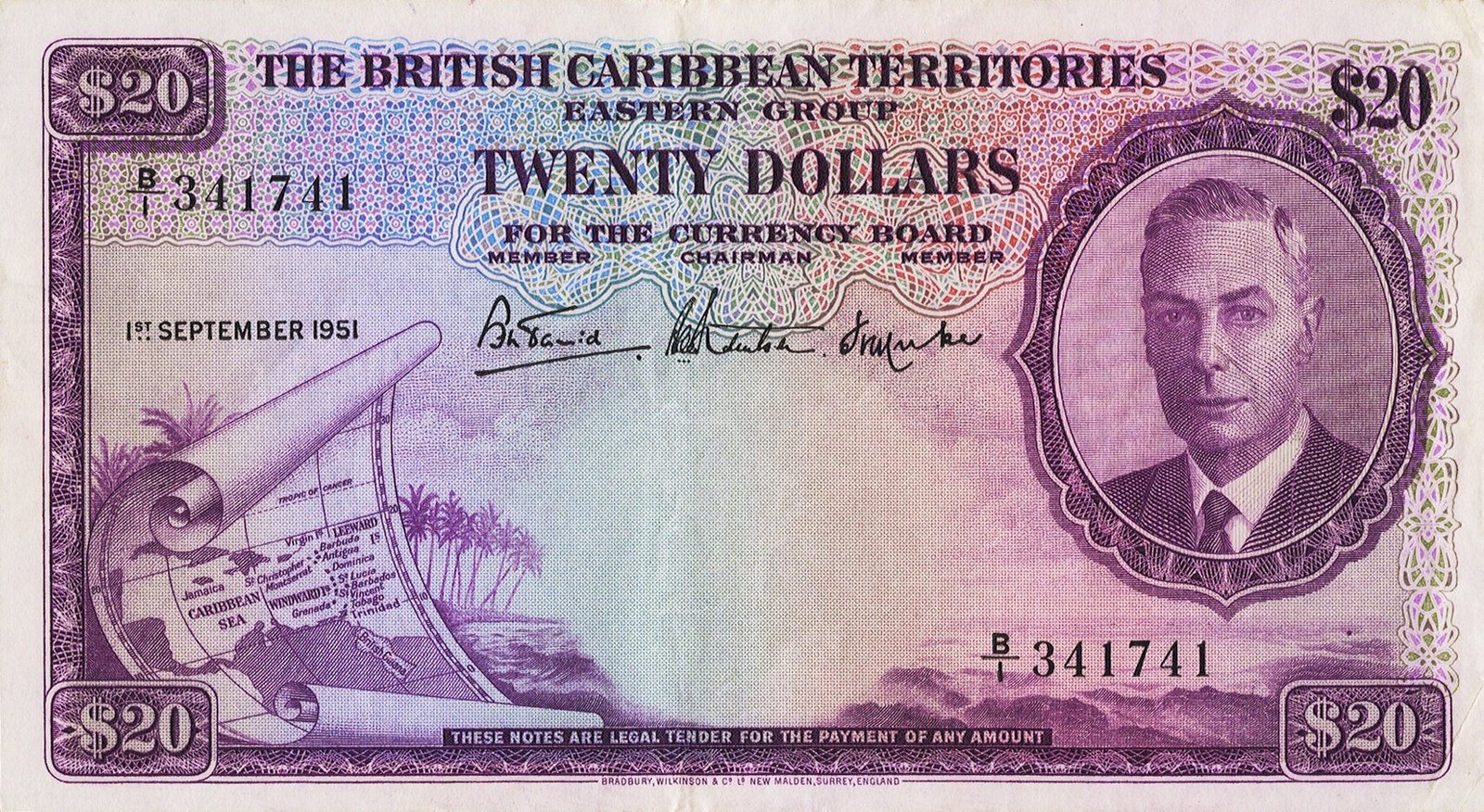
The Government's information booklet Informatives, in its report on the Government Analyst's Department for 1954 (page 151, read on the page image), says: "Of 88 currency notes examined during the year, 44 were found to be forged, and 26, though genuine, were found to be treated for the purpose of making forged notes." It adds that "the chemical in vogue at the present time succeeds best with $5 and $20 notes", and that the forgeries were mostly of those two values. The passage runs on to a page that is not held, and it does not say whether the notes were the Government's or the Board's. The Government's notes ceased to be legal tender on 2nd January 1955; in 1954 both kinds were in use, and both had a 5 and a 20 dollars.
1958 and 1959: the Analyst's tables
The Government Analyst's report for 1958 is bound at the back of the report on co-operatives for 1958, laid on 14th July 1959 (page 4, paragraph 17, read on the page image). In 1958 the Analyst examined 55 currency notes: 23 sent by the police and 32 by the Commissioners of Currency. The report counts them so:
| 1958 | 1 dollar | 5 dollars | 10 dollars | 20 dollars | 100 dollars | All |
|---|---|---|---|---|---|---|
| Forged | 1 | 1 | 3 | 17 | none | 22 |
| Genuine, but connected with the making of forged notes | 1 | 4 | 14 | 5 | 4 | 28 |
| Genuine and unconnected | 5 |
Besides the notes, 24 exhibits were tools and supplies for making forged notes. The report calls the forging a "cottage industry". The report does not say which notes they were; by 1958 the old Government notes had ceased to be legal tender more than three years before.
The report for 1959 (page 4, paragraph 10 and its table, read on the page image) counts 13 forged notes and 10 genuine notes "treated" in making them:
| 1959 | Treated 1 dollar | Treated 2 dollars | Treated 5 dollars | Treated 10 dollars | Treated 20 dollars | Forged 1 dollar | Forged 5 dollars | Forged 20 dollars |
|---|---|---|---|---|---|---|---|---|
| Sent by the Currency Commissioners | none | none | 1 | none | 1 | none | none | 1 |
| Sent by the Police Department | 3 | 1 | 1 | 2 | 1 | 2 | 3 | 7 |
| Total | 3 | 1 | 2 | 2 | 2 | 2 | 3 | 8 |
A further 32 notes sent in were genuine, and 23 exhibits were appliances, paper and chemicals for making false notes. In both years the 20 dollars was the value most often forged.
The Board's report for 1959, read in the text layer only as printed in the Antigua, Montserrat and Virgin Islands Gazette of 27th July 1961 (page 133), says ten reports of offences with currency notes and coin were received in British Guiana during the year. The same report has one forged 1 dollar in Grenada and one mutilated note in Dominica.
1960: 147 suspect notes
The Analyst's report for 1960 (pages 23 and 25, read in the typescript's text layer only) says the department received 147 suspect currency notes in 19 lots and 17 exhibits of materials for making forged notes in 2 lots, and that the Commissioners of Currency sent 2 samples of notes for advice. The pages read do not say how many of the 147 were forged or of which values.
The Board's report for 1960 (Antigua, Montserrat and Virgin Islands Gazette, 23rd August 1962, page 179, read on the page image) records, for British Guiana, "One report in connection with uttering forged notes". In the other territories it records two reports in Grenada, four in Saint Lucia with charges laid on two, and one conviction in Trinidad for having paper for forging notes. The values are not given.
The police reports, 1959 to 1963
The yearly reports of the Commissioner of Police give the number of reports made to the police of forgery and of having forged currency notes. Each report gives its own year and the one before, and the two readings agree.
| Year | Reports to the British Guiana police | Source |
|---|---|---|
| 1959 | 10 | Report for 1960, paragraph 74 |
| 1960 | 24 | Report for 1960, paragraph 74; report for 1961, paragraph 70 |
| 1961 | 37 | Report for 1961, paragraph 70; report for 1962, paragraph 66 |
| 1962 | 42 | Report for 1962, paragraph 66; report for 1963, paragraph 58 |
| 1963 | 55 | Report for 1963, paragraph 58 |
These are reports to the police, not notes, and they give no values. The figures were read in the text layer of the typescripts, not on the page images.
1962: notes "raised" with crayon
The Board's report for 1962 records reports in British Guiana of attempts to "raise" 118 genuine notes to higher values: the colour of the notes changed with crayons or water colours, and the value altered to a higher one. There was no evidence for a charge. The same report has four charges laid in British Guiana in connection with forged currency notes. It does not give the values before and after.
Small traces in the accounts
A few lines in other papers laid before the legislature show false notes reaching public offices. The Director of Audit's report on the fish marketing centre for December 1961 to December 1962 lists among the write-offs a line of 10 dollars for counterfeit notes at Suddie Hospital, without the value of the notes. The Accountant General's report for 1963 and the financial statements of that year write off counterfeit currency received by the Housing Department, again with no value of note. The Labour Department's report for 1963 lists a one-day stoppage at a factory on 13th and 14th August 1963 over a counterfeit bill said to have been paid to a worker. The prisons report for 1960 counts two cases of having moulds for counterfeiting, which were for coin.
The law the forgers broke
The Currency Ordinance, 1950 (section 11) brought the Board's notes under the criminal law on forgery by calling them currency notes. The Currency Ordinance, 1959 (No. 8 of 1959, section 12) did the same by reference to section 201 of the Summary Jurisdiction (Offences) Ordinance and section 241 of the Criminal Law (Offences) Ordinance. Neither law had a section on mutilated notes; the British Caribbean Currency Agreement of 1964 (Article 19) said a holder had no right to be paid for a mutilated or imperfect note, any refund being an act of grace.
What the sources do not give
- A serial number of any forged or altered note, or a picture of one.
- Which issue the forged notes of 1954 to 1963 belonged to, and whether any forged Government note was found after 1923.
- The values of the 147 suspect notes of 1960 and of the 118 raised notes of 1962.
- The outcome of the case of 1923.
Sources
- The Voice of Saint Lucia, 22nd August 1923.
- Official Gazette of British Guiana, 8th March 1952, page 524, notice No. 440.
- Informatives (British Guiana), report on the Government Analyst's Department for 1954, page 151.
- Annual reports of the Government Analyst of British Guiana for 1958 (bound with the report on co-operatives for 1958, page 4), 1959 (page 4) and 1960 (pages 23 and 25).
- Annual reports of the Commissioner of Police, British Guiana, for 1960, 1961, 1962 and 1963.
- British Caribbean Currency Board, reports of the Executive Commissioner for 1959 (Antigua, Montserrat and Virgin Islands Gazette, 27th July 1961, page 133), 1960 (the same Gazette, 23rd August 1962, page 179) and 1962.
- Krus and Schuler, Currency Board Financial Statements (2014), British Caribbean Currency Board section.
- Director of Audit, report on the fish marketing centre, December 1961 to December 1962; Accountant General, report for 1963; financial statements, 1963; Labour Department, report for 1963; report on the treatment of offenders, 1960.
- Currency Ordinance, 1950 (No. 20 of 1950), section 11; Currency Ordinance, 1959 (No. 8 of 1959), section 12; Currency Ordinance, 1965 (No. 8 of 1965), Article 19 of the Agreement.
Member comments
Log in or register to post a comment.