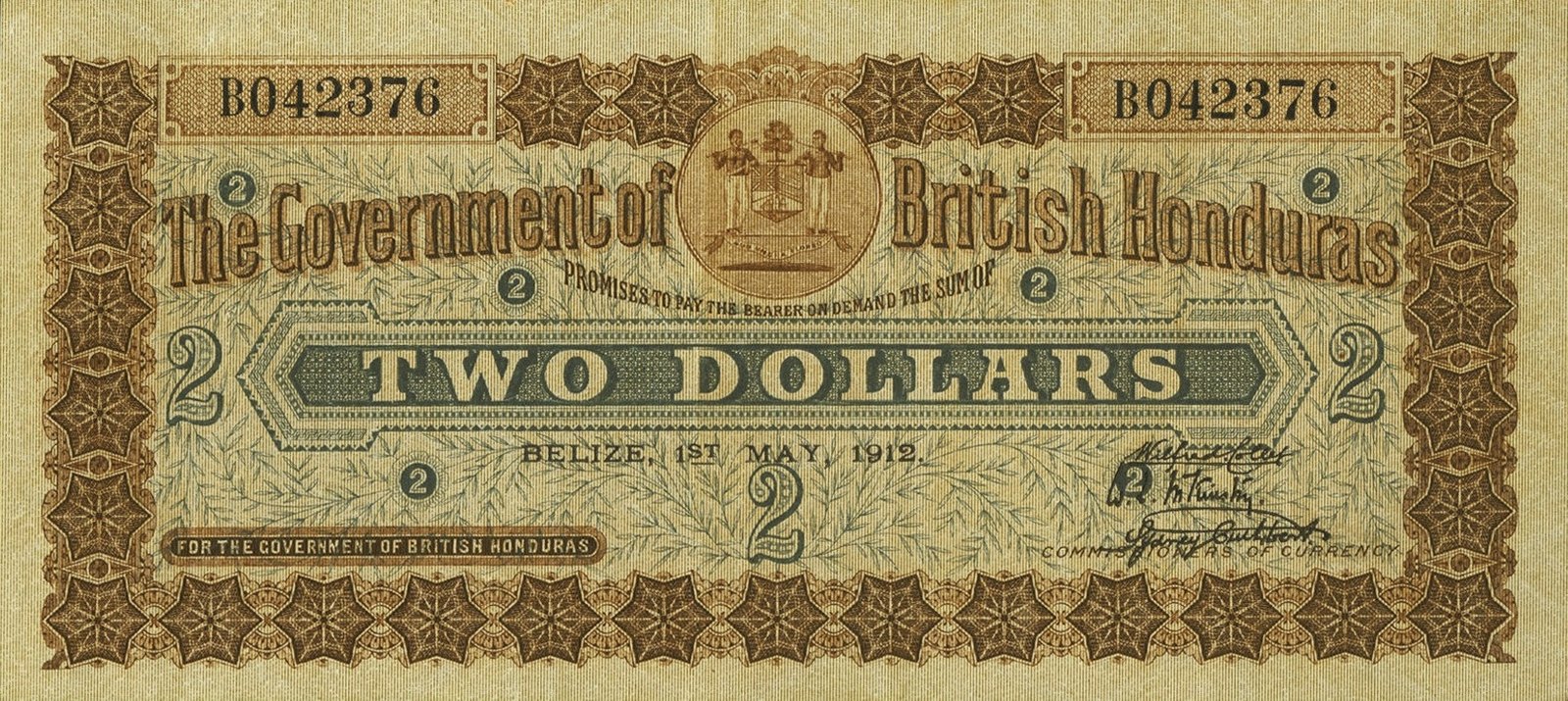
Thomas de la Rue printed every note of British Honduras from 1894 to 1928. This article gathers what the Pick pages, the colony's annual reports, the British Honduras Gazette and the auction houses' descriptions say of those notes: the first issue of 1894, the design of 1895 and its reprints to 1920, the notes of 1924 and 1928, how much was in circulation, and the end of all of them on 1st May 1940. The whole story of the colony's notes is told in the paper money of British Honduras, 1894 to 1973.
The first issue, October 1894
Sources mention that the notes were issued under Ordinance No. 32 of 1894, which set up the Commissioners of Currency and made the dollar equal to the United States gold dollar. The Central Bank of Belize gives the number as Ordinance No. 31 of 1894 on its page History of Currency. The annual reports for 1908 and 1911 name Ordinance 32 of 1894.
The six values, 1 dollar, 2 dollars, 5 dollars, 10 dollars, 50 dollars and 100 dollars, are uniface notes issued from a counterfoil book, with handwritten signatures and the date applied by a circular city datestamp. On the recorded 1 dollar the stamp reads BELIZE, 17 October 1894.
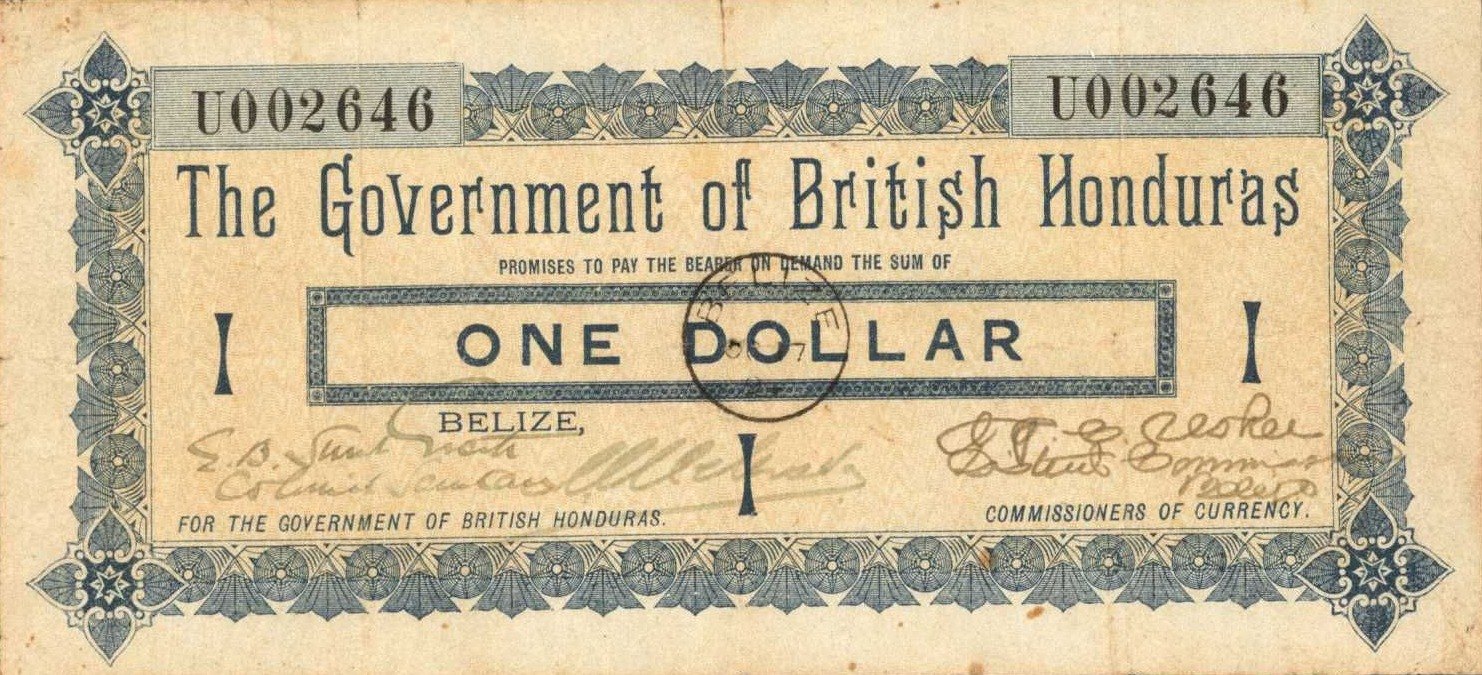
What the houses say of this issue comes from one sale. Stack's Bowers offered an issued 1 dollar and a 5 dollars specimen on 12 January 2018 (lots 30070 and 30071). The first description says:
- three issued 1 dollar notes are known: the one in that sale, the Pick plate note in very poor condition, and one in a private collection;
- the note in the sale had been in private hands since the mid-1890s and had never been offered in public before;
- no issued note of the five higher values has been seen;
- the issue was withdrawn and destroyed after only two months;
- the note is signed by E. B. Sweet-Escott as Colonial Secretary, C. Melhado and H. C. Usher, and has a watermark of a crown above the letters CC.
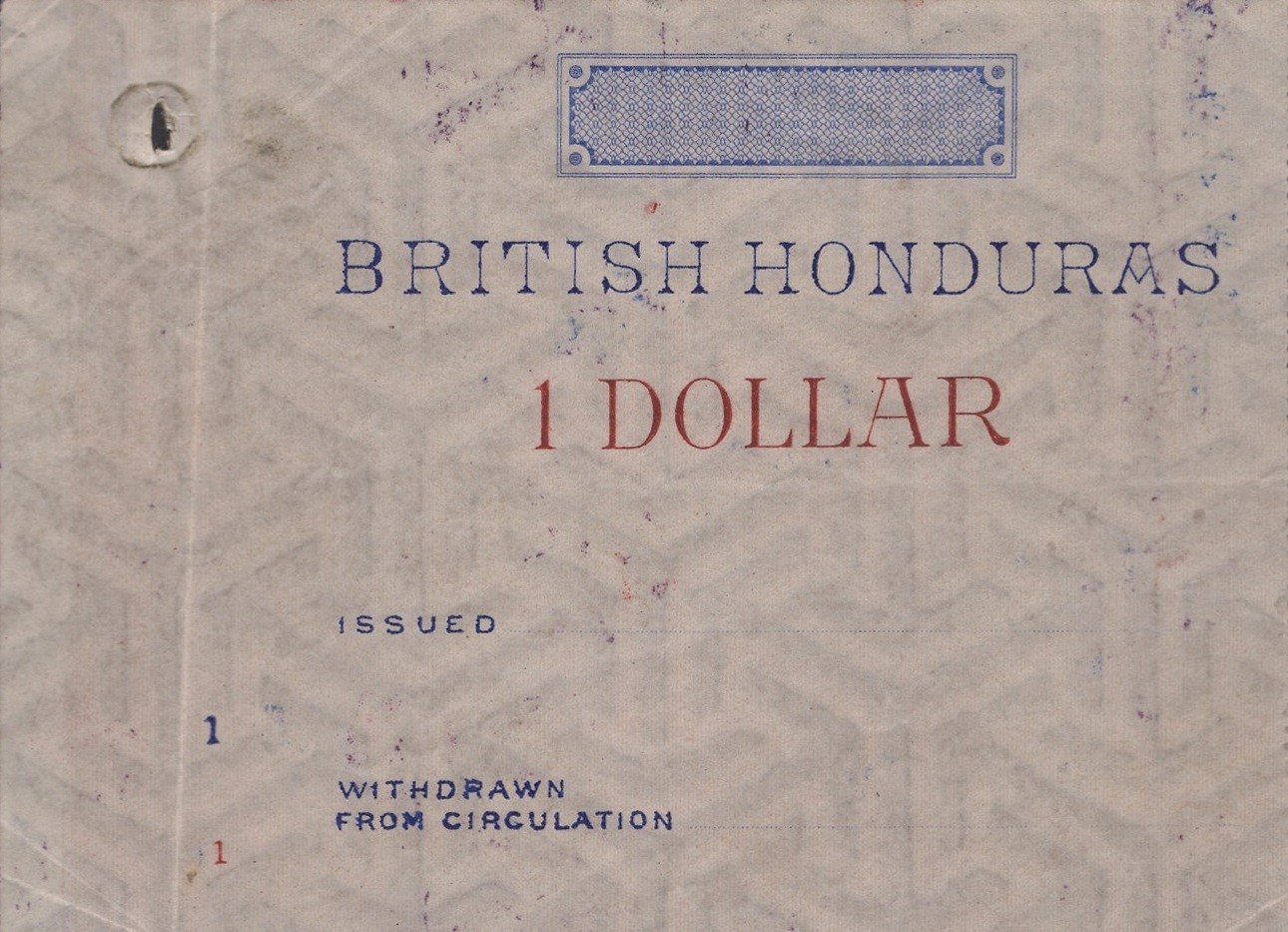
The second description says the first issue can be told by its title THE GOVERNMENT OF BRITISH HONDURAS printed in a straight line, and by rows of the crowned CC watermark, which the house says was used on no later note of the colony. It says every specimen of the issue has the word CANCELLED perforated diagonally across it, and that no remainders exist. It also explains the counterfoil: it stayed fixed by its left edge in the ledger of the issue, and a note that was issued was given the same letter and number as its counterfoil and torn off at the perforation. The house says it had verified two 5 dollars specimens.
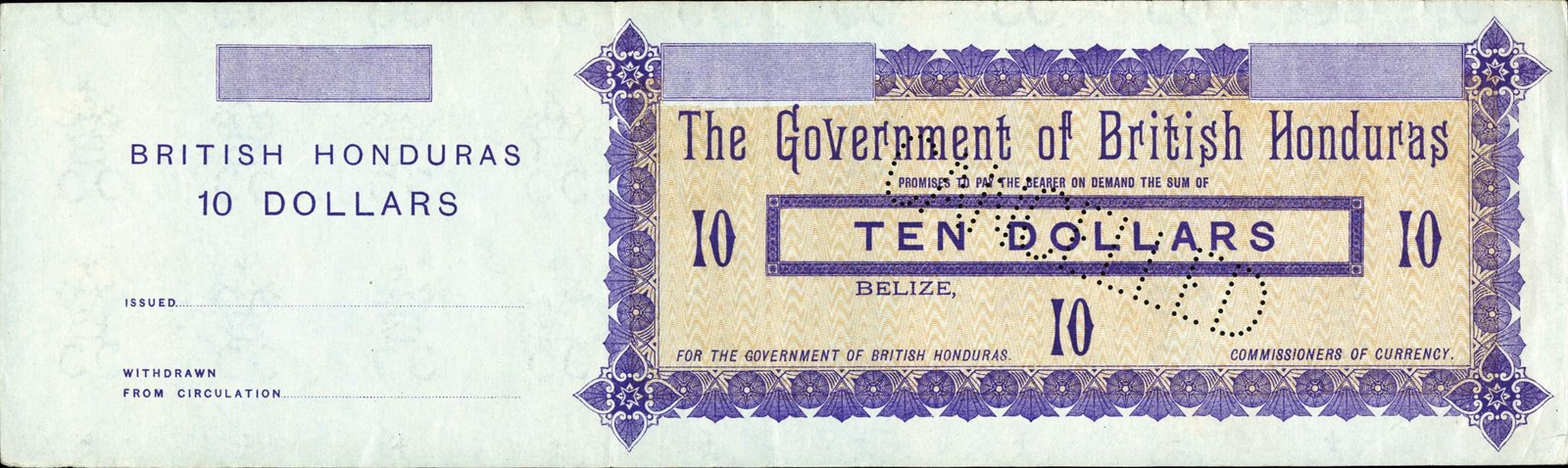
The Pick pages hold an undated specimen of each value, a counterfoil of the 1 dollar, and no issued note above the 1 dollar. The issued 1 dollar on the Pick page is U 002646.
A 25 dollars that was not issued
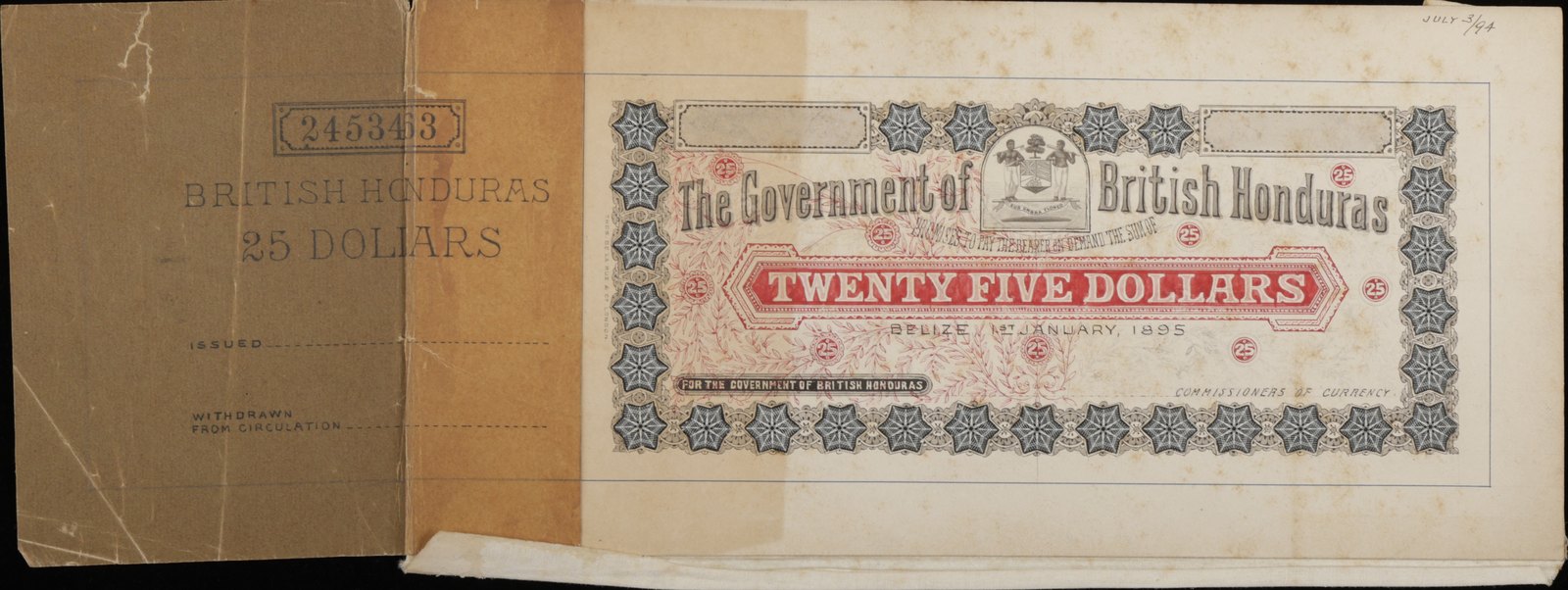
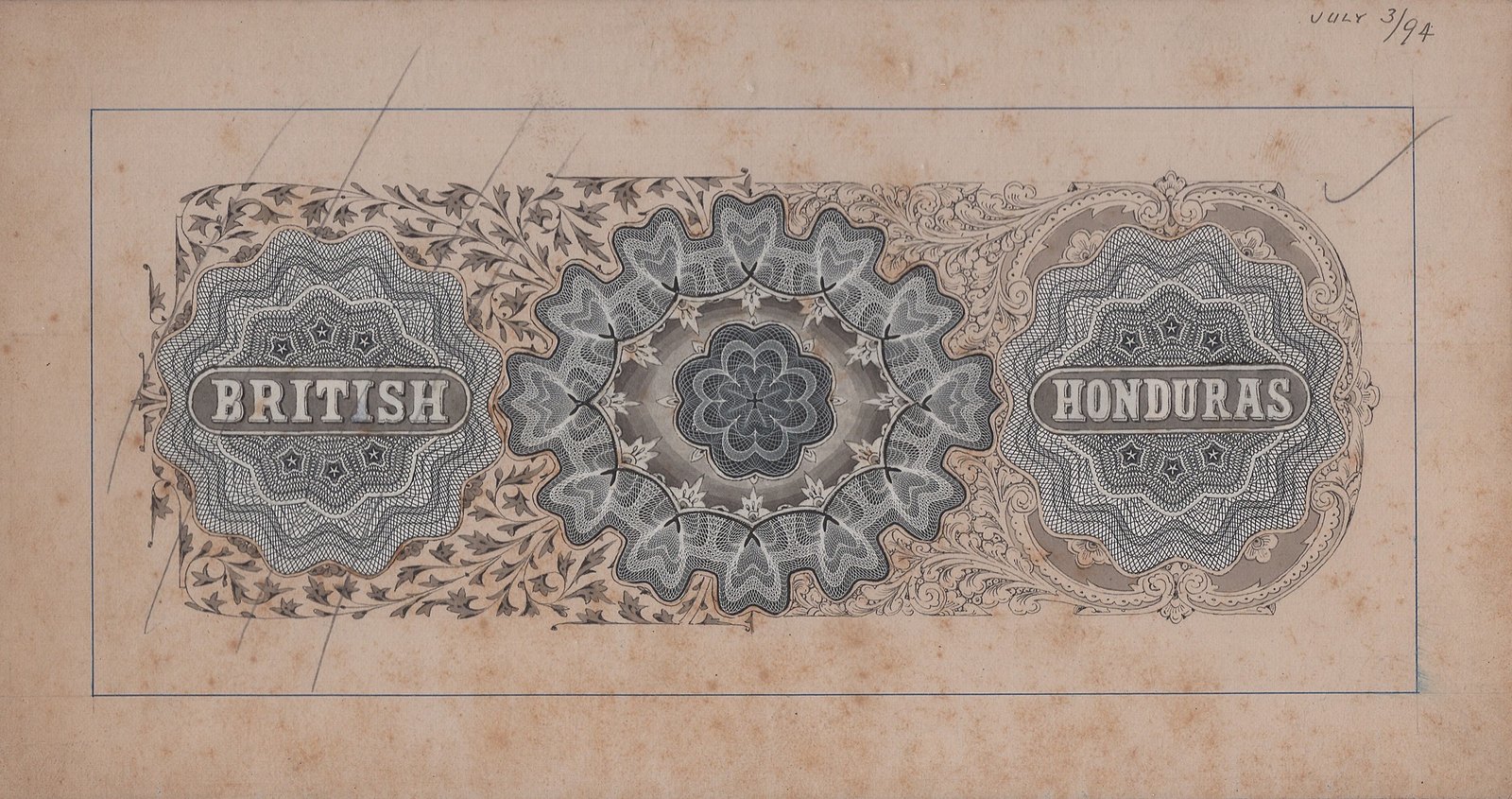
A 25 dollars is known only from a pair of partly hand-executed composite essays on board, the face and the proposed back, both annotated JULY 3/94. The pair was offered at Noble Numismatics on 25 July 2017 and again at Noonans on 27 November 2025 (lot 328). Noonans describes the face as blue and red, with a counterfoil of brown greaseproof paper loosely attached and a red leaf design left unfinished across the right-hand side, and calls the denomination unrecorded.
The notes of 1895 to 1920
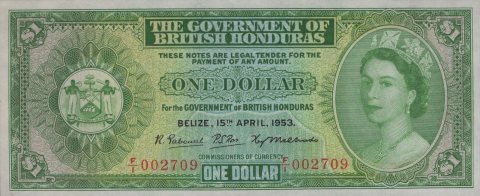
The second design has the arms at top centre and no printer's imprint. Its first date is 1st January 1895. Stack's Bowers' description of 12 January 2018 (lot 30071) says this issue began two months after the first.
Sources mention the notes issued before 26th March 1916, value by value. The Pick pages do not name the source; the article What the currency boards published has a section on it.
| Value | Notes issued before 26th March 1916 | Numbers |
|---|---|---|
| 1 dollar | 22,000 | A 000001 to A 022000 |
| 2 dollars | 47,500 | B 000001 to B 047500 |
| 5 dollars | 41,000 | C 000001 to C 041000 |
| 10 dollars | 5,200 | D 000001 to D 005200 |
| 50 dollars | 700 | E 000001 to E 000700 |
| 100 dollars | 700 | F 000001 to F 000700 |
The printed dates are 1st January 1895 on all values; 3rd September 1901 on the 1 dollar of P-8; 23rd February 1904 on the 2 dollars; 1st December 1910 on the 2, 5 and 10 dollars; 1st May 1912 on the 1 and 2 dollars; 1st April 1919 on the 2 dollars; and 1st March 1920 on the 1 dollar of P-9. The watermark GOVERNMENT OF BRITISH HONDURAS is known from the 1920 notes.
Little of this is recorded as issued notes. The pages have no issued 5, 10, 50 or 100 dollars and no 1 dollar of 1912. One issued note of P-7 is recorded, A 000043, known from a published illustration. Heritage, describing a 1 dollar of 1st January 1895 on 14 October 2026 (lot 24058), says three notes of the type stood in the PMG Population Report at that time. Heritage's description of a 10 dollars specimen of 1st December 1910 (9 November 2023, lot 24112) says the note is not in the Standard Catalog and that the house could not say whether an issued one exists.
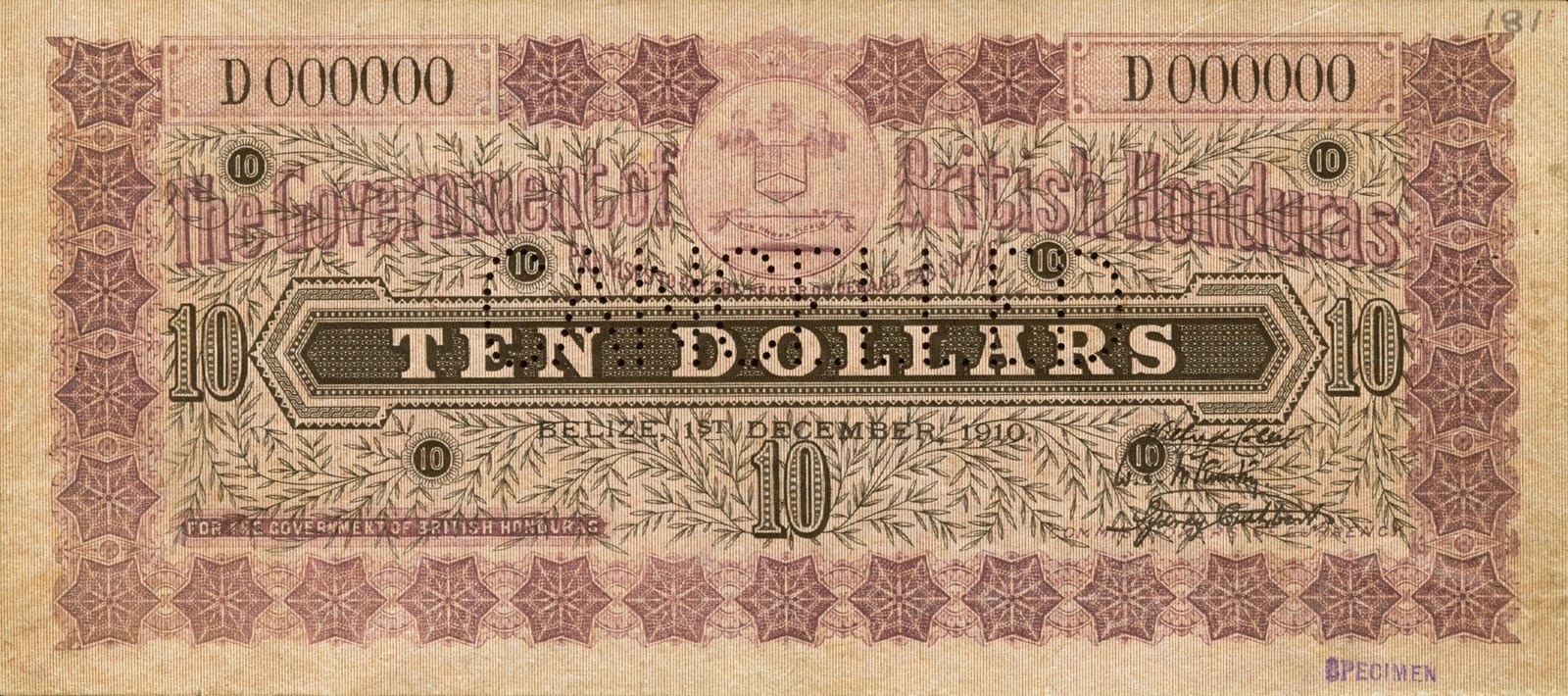
Three values have no Pick number. Sources mention no Pick number for the 5 dollars or the 100 dollars, and give the number 11 to a different note; they are numbered P-11 and P-13 here to fill the gap in the series. The 10 dollars has no Pick number at all.
The colour sheets of 5th May 1913
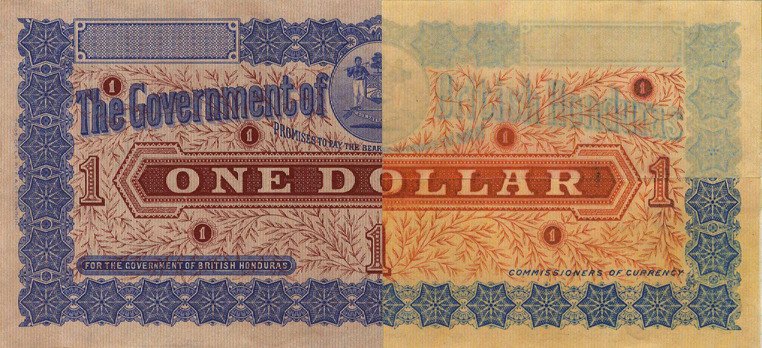
Nine colour trial varieties of the 1 dollar come from a single submission by the printer to the Government of British Honduras dated 5th May 1913. Each sheet is headed Appendix and a letter, and proposes the colour scheme for one value of the coming issue, worked out on the 1 dollar plate: A the 1 dollar, B the 2 dollars, C the 5 dollars, D the 10 dollars, E the 50 dollars and F the 100 dollars. Each of those carries the design beside a section of the same note treated with carbolic, with a rubbing taken from the carbolic-treated and the creosote-treated sections: the printer was testing how the inks would stand up to the disinfectants then used on currency. Appendix H is a later sheet in the same run with three finished uniface proofs for the 10, 50 and 100 dollars.
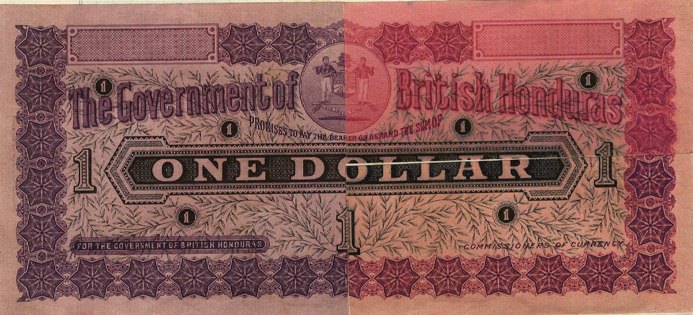
Earlier trials exist for the 2 dollars. Spink offered four partial colour trial proofs of 1895 on 27 October 2021 (lot 19), each with the counterfoil at left and the design in black, with the signatures, dates and back pattern in other colours. The house gives the four pairs of face and back colours as black with olive green, green with orange, orange with slate blue, and blue with red, and says the issued note is brown. Spink offered four such proofs again on 25 June 2026 (lot 59), with a vignette of the colony's arms and a letter from De La Rue of February 1895 on the printing of signatures.
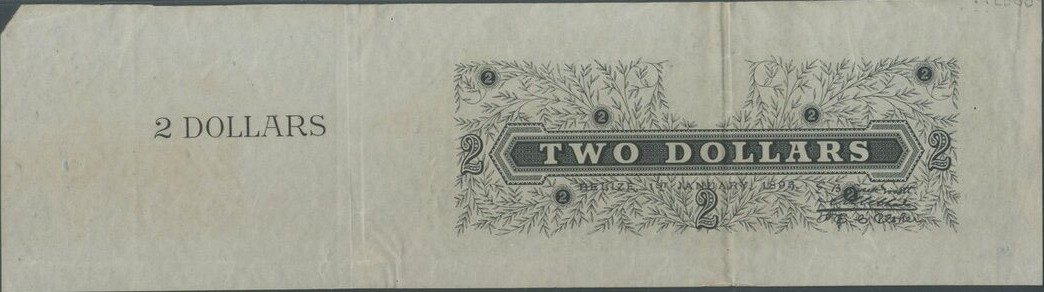
A progress proof of the face with no denomination, offered by Noble Numismatics on 25 July 2017 (lot 3460), is described by the house as a black and white proof on card with the imprint of Thos. de la Rue & Co., a printer's tag, and a sheet of tissue signed by three signatories.
The notes of 1924 and 1928
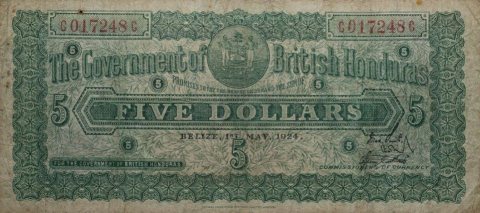
The notes dated 1st May 1924 and 1st October 1928 copy the design of 1895 to 1920. On the 1 dollar two things separate them: the ONE DOLLAR panel at the centre is dark blue-green in place of red, and the lower margin carries the imprint THOMAS DE LA RUE & COMPANY LIMITED, LONDON. The other values are the 2 dollars, 5 dollars, 10 dollars, 50 dollars and 100 dollars. On the 1, 2, 5 and 10 dollars the prefix letter is repeated as a suffix after the number, and on the 1 and 2 dollars the pages show both dates with the same letter.


The houses add the following.
- Stack's Bowers (12 August 2024, lot 30063) says the colours were changed to make the notes harder to counterfeit, and that a handful of specimens were made for the archives.
- Stack's Bowers (8 May 2025, lot 50058) says the 2 dollars of this issue was printed in light brown, that the serial numbers ran on through both dates, and that the 1928 date seems to have had a fairly limited print run. The same description says a new design was introduced in 1920; the Pick pages show the 1 dollar of 1st March 1920 in the design of 1895.
- Stack's Bowers (29 August 2025, lot 30035) says specimens of the 50 and 100 dollars are known, that the 10 dollars is believed to be the highest value that survives as an issued note, that the house knows of at least one other 10 dollars of 1st May 1924, and that its cataloguer knows of no issued 10 dollars dated 1928.
- Spink (23 September 2025, lot 152) says eight notes of the 1 dollar, both dates together, had been certified by PMG.
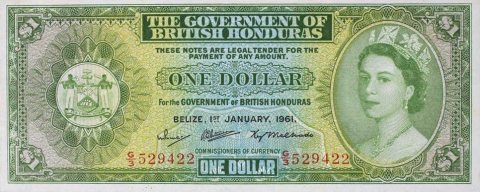
- Heritage (9 November 2023, lot 24113) says the print totals of this design were small, and that the notes were redeemed and replaced by portrait notes from about 1939. The first notes with the portrait of King George VI (P-20) are dated 2nd October 1939.
The Pick pages record no note, specimen or photograph of the 50 dollars of either date and no issued 100 dollars. An undated proof of the front of the 100 dollars serves both this issue and that of 1895, because the layout was kept and nothing on the piece tells the two apart. The annual reports for 1922, 1925 to 1928 and 1930 and the Economic Survey of the Colonial Empire for 1932 name only the 10, 5, 2 and 1 dollar notes as the colony's paper currency.
Notes in circulation, 1908 to 1928
The annual reports give the value of all Government notes in circulation on a named day, and for some years the reserve held against them.
| Day | Notes in circulation | Reserve, as the report gives it |
|---|---|---|
| 31st December 1908 | 123,993 dollars | 87,029 dollars 48 cents in gold held in the Colony; 36,963 dollars 52 cents invested in England |
| 31st December 1911 | 161,433 dollars | not given on the pages |
| 31st March 1923 | 224,544 dollars | 89,607 dollars in gold; 134,937 dollars in investments |
| 31st March 1926 | 429,846 dollars | not given on the pages |
| 31st March 1928 | 357,102 dollars | not given on the pages |
The reports for 1908 and 1911 still list notes of 1, 2, 5, 10, 50 and 100 dollars as issued under Ordinance 32 of 1894. The annual report for 1913 says the 50 and 100 dollars notes had by then been withdrawn from circulation.
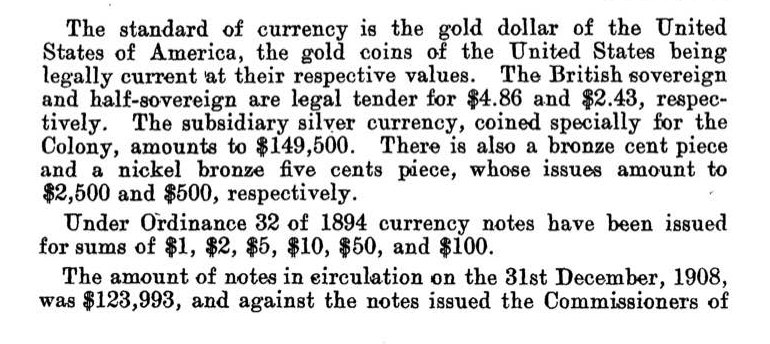
The figure of 224,544 dollars is printed twice: the annual reports give it for 31st March 1923, and the report for 1924 prints it again for 31st March 1925. By 31st March 1926 the notes of 1924 had come into use.
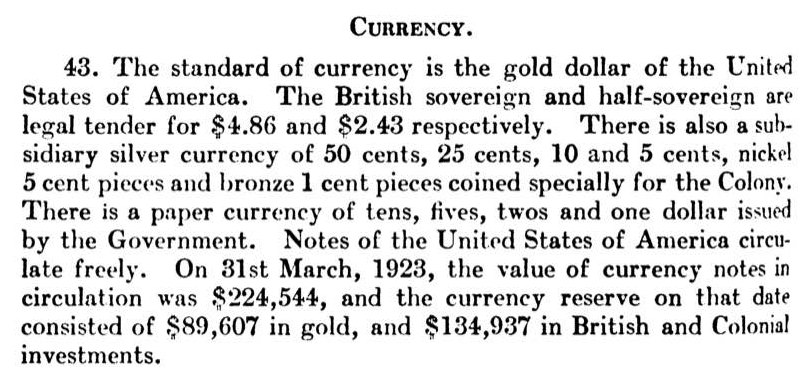
The annual report for 1922 says the Colony's only bank, the Royal Bank of Canada, was not allowed to circulate notes of its own and had to use the Government's, while notes of the United States circulated freely.
Demonetised on 1st May 1940
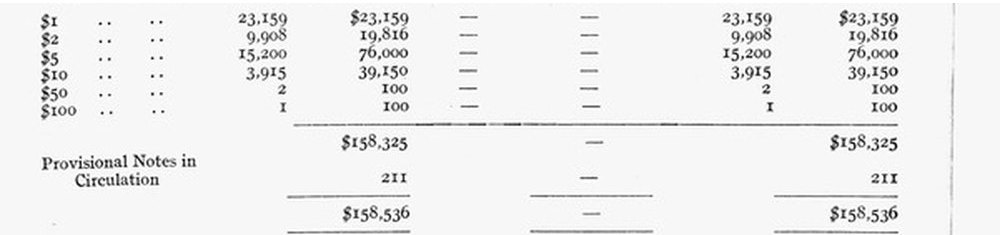
The statement of the Board of Commissioners of Currency for 30th June 1940, printed in the British Honduras Gazette, lists the notes of before 1939 as the "Old Issue (demonetised 1st May, 1940)", under a Proclamation of 1939. It counts the old notes by value, without dividing them by issue.
| Value | In circulation on 30th June 1939 | Still out on 30th June 1940 |
|---|---|---|
| 1 dollar | 45,497 | 23,159 |
| 2 dollars | 18,333 | 9,908 |
| 5 dollars | 27,378 | 15,200 |
| 10 dollars | 5,508 | 3,915 |
| 50 dollars | 2 | 2 |
| 100 dollars | 1 | 1 |
The two 50 dollars and the one 100 dollars were the only notes of those values, of all the issues before 1939, in circulation on 30th June 1939, and the same notes were still out a year later.
What is not known
- The text of the Ordinance of 1894 and of the Proclamation of 1939 is not quoted on the Pick pages.
- No source on the pages gives the numbers printed of the notes of 1894, or of 1924 and 1928.
- The figures of notes issued stop at 26th March 1916. Nothing on the pages counts the notes dated 1919 and 1920.
- Sources mention a split of the 1 dollar of 1895 by a perforated against a straight left edge. The pages divide the same notes by signature, and do not say how the two splits relate.
- Stack's Bowers says specimens of the 50 and 100 dollars of 1924 to 1928 are known. None is recorded on the Pick pages.
Sources
- The Pick pages of this catalogue for British Honduras, P-1 to P-19 and the unlisted 10 dollars and 25 dollars.
- The annual reports on British Honduras for 1908, 1911, 1913, 1922, 1924 to 1928 and 1930; the Economic Survey of the Colonial Empire for 1932.
- The British Honduras Gazette: statement of the Board of Commissioners of Currency for 30th June 1940.
- Stack's Bowers, 12 January 2018, lots 30070 and 30071; 12 August 2024, lot 30063; 8 May 2025, lot 50058; 29 August 2025, lot 30035.
- Heritage Auctions, 9 November 2023, lots 24112 and 24113; 14 October 2026, lot 24058.
- Spink, 27 October 2021, lot 19; 23 September 2025, lot 152; 25 June 2026, lot 59.
- Noble Numismatics, 25 July 2017, lot 3460. Noonans, 27 November 2025, lot 328.
- Central Bank of Belize, "History of Currency", https://centralbank.org.bz/history-of-belize-currency
Member comments
Log in or register to post a comment.