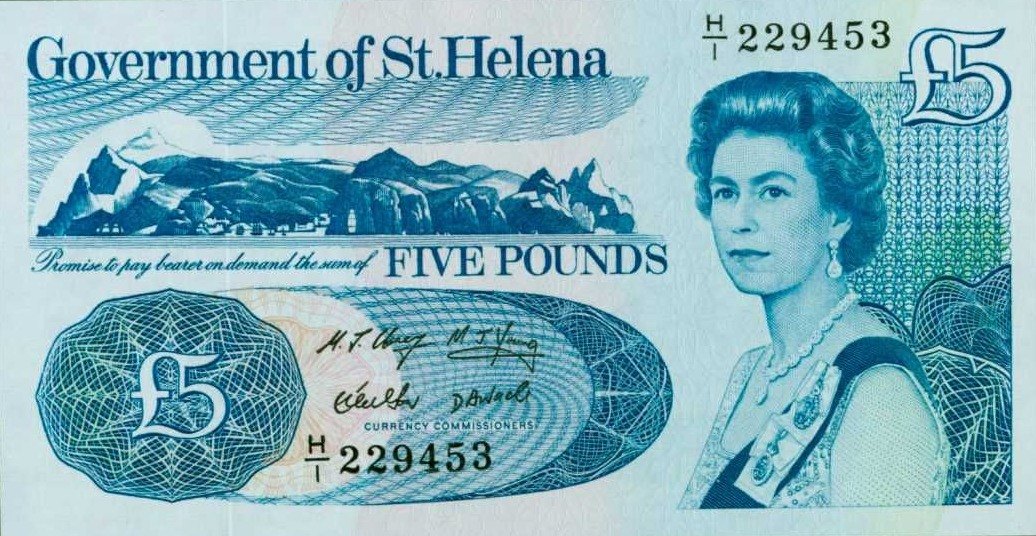
Every note of Saint Helena since 1976 has been issued under one law, the Currency Ordinance, 1975. This article sets out what that law says, from the consolidated text on the St Helena Government's website, and what the Commissioners' own accounts of the Currency Fund record for the years 2011 to 2021. The notes themselves are in The notes of the Government of St. Helena, 1976 to 2026.
The Ordinance and its dates
The Currency Ordinance, 1975, is Ordinance 7 of 1975. The consolidated text gives three days on which it came into force: 19 December 1975 (G.N. 35/1975), 2 February 1976 (G.N. 5/1976) and 1 October 1976 (G.N. 38/1976). The second is the day the first 1 pound and 5 pounds were issued. The text lists amendments by Ordinances 6 of 1985, 4 of 1994, 6 of 1998, 13 of 2007, 8 of 2016, 7 of 2019 and 11 of 2025. It is the law as it stands now, in modern drafting, and not the wording of 1975.
Section 3 makes the St Helena pound the unit of currency, divided into 100 pence. Section 4 says it "is to have parity with the pound sterling".
The Commissioners and the issue
Section 5 says there are to be "not less than 3 and not more than 4 Commissioners of Currency", who are the holders of those public offices in St Helena that the Governor appoints with the approval of the Secretary of State. Any two Commissioners acting together may carry out any duty or use any power of the Commissioners. They must meet at least once in six months.
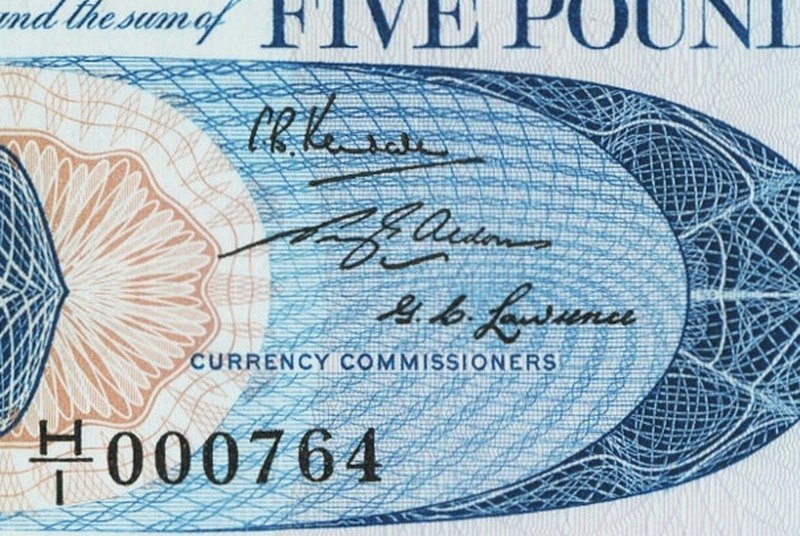
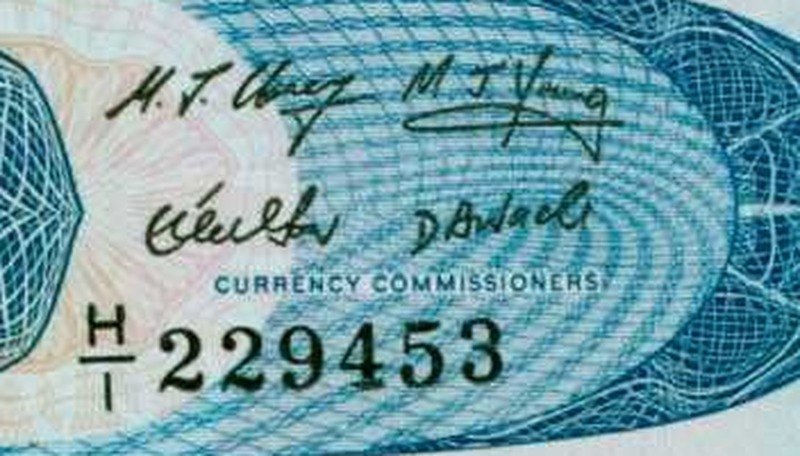
Section 6 gives the Commissioners, on behalf of the Government of St Helena, the sole right to issue notes and coins in St Helena. For notes they must:
- arrange for printing notes of the values, form and design, from the plates, on the paper and authenticated in the manner that the Governor specifies by Proclamation, made with the approval of the Secretary of State;
- issue, reissue, withdraw and, at their discretion, exchange notes at Jamestown and at offices and agencies elsewhere in St Helena;
- arrange for the security of the notes.
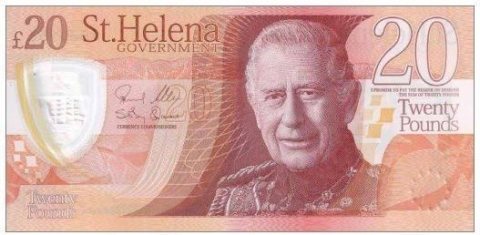
So each new note has a Proclamation behind it that describes the note. The one for the polymer notes is Legal Notice No. 2 of 2026; it is read in St Helena's polymer notes of January 2026. The Proclamations for the earlier notes were not found.
Legal tender, calling in and notes that are not paid
By section 9 the notes are legal tender for the payment of any amount. A note that has been "illegally dealt with" is not: that is a note impaired otherwise than by fair wear, or defaced by any name, word, device or number stamped on it.
Section 21 keeps the older money. Bank of England notes remain legal tender in St Helena at their face value for any amount, and United Kingdom coin within the limits set for coin. The Governor may by notice in the Gazette name a day on which they cease to be so.
Section 10 is the rule for withdrawing an issue. With the approval of the Secretary of State, the Governor may declare by notice in the Gazette that any notes cease to be legal tender from a named day. The holders may still claim their value at any time. Five years after the day, a sum equal to the face value of the notes still outstanding is moved from the Currency Fund to the Consolidated Fund of St Helena and written off the Fund's liabilities, and later claims are paid from the Consolidated Fund.
Section 11 says that no person is entitled to recover from the Commissioners the value of any lost, stolen, mutilated or imperfect note, or of a note illegally dealt with; a refund as an act of grace is at the Commissioners' discretion.
The Currency Fund
Section 12 obliges the Commissioners to buy or sell sterling on demand, for delivery in London, against St Helena pounds at par. The Currency Regulations, 1976 set the least sum at 10,000 pounds and the commission at 0.5 per cent for the Bank of St Helena or the Treasury and 1 per cent for anyone else.
Section 13 sets up the Currency Fund, into which all sums due to the Commissioners are paid. At least 10 per cent of the Fund's demand liabilities, which are the notes and coins in circulation and certain deposits, must be held in liquid form: United Kingdom notes and coin, balances with approved London banks or with the Crown Agents, United Kingdom Treasury Bills, or money at call. The rest must be invested in securities of or guaranteed by the United Kingdom Government that mature within ten years, except that up to 30 per cent may be placed in securities of the Government of St Helena. Section 20 obliges the Government to make good any shortfall of the Fund's assets against its liabilities. A note to the accounts for 2011-12 says the investments are managed by the Crown Agents and that the Fund serves St Helena and Ascension.
The Regulations of 1976 also order the Commissioners to make rules for the safe keeping of unissued and redeemed currency, for the custody and destruction of the plates and paper for printing notes, and for the destruction of notes withdrawn from circulation, with proper books of the issue, redemption and stock of notes.
Who the Commissioners were, 2012 to 2021
The accounts name the Commissioners by office, not by name. In 2012-13 they were the Chief Secretary, who took the chair, the Financial Secretary, the Assistant Financial Secretary and the Deputy Chief Secretary. In 2013-14 and 2014-15 they were the Chief Secretary, the Financial Secretary, the Assistant Chief Secretary (Support) and the Assistant Financial Secretary. From 2017-18 to 2020-21 they were the Chief Secretary, the Financial Secretary, the Deputy Chief Secretary and the Deputy Financial Secretary.
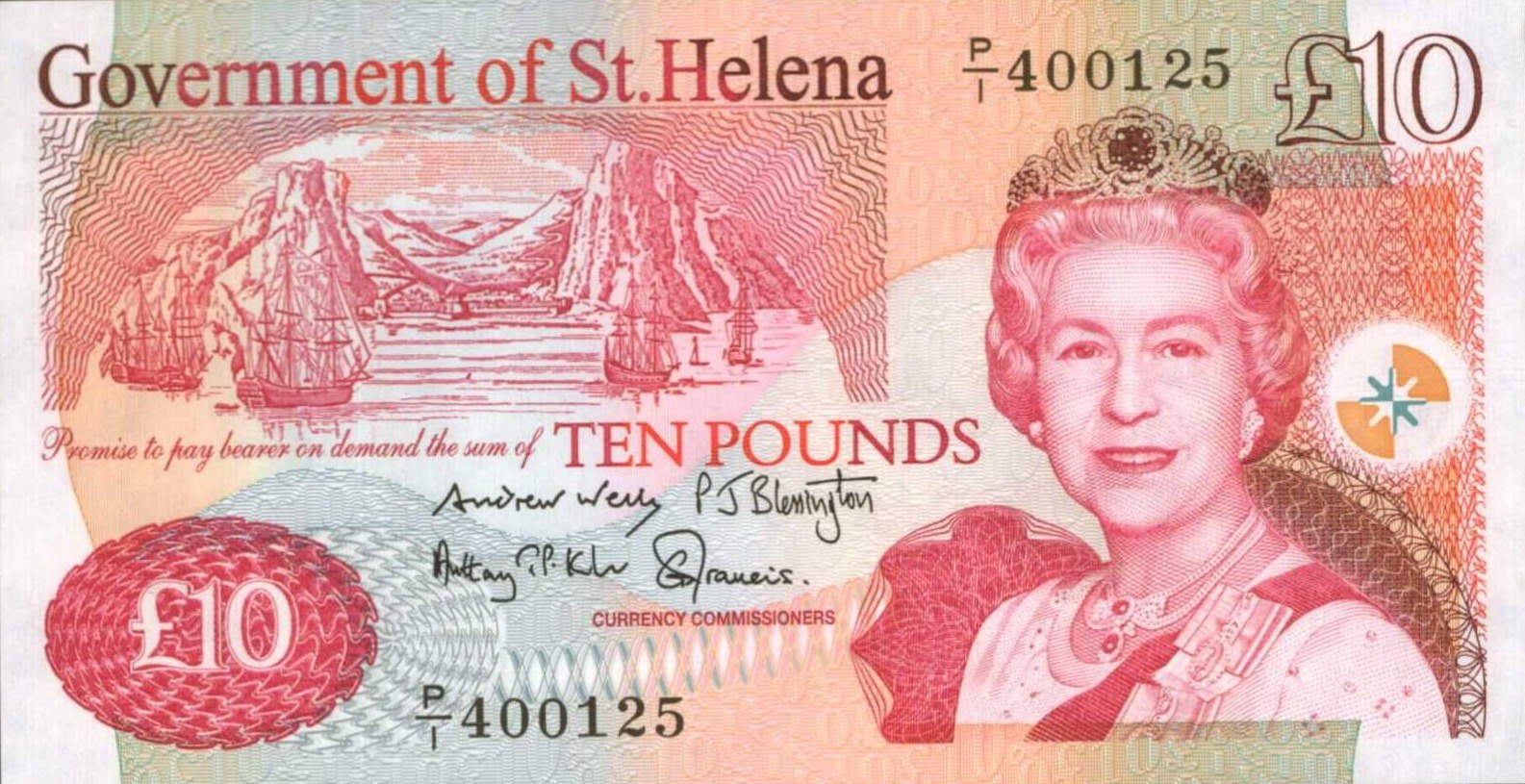
Only the officer who signed the accounts is named. Colin Owen signed as Financial Secretary for 2013-14 and 2014-15. Dax Richards signed as Financial Secretary and Commissioner of Currency for 2017-18, 2019-20 and 2020-21, and Nicholas Yon as Acting Financial Secretary and Commissioner of Currency for 2018-19. Richards and Yon are two of the four signers of the notes of 2026. The accounts do not say which offices were held by Wells, Blessington, Kilner and Francis, who sign the notes of 2012, and they do not say whether the Yon of 2019 is the Yon who signs the 5 pounds of 1998 and the notes of 2004.
The auditor's management letter on the accounts for 2015-16 records that some small issues of currency that year were authorised by one Commissioner only, where section 5 asks for two.
Notes in circulation, 2011 to 2021
The accounts give the notes in circulation at 31 March of each year by value, in pounds. They give no count of notes. Only three values are listed: no 1 pound and no 50 pence note appears in any year, and the accounts do not say when those two values ceased to be counted.
| 31 March | 20 pounds | 10 pounds | 5 pounds | All notes |
|---|---|---|---|---|
| 2011 | 2,035,980 | 1,453,000 | 279,990 | 3,768,970 |
| 2012 | 2,090,980 | 1,503,000 | 329,990 | 3,923,970 |
| 2013 | 2,110,980 | 1,513,000 | 329,990 | 3,953,970 |
| 2014 | 2,148,980 | 1,804,000 | 318,990 | 4,271,970 |
| 2015 | 2,273,980 | 1,929,000 | 326,990 | 4,529,970 |
| 2017 | 2,322,980 | 1,974,000 | 390,990 | 4,687,970 |
| 2018 | 2,321,980 | 1,900,000 | 349,990 | 4,571,970 |
| 2019 | 2,284,980 | 1,865,000 | 360,990 | 4,510,970 |
| 2020 | 2,254,980 | 1,822,000 | 358,990 | 4,435,970 |
| 2021 | 2,371,980 | 1,765,000 | 373,990 | 4,510,970 |
The accounts for 2015-16 and 2016-17 were not read, so 2016 is missing; the figures for 2017 come from the comparison column of the next year. The accounts for 2011-12 and 2012-13 also give the notes put out and taken in: 574,980 pounds released and 259,000 pounds withdrawn in the year to 31 March 2011, 350,000 pounds released and 195,000 pounds withdrawn in the year to 31 March 2012, and 30,000 pounds released and none withdrawn in the year to 31 March 2013.
A note to the accounts for 2019-20 warns how these figures are made. The Fund assumes that every note issued and not returned is still in circulation and still payable. It does not write off notes that have been lost or destroyed, so the totals may include notes that no longer exist.
The printing dated 2012 and the stock in the vault
The Commissioners' report for 2011-12 records "a final payment on the printing of new circulation notes dated 2012 costing £130,500 which was released in March 2012". The income and expenditure account shows 130,510 pounds for the printing of notes in 2010-11 and 130,500 pounds in 2011-12, with the remark that the printing is a one-off item spread over two years and that the notes should meet the island's need for cash for the foreseeable future. The words "released in March 2012" can be read of the notes or of the payment; the accounts do not settle it. Neither the printer nor the values printed are named. The catalogue has two notes dated 2012, the 10 pounds and the 20 pounds, both printed by De La Rue.
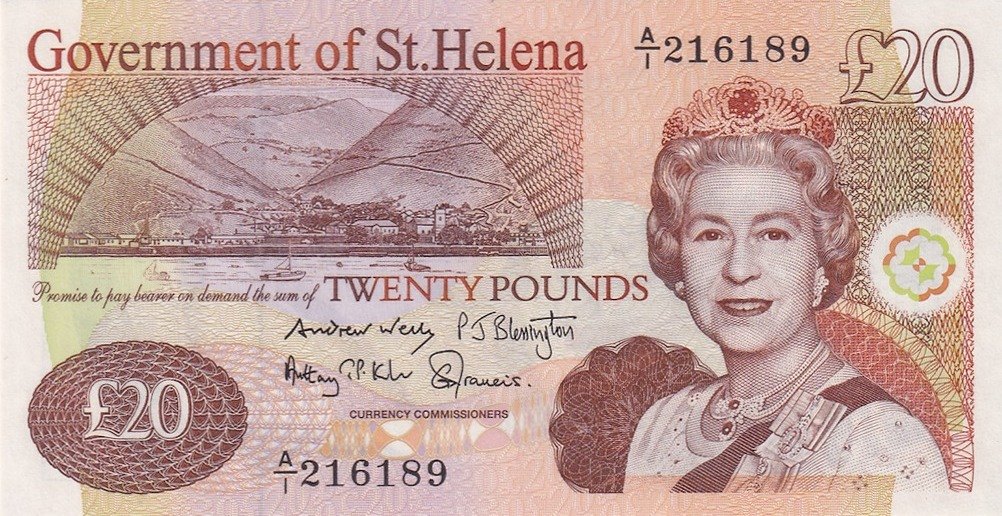
No notes were printed in 2012-13, and no later accounts that were read, to 2020-21, show a new order. From 2013-14 the accounts show the stock of unissued notes at what it cost to print: 328,711 pounds at 31 March 2013, 266,929 in 2014, 223,599 in 2015, 200,979 in 2017, 190,192 in 2018, 186,192 in 2019, 183,192 in 2020 and 173,978 in 2021. These are costs, not face values, and no number of notes is given. A note to the accounts for 2020-21 says the cost of the old stock is reckoned from invoices available from 2012-13.
The auditor qualified the accounts for 2013-14 and 2014-15 because the unissued notes and coins had not been counted at the year end. The management letter of 4 April 2016 says that no count was made at 31 March 2014 and that the first was made on 28 May 2015. It found the handwritten Vault Register unreliable, with missing signatures and alterations, and records that a spreadsheet and vault movement slips replaced it. The letter on 2015-16 adds that sealed boxes of currency in the vault were so poorly marked that it was hard to tell which value each held. The audit opinion for 2017-18 is without qualification.
What these papers do not give
The law and the accounts leave a collector's questions open. They name no printer before the press release of 2026. They give no number of notes printed, issued or destroyed for any value. They record no destruction of notes and no notice calling in any issue. And the Commissioners who signed the notes of 1986, 1998, 2004 and 2012 are not matched to their offices in anything read here.
Sources
- Currency Ordinance, 1975 (Ordinance 7 of 1975), and Currency Regulations, 1976 (Legal Notice 20 of 1976), consolidated text of 7 July 2025 in the St Helena Revised Edition of the Laws, 2017, on the St Helena Government's website.
- St Helena Currency Commissioners, accounts of the Currency Fund for 2011-12, and financial statements for 2012-13, 2013-14, 2014-15, 2017-18, 2018-19, 2019-20 and 2020-21.
- Management letters of the auditor on the Currency Fund for 2013-14 and 2014-15 (4 April 2016) and for 2015-16 (16 November 2016).
- The catalogue's pages for the notes of Saint Helena.
Member comments
Log in or register to post a comment.