This article sets out who signed the currency notes of the Straits Settlements and what office each signer held, as far as the Pick pages can show it from the Blue Books of the Colony for 1917, 1919, 1925, 1932 and 1933 and the earlier Blue Books. It covers the notes with three signatures and those for which the pages name one signer. Where the pages name no signer for a date, that is said.
Three Commissioners of Currency
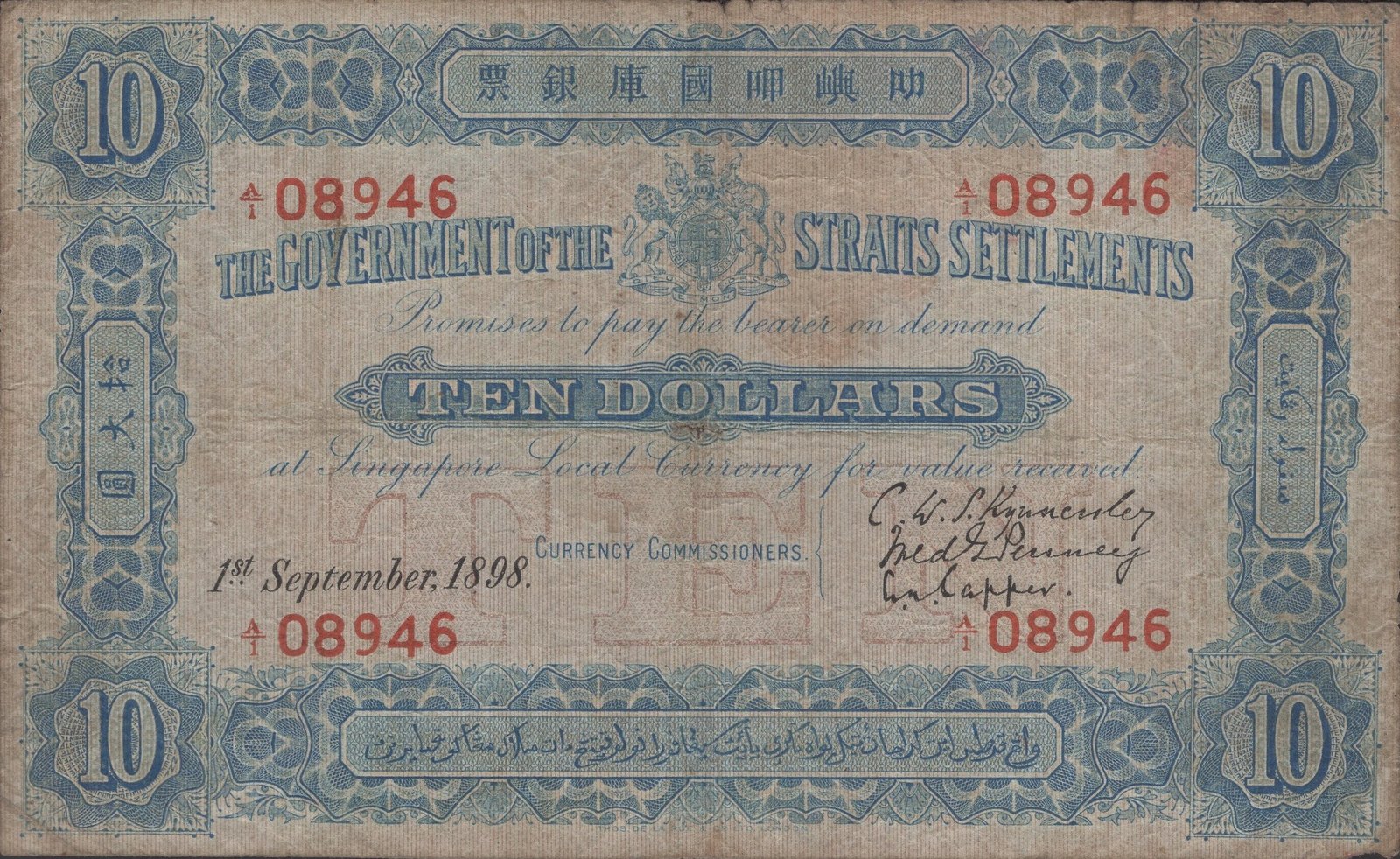
The Ordinance of 1897 and the Currency Note Ordinance 1899 both named three Commissioners of Currency: the Colonial Secretary, the Treasurer and one member named by the Governor. That is why the notes carry three signatures. On the notes of 1898 to 1901 each date has its own set of three. J. O. Anthonisz credits the first issue to Alexander Swettenham, the Colonial Secretary, and F. G. Penney, the Treasurer; the pages do not say whose signatures stand on the notes of 1898, 1900 and 1901.
The sets of three, 1909 to 1921
The Blue Books show who the first two signers were on the 1 dollar, the 5 dollars and the 10 dollars of two dates:
- On the notes of 8th June 1909: the Colonial Secretary, A. H. Young, in office from 28th June 1906, and the Treasurer, J. O. Anthonisz, in office from 8th May 1908.
- On the notes of 17th March 1911: the second signature is that of W. C. Michell, acting Treasurer from 27th July 1910.
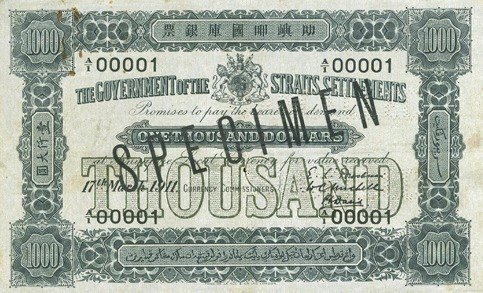
Spink's description of the 1,000 dollars of 17th March 1911 (5 July 2008, lot 0A) names the Commissioners on that note as Brockman, Michell and David. That is the house's reading; the pages give no office for Brockman or David.
The notes of 10th July 1916 and 20th June 1921 carry the same three signatures, so on the 1, 5 and 10 dollars only the printed date and the prefix tell the two apart. The pages do not name the signers of 2nd January 1914, 4th March 1915, 10th July 1916, 20th June 1921 or 5th September 1924.
The portrait notes of 1916 to 1933
| Date | Signers named on the pages | Notes |
|---|---|---|
| 7th March 1916 | Maxwell, Pountney and Saunders | 50 and 100 dollars |
| 1st September 1919 | Pountney alone | 1,000 dollars |
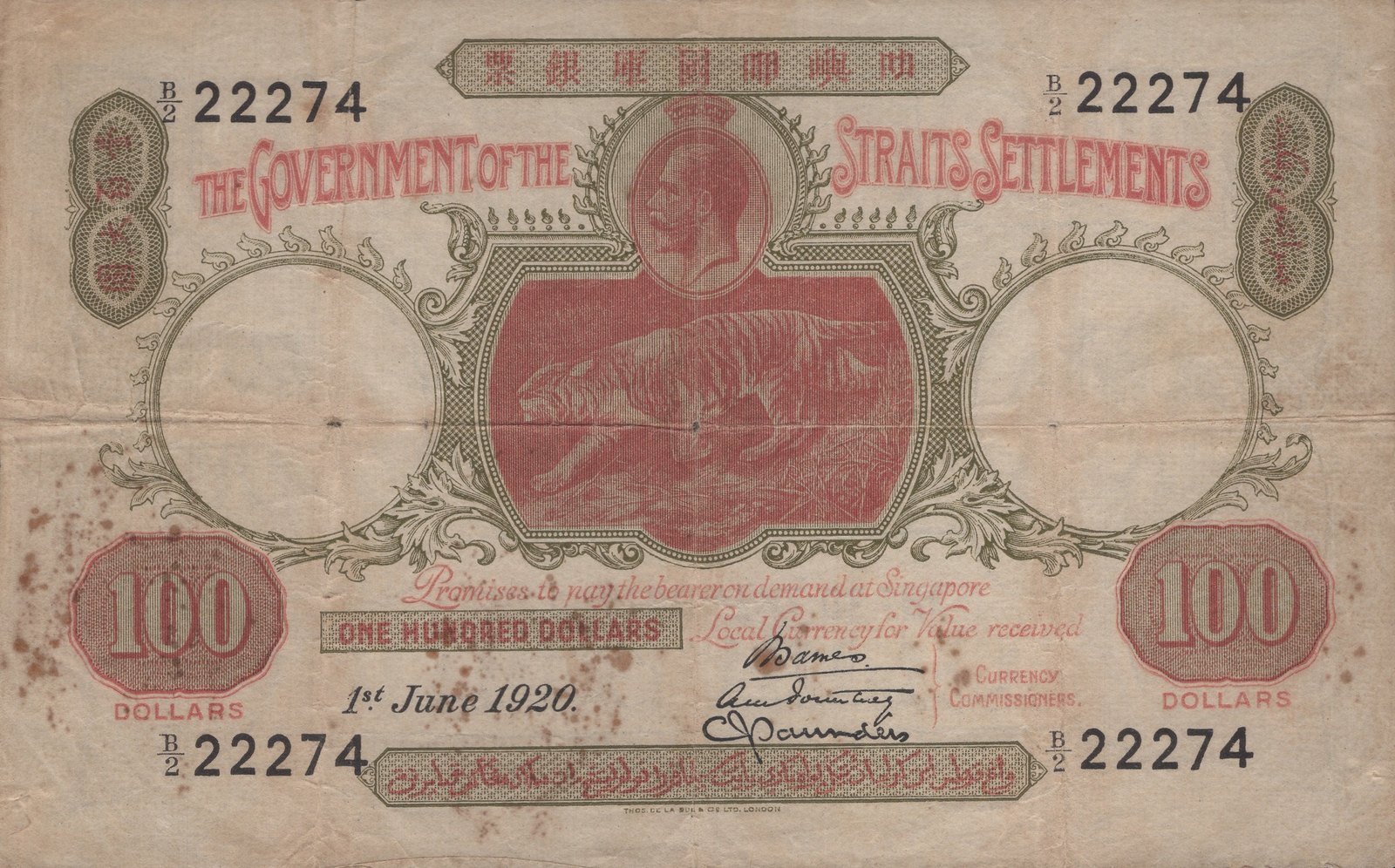
| 1st June 1920 | James, Pountney and Saunders | 50 and 100 dollars |
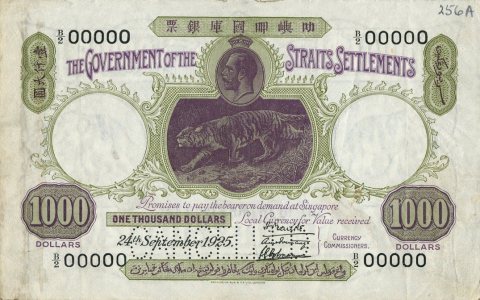
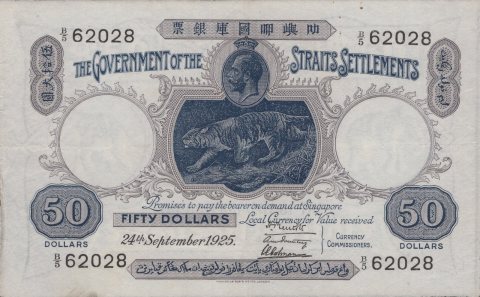
| 24th September 1925 | Marriott, by the dates of office the pages give | 50, 100, 1,000 and 10,000 dollars |
| 1st November 1927 | not named | 50 and 100 dollars |
| 1st October 1930 | Scott and Shelley among them | 50, 1,000 and 10,000 dollars |
| 8th December 1933 | Caldecott and Small among them | 50, 100, 1,000 and 10,000 dollars |
The Blue Books for 1925, 1932 and 1933 show these signers in office. Marriott was acting Colonial Secretary from 7th November 1924 to 10th April 1925 and again from 8th May 1925. Scott sat as Colonial Secretary from 12th February 1929 to 11th August 1933 and Shelley as Treasurer from 7th May 1928 to 21st June 1932; they are the signers of 1st October 1930. Caldecott became Colonial Secretary on 8th December 1933, the date printed on the last notes, with Small as Treasurer from 22nd June 1932.
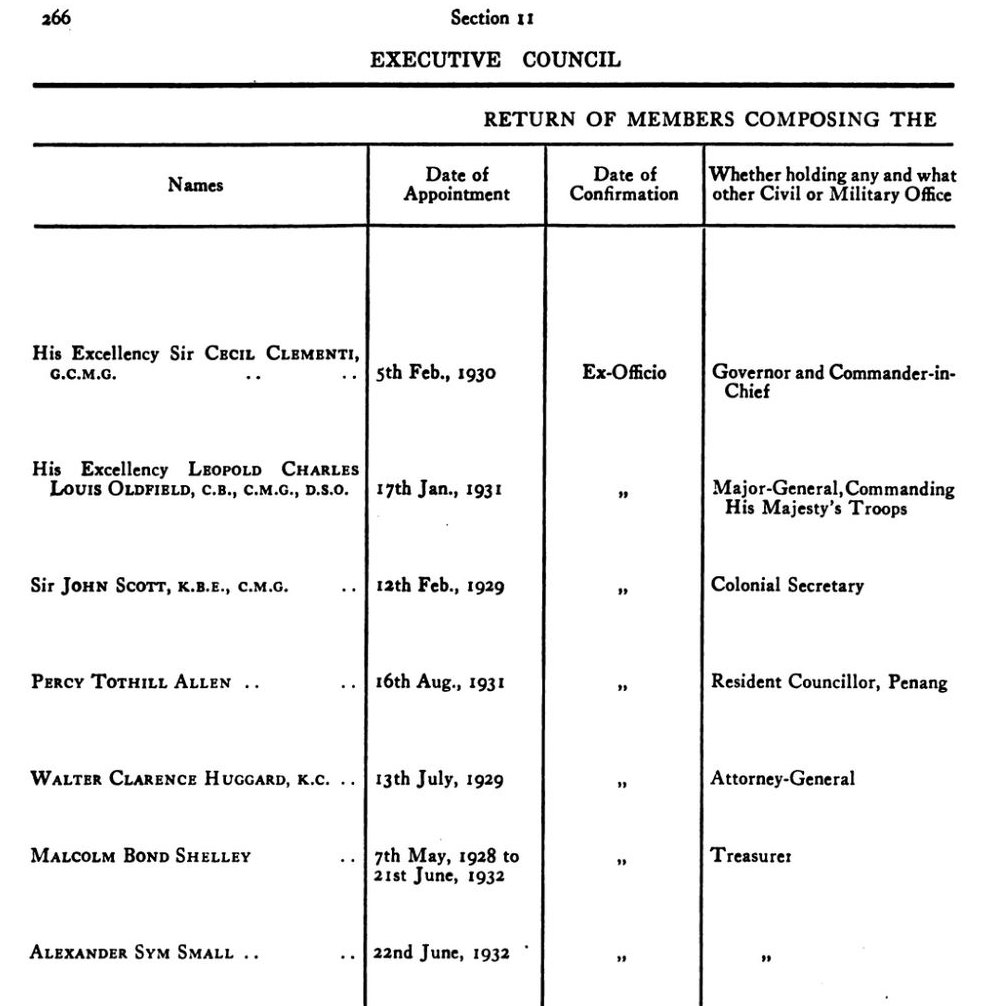
These dates of office stood on the pages of the 50 dollars of 1925 to 1933, the 100 dollars of 1925 to 1933, the 1,000 dollars and the 10,000 dollars. The pages name Maxwell, James and Saunders by surname only, without an office.
One signer: the small notes of 1917 to 1920
The pages name one signer, the Treasurer or acting Treasurer, on each of the notes for less than a dollar. On the 10 cents of 1917 to 1920 the notes of 1917 and 1918 are signed by Hayes Marriott as Ag. Treasurer and those of 1919 and 1920 by Arthur Meek Pountney as Treasurer. The 25 cents of 1917 is signed by Marriott as Ag. Treasurer.
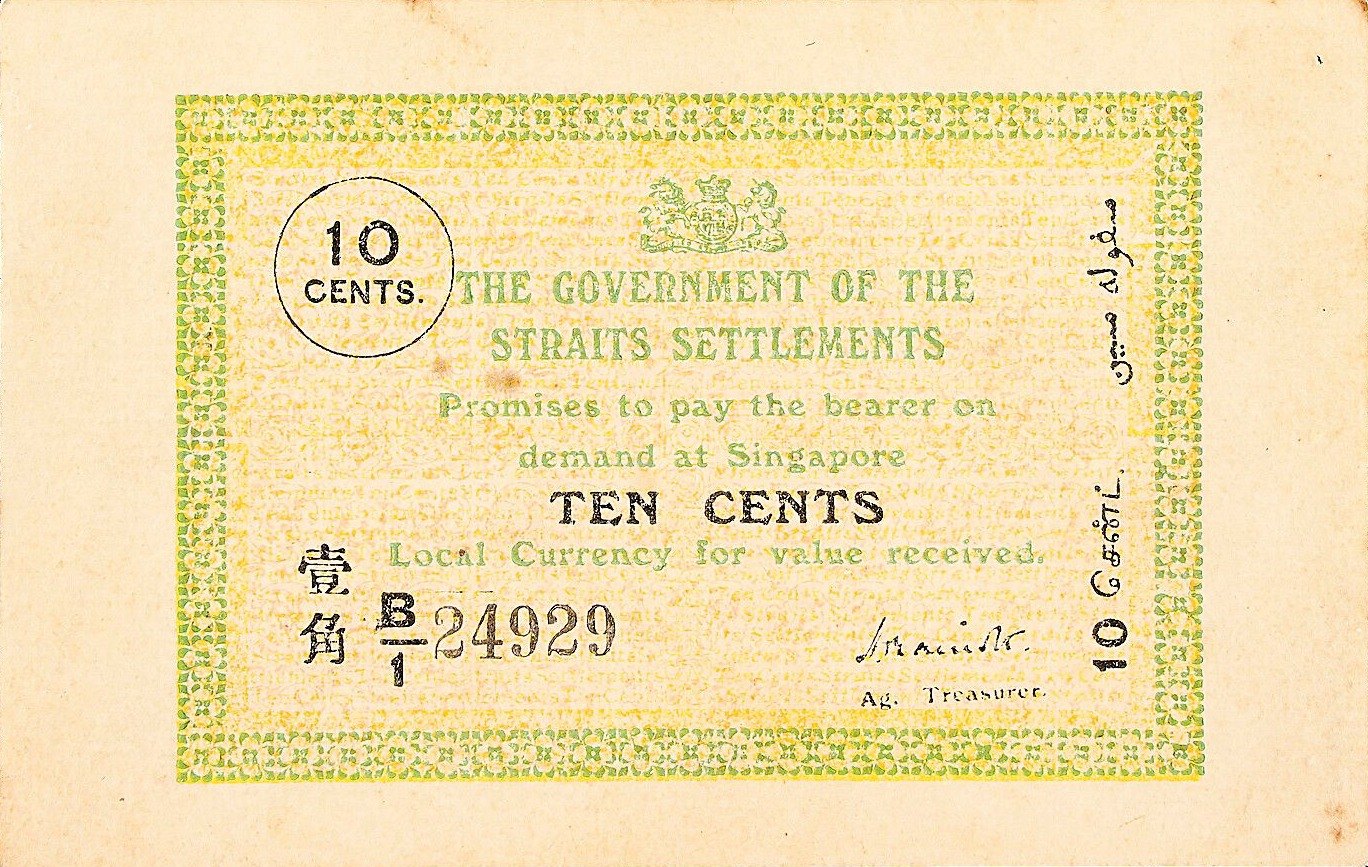
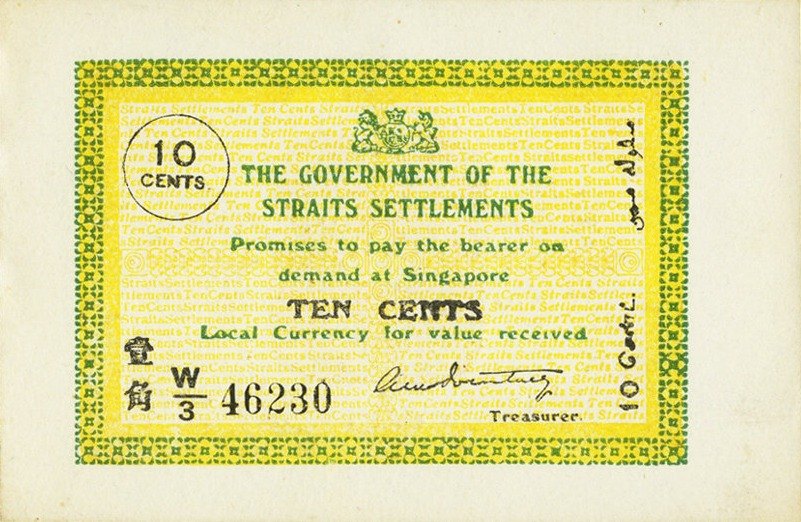
The Blue Book for 1917 lists Pountney in the Executive Council as Treasurer until 17th January 1917 and Marriott as Acting Treasurer from 18th January 1917. The Blue Book for 1919 has Pountney back as Treasurer from 11th December 1918.
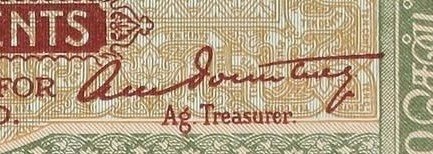
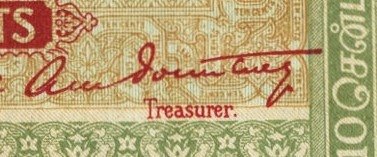
The 10 cents dated 14th October 1919 does not fit this neatly. Every note photographed is signed Pountney, but the title printed under the signature is Ag. Treasurer on the first prefixes (A/1 to A/13 and A/15) and Treasurer on the rest (A/16 to G/61). By the Blue Book for 1919 Pountney had been Treasurer again since 11th December 1918, ten months before the date on the note. The pages do not explain the title on the first prefixes.
One signer: the 1, 5 and 10 dollars of 1925 to 1935
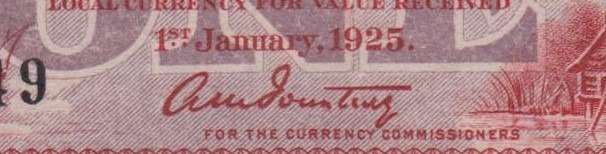
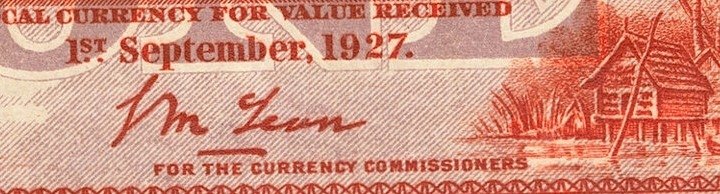
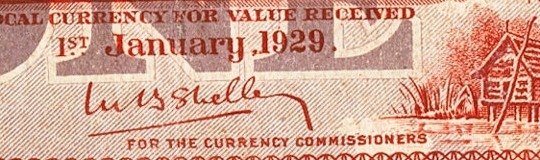
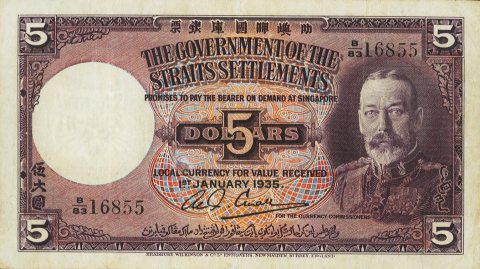
From 1st January 1925 the 1 dollar, the 5 dollars and the 10 dollars have one signer named for each date, and so do the 1 dollar, the 5 dollars and the 10 dollars of 1931 to 1935.
| Date on the note | Signer | In office as Treasurer (Blue Book for 1932) |
|---|---|---|
| 1st January 1925 | Pountney | not given on the pages |
| 1st September 1927 | McLean | not given on the pages |
| 1st January 1929 and 1930 | Shelley | 7th May 1928 to 21st June 1932 |
| 1st January 1931 and 1932 | Shelley | 7th May 1928 to 21st June 1932 |
| 1st January 1933, 1934 and 1935 | Small | from 22nd June 1932 |
Shelley and Small sat in the Executive Council as Treasurer for the periods shown.
What is not known
- The office of the third Commissioner on any date. The law says only that the Governor named that member.
- The signers of 1898, 1900 and 1901, of 1914 to 1924 on the 1, 5 and 10 dollars, and of 1st November 1927 on the high values.
- McLean's dates of office, and Pountney's after 1919.
- Why Pountney signs as Ag. Treasurer on the first prefixes of the 10 cents of 14th October 1919.
Sources
- Blue Books of the Straits Settlements for 1917, 1919, 1925, 1932 and 1933, and the earlier Blue Books cited on the Pick pages for Young, Anthonisz and Michell.
- J. O. Anthonisz, Treasurer of the Straits Settlements, as cited on the Pick pages.
- Spink, 5 July 2008, lot 0A (the Commissioners named on the 1,000 dollars of 1911).
Member comments
Log in or register to post a comment.