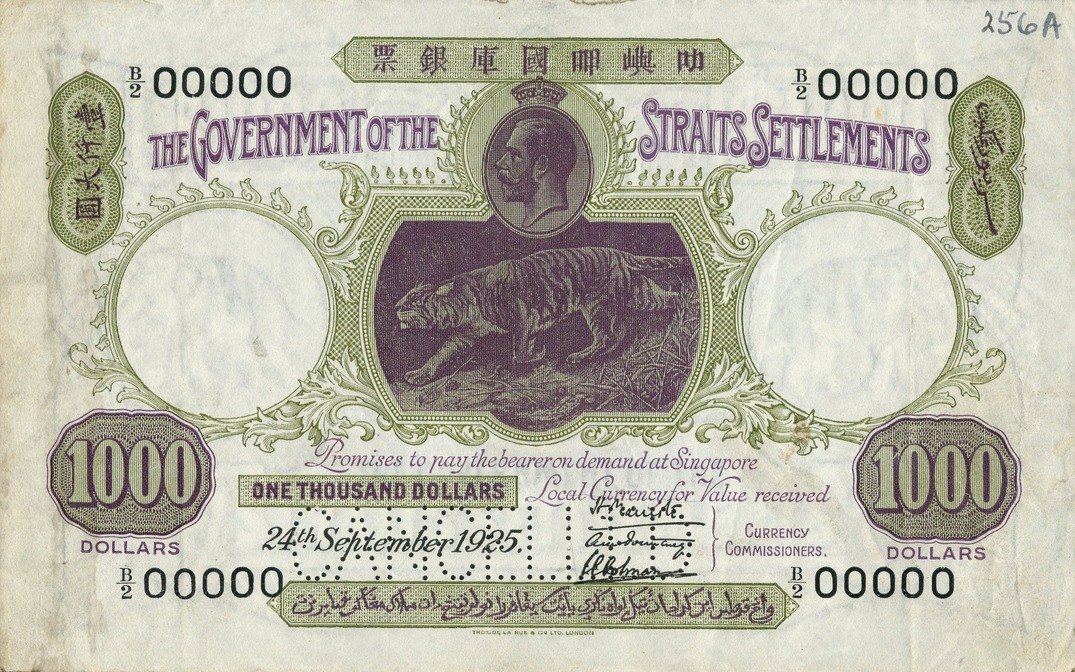
Two collectors' papers were read through for the notes of the Straits Settlements: the Journal of the International Bank Note Society (IBNS) and the newspaper Bank Note Reporter. Neither printed much on the Colony. This article gathers what they did print, sets each statement against the catalogue's pages and the official reports, and ends with the one report that the pages cannot yet confirm or dismiss: a pair of 1,000 dollars notes said to have been sold in Melbourne about the year 2000. No prices are given here.
C. C. Low's list in the IBNS Journal, 1967
The earliest piece is C. C. Low's "Straits Settlements Currency Notes (from 1898 to 1935)" in the IBNS Journal, volume 7, number 2, Christmas 1967. It is a dealer's checklist and names no sources. Three of its statements differ from the catalogue.
| Low in 1967 | The catalogue's pages | Where the difference stands |
|---|---|---|
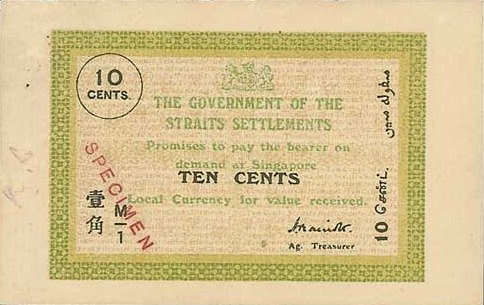
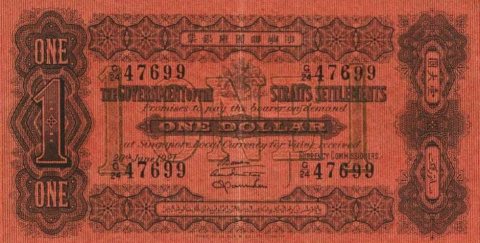
| The 1, 5 and 10 dollars of 1921 are dated 20th September 1921 (p. 14) | 20th June 1921 on the 1 dollar, the 5 dollars and the 10 dollars | The date on the pages is read from the notes. Low's September is taken as a misreading |
| The 1 dollar of the type of 10th July 1916 was also issued in 1915; no date of 1914 is listed (p. 14) | 2nd January 1914 and 4th March 1915 both have rows | Notes of both dates are on record |
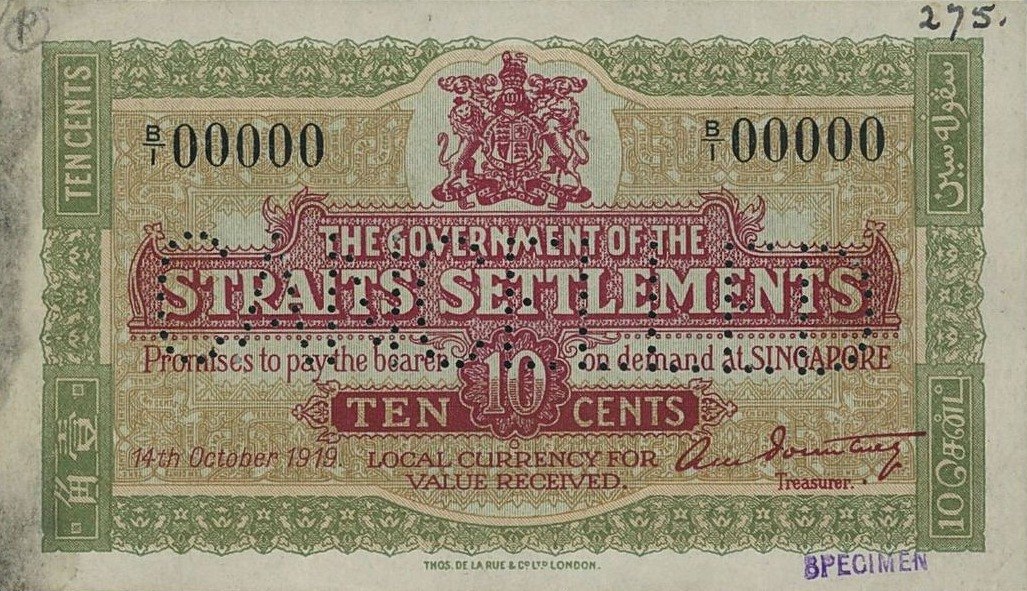
| The 10 and 25 cents of 1917 to 1920 were printed by the Government Printing Department, Singapore (p. 17) | Printer given as the Government Survey Office, Kuala Lumpur, for the 10 cents and the 25 cents | Not settled by an official source |
On the third point the official reports do not decide between the two. The annual reports for 1921 and 1922 divide the small notes into 10 cents notes "printed in United Kingdom", 10 cents notes "printed locally" and 25 cents notes "printed locally", and say no more about where. The split itself agrees with the catalogue, which gives the 10 cents of 14th October 1919 to Thomas de la Rue and the other two notes to a local printer. The catalogue keeps Kuala Lumpur on the strength of newer writing than Low's list.
A date new to the Standard Catalog, 1983
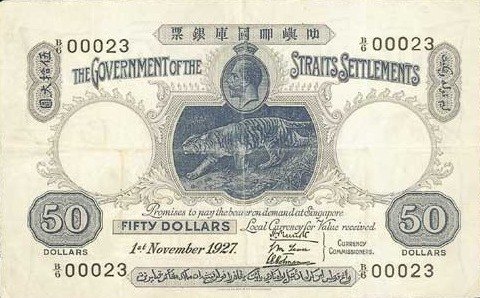
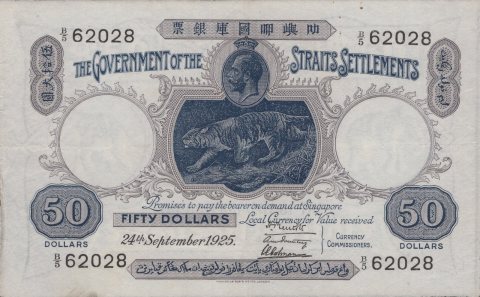
Bank Note Reporter of August 1983, p. 20, in its column "World Paper Money Update", pictured a 50 dollars dated 1st November 1927, numbered B/6 00023, as a date then new to the Standard Catalog of World Paper Money. The picture was shown by courtesy of Graham Neale of Ottawa. On the cut of the newspaper page the figures 00023 can be read in all four places and the prefix is too small to read. The date is a row of the catalogue today, and Heritage's descriptions of later sales reckon at most 100,000 notes of it, as told in how many notes were made as the auction houses put it.
The first sale reports from Singapore, 1988 and 1989
Bank Note Reporter of March 1988 reported the Spink-Taisei sale held in Singapore on 11th February 1988 and singled out a Very Fine 50 dollars of 1901. The report gives no lot number and no serial number, so the note cannot be matched to one known today. When the report was read, the earliest sale of that note in the catalogue was of 2005.
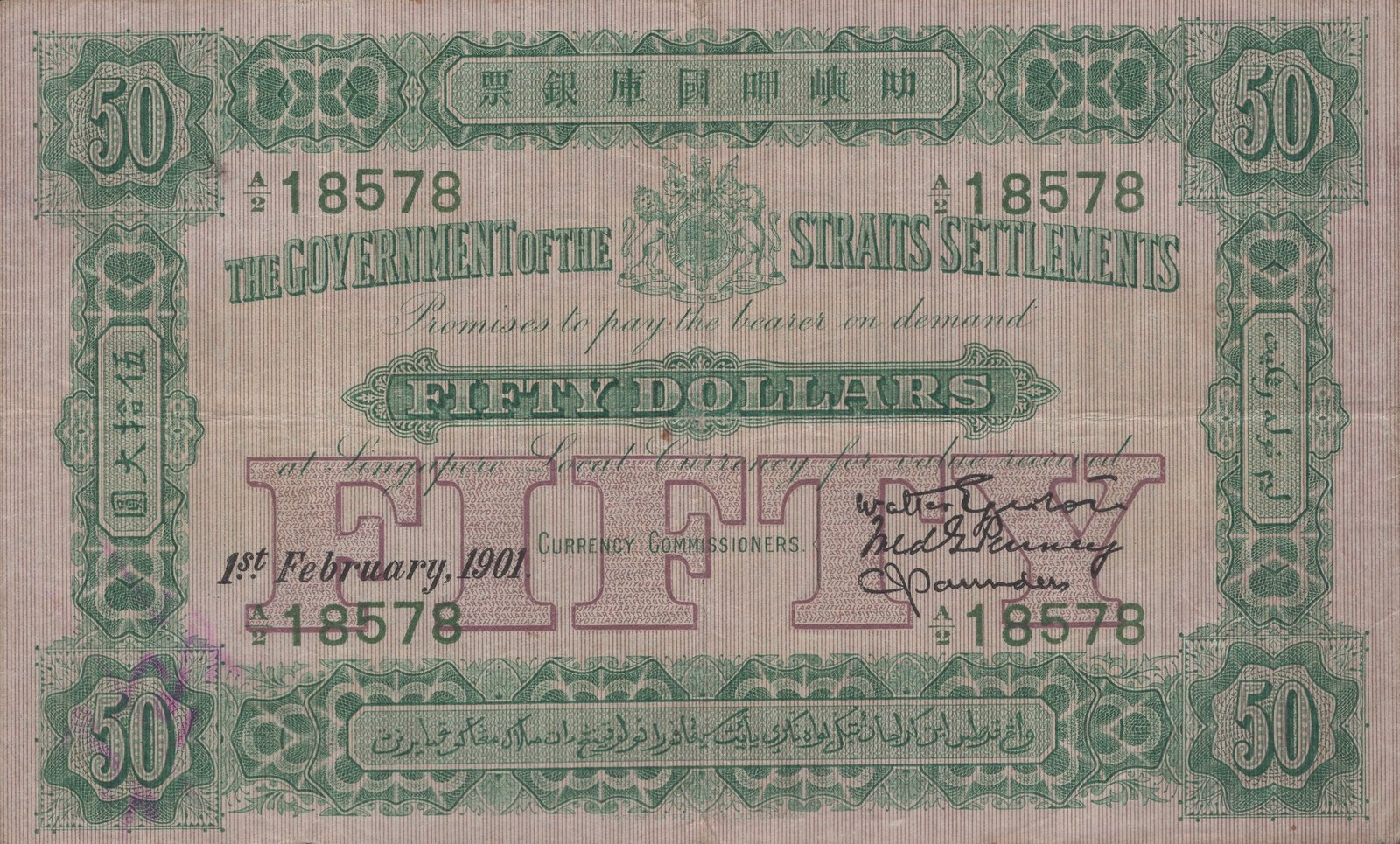
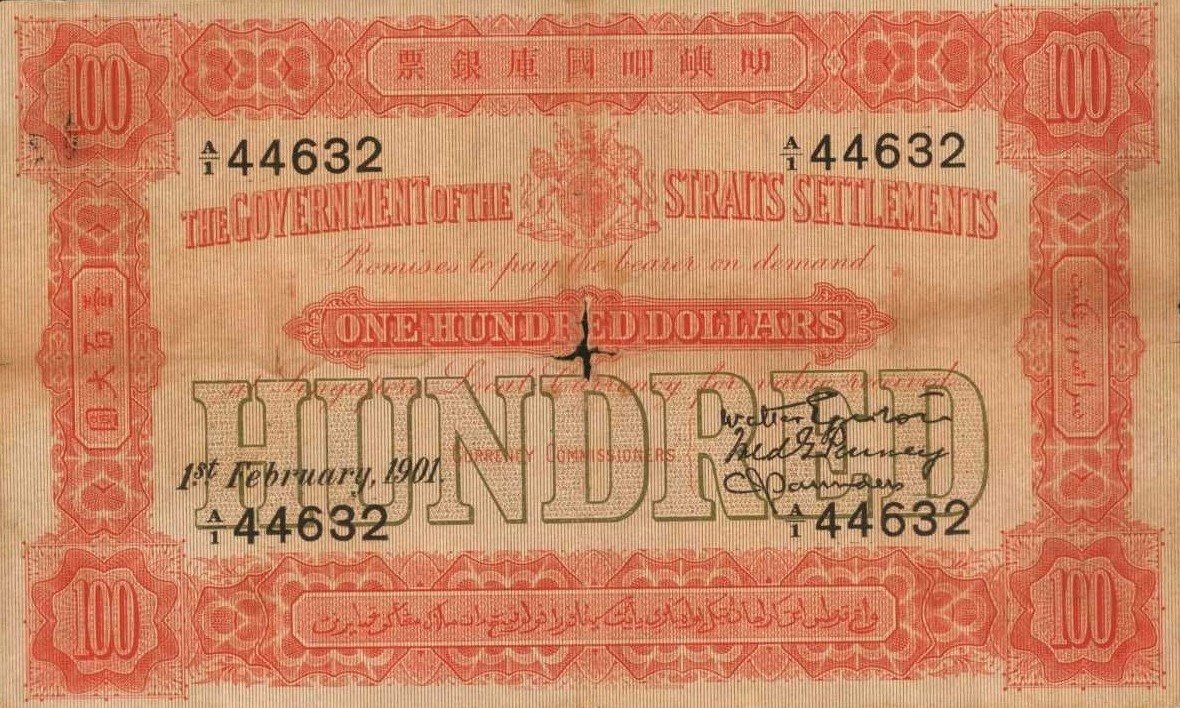
The issue of February 1989 previewed the next Spink-Taisei sale, of 23rd February 1989, with a Fine 100 dollars of 1st February 1901 and a 50 dollars to go with it. No result for that sale was found in the paper. In November 1989 the paper mentioned a 100 dollars of 1901 sold at an auction, without the house, the day or a number.
Pictures and slips, 2001 to 2022
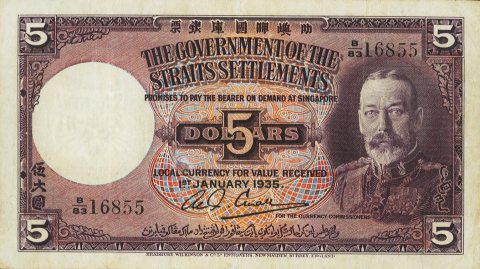
- November 2001, pp. 66 and 67. Seven of the Straits notes pictured have prefixes that cannot be read on the newspaper print: three 5 dollars of 1925, 1927 and 1929, and 10 dollars of 1921, 1925, 1930 and 1935. A caption on p. 66 dates a fourth 5 dollars "Sept. 1, 1930"; the note pictured reads 1st January 1930, and no 5 dollars of September 1930 exists on the page of that note.
- August 2009. The report of Spink's Singapore sale of 4th July 2009 describes a colour trial of the 5 dollars of 1st January 1925, like the issued note but in brown.
- November and December 2009. A preview and then Kerry Rodgers' report of Ponterio's Baltimore sale of November 2009 name a 1 dollar of 1st January 1933 and a 50 dollars of 24th September 1925. The report calls the 1 dollar P-16a, the letter of the Standard Catalog; in this catalogue the 1933 date is the third row of the 1 dollar of 1931 to 1935.
- February 2015. The report of Spink's London sale of 9th and 10th December 2014 mentions a trial printing of the tiger vignette of the 50 dollars, offered on its own.
- November 2015. The report of Spink's Singapore sale of 16th August 2015 mentions a cancelled 50 dollars of 1st February 1901. That lot, number 419, a note handstamped CANCELLED, was missing from the catalogue's record of the sale until the report was read.
- August 2021 and January 2022. Two advertisements of World Banknote Auctions picture 1 dollar notes of 1st January 1934 in grading holders whose labels say Pick 16a. The date on both notes puts them on the row of 1934.
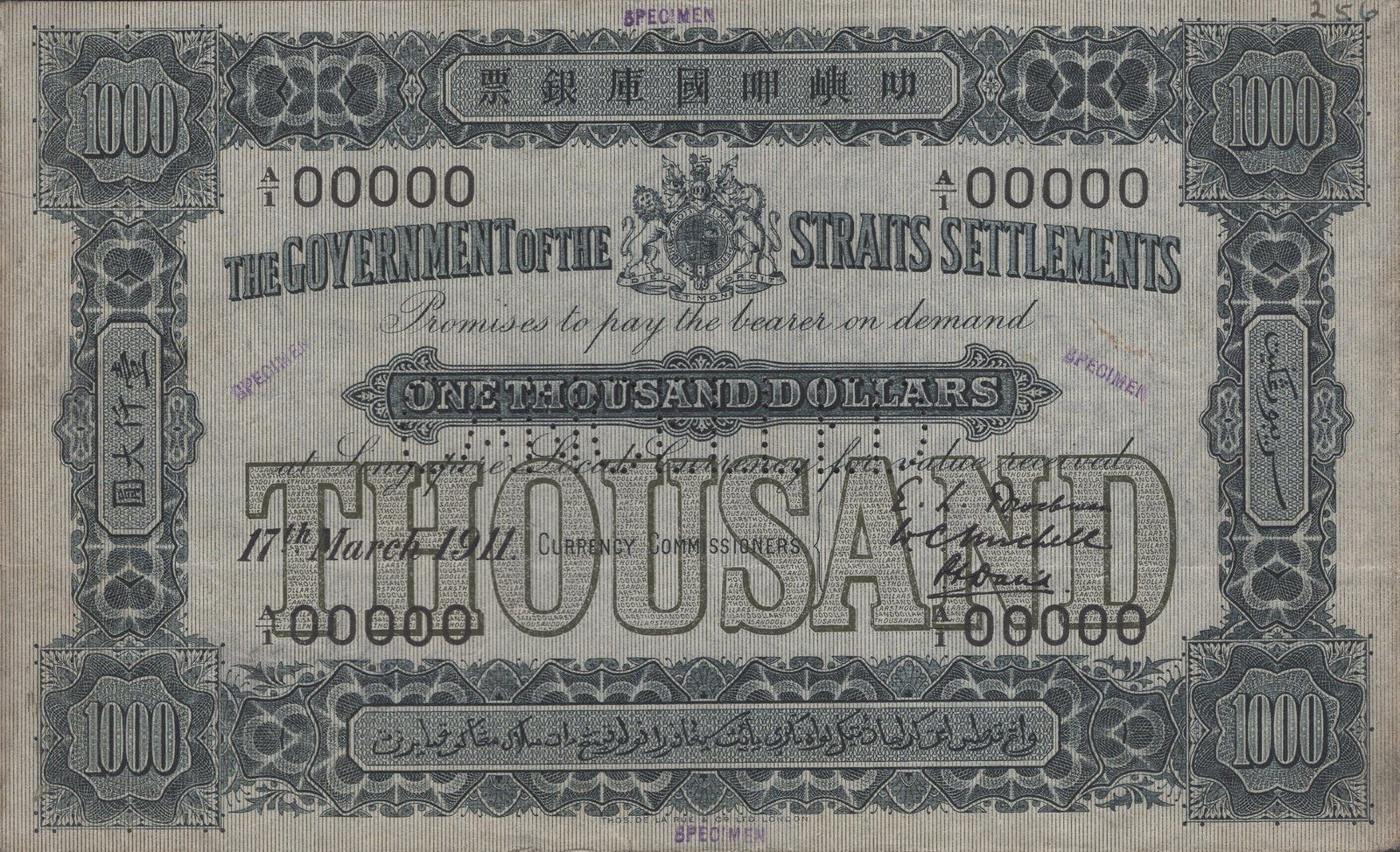
The IBNS Journal adds one thing of the same kind. A Spink advertisement in volume 47, number 4, calls the 1,000 dollars of 17th March 1911 numbered A/1 00001 an issued note. The picture in the advertisement shows the SPECIMEN overprint, and the catalogue records the piece as a specimen from Spink's sale of 5 July 2008 (lot 0A).
Bank Note Reporter of December 1985, p. 9, also wrote on the notes of the New Oriental Bank, the Asiatic Banking Corporation, the Hongkong and Shanghai Bank and the Chartered Bank in the Straits. Those are commercial banks' notes, which this catalogue does not list.
The report of 2006: two 1,000 dollars sold in Melbourne
The catalogue's page of the 1,000 dollars of 1919 to 1933 says the note is known only from specimens and that no issued example is confirmed. One passage in Bank Note Reporter says otherwise.
In March 2006, on its printed page 79, the paper previewed a Noble sale and looked back: six years before, a pair of Straits Settlements notes of this type, dated 1st September 1919, had been sold in Melbourne. It went on to cite Yow Kok Chee, writing in Asia Numismatics in 2000, as believing the two to be among only five such notes still in being, inside or outside museums.
What the passage gives and does not give:
- It gives the type, the date on the notes, the city and the rough year.
- It does not name the auction house, the day of the sale or a lot number.
- It gives no serial number and no picture.
- It does not say in so many words that the two notes were issued notes and not specimens, though it follows a paragraph on an issued example.
- It is second-hand and was written six years after the sale.
The catalogue holds three Noble sales of the year 2000, of 29th March, 12th July and 15th November, and none of them has a 1,000 dollars of the Straits Settlements. So the pair is not on record here, and the page's sentence stands until the sale is found.
What the official sources add to the question
Nothing in the reports proves that a 1,000 dollars note survives, but they do say that the value was issued and used.
- The annual reports for 1928 and for 1930 to 1936 list the values issued by the Colony as 10,000, 1,000, 100, 50, 10, 5 and 1 dollars, and say the first two are used mainly for the bankers' clearances.
- Money in British East Asia (1957), p. 24, says that after the war the old notes of 1,000 and 10,000 dollars were not made legal tender again, and that the right of possession of them had to be established.
- Table 20 of the same book, p. 154, shows one note of 1,000 dollars from before the occupation handed in and destroyed in 1954. The table does not say whether it was a Straits Settlements note or a note of the Malaya Board.
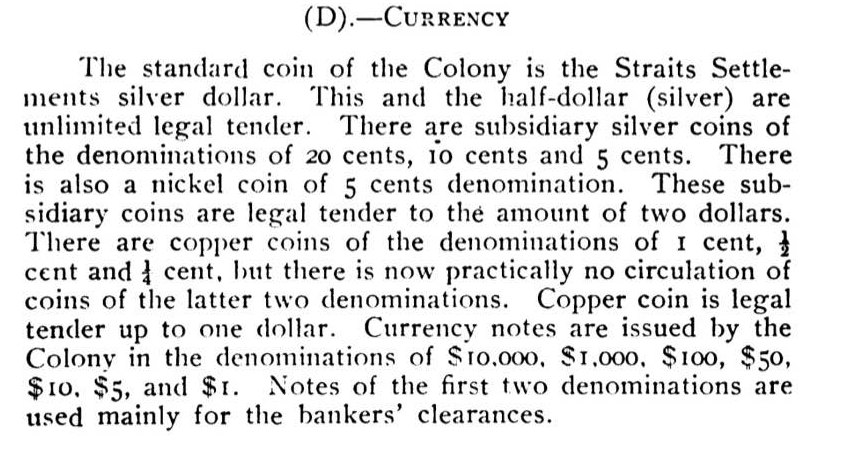
On when the high values began the sources also differ. The pages give 1st September 1919 as the first date of both the 1,000 and the 10,000 dollars, and the page of the 10,000 dollars says it was introduced in October 1922, without a source. Spink's description of a printer's model (9 January 2022, lot 4190) says both values are believed to have been first issued in 1916. The annual reports for 1922 and 1928, read for this point, say nothing on the introduction of either.
What would settle it
- The catalogue of the Melbourne sale of about 2000, with its pictures, which would show whether the two notes carry specimen marks and what their numbers are.
- Yow Kok Chee's article in Asia Numismatics of 2000, for the count of five and where each note was.
- The Currency Commissioners' own annual reports, which the Blue Books do not reprint, for the number of 1,000 and 10,000 dollars notes outstanding in any year.
Sources
- C. C. Low, "Straits Settlements Currency Notes (from 1898 to 1935)", IBNS Journal, volume 7, number 2, Christmas 1967, pp. 14 and 17.
- IBNS Journal, volume 47, number 4 (Spink advertisement).
- Bank Note Reporter: August 1983, p. 20; December 1985, p. 9; March 1988; February 1989; November 1989; November 2001, pp. 66 and 67; March 2006, p. 79; August 2009; November 2009, p. 6; December 2009, p. 48 (Kerry Rodgers); February 2015; November 2015; August 2021, p. 81; January 2022, p. 94.
- Colonial Reports, Annual, Straits Settlements: the reports for 1921, 1922, 1928 and 1930 to 1936.
- Money in British East Asia (1957), pp. 24 and 154 (Table 20).
- Spink, 5 July 2008, lot 0A; Spink, 9 January 2022, lot 4190.
- The Pick pages of the notes named.
Member comments
Log in or register to post a comment.