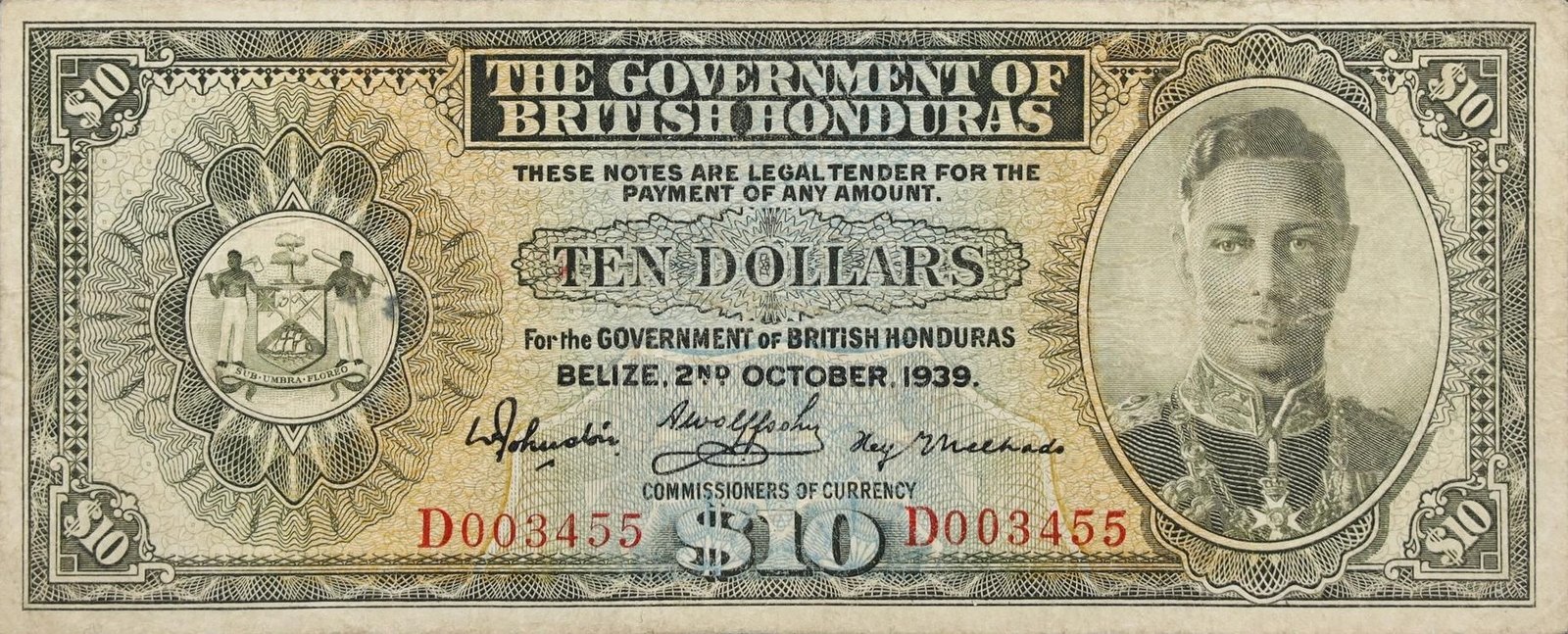
The notes of British Honduras with the portrait of King George VI were printed by Bradbury Wilkinson in two issues, dated 1939 to 1942 and 1947 to 1952. This article sets out what the Pick pages draw from the printer's specimens, the half-yearly statements of the Board of Commissioners of Currency in the British Honduras Gazette and the colony's annual reports, with a few statements of the auction houses. The earlier notes are in the De La Rue notes of 1894 to 1928.
The law of 1937
The notes were issued under the British Honduras Currency Notes Ordinance, 1937 (No. 1 of 1937). The issuer was a Board of three: the Colonial Secretary, the Treasurer and one member from outside the public service. The dollar was kept at par with the United States dollar.
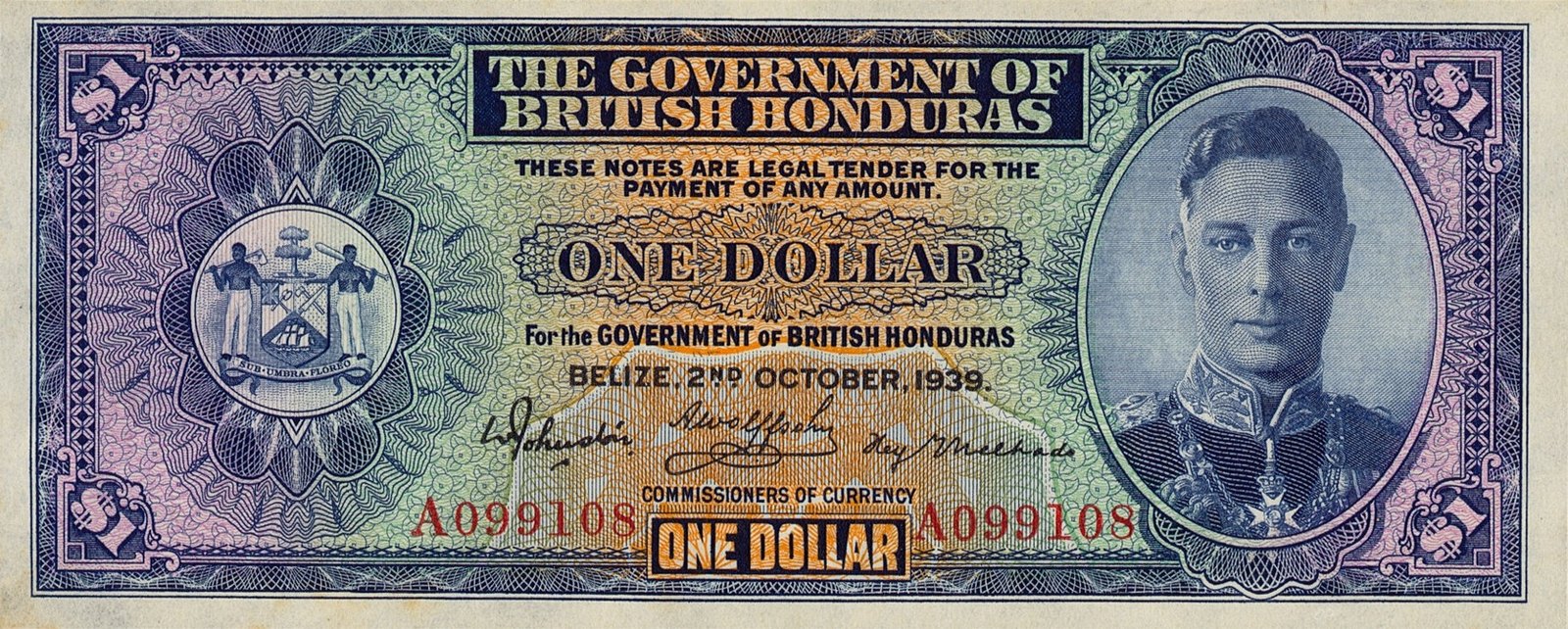
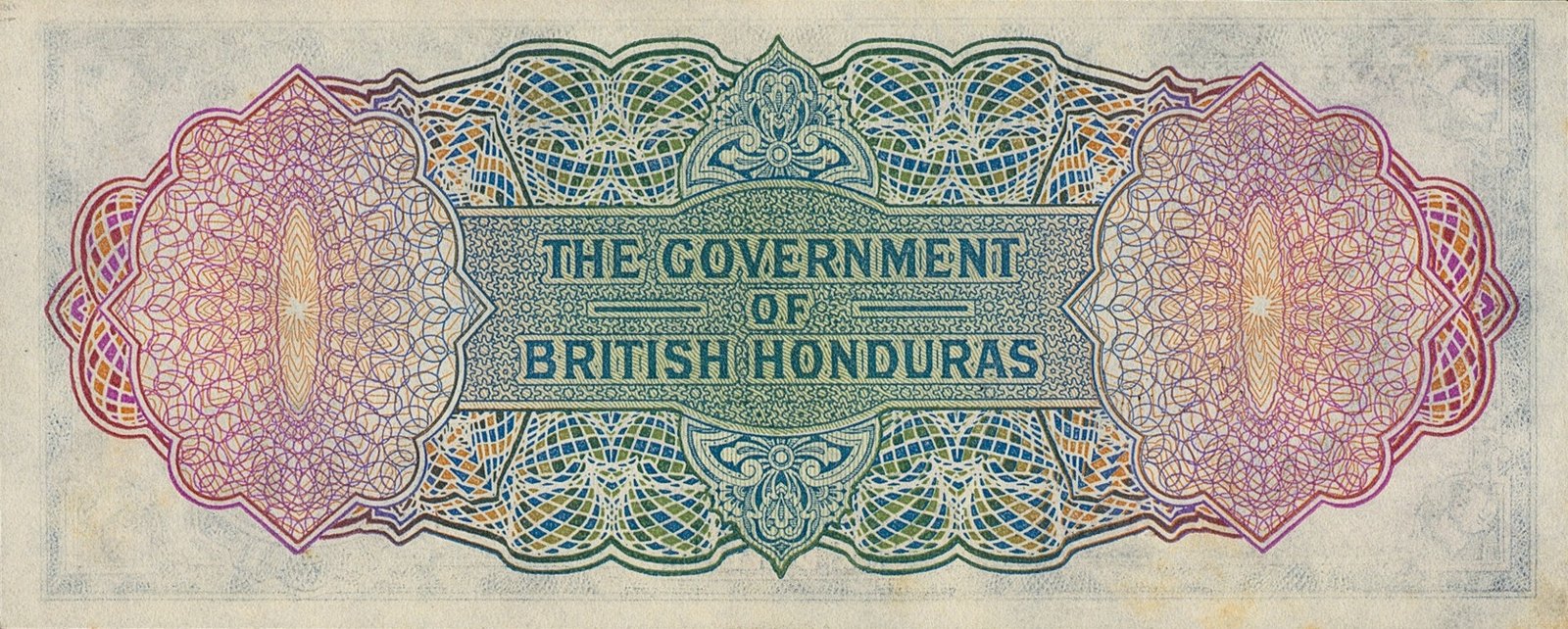
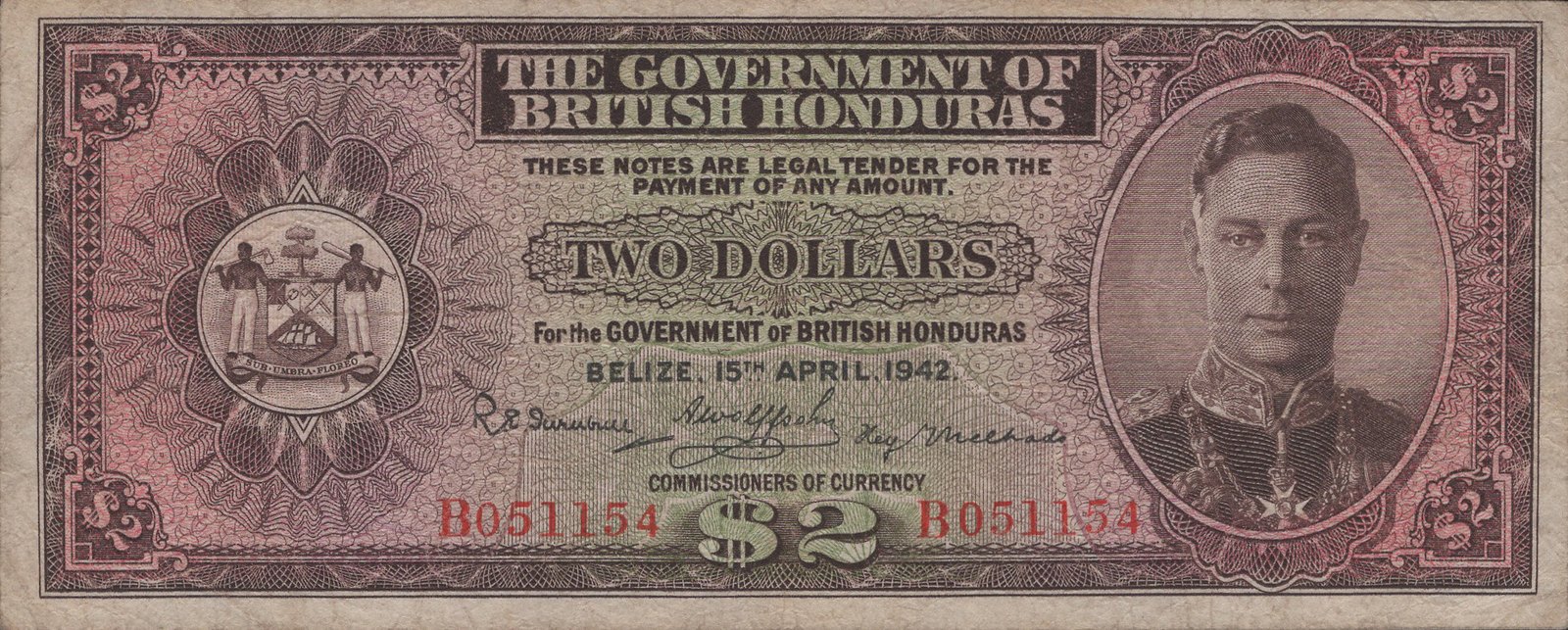
The design has the arms at left and the portrait of the King at right. There are four values in each issue, and every note carries three signatures.
The issue of 1939 and 1942
Two dates are printed: 2nd October 1939, signed by Johnston, Wolffsohn and Melhado, and 15th April 1942, signed by Turnbull, Wolffsohn and Melhado. Each value has one prefix letter and six digits, with no suffix letter: A on the 1 dollar, B on the 2 dollars, C on the 5 dollars and D on the 10 dollars.
The printer's specimens carry the range of numbers of each printing.
| Value | Printings dated 2nd October 1939 | Printing dated 15th April 1942 |
|---|---|---|
| 1 dollar | A000,001 to A060,000 and A060,001 to A110,000 | A110,001 to A260,000 |
| 2 dollars | B000,001 to B015,000 and B015,001 to B040,000 | no range on the page |
| 5 dollars | C000,001 to C030,000 and C030,001 to C040,000 | no range on the page |
| 10 dollars | D000,001 to D006,000 (the first printing) | no range on the page |
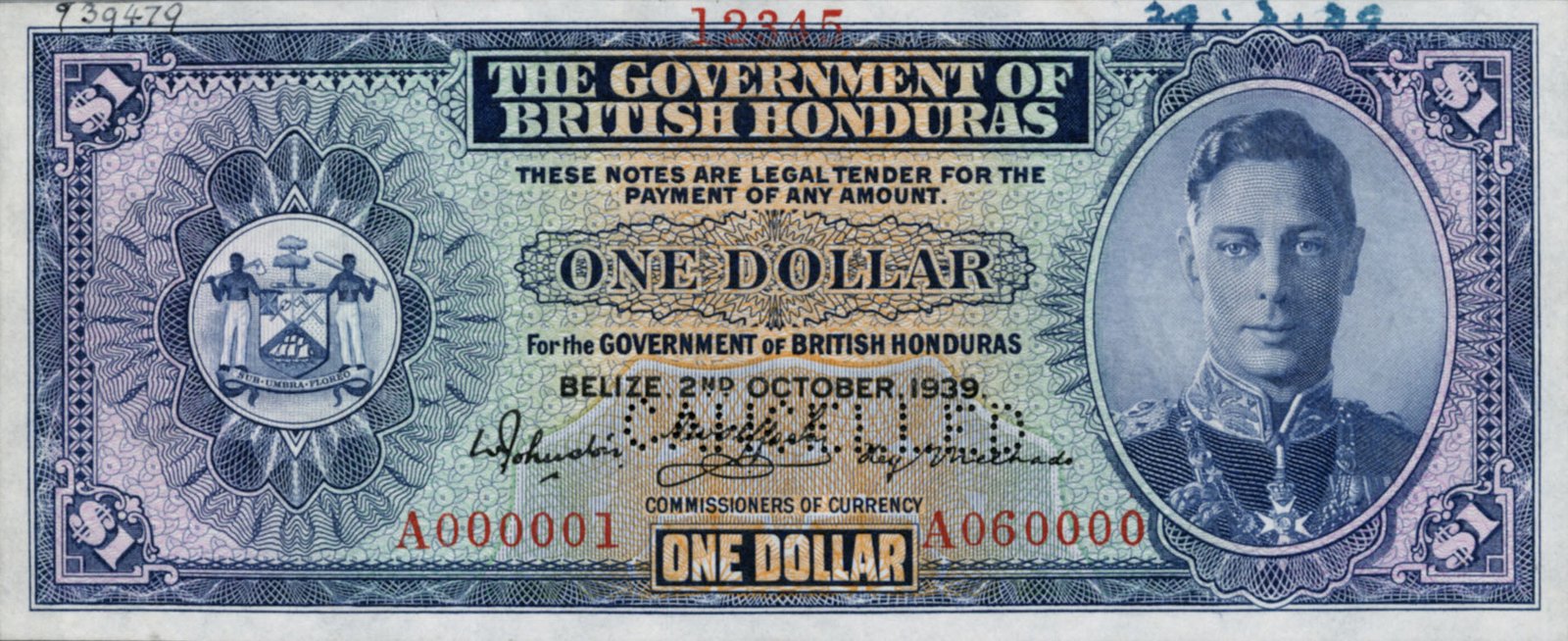
The issued notes recorded agree with the specimens. Every 1 dollar fits the range of its date. Every 2 dollars of 1939 lies below B040,000 and every one of 1942 above it. The recorded 5 dollars of 1939 fall inside the second range, and every one of 1942 lies above it. Every 10 dollars of 1939 falls inside the first printing and every one of 1942 above it.
When the notes of 1939 went into use
The notes did not go out on the day printed on them. The Board's half-yearly statements in the British Honduras Gazette show when they came into use. The statement of 31st December 1939 still lists only the old notes.
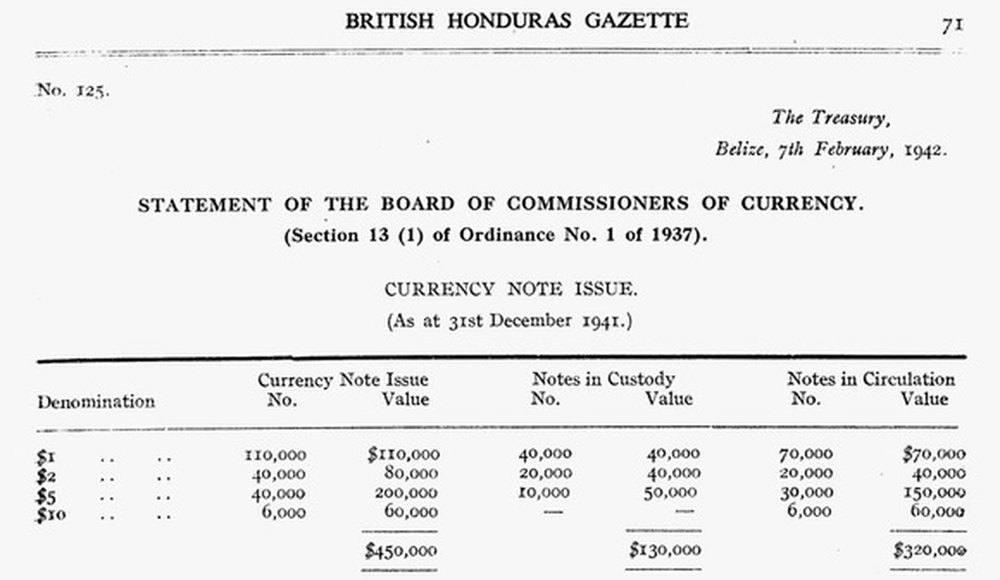
| Value | Taken into issue by 30th June 1940 | Of those, in circulation | Issue on 31st December 1941 |
|---|---|---|---|
| 1 dollar | 60,000 | 30,000 | 110,000 |
| 2 dollars | 15,000 | 10,000 | 40,000 |
| 5 dollars | 30,000 | 11,000 | 40,000 |
| 10 dollars | 6,000 | 2,000 | not given on the page |
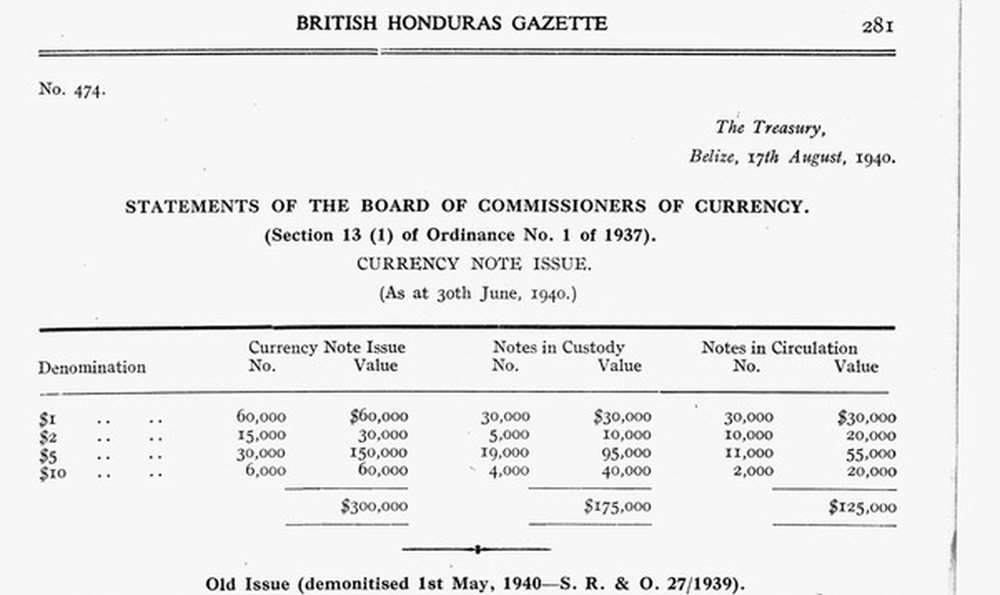
The figures of 31st December 1941 for the 1, 2 and 5 dollars are the end of the second range of each value, as the Pick pages note. On 30th June 1942 the issue of the 1, 2 and 5 dollars was unchanged, and the issue of the 10 dollars was still 6,000, all of them out. So no note dated 15th April 1942 had been issued by that day.
One signature was out of date before most of the notes were paid out. Johnston, whose signature the notes of 1939 carry as Colonial Secretary, had left the colony for Sierra Leone on 6th March 1940, as the Gazette records. Roland Evelyn Turnbull, who signs the notes of 1942, became Colonial Secretary in 1940 (Colonial Office List).
The old De La Rue notes were demonetised on 1st May 1940, as the same statement of 30th June 1940 says in its heading.
The issue of 1947 to 1952
The annual reports say the Commissioners decided in 1946 to order notes of 'a more distinctive colouring'. New notes worth 1,050,000 dollars, the whole printing dated 30th January 1947, reached the colony in December 1947. Stack's Bowers, describing a 1 dollar of 1942 on 17 January 2025 (lot 20061), says the first colours did not last long and that the 1 dollar was green later in the 1940s.
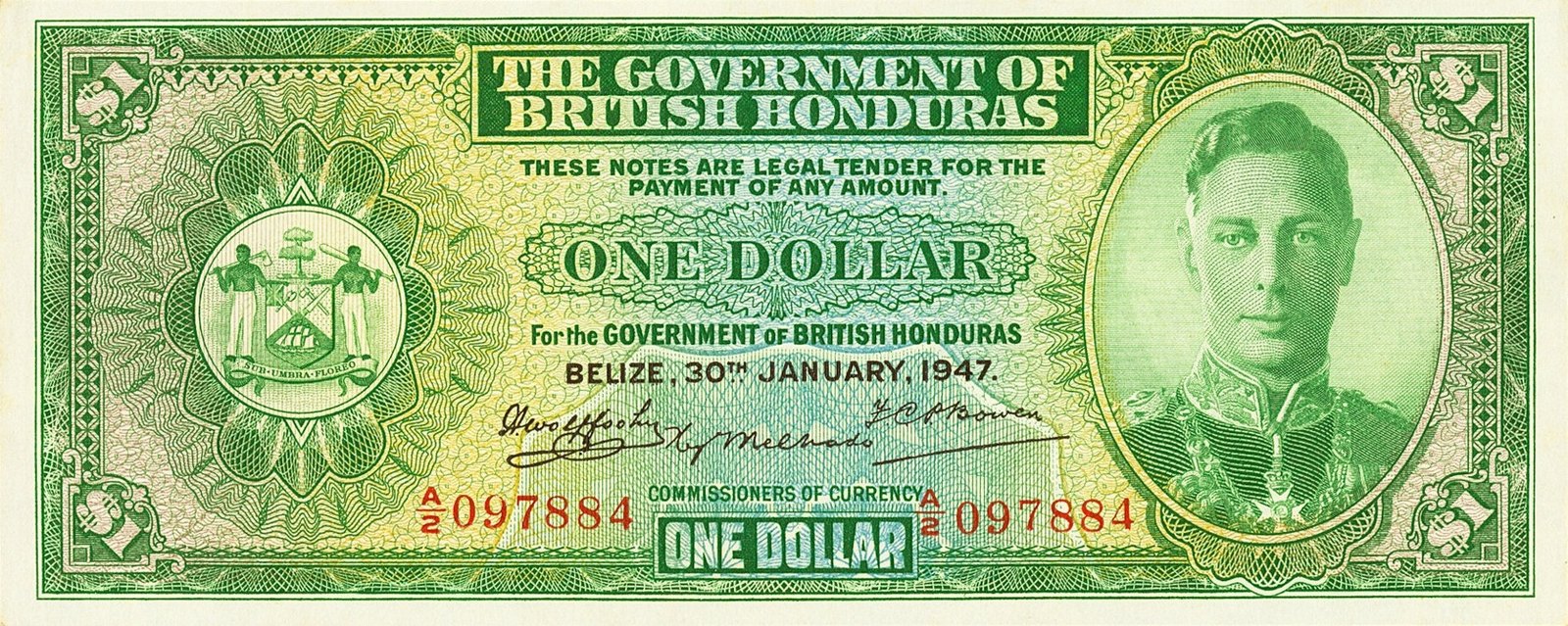
The values are again the 1 dollar, 2 dollars, 5 dollars and 10 dollars. The notes of 30th January 1947 are signed by Wolffsohn, Melhado and Bowen. Those of 1st November 1949, 1st June 1951 and 1st February 1952 are signed by Hone, Stone and Melhado. By the Colonial Office List, Hone was Colonial Secretary from 1948 to 1953.
The prefix now has a letter over a number.
| Value | 30th January 1947 | 1st November 1949 | 1951 and 1952 |
|---|---|---|---|
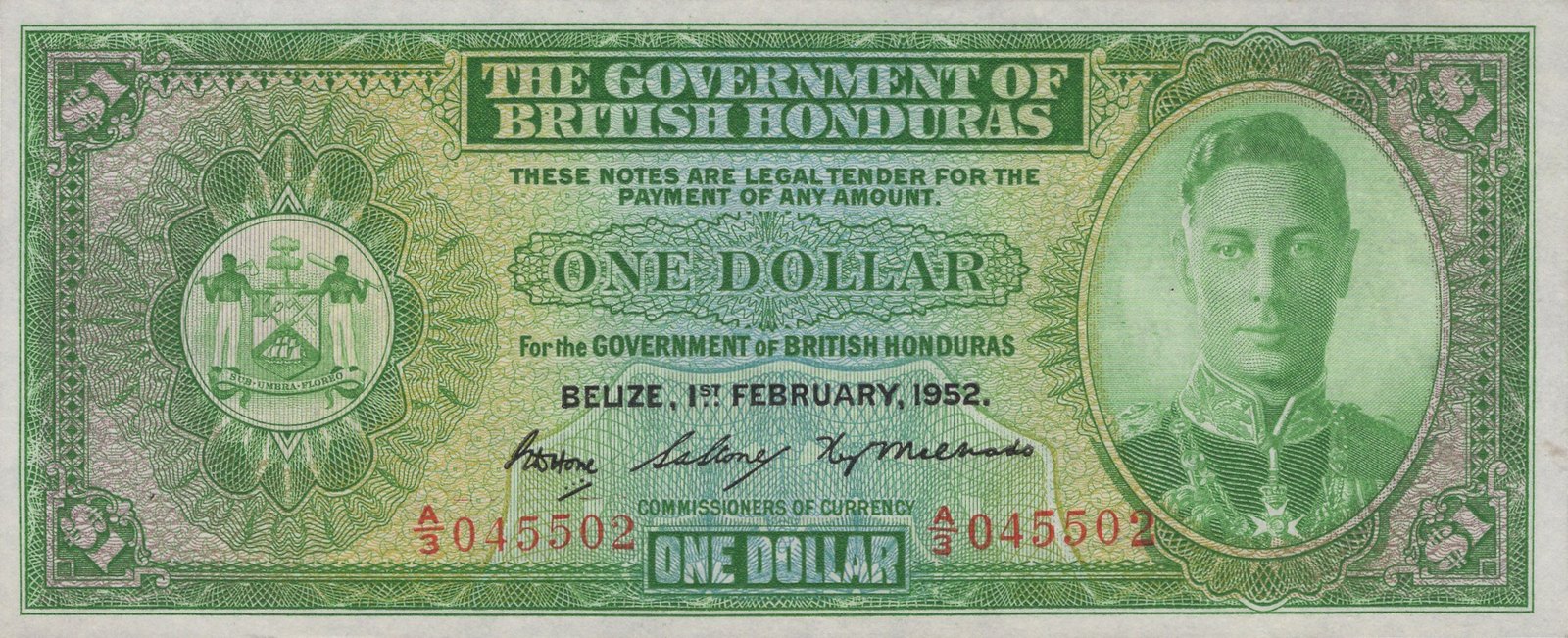
| 1 dollar | every note recorded is below A/2 100,001 | A/2 100,001 to A/2 200,000 and A/2 200,001 to A/2 300,000 | 1st February 1952: A/3 000,001 to A/3 050,000 |
| 2 dollars | every note recorded is below B/2 100,001 | B/2 100,001 to B/2 125,000 | 1st February 1952: listed, no note recorded |
| 5 dollars | C/2 000,001 to C/2 100,000 | C/2 100,001 to C/2 125,000 | 1st February 1952: C/3 000,001 to C/3 050,000 |
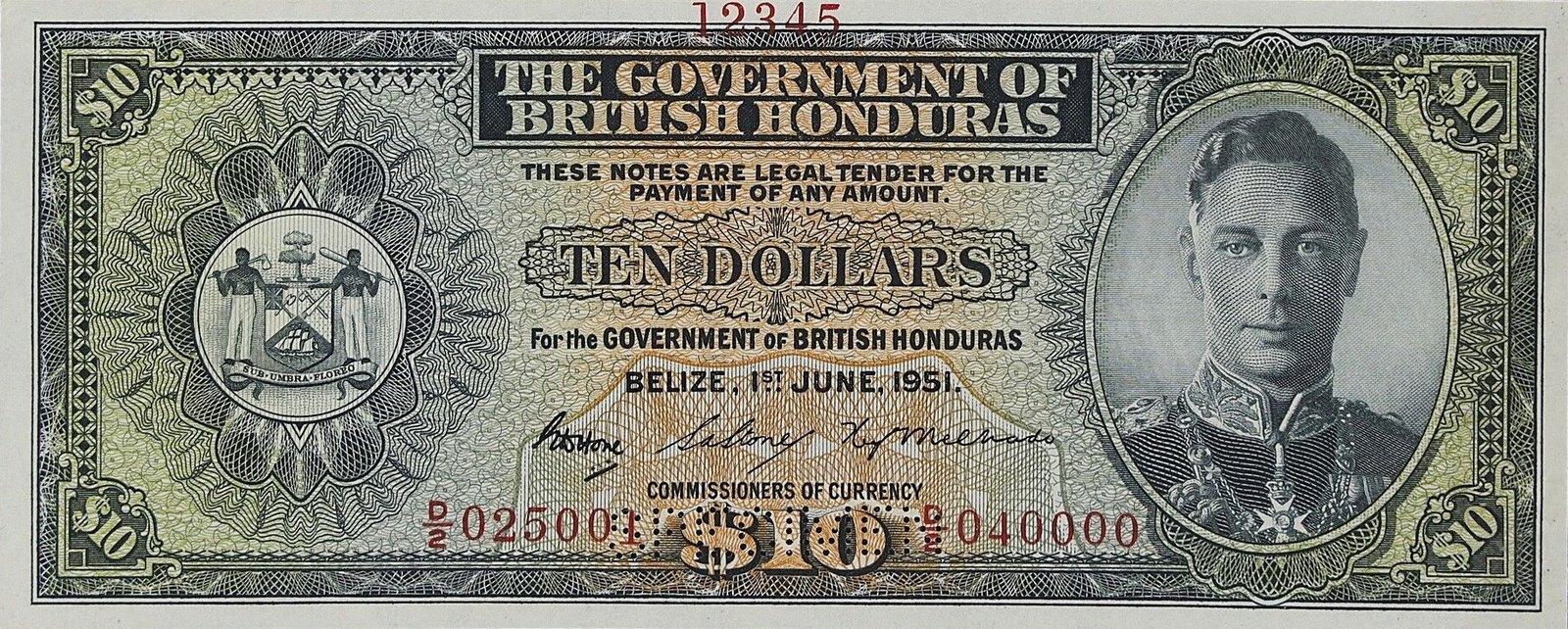
| 10 dollars | D/2 000,001 to D/2 025,000 | none recorded | 1st June 1951: D/2 025,001 to D/2 040,000 |
The notes dated 1st November 1949 reached the colony in 1950. The annual report for 1950 records 375,000 dollars of new notes received, and the Pick pages find that this is the sum of the 1949 printings of the 1, 2 and 5 dollars by their specimen ranges.
The 10 dollars of 1949
A row for a 10 dollars dated 1st November 1949 stands on the Pick page as P-27c. No such note has been recorded, and the page holds that there was most likely none. Its reasons are two: the 375,000 dollars of new notes of 1950 are exactly the 1949 printing of the three lower values, and the 10 dollars of 1st June 1951 continues the numbers straight on from the range of 1947.
Notes in circulation, 1946 to 1950
The annual reports count the notes in circulation at the end of each year, value by value. The figures are numbers of notes.
| End of year | 1 dollar | 2 dollars | 5 dollars | 10 dollars |
|---|---|---|---|---|
| 1946 | 76,534 | 52,442 | 91,976 | 16,859 |
| 1947 | 85,782 | 41,748 | 90,956 | 18,734 |
| 1948 | 92,867 | 49,652 | 87,224 | 20,404 |
| 1949 | 100,509 | 45,697 | 83,186 | 22,981 |
| 1950 | 116,907 | 57,641 | 99,538 | 31,507 |
The pages do not say how these counts divide between the notes of 1939 to 1942 and the new notes.
The dollar in 1949
The notes changed in value while the second issue was current. When sterling was devalued in September 1949 the British Honduras dollar stayed at par with the United States dollar. On 31st December 1949 it was fixed at 4 dollars to the pound by an amendment of the Currency Notes Ordinance. The annual report for 1949 says the Governor declared the amendment passed under reserve powers after every unofficial member of the Legislative Council had voted against it.
Specimens, colour trials and what the houses say
The undated colour trial specimens of this design serve both issues, 1939 to 1942 and 1947 to 1952, and are listed on the pages of the first. The first issue also has an archival photograph of the 1 dollar, and the second has die proofs.
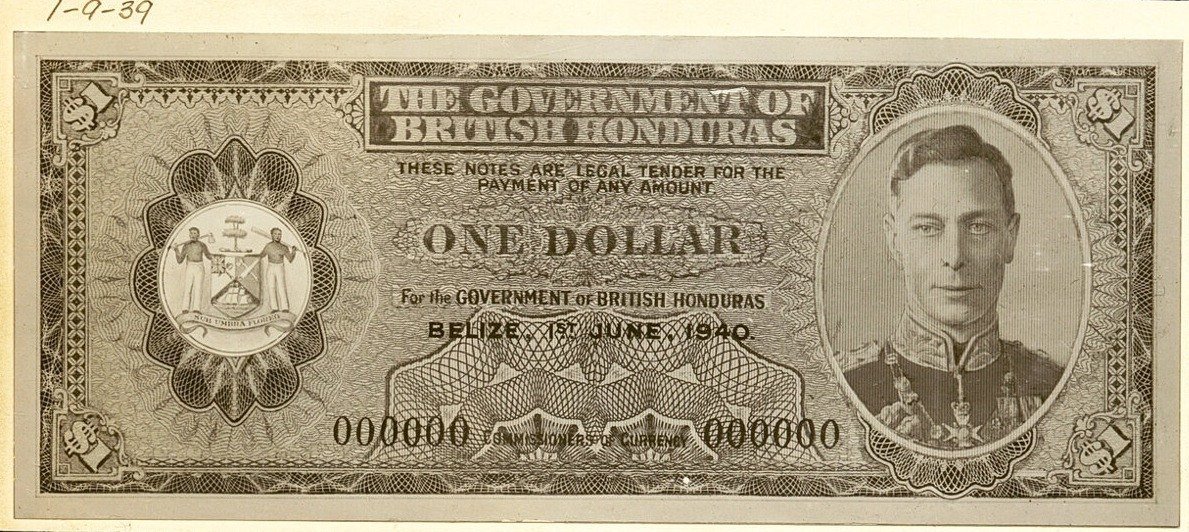
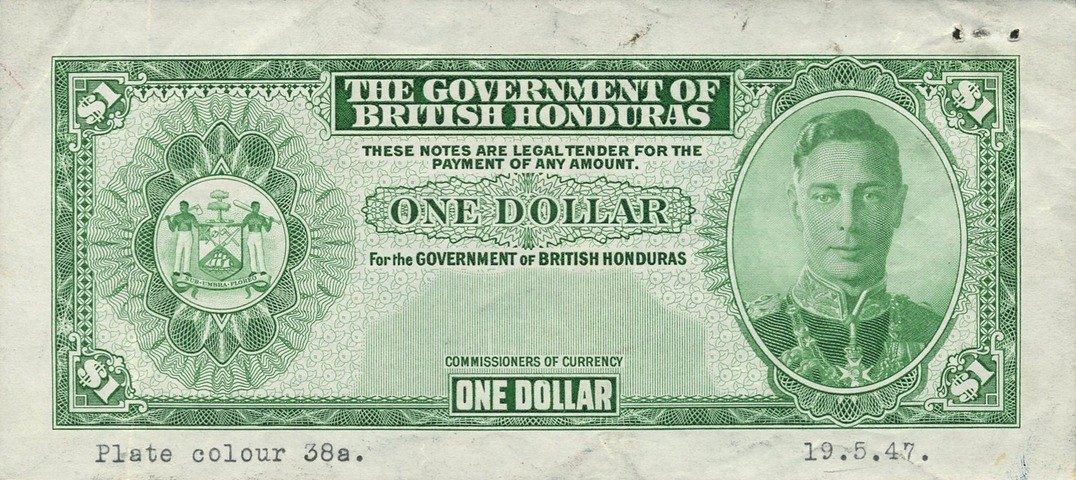
The houses' catalogue letters do not always match the rows here. Heritage calls the 10 dollars of 1st June 1951 Pick 27c (9 November 2023, lot 24118) and both Heritage and Stack's Bowers call the 1 dollar of 1st February 1952 Pick 24b; on the Pick pages these are P-27b and P-24c.
Stack's Bowers (17 January 2025, lot 20063) says the notes with the King's portrait were produced in more limited numbers than the Queen Elizabeth II notes of the same basic design. Heritage (9 November 2023, lot 24117) puts the small batches down to the small population of the colony. Heritage offered two 1 dollar notes of 1st February 1952 with consecutive numbers on 21 April 2022 (lots 25057 and 25058), from the Bruce Smart Collection.
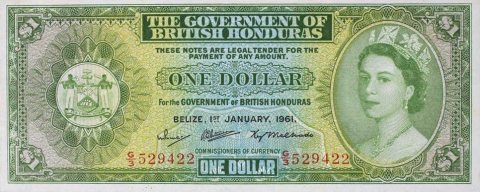
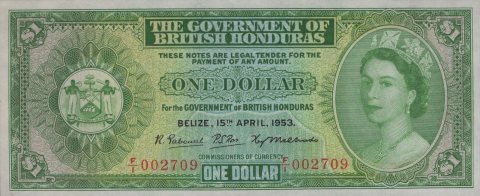
The design went on under the next reign. The 20 dollars with the portrait of Queen Elizabeth II is dated 1st December 1952, and the other values follow on 15th April 1953, as the paper money of British Honduras, 1894 to 1973 sets out.
What is not known
- The pages give no specimen range for the 2, 5 and 10 dollars of 15th April 1942, and none after the first printing of the 10 dollars of 1939.
- The Board's statements on the pages end at 30th June 1942, so the day the notes of 1942 went into use is not known.
- No 2 dollars of 1st February 1952 has been recorded.
- The pages give no day on which either issue ceased to be legal tender.
Sources
- The Pick pages of this catalogue for British Honduras, P-20 to P-27.
- The British Honduras Currency Notes Ordinance, 1937 (No. 1 of 1937), as the Pick pages cite it.
- The British Honduras Gazette: the half-yearly statements of the Board of Commissioners of Currency for 31st December 1939, 30th June 1940, 31st December 1941 and 30th June 1942; its record that Johnston left the colony on 6th March 1940.
- The annual reports on British Honduras for 1946 to 1950.
- The Colonial Office List.
- The printer's specimens listed with the varieties on the Pick pages.
- Stack's Bowers, 17 January 2025, lots 20061 and 20063.
- Heritage Auctions, 21 April 2022, lots 25057 and 25058; 9 November 2023, lots 24117 and 24118.
Member comments
Log in or register to post a comment.