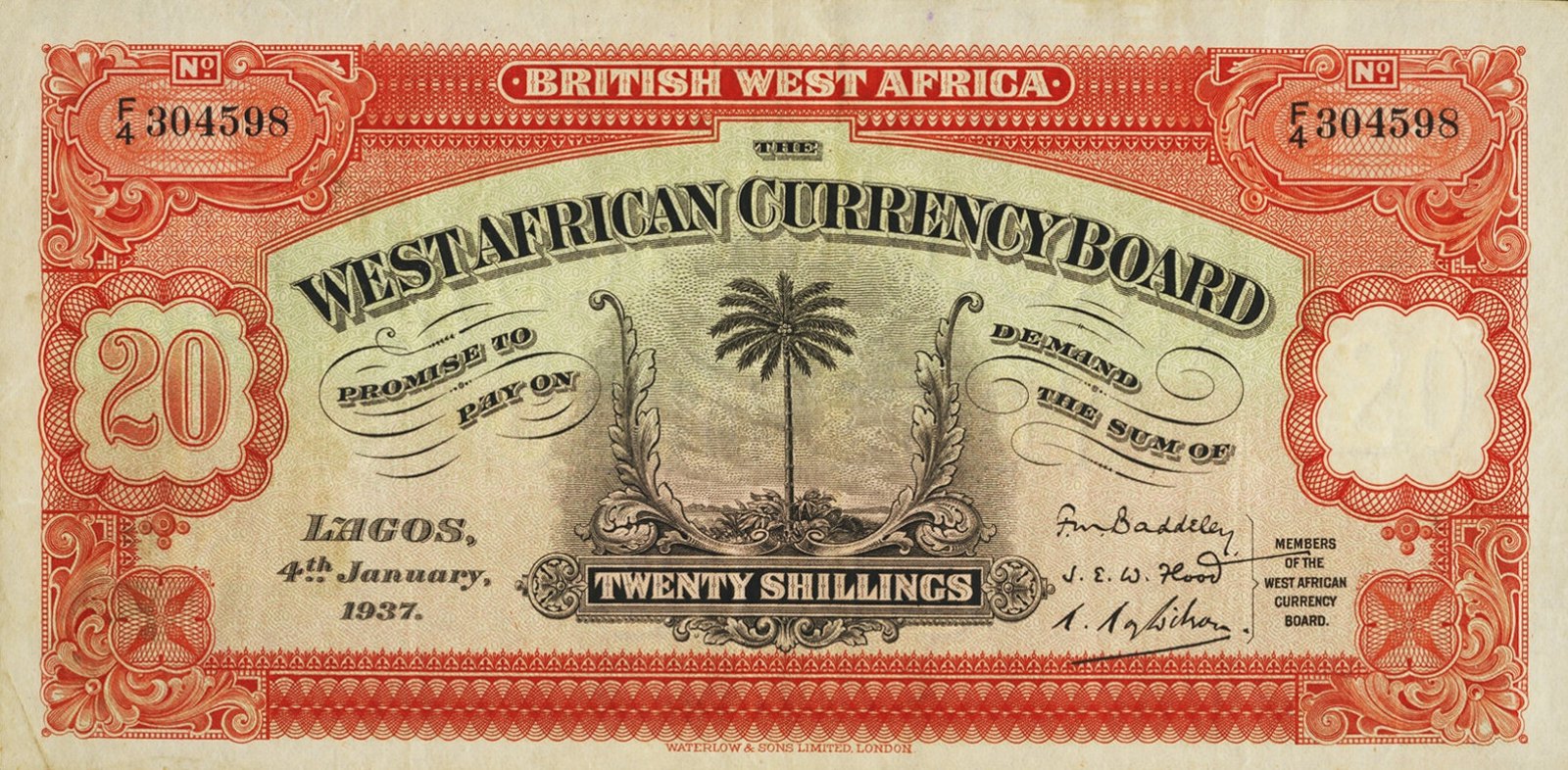
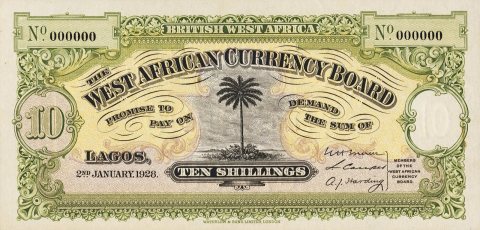
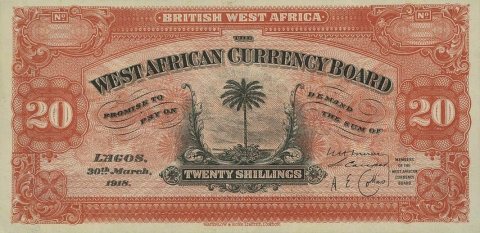
The figures of the West African Currency Board's notes in circulation that the official papers give are gathered in The West African Currency Board's notes in circulation, 1917 to 1961. This article takes what that one leaves out: the coin counted beside the notes, Sierra Leone's own series, the notes shipped in and out of a colony, and the figures that two official sources give differently. The sources are the Blue Books and annual reports of British West Africa's four colonies, the Nigeria Year Book for 1952, the Economic Survey of the Colonial Territories for 1951 and the Gold Coast Blue Book for 1937. Each table says whether its figures were read on the page image or in the text only. No figure here has been added up or worked out: totals are those the sources print.
Why a colony's figure is not the notes in that colony
The reports say themselves why their figures are hard to use. Nigeria's annual reports for 1929 and for 1931 to 1937 give no figure for Nigeria alone, because of "Inter-Colonial movements in currency notes" (report for 1929; the report for 1931, paragraph 189, says "in coin and currency notes"), and give the total for West Africa instead. Sierra Leone's reports for 1921 and 1922 explain that notes issued in the other colonies were landed and cashed at Freetown, the last port homeward. Sierra Leone's net circulation, notes issued less notes redeemed, was minus 752,448 pounds in 1925, minus 888,038 pounds in 1926 and minus 483,405 pounds in 1927 (Sierra Leone reports for 1925, 1926 and 1927; 1925 and 1926 read on the page image, 1927 in the text only). The report for 1926 gives the figure at the start of that year as minus 752,488 pounds 11 shillings, and the text of the report for 1927 gives its opening figure as minus 868,038 pounds 11 shillings, where the page image of the report for 1926 reads 888,038 pounds 11 shillings. Sierra Leone's figures of 1921 and 1922 are a stock account of the notes held at Freetown, not of the notes with the public; they are read closely in A million shilling notes.
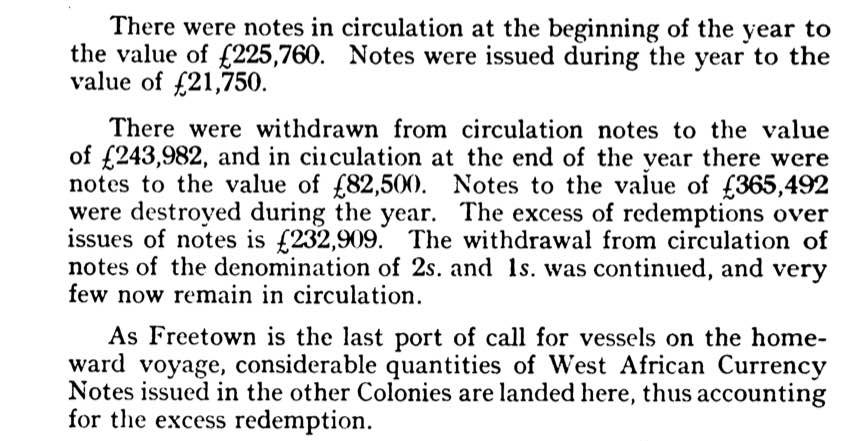
All West Africa, 30th June 1929 to 1937: notes and coin
Nigeria's annual reports give the Board's coin beside its notes for the four colonies together (reports for 1931, 1932, 1934 and 1937, all read on the page image; the row for 1929 is from the report for 1931, paragraph 189).
| 30th June | Silver coin | Alloy coin | Nickel bronze coin | Currency notes |
|---|---|---|---|---|
| 1929 | 2,228,482 | 10,042,542 | 587,524 | 753,588 |
| 1930 | 2,081,038 | 9,075,991 | 595,464 | 759,370 |
| 1931 | 1,860,590 | 6,327,436 | 599,464 | 668,964 |
| 1932 | 1,677,891 | 6,168,317 | 597,706 | 628,122 |
| 1933 | 1,543,736 | 6,716,944 | 606,193 | 705,140 |
| 1934 | 1,432,650 | 5,374,078 | 624,628 | 697,024 |
| 1935 | 1,348,318 | 7,276,567 | 653,065 | 717,295 |
| 1936 | 1,290,300 | 9,541,138 | 732,474 | 976,247 |
| 1937 | 1,257,241 | 14,748,387 | 888,574 | 2,374,909 |
The notes were worth less than the silver coin in every year until 1937, when they passed it, and far less than the alloy coin throughout. The report for 1928 gives 791,313 pounds of notes in all the colonies at 31st March 1928, and the report for 1938 (No. 1904) gives 2,500,324 pounds at 30th June 1938 (text only).
Nigeria: from the Blue Books to the Year Book
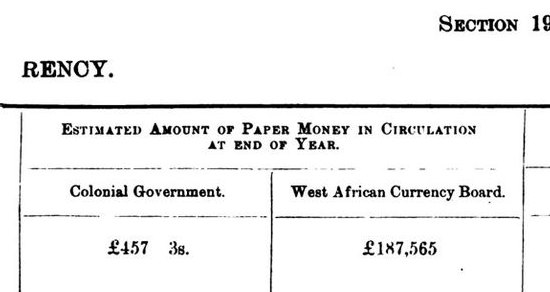
The Nigeria Blue Books for 1919 to 1923 estimate the Board's notes in Nigeria alone at the end of each year:
| End of year | Board's notes in Nigeria, pounds | Read on |
|---|---|---|
| 1919 | 2,499,495 | text |
| 1920 | 1,338,486 | text |
| 1921 | 187,565 | page image |
| 1922 | 146,696 | page image |
| 1923 | 75,250 | text |
These cannot be squared with the other sources. The Nigeria Handbook of 1919 gives 658,395 pounds in Nigeria and 1,583,740 pounds in all four colonies at the end of March 1919, less than the Blue Book's figure for Nigeria alone nine months later. The Nigeria Handbook of 1922 gives 295,446 pounds in Nigeria at the end of March 1922, against the Blue Book's 187,565 pounds three months before. The Blue Books do not say how their estimate was made.
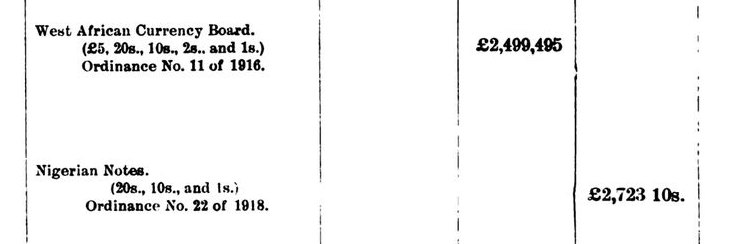
The Nigeria Year Book for 1952 (Table 6, read on the page image) prints the currency in Nigeria in thousands of pounds, and for 1950 it gives four dates in the year:
| Date | Notes | Alloy coin | Nickel bronze coin | Total |
|---|---|---|---|---|
| 31st March 1950 | 8,935 | 20,109 | 2,533 | 31,577 |
| 10th June 1950 | 8,600 | 20,438 | 2,539 | 31,577 |
| 30th September 1950 | 9,298 | 19,778 | 2,520 | 31,596 |
| 31st December 1950 | 12,487 | 21,500 | 2,589 | 36,576 |
The notes fell between March and June and rose most in the last quarter of the year. The Year Book gives no reason. The same table prints the total for 31st March 1947 as 13,429 thousand pounds, where the annual reports give 23,429,013 pounds. Nigeria's notes year by year to 1957 are in the article on the notes in circulation linked above.
The Gold Coast: notes and coin by value, 1942 to 1951
The Gold Coast annual reports for 1946 to 1951 count the currency by value (page images). The reports for 1946 and 1947 head their table "exclusive of silver and old type alloy".
| Date | 1 pound notes | 10 shilling notes | 2 shilling alloy coin | 1 shilling alloy coin | Total as printed |
|---|---|---|---|---|---|
| 31st March 1942 | 2,054,404 | 381,898 | 3,035,200 | 559,700 | 6,379,591 |
| 31st March 1943 | 2,751,023 | 570,464 | 3,475,699 | 631,600 | 7,821,985 |
| 31st March 1944 | 3,024,740 | 546,034 | 3,752,199 | 711,000 | 8,465,234 |
| 31st March 1945 | 3,420,930 | 519,459 | 4,669,979 | 702,000 | 9,750,664 |
| 31st March 1946 | 3,731,559 | 601,177 | 5,614,300 | 771,000 | 11,180,303 |
| 31st March 1947 | 5,407,950 | 987,877 | 6,587,499 | 801,700 | 14,279,508 |
| 31st December 1947 | 7,334,639 | 2,193,178 | 7,118,400 | 807,600 | 17,963,773 |
| 31st December 1948 | 17,525,284 | 2,973,178 | 8,921,300 | 1,121,500 | 31,133,528 |
| 31st December 1949 | 19,493,929 | 1,829,476 | 8,298,700 | 1,256,900 | 31,517,662 |
| 31st December 1950 | 21,780,685 | 2,689,726 | 8,536,500 | 1,259,000 | 34,954,196 |
| 31st December 1951 | 25,312,153 | 1,347,246 | 8,432,300 | 1,503,500 | 37,348,665 |
The totals also include the sixpence and threepence alloy pieces and the nickel coin, which are not shown here. By the end of 1947 the 1 pound notes were worth more than the 2 shilling coins, and they stayed ahead. The reports for 1953 and 1954 add an estimate of net circulation, notes and coin less what the banks held: between 24.4 million pounds in August and 36.0 million pounds in December 1954.
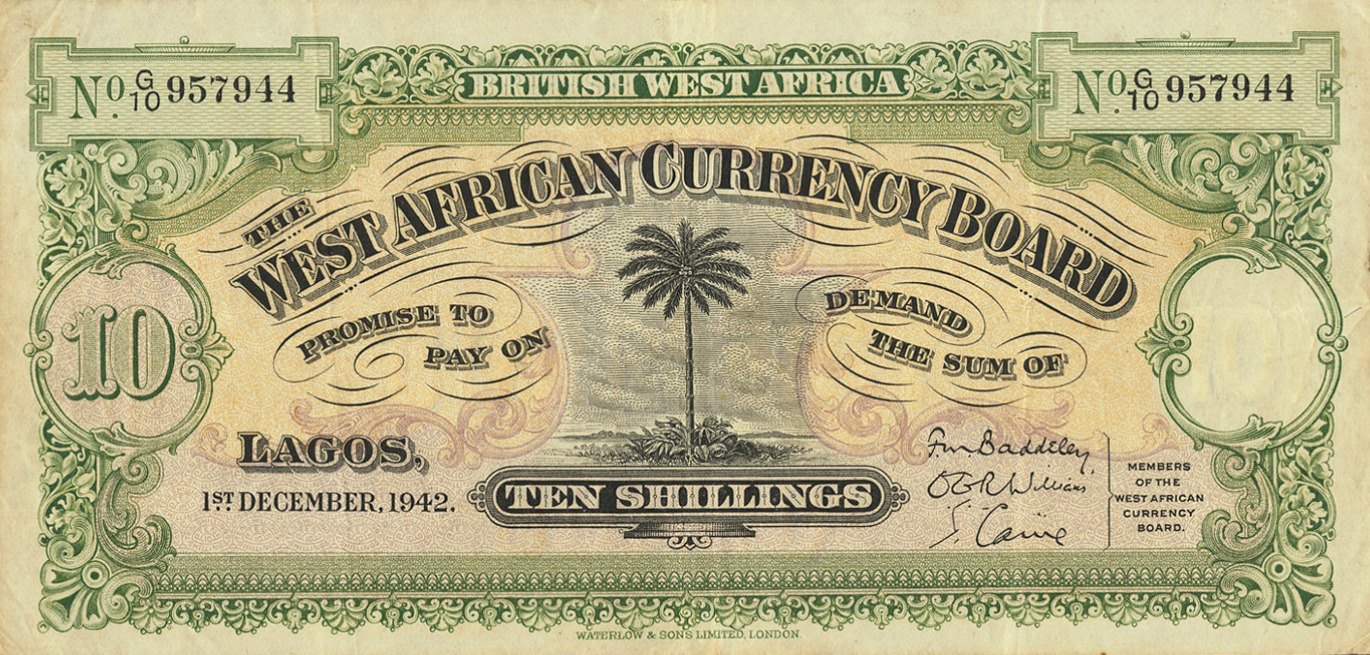
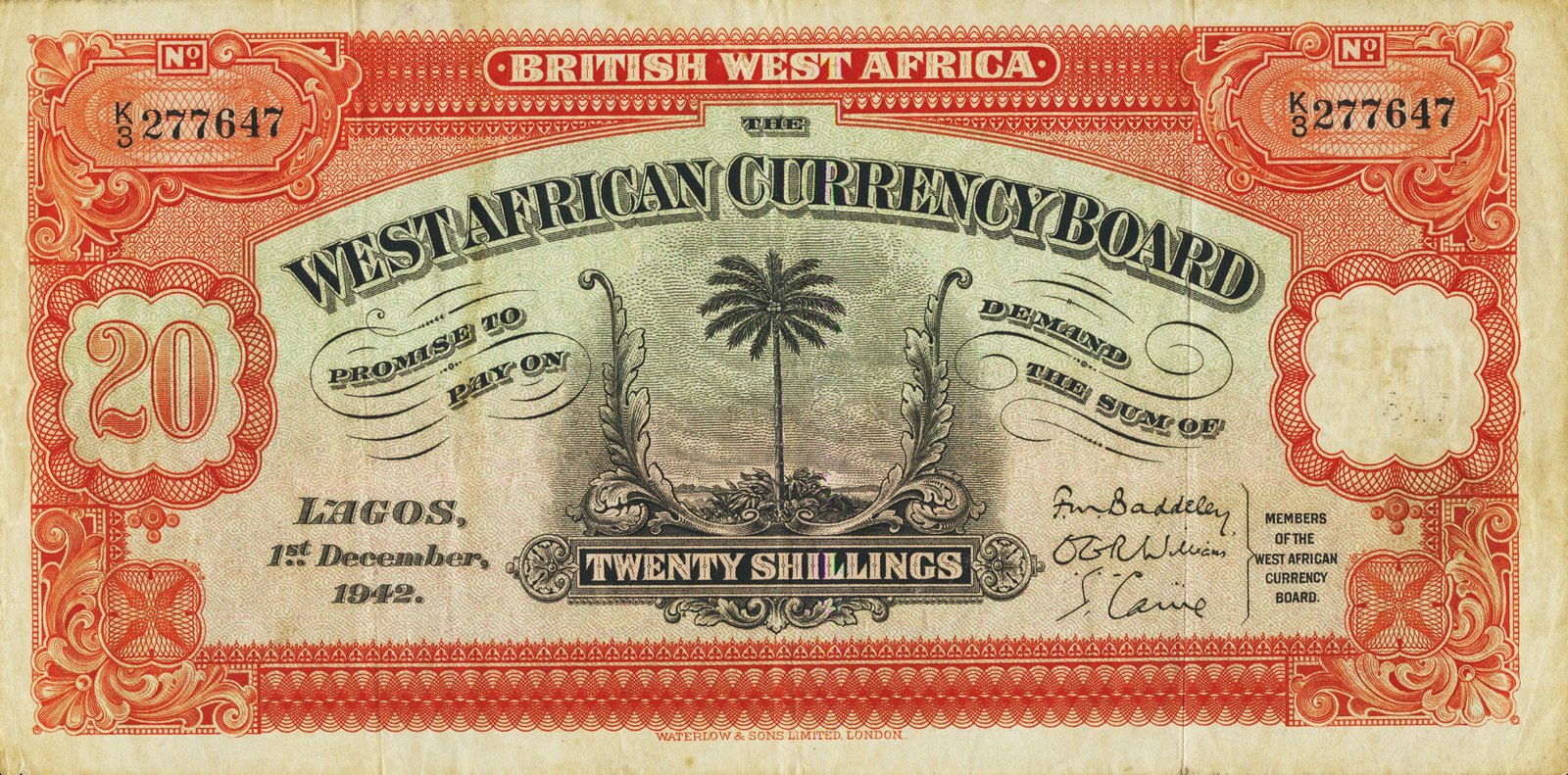
Before the war the reports give only round statements. At 31st March 1938 the Gold Coast had "approximately £2,355,506" in the Board's notes against 8,486,000 pounds of alloy coin and 107,000 pounds of nickel bronze coin (annual report for 1937-38, page image). At 31st March 1922 it had 1,078,631 pounds of notes against 1,140,185 pounds of alloy coin and 41,591 pounds of nickel bronze (annual report for 1921, page image).
Sierra Leone
Sierra Leone's Blue Books estimate the paper money in the colony at the end of each year. Neither the Government nor any private bank issued notes; the only paper money was the Board's.
| Blue Book | Board's notes, pounds | Notes listed as legal tender | Read on |
|---|---|---|---|
| 1915 | none listed | not listed | text |
| 1917 | 14,500 (the column is uncertain) | not listed by value | text |
| 1918 | 14,500 (the same; column uncertain) | not listed by value | text |
| 1925 | 150,000 | 5 pounds, 1 pound, 10s, 2s, 1s | text |
| 1926 | 150,000 | the same | text |
| 1927 | 150,000 | the same | text |
| 1933 | 100,000 | 1 pound, 10s | text |
| 1934 | 32,000 | 1 pound, 10s | page image |
| 1935 | 343,000 | 1 pound, 10s | text |
| 1936 | 50,000 | 1 pound, 10s | page image |
| 1937 | 60,000 | 1 pound, 10s | text |
| 1938 | 90,000 | 1 pound, 10s | text |
The figure for 1935 is out of line with 1934 and 1936. It has been read only in the text of the scan, and may be a misreading of the printed figure.
The reports for 1937 and 1938 give the notes shipped in and out of Sierra Leone in pounds (page images):
| Year | Currency notes imported | Currency notes exported |
|---|---|---|
| 1933 | 2,045 | none |
| 1934 | 15,406 | 2,580 |
| 1935 | 3,849 | 1,230 |
| 1936 | 1,276 | 100,500 |
| 1937 | 21,397 | none |
| 1938 | 62,185 | none |
After the war the annual reports give notes and coin side by side (page images):
| Date | Board's notes, pounds | Coin, pounds |
|---|---|---|
| 31st December 1945 | 1,118,374 10s | 1,228,663 10s |
| 31st December 1946 | 816,297 10s | 1,176,463 10s |
| 31st December 1947 | 673,365 | 1,163,546 |
| 31st December 1948 | 563,990 | 1,249,421 |
| 31st December 1949 | 550,369 | 1,425,500 |
| 31st December 1950 | 720,527 | 1,630,739 |
| 31st December 1951 | 1,132,404 | 3,135,454 |
| 31st December 1952 | 1,142,303 | 2,027,837 |
| 31st December 1953 | 1,373,228 | 2,187,270 |
| 31st December 1954 | 5,499,984 | 3,163,980 |
| 31st December 1955 | 6,638,592 | 3,106,194 |
| 31st December 1956 | 7,960,748 | 4,740,689 |
| 31st December 1957 | 8,711,989 | 4,736,748 |
| 30th June 1958 | 9,232,512 | 4,678,586 |
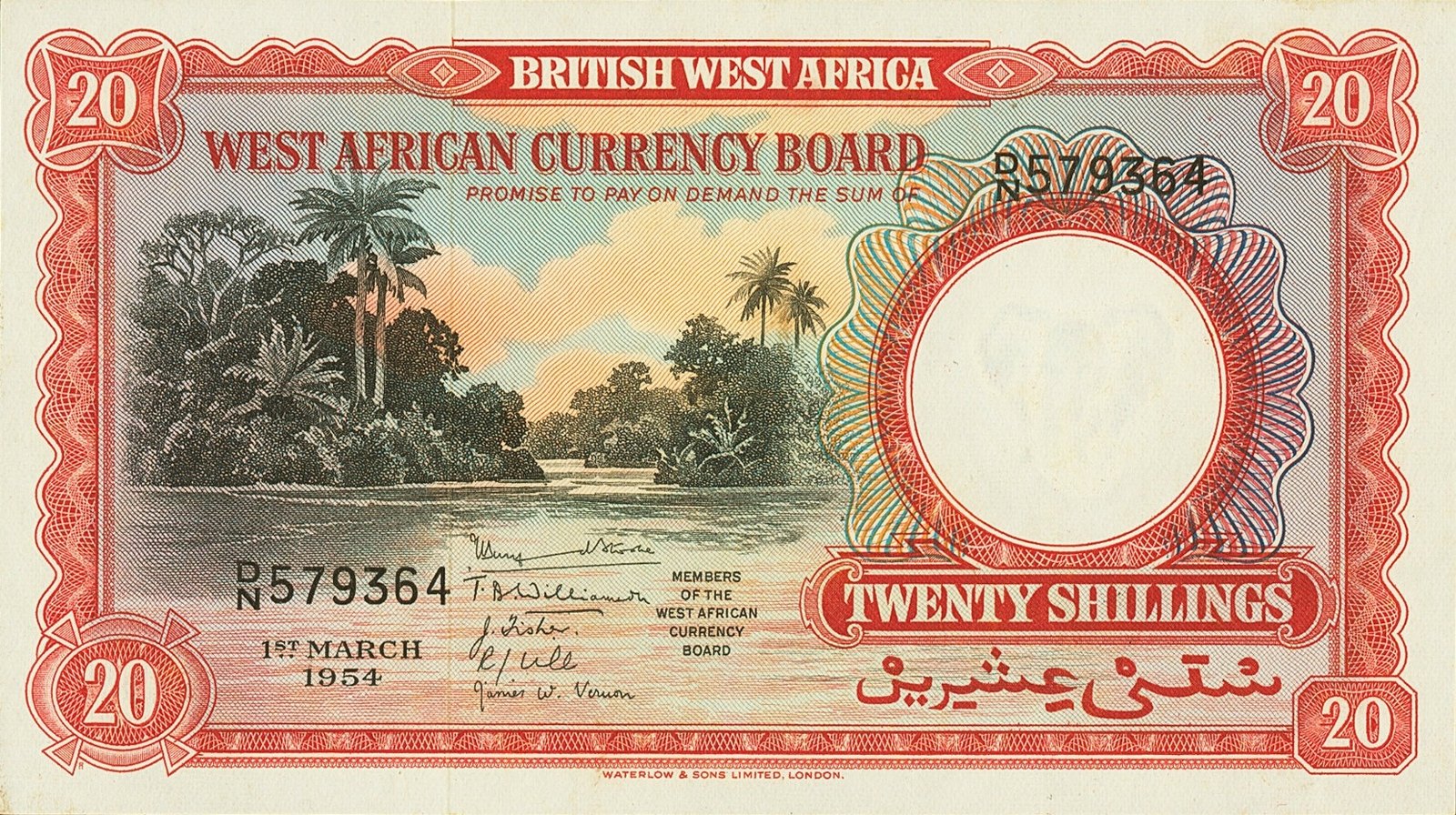
The notes first passed the coin at the end of 1954. The reports do not explain the rise of that year.
The Gambia
The Gambia's reports give notes and alloy coin at the end of each year (page images):
| 31st December | Notes, pounds | Alloy coin, pounds |
|---|---|---|
| 1935 | 232,984 | 250,522 |
| 1936 | 239,600 | 358,100 |
| 1937 | 264,700 | 380,214 |
| 1938 | 258,351 | 192,365 |
The reports add 218,936 pounds of notes at the end of 1933 (page image) and 224,434 pounds at the end of 1934 (text only). The report for 1936 says the currency stock was held for the Board and issued to the bank against payment in London. The report for 1938 (p. 128 of the bound volume, page image) gives currency notes imported into the Gambia as 3,722 pounds in 1934, 30,000 in 1935, none in 1936, 45,000 in 1937 and none in 1938. At 31st December 1949 the Board's currency in the Gambia came to 1,594,150 pounds, of which 768,318 pounds were notes of 1 pound and 10 shillings (Economic Survey of the Colonial Territories, 1951, vol. III, text only).
Figures that do not agree
Besides the Nigerian Blue Books above, the records hold five pairs of official figures that cannot both describe the same thing:
| Date | One source | The other source |
|---|---|---|
| 31st March 1934, Gold Coast | about 695,809 pounds (annual report for 1933-34, text) | about 2,109,809 pounds (Blue Book for 1933-34, p. 143, text) |
| Gold Coast, report for 1931-32 against 31st March 1933 | about 2,000,070 pounds (annual report for 1931-32, page image) | about 624,586 pounds a year later (annual report for 1932-33, p. 87, page image) |
| 31st December 1937 | about 4,015,829 pounds in the Gold Coast alone (Gold Coast Blue Book for 1937, p. 117; how it was read is not recorded) | 2,604,883 pounds in all four colonies (Nigeria Blue Book for 1938, p. 265, text) |
| 1936 | about 984,242 pounds in the Gold Coast alone at 31st March 1936 (annual report for 1935-36, page image) | 976,247 pounds in all four colonies at 30th June 1936 (Nigeria annual report for 1937, page image) |
| 31st December 1949, Gold Coast 1 pound notes | 19,493,929 pounds (report for 1949, page image) | 19,493,939 pounds (report for 1950, page image) |
Three months after the third pair, the Gold Coast annual report gives about 2,355,506 pounds in the Gold Coast at 31st March 1938 (page image). The reports do not say what their totals for all West Africa count. The Gold Coast Blue Books for 1934 to 1937 have their currency tables printed sideways, and their text layer cannot be read.
What the figures do not tell
- How many notes of each value were in any colony, except in the Gold Coast from 1942 and on 31st March 1922.
- How each colony made its estimate, or whether a colony counted notes it had issued or notes found in it.
- Why the Sierra Leone notes rose in 1954, or which of each disagreeing pair is right.
- None of these figures says how many notes survive today.
Sources
- Nigeria: Blue Books for 1919 to 1923 (Section 19) and for 1938, p. 265; Nigeria Handbooks of 1919, p. 41, and 1922, p. 67; annual reports for 1928, 1929, 1931 (p. 47), 1932, 1934, 1937 and 1938 (No. 1904); Nigeria Year Book for 1952, Table 6.
- Gold Coast: annual reports for 1921, 1931-32, 1932-33 (p. 87), 1933-34, 1935-36, 1937-38 and 1946 to 1954; Blue Books for 1933-34 (p. 143) and 1937 (p. 117).
- Sierra Leone: Blue Books for 1915, 1917, 1918, 1925 to 1927 and 1933 to 1938; annual reports for 1921, 1922, 1925 to 1927, 1937, 1938 and 1946 to 1958.
- The Gambia: annual reports for 1932, 1933, 1934, 1936 and 1938.
- Economic Survey of the Colonial Territories, 1951, vol. III, p. 22.
Member comments
Log in or register to post a comment.