Twice in the 1930s people in Palestine lost their nerve about money, in opposite ways. In the autumn of 1931 they turned from notes to coin. In September 1938 they emptied the banks of notes. The newspapers of the day, and the Board's reports as the papers summed them up, show both, and the second explains why new dates of note followed in 1939.
1931: coin, not paper
Britain left the gold standard in September 1931 and the pound sterling fell against gold. The Palestine pound was tied to sterling, and word went round that silver was safer than paper.
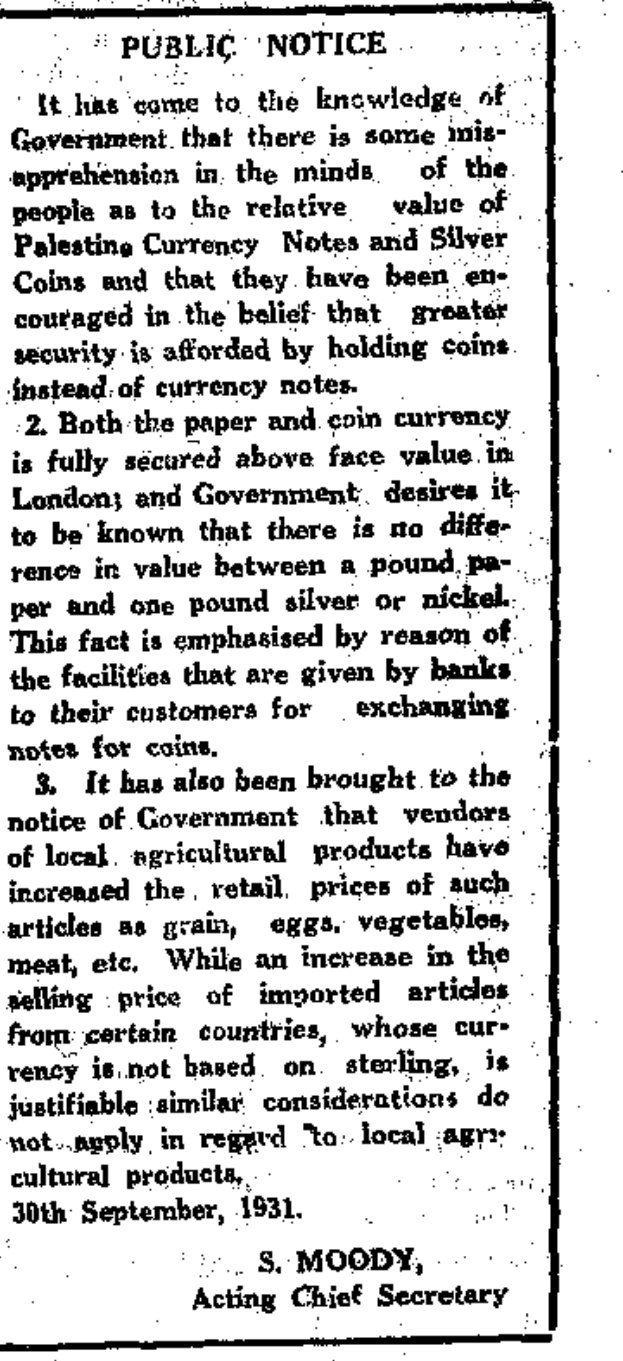
On 30 September the Government answered with a Public Notice, printed on the front page of The Palestine Bulletin the next day and signed by the Acting Chief Secretary, S. Moody. It had come to the Government's knowledge, the Notice said, that people believed there was more security in holding coin than in holding currency notes. Both were "fully secured above face value in London", and there was no difference in value "between a pound paper and one pound silver or nickel". It pointed to the banks, which changed notes for coin for their customers.
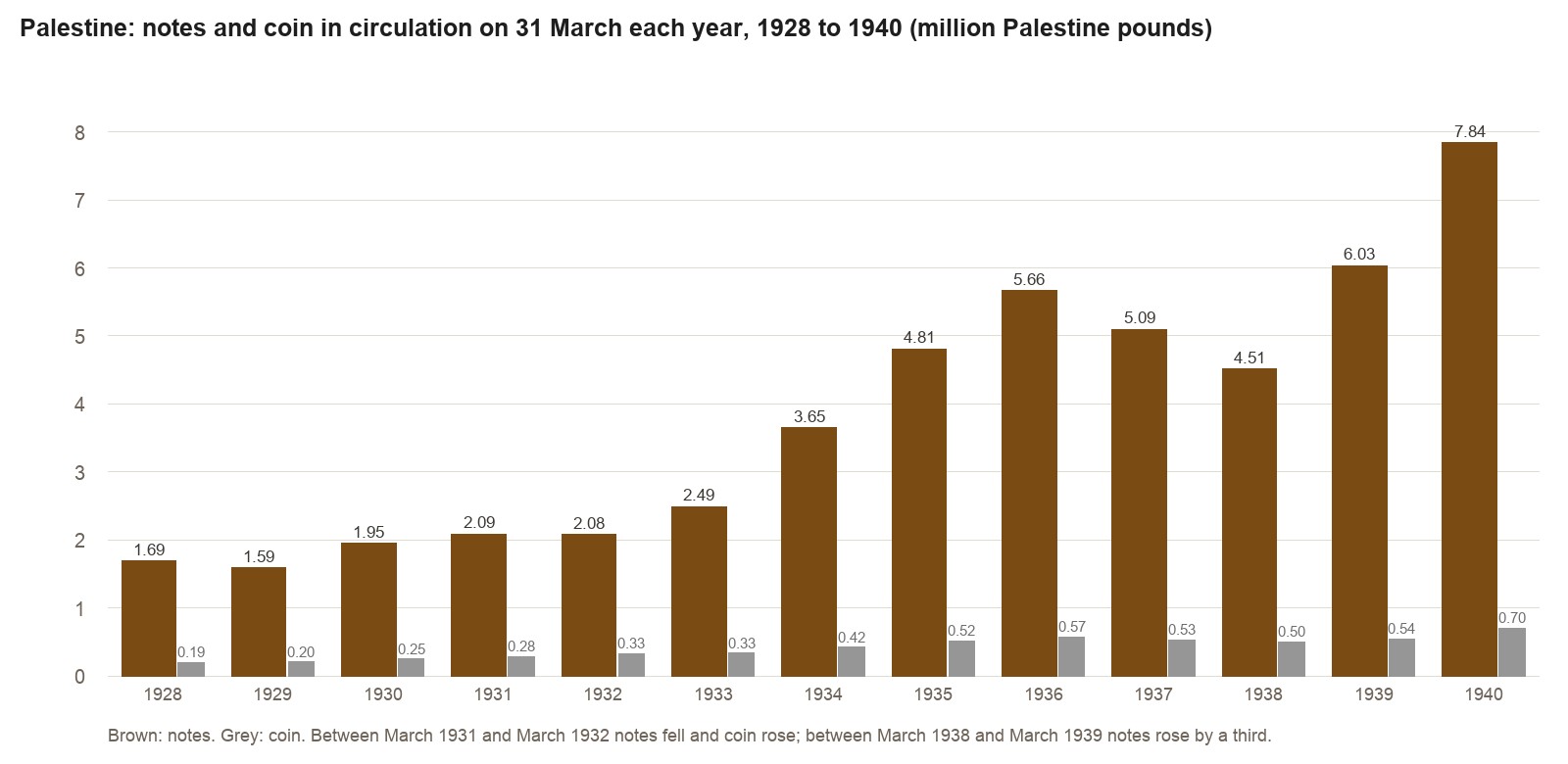
The Board's report for the year to 31 March 1932, summed up in the Bulletin of 12 December 1932 (p. 4), shows what happened: over the year the notes in circulation fell by 7,160 pounds while coin rose by 46,160. In September and October 1931, it says, the fellahin lost confidence in the paper pound and went back, more than before, to hoarding coin. Confidence returned later.
The figures by value, from the Palestine Blue Book:
| Value | 31 March 1931 | 31 March 1932 |
|---|---|---|
| 500 mils | 104,385 | 117,779 |
| 1 pound | 999,943 | 985,514 |
| 5 pounds | 648,770 | 643,815 |
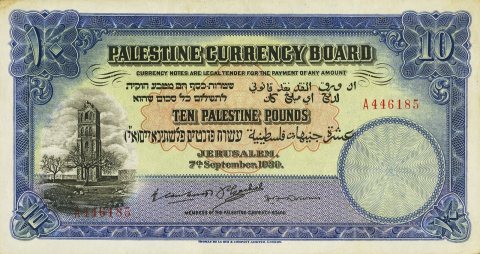
| 10 pounds | 231,880 | 244,710 |
| 50 pounds | 88,350 | 76,850 |
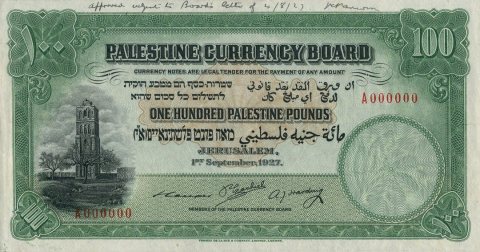
| 100 pounds | 12,000 | 9,500 |
| All notes | 2,085,328 | 2,078,168 |
All figures are in Palestine pounds. The fall was small, and it was in the 1 pound and the large notes; the 500 mils and the 10 pounds rose.
The Board itself took a knock that autumn. Its reserve was held in British and colonial government stocks, and when their prices fell the half-yearly statement of 30 September 1931 showed the investments worth 186,000 pounds less than they had cost (The Palestine Bulletin, 4 March 1932, p. 2). On that day there were 2,045,380 pounds of notes and 299,284 pounds of coin in circulation. By 26 January 1932 prices had recovered and the reserve again covered every note and coin.
1938: a rush for notes
Seven years later the fear ran the other way. The Board's report for the year to 31 March 1939 was summed up by The Palestine Post on 6 December 1939 (p. 5). Through the summer of 1938 the circulation had been shrinking. Then came the crisis in Europe over Czechoslovakia. Depositors drew their money out of the banks and the co-operative societies, and in September 1938 an extra 1,975,000 pounds of currency was needed. More than half of it, 1,090,000 pounds, went out to the banks on a single day, 28 September.
After the Munich agreement the money flowed back. But in February and March 1939 events in Europe again set people hoarding notes: 195,000 pounds more in February, 805,000 more in March. On 31 March 1939 the circulation stood at 6,574,134 pounds, which was 1,565,000 more than a year before.
By value, from the Board's yearly figures:
| Value | 31 March 1938 | 31 March 1939 |
|---|---|---|
| 500 mils | 298,509 | 384,854 |
| 1 pound | 1,926,530 | 2,457,821 |
| 5 pounds | 1,484,355 | 1,949,245 |
| 10 pounds | 734,340 | 1,046,470 |
| 50 pounds | 53,400 | 170,200 |
| 100 pounds | 14,700 | 23,800 |
| All notes | 4,511,834 | 6,032,390 |
Every value rose, and the 50 pounds most of all: from 1,068 notes to 3,404, which is what hoarding would do.
The notes that followed
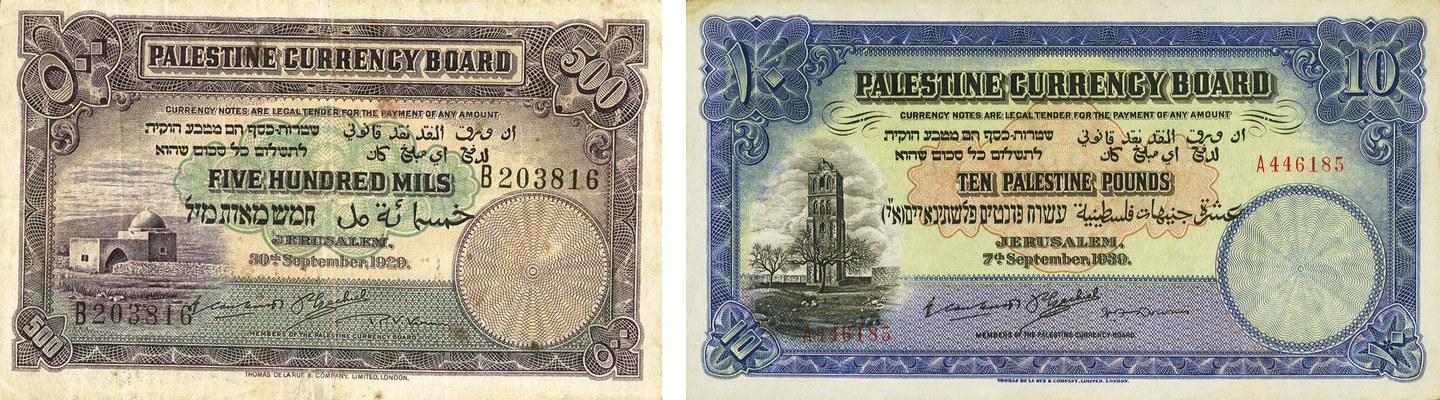
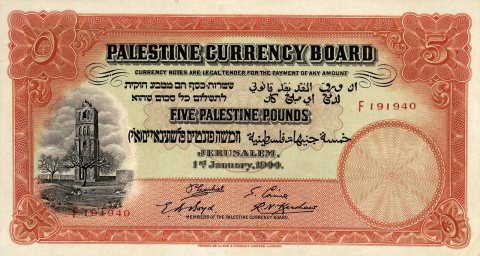
The dates printed on the next Palestine notes fall straight after these months: 20th April 1939 on the 500 mils, 1 pound and 5 pounds, and 7th September 1939, four days after Britain went to war, on the 10 and 50 pounds. The newspapers read for this article do not report the order for them or the day they came out, so the link is one of dates only. But the Board had just seen a third of its notes called for within a year, and its stocks were the same ones printed with the date of 1929.
What the two runs show
- In 1931 the doubt was about paper against silver, and it was small: 7,160 pounds of notes in a circulation of two million.
- In 1938 the doubt was about banks, and the answer was to hold notes: nearly two million pounds in a month.
- The 50 pounds, which had been falling out of use for ten years, came back in 1938 as a note to hold. It was given a new date, 7th September 1939, the year after.
The reports the newspapers summed up give totals. The figures by value are from the Palestine Blue Book for 1938 and from the Board's yearly tables as Jack H. Fisher printed them in The Shekel.
Member comments
Log in or register to post a comment.