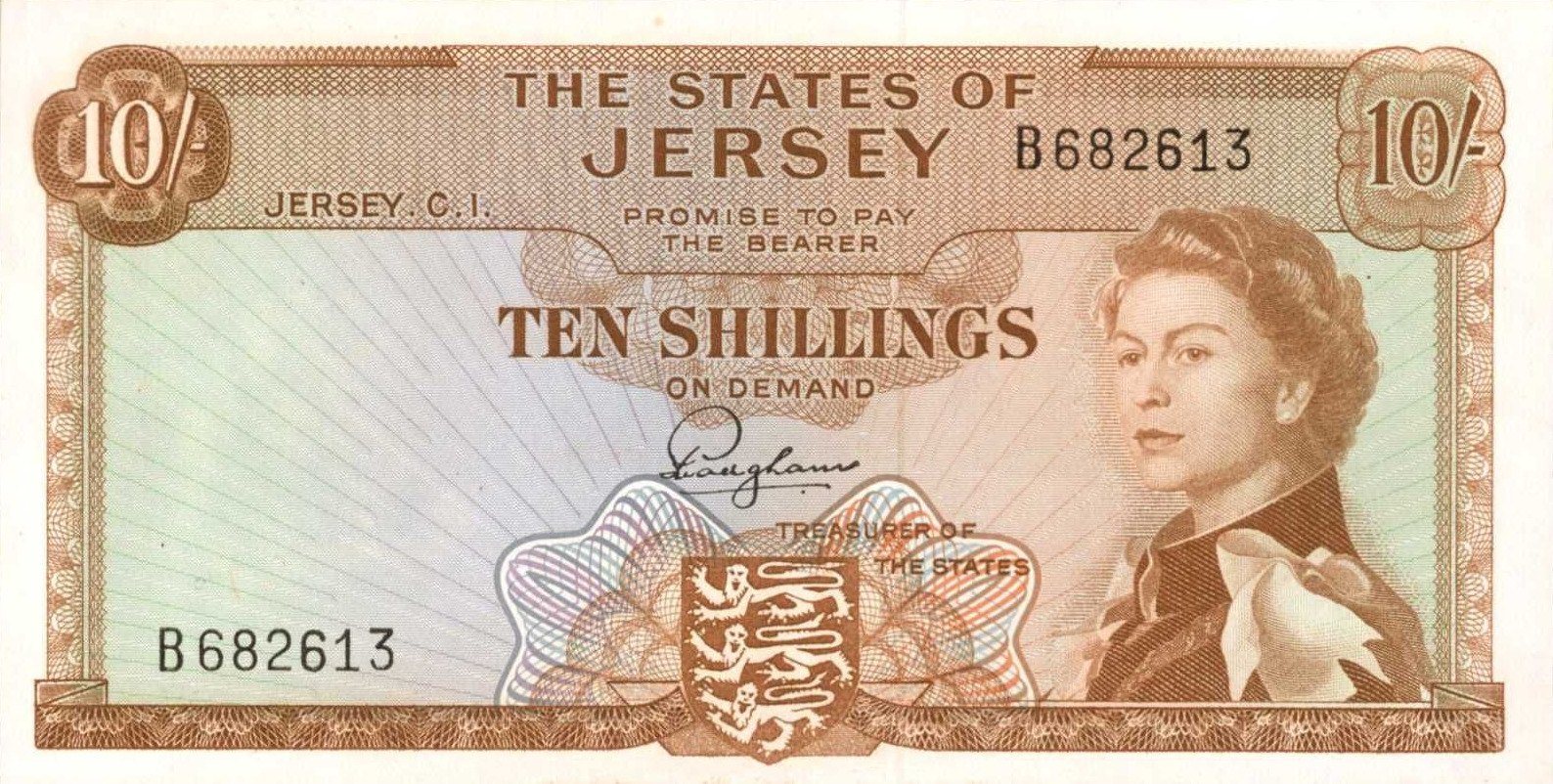
Every note of the States of Jersey since 1941 carries one signature, that of the Treasurer of the States. Most of the notes are undated, so the signature and the serial prefix are what place a note. This article follows the signers in order and sets out which prefixes each used. It is written from the catalogue pages, from Francis Thornton's articles in the Journal of the International Bank Note Society (IBNS), from Bank Note Reporter, and from Yasha Beresiner's article of 1970.
The office
The Treasurer's name is already on the oldest States note in the catalogue. The 5 pounds of 1 September 1840 was signed by hand by three members of a committee of the States and by the Treasurer, whose signature, with the number and the date, was written in when the note was issued. Remainders have the three committee signatures and no Treasurer's.
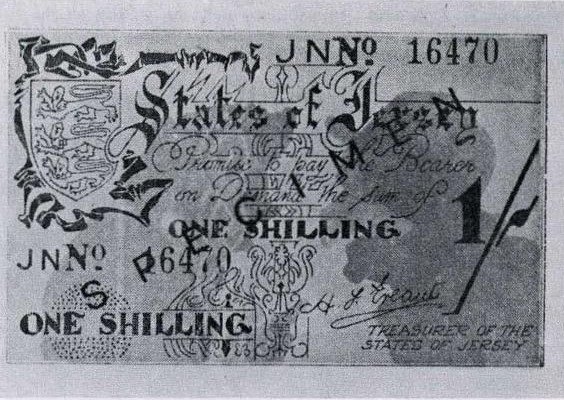
From 1941 the signature is printed. The title under it reads Treasurer of the States of Jersey on the occupation notes and Treasurer of the States from 1963.
Ereaut, 1941 and 1942
All six occupation notes, the 2 shillings of 1941 and the five values of 1942 from the 6 pence to the 1 pound, carry the signature of H. F. Ereaut and the one prefix JN. Yasha Beresiner ("An Excursion to Jersey", IBNS Journal, volume 10, number 2, 1970) gives the name in full as Herbert Frank C. Ereaut, born in Jersey at the end of the nineteenth century, in office some 35 years, retired in 1953 and dead in July 1969. The notes took their nickname, Dirty Berties, from the Treasurer. More on them is in the article on the occupation notes.
Padgham, 1963 to 1971
F. N. Padgham signed the first notes of July 1963. Francis Thornton's table of the issue ("Island of Jersey, Channel Islands, Part 1", IBNS Journal, volume 15, number 4, 1976) and the catalogue pages agree on the prefixes, each a single letter:
- 10 shillings: A, B and C, all Padgham. No 10 shillings with a later signature has been recorded.
- 1 pound: A to E.
- 5 pounds: A.
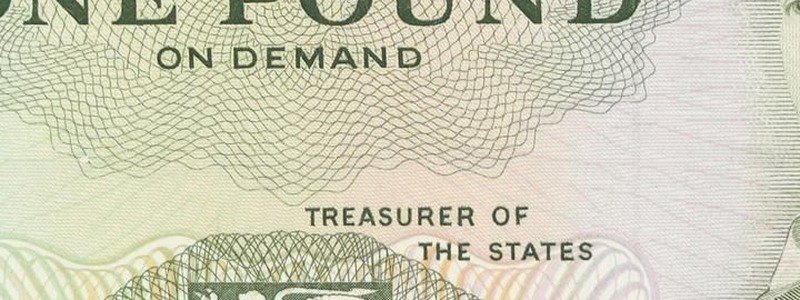
Beresiner, writing in 1970, calls Padgham the present Treasurer and records the one accident of the term: a small quantity of 1 pound notes issued without a signature by mistake. The catalogue page gives about 600 notes, all with prefix B. The website britishnotes.co.uk, which logs sightings sent in by collectors, records the unsigned notes in two blocks of numbers, both in prefix B. Beresiner adds that the Treasury could not give a straight answer on whether it would treat an unsigned note as legal tender. The catalogue lists the unsigned notes as P-8b and the later Clennett notes as P-8c; other catalogues, grading companies and auction houses use the two letters the other way round, as the 1 pound page explains.
Clennett, 1971 to 1983
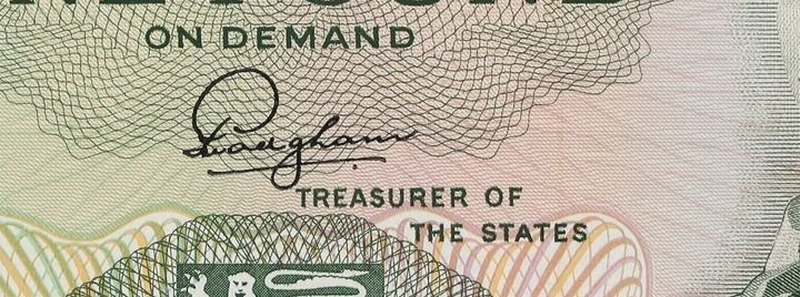
Thornton dates the appointment of J. Clennett as Treasurer to July 1971. Bank Note Reporter gives the first name as John. Clennett's signature went on to the existing notes of 1963 and on to the new 10 pounds:
- 1 pound: F to K.
- 5 pounds: B and C.
- 10 pounds: A only.
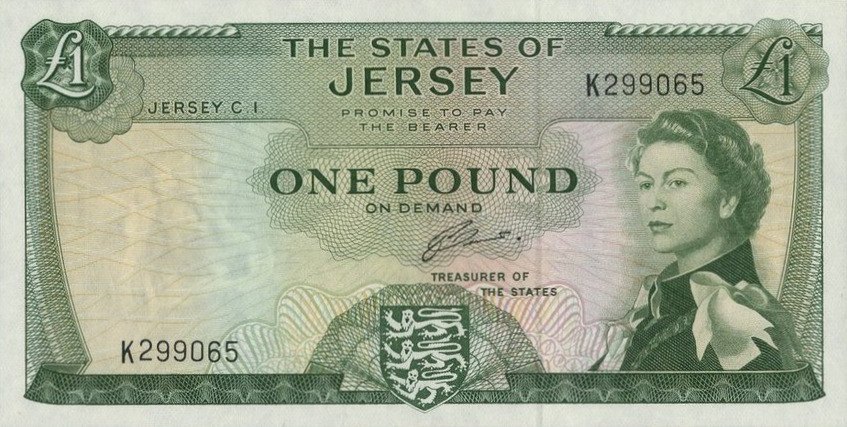
With Clennett came the replacement note with the prefix Z, described in the article on printers, replacement notes and specimens.
The series of 1976 began with two-letter prefixes at AB on all four values, signed by Clennett. On the 1 pound Clennett's signature runs from AB to LB. Thornton, updating the series in 1986, remarks that a new 1 pound prefix had come out in almost every year, while the other values were ordered as trade and the banks needed them.
May, 1984 to the first notes of Baird
Thornton ("Modern Currency Note Update", IBNS Journal, volume 25, number 1, 1986) gives 1 January 1984 as the day Leslie May became Treasurer. The new signature did not reach the notes at once, and when it came it broke with past practice. Under Padgham and Clennett a new signature had begun with a new prefix. May's signature was brought in partway through prefixes that Clennett had begun. Thornton warns collectors that a set of first and last prefixes becomes harder to build when the change falls inside a prefix.
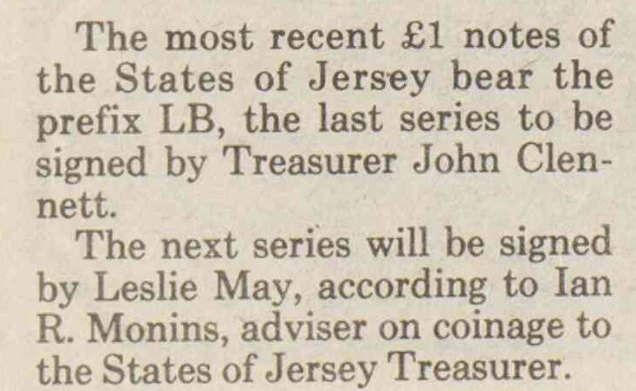
1 pound. Here the old rule held. Bank Note Reporter of July 1985, under the heading "John Clennett signs last Jersey notes", reported that the newest 1 pound notes bore the prefix LB, the last series to be signed by Clennett, and that the next would be signed by Leslie May. In October 1985 the same paper reported that 1 pound notes with the prefix MB had recently been released. Both reports came from Ian Monins, the numismatic adviser to the States of Jersey Treasury. May's 1 pound notes run from MB to TB, and no 1 pound prefix is shared. (The caption to the picture in the July 1985 report gives MB as Clennett's last prefix. The text of the report and the notes recorded say LB, and the October report has MB as newly released.)
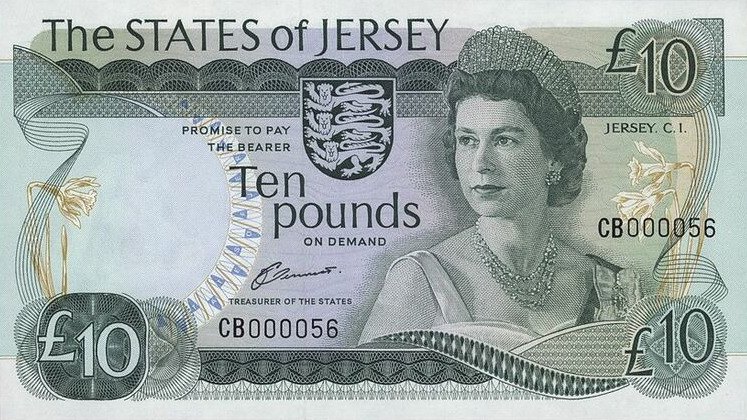
10 pounds. Thornton, in the article of 1986, gives the exact place on the 10 pounds: Clennett signs the DB notes from 000001 to 900000 and May from 900001. A DB note is therefore placed by its signature. Thornton was told that, because a specimen existed for the DB prefix under Clennett, no further specimen would be made for the same prefix with May's signature. May's 10 pounds then continue with EB.
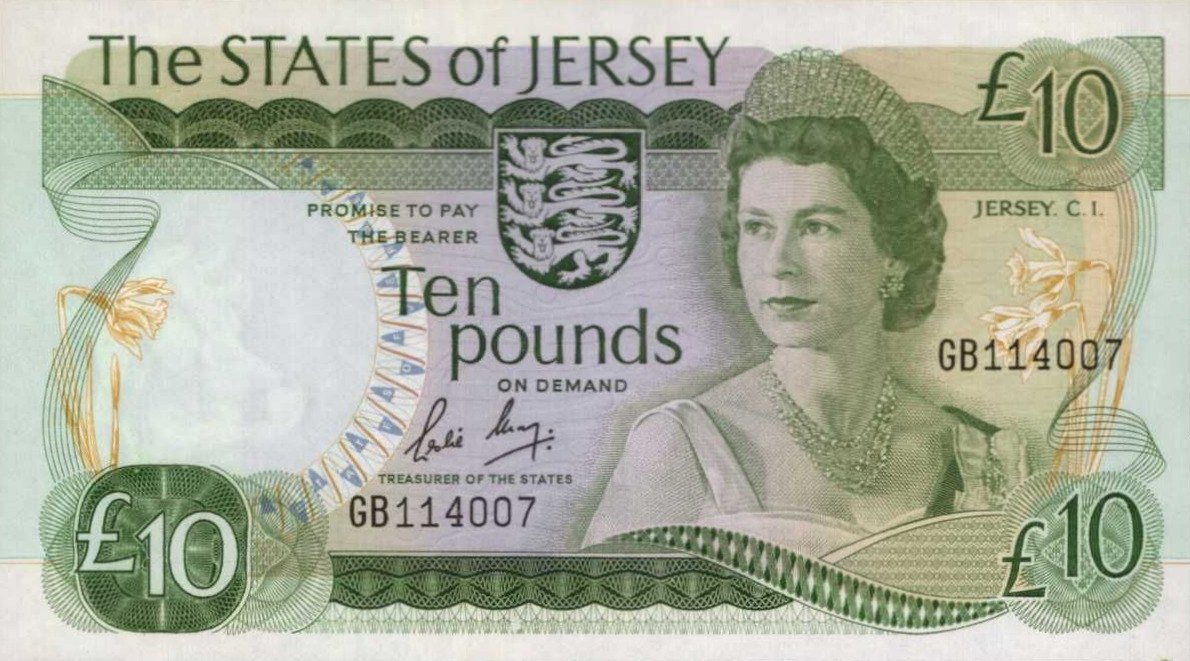
5 pounds. An unsigned item in Bank Note Reporter of August 1986, drawn from a Jersey dealer, says that the signature changed midway through a prefix: Clennett signed 400,000 notes and May's signature began on GB 400001. The notes recorded on the page of the 5 pounds agree. The same item names both the 5 pounds and the 10 pounds for this change. That cannot be right for the 10 pounds, which changes inside DB as Thornton says. May's 5 pounds carry GB, HB, JB and KB.
20 pounds. On the 20 pounds the signer changes once inside AB, the only prefix Clennett used, and May's notes continue in AC. The exact number is not settled. Spink's lot text puts the first May note at AB 750001.
In 1989 May's signature opened the new, smaller series, with every value starting again at AC. One consequence is that AC appears with May's signature on two different 20 pound notes, the last of the 1976 design and the first of the 1989 design. They are told apart by size and by the back: Gorey Castle on the larger note, Saint Ouen's Manor on the smaller.
May, Baird and Black on one design, 1989 to 2010
The designs of 1989 were issued with three signatures in turn, and the prefixes run on from one to the next. Thornton (IBNS Journal, volume 31, number 2) records the first note of George Baird, a 5 pounds with prefix CC, in December 1991. The catalogue pages date the other Baird notes to 1993 and those of Ian Black to 2000. The prefixes divide like this:
| Value | May, from 1989 | Baird, from 1993 | Black, from 2000 |
|---|---|---|---|
| 1 pound | AC to GC | GC to RC | SC to ZC, then AAC to AEC |
| 5 pounds | AC, BC | CC to JC | KC |
| 10 pounds | AC to CC | DC to MC | NC to TC |
| 20 pounds | AC, BC | BC to JC | KC to QC |
| 50 pounds | AC | AC | AC, then BC |
Three prefixes are shared between two signers or more: GC on the 1 pound (May and Baird), BC on the 20 pounds (May and Baird) and AC on the 50 pounds (all three). For those the signature alone decides, and specimens with the all-zero number exist with each of the signatures concerned. Where the signature cannot be seen, the 5, 10 and 20 pounds of May can still be told from those of Baird by the value at the upper right of the front: outlined on May's notes, filled with colour on Baird's. Thornton noticed the same change on the first Baird 5 pounds.
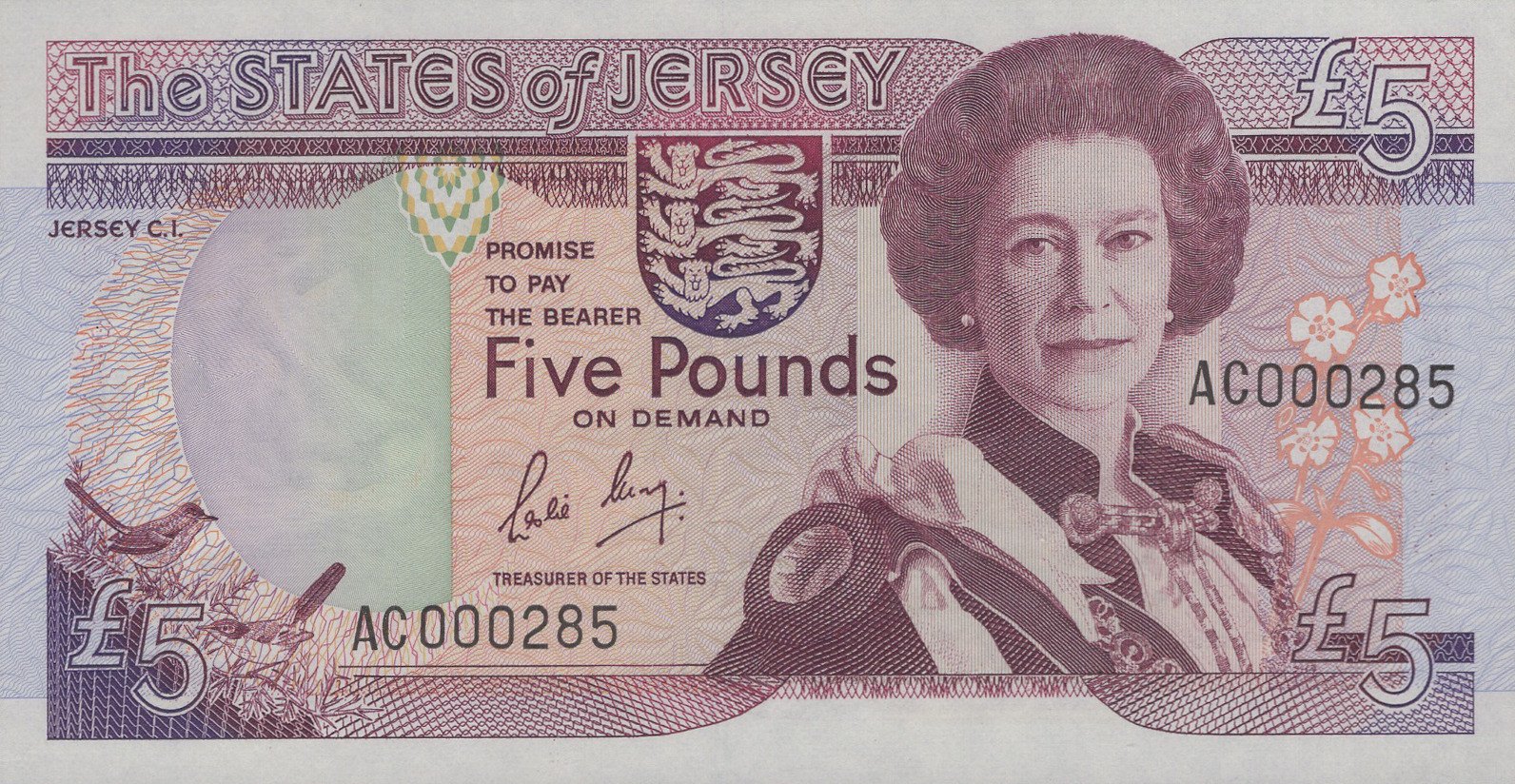
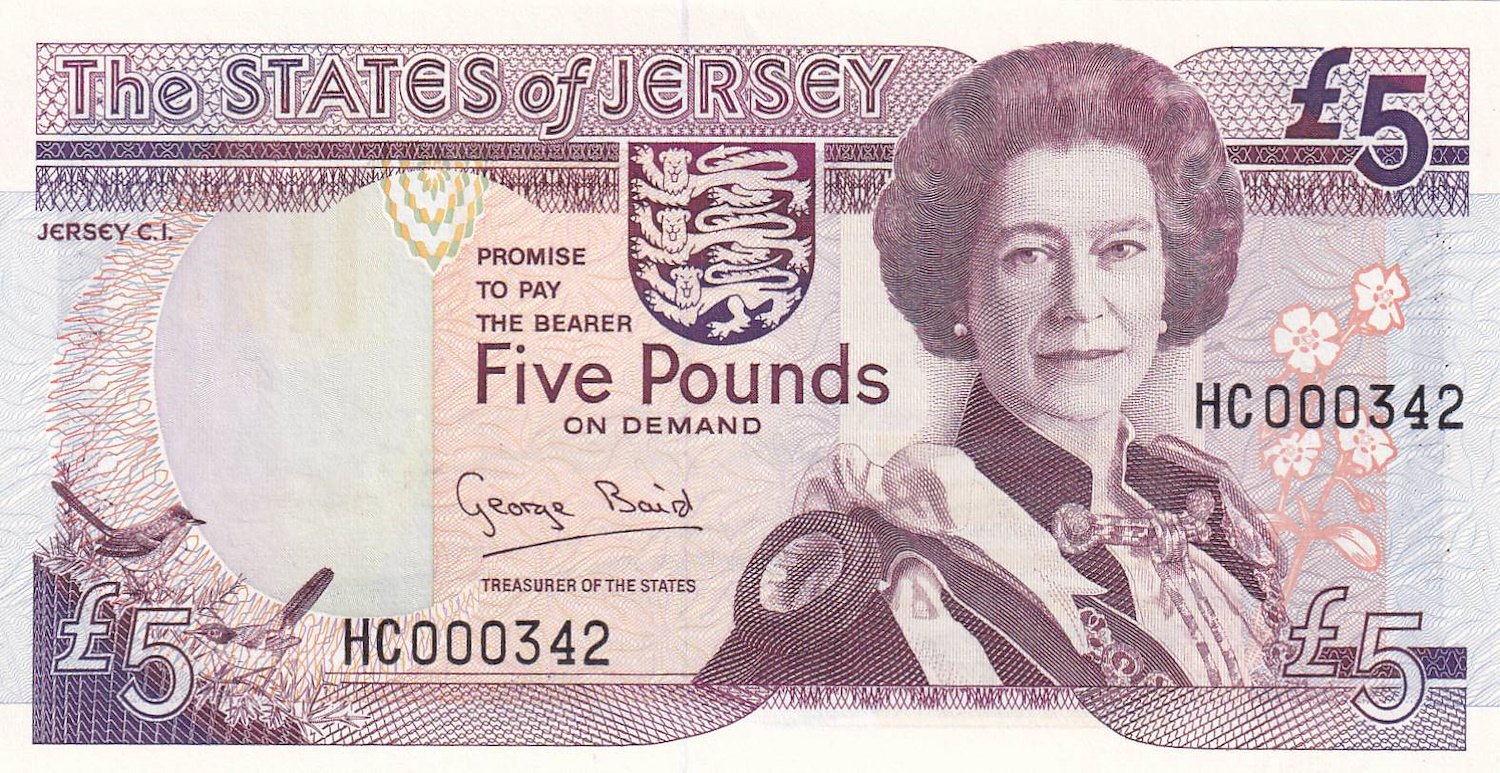
Baird also signed the 1 pound of 9 May 1995 for the anniversary of the Liberation, with the prefix LJ, and Black the 1 pound of 2004 for 800 years of Jersey, with the prefix J8C.
Black, Rowley and Bell on the notes of 2010
The series of 2010 began with Black's signature on every value and the prefix AD. Two later Treasurers appear on it, and here the prefixes do not line up from one value to the next:
- 1 pound: Black on AD to HD; Bell on HE to HG.
- 5 pounds: Black on AD, the only prefix recorded.
- 10 pounds: Black on AD, BD and CD; Rowley from DD.
- 20 pounds: Black on all four prefixes, AD to DD. A DD note is Rowley's on the 10 pounds and Black's on the 20 pounds.
- 50 pounds: AD with both Black's signature and Bell's. Where Bell's printing begins is not settled.
The page of the 1 pound gives February 2018 as the start of Bell's term. Rowley's signature is also the one on the 100 pounds of 2012, according to London Coins (1 September 2019, lot 320, which gives the name as L. Rowley) and to britishnotes.co.uk.
The signers in one table
| Treasurer | Notes signed | What the sources say of the term |
|---|---|---|
| H. F. Ereaut | the six occupation notes, 1941 and 1942 | in office some 35 years, retired 1953 (Beresiner) |
| F. N. Padgham | 10 shillings, 1 pound and 5 pounds of 1963 | Treasurer in 1963 and still in 1970 (Beresiner) |
| J. Clennett | 1, 5 and 10 pounds of the 1963 design; the series of 1976 | appointed July 1971 (Thornton) |
| Leslie May | the later notes of the 1976 series; the series of 1989 | Treasurer from 1 January 1984 (Thornton) |
| George Baird | 5 pounds from December 1991; the notes of 1993; the 1 pound of 1995 | first note December 1991 (Thornton) |
| Ian Black | the notes of 2000; the 1 pound of 2004; the series of 2010 | no date in the sources read |
| L. Rowley | 100 pounds of 2012; 10 pounds of the 2010 series from DD | no date in the sources read |
| Bell | 1 pound and 50 pounds of the 2010 series | in office from February 2018 (the 1 pound page) |
What is not known
- The dates on which Baird, Black and Rowley took office. The catalogue pages and the journals give only the dates of the notes.
- The first names of Padgham and Bell, which no source read for this article gives.
- The number at which May's signature takes over on the 20 pounds of 1976, apart from Spink's statement.
- Where Bell's signature begins on the 50 pounds of 2010.
- Why the 20 pounds with prefix DD carries Black's signature when the 10 pounds with DD carries Rowley's.
Sources
- Francis Thornton, "Island of Jersey, Channel Islands, Part 1: Currency and Specimen Notes", IBNS Journal, volume 15, number 4, 1976.
- Francis Thornton, "Modern Currency Note Update", IBNS Journal, volume 25, number 1, 1986.
- Francis Thornton, "Channel Island Update: The Reduced Size Notes of the States of Jersey and Guernsey", IBNS Journal, volume 31, number 2.
- Yasha L. Beresiner, "An Excursion to Jersey", IBNS Journal, volume 10, number 2, 1970.
- Bank Note Reporter, "John Clennett signs last Jersey notes", July 1985; "Jersey offers new pound notes", October 1985; "Jersey, Guernsey notes interesting study", August 1986.
- britishnotes.co.uk, Jersey prefix sightings, https://britishnotes.co.uk/news_and_info/prefix_sightings/jersey.php (the copy saved on 11 November 2026).
- London Coins, 1 September 2019, lot 320; Spink's lot text on the 20 pounds of 1976, as quoted on the catalogue page.
- The catalogue pages of Jersey.


Member comments
Log in or register to post a comment.