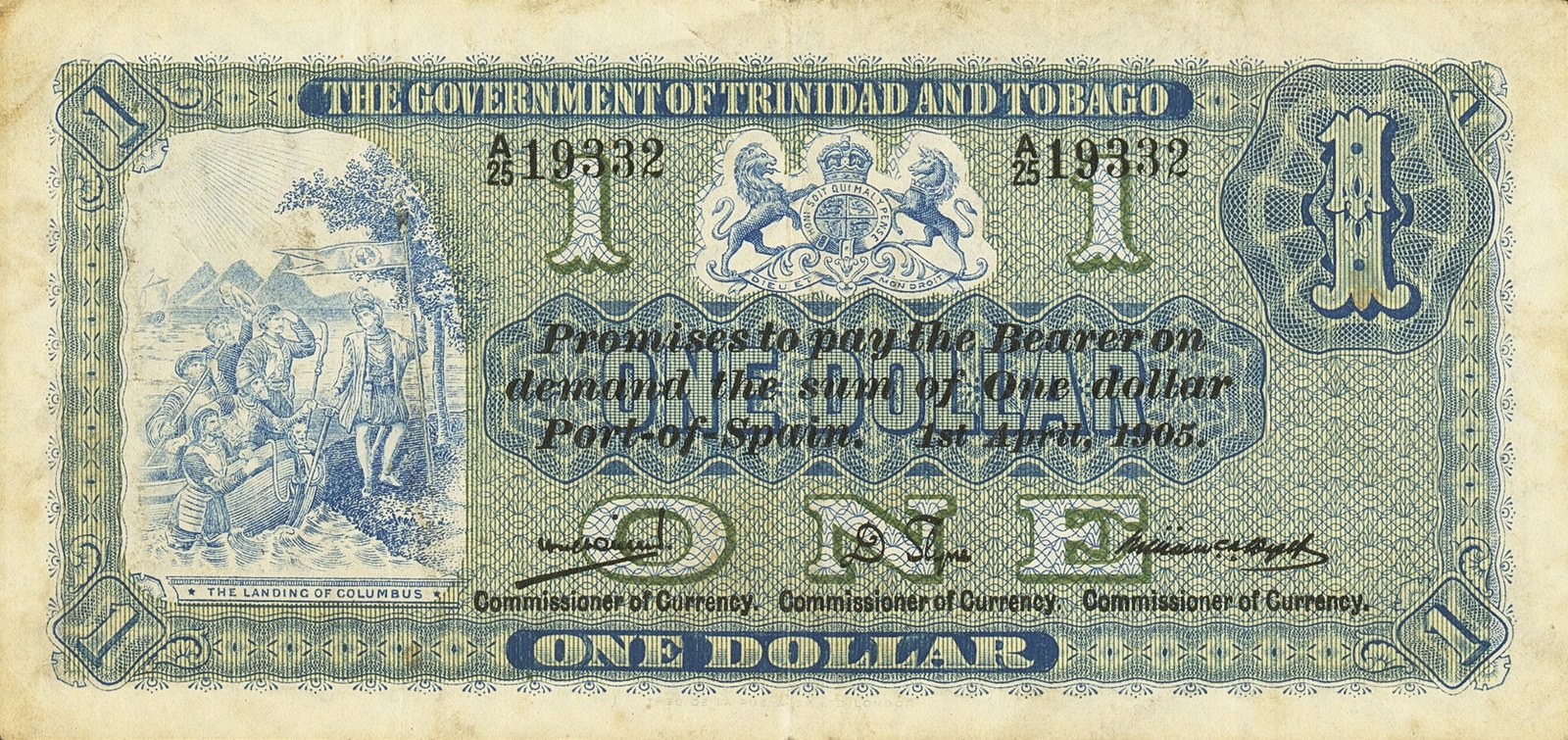
This article follows the Government notes of Trinidad and Tobago from the Ordinance of 1903 to the day in January 1936 when the first two series ceased to be legal tender. It is drawn from the catalogue's pages, which rest on the colony's Blue Books and Year Books, the annual reports, the Port of Spain Gazette and the Royal Gazette, and from what the auction houses have written about single pieces. The notes of 1935 to 1949 have an article of their own.
The Ordinance of 1903 and the Board
The Government Currency Notes Ordinance of 1903 (No. 16 of 1903) set up the Board of Commissioners of Currency. It had three members: the Colonial Secretary, the Receiver-General and one member from outside the salaried public service. The Board had the right to issue notes of 1 and 2 dollars against gold and silver coin. The revised edition of the Ordinance (No. 244) names "one dollar and two dollars" only, with the amounts fixed by the Commissioners, and an amending Ordinance, No. 4 of 1905, followed on 13th March 1905. The 1,000 dollars was allowed later, by a law of its own.
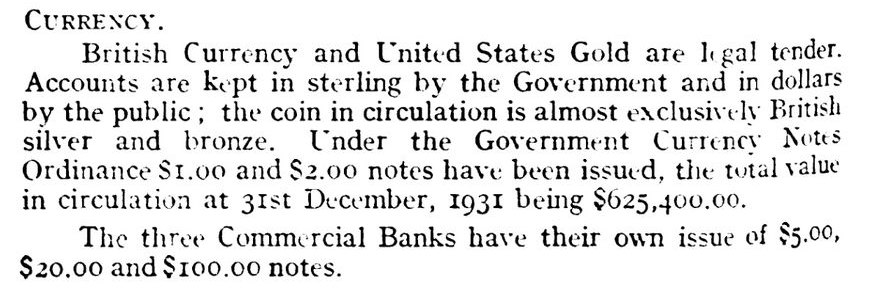
The higher values were not the Government's. The annual report for 1931 says the 5, 20 and 100 dollar notes were left to the three commercial banks. Lyn Knight's description of lot 1467 in its sale of 13 June 2014 names them as the Royal Bank of Canada, the Canadian Bank of Commerce and the Colonial Bank, and says the Government kept the notes below 5 dollars to itself so that people of small means would not lose by a bank failure. That reason is the house's statement; the pages do not give one.
The design competition of 1904
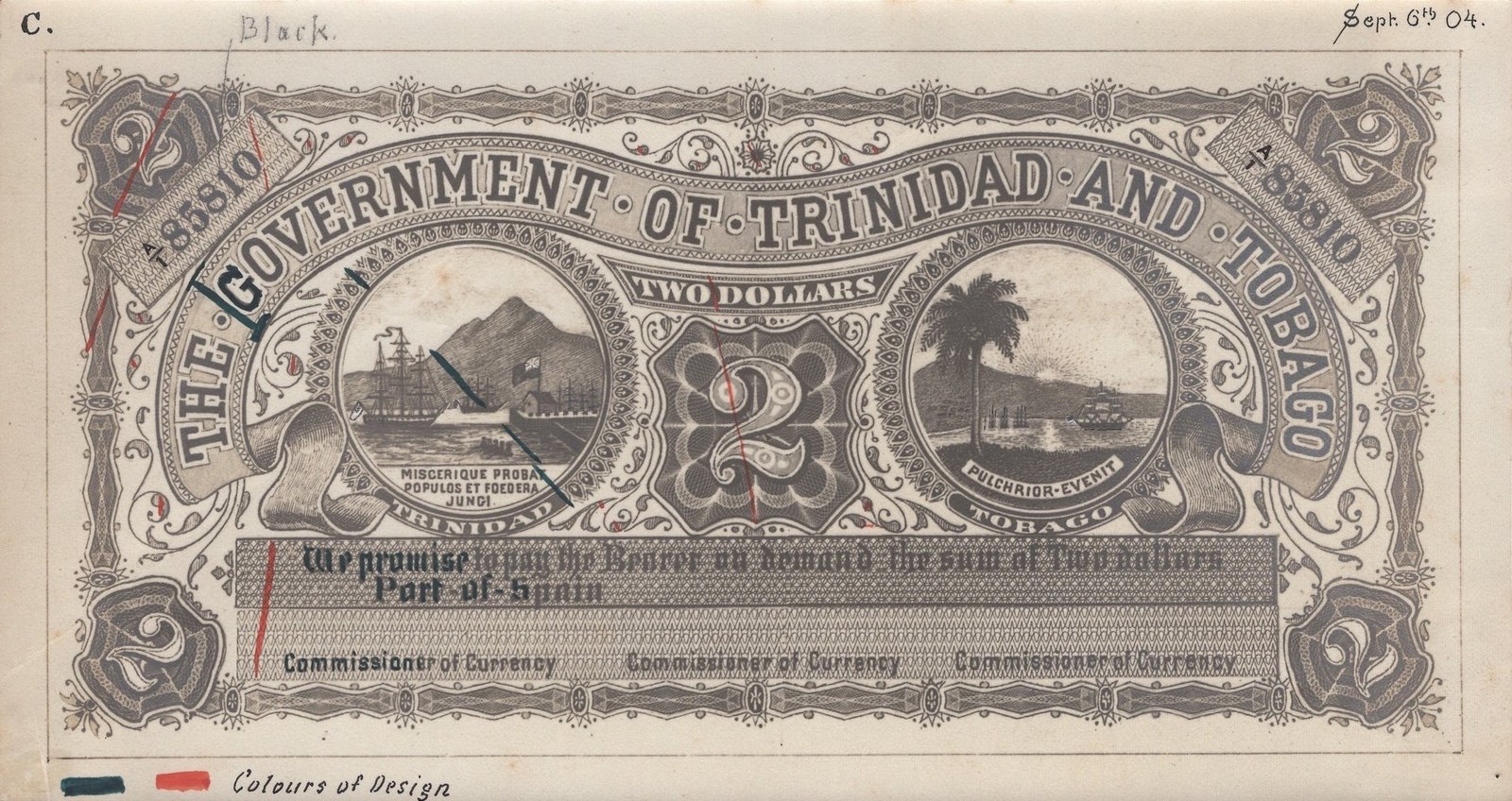
The designs came from a public competition held by the Government in 1904. The Port of Spain Gazette of 21st June 1904 names the two winners: Philip John of the Royal College for the 1 dollar, with the landing of Columbus and the Three Sisters, and C. Zepero of St. Joseph for the 2 dollars, with the arms of Trinidad and of Tobago on the front and cane and a cocoa tree on the back. The same report says the notes were to be of the size of the Canadian issue, a trifle smaller than those of the Colonial Bank.
Thomas de la Rue worked the rough designs up for printing. The Port of Spain Gazette of 2nd February 1906 says the firm produced the finished design from the rough designs and from photographs sent from Trinidad. Three archival photographs of that work survive: Noonans' description of lot 548 in its sale of 27 May 2026 says they show the front and back of the 1 dollar and the front of the 2 dollars, are lettered A, B and C, carry the date "Sept. 6th 04" and no signatures, and differ in wording from the issued notes.
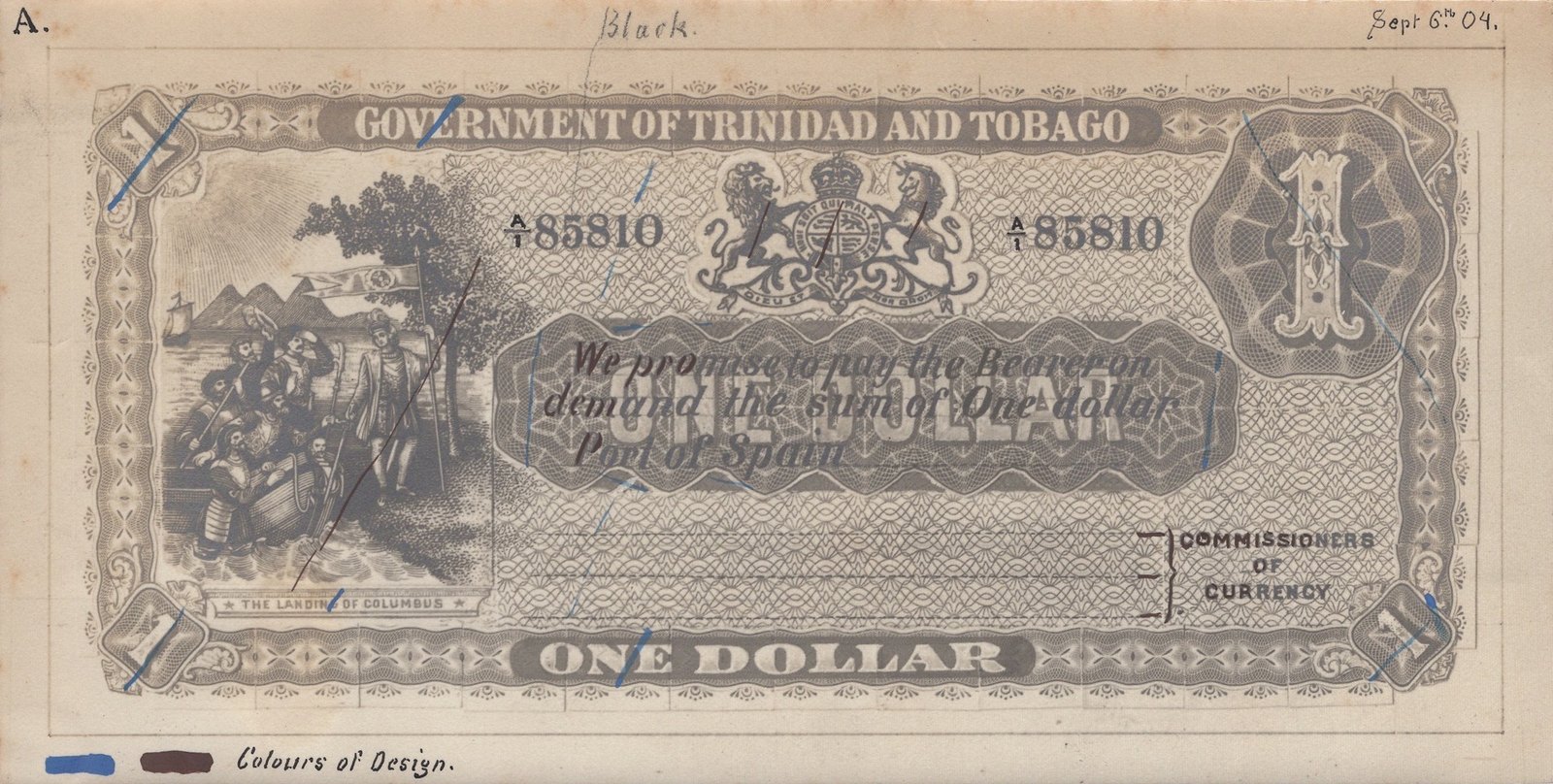
One proof of the 1 dollar was cut into three pieces for a test with carbolic and creosote. Christoph Gärtner, which offered it on 27 October 2015 as lot 38596 and four times afterwards, says the left half was left untreated and the two right quarters were treated, and that the piece came from the American Bank Note Company archives. The notes were printed by Thomas de la Rue, and nothing on record shows how the piece would have reached that archive.
The first issue, 1st February 1906
The 1 and 2 dollars are dated 1st April 1905 and were first issued on 1 February 1906. The printed signatures are those of the first Board: Clifford, Slyne and Dyett. The Port of Spain Gazette of 2nd February 1906 adds that each note was also signed by hand by one of the junior clerks. The 1 dollar of prefix A/25 pictured in the catalogue shows only the three printed signatures on its front, so the hand signing, if it was done, was on the first notes only or is not on the front.
The 1905 printings were numbered first with a short horizontal bar in the prefix, between the A and the number of the fraction, and then without it. On the 1 dollar the prefixes A/1 to A/16 have the bar and A/19 to A/34 have none; on the red 2 dollars A/4 to A/9 have it and A/10 has none. The 2 dollars also came in two colour schemes: green title band and vignettes on a red frame on prefixes A/1 and A/2, and red throughout on A/4 to A/10. Stack's Bowers, in its description of lot 50614 of 8 May 2025, makes the same point: the green and red notes are the earlier ones, and the Pick catalogue has the two varieties in the wrong order.
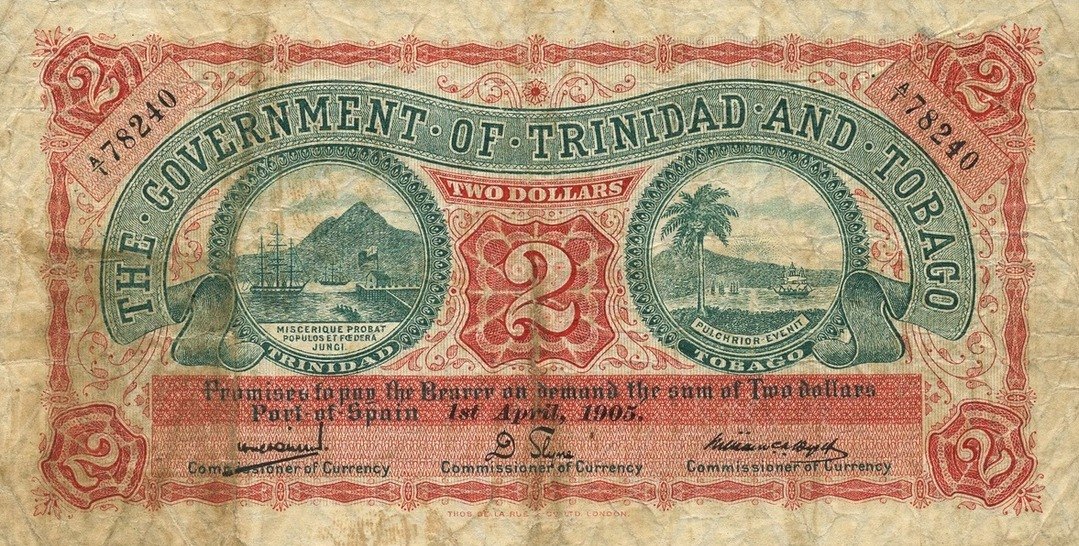
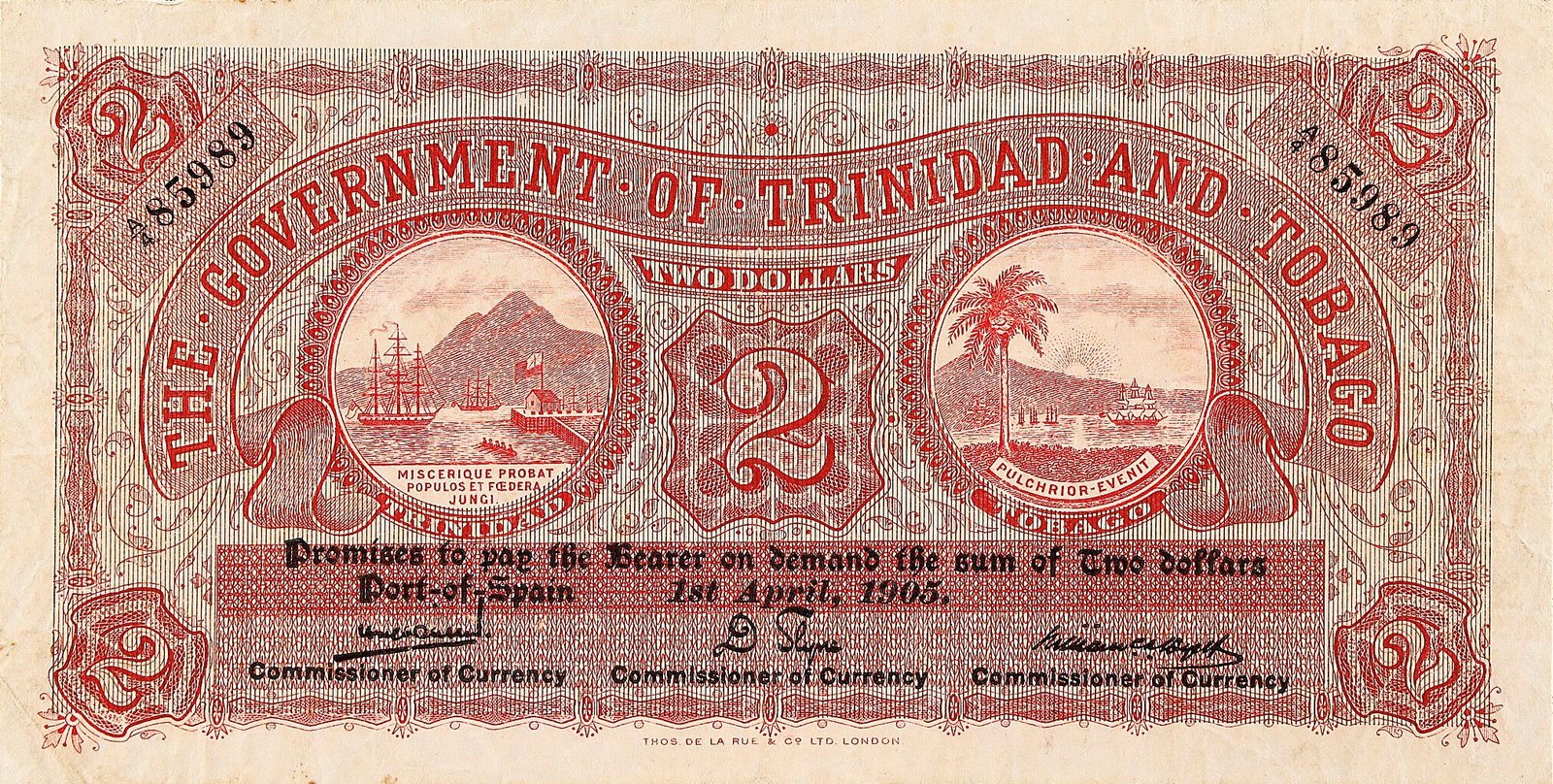
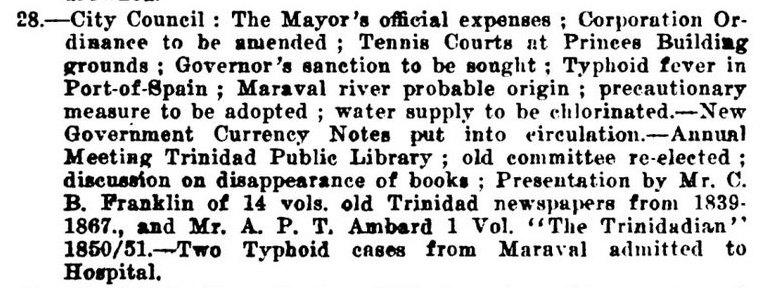
The 1 dollar was reprinted with the dates of 1st January 1924 and 1st March 1926. The Year Book's local events record new Government currency notes put into circulation on 28th February 1924, which fits the first of those dates. No reprint of the 2 dollars is on the pages.
The Board changed, the signatures did not
The 1905 notes kept the printed signatures of the first Board long after it had changed. By the Blue Books and Year Books:
- Samuel William Knaggs was Colonial Secretary from 31st May 1907, and Thomas Alexander Vans Best from 1st October 1919.
- The member from outside the service was the Hon. Adam Smith by 1911 and Joseph Brown from 1921 to 1923.
- Denis Slyne, Receiver-General from 15th February 1903, sat on every Board until 1923.
Yet every 1 dollar dated before 1924 that the catalogue records, and every 2 dollars, is signed Clifford, Slyne and Dyett.
The 1,000 dollars of 1914
The Ordinance that allowed the 1,000 dollars was passed by the Legislative Council on 21st May 1913. The Port of Spain Gazette of the next day gives the reason: the note would ease the settlement of balances between the banks. The Ordinance, No. 21 of 1913, received the Governor's assent on 16th June 1913, and the first notes were issued on 12 June 1914.
The note carries two dates. With the date of 1st January 1914 and the signatures of Knaggs, Slyne and Smith it is known as a specimen. With the date of 1st April 1914 it is known from a photographic proof. The finished green pieces perforated CANCELLED print no date, serial number or signatures. No issued note is known: the type survives only in specimen and cancelled form.
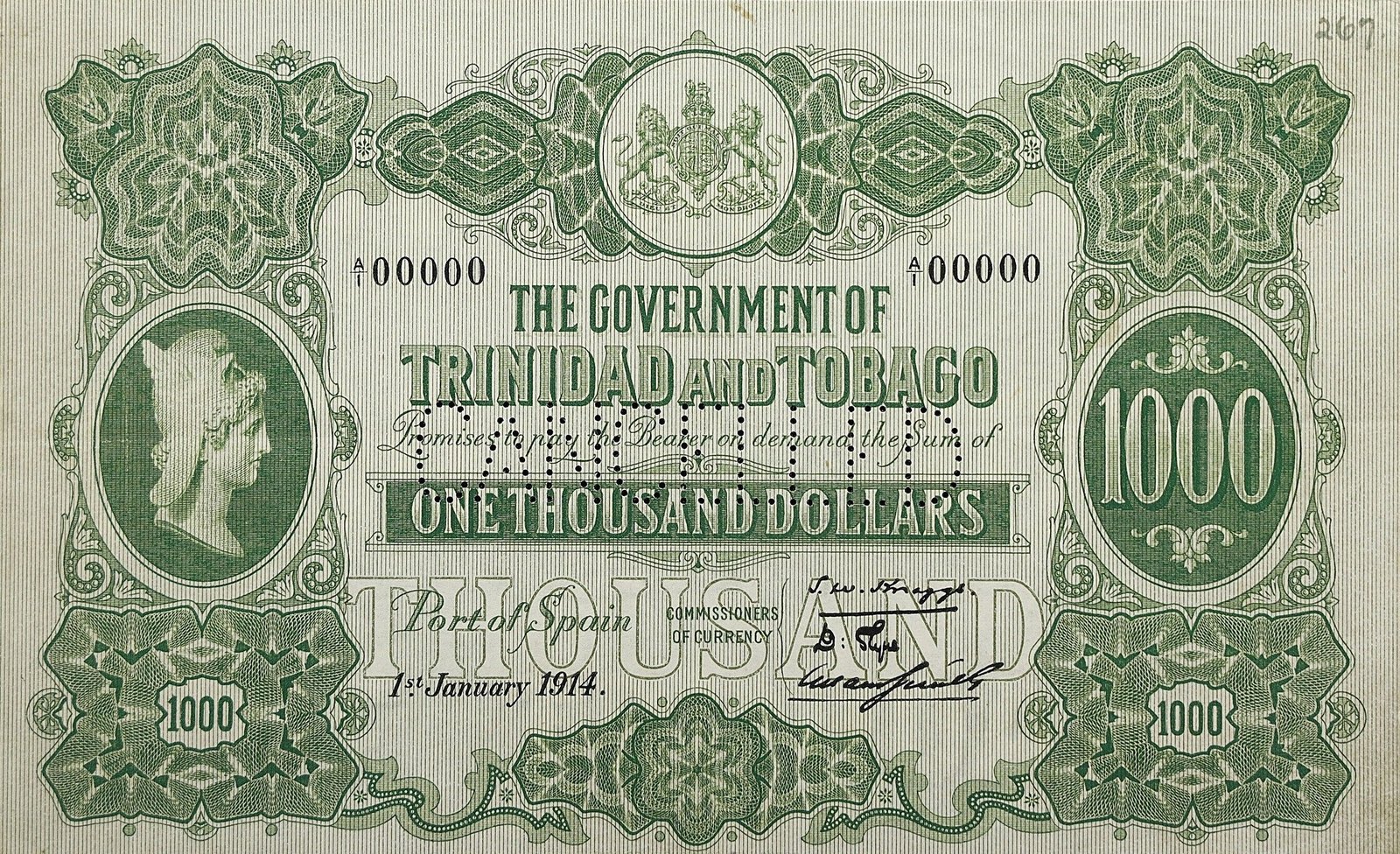
It was in real use all the same. The Blue Books count the notes out: 202 at the end of 1915, 491 at the end of 1920, the most, and 89 at the end of 1922. Stack's Bowers (4 May 2023, lot 50769) quotes the Blue Book for 1914 to 1915, and Lyn Knight (20 March 2019, lot 45390) prints the same passage without naming the book: it gives the Government notes in circulation at the end of that financial year as 636,960 dollars, of which 102,000 dollars were in 1,000 dollar notes.

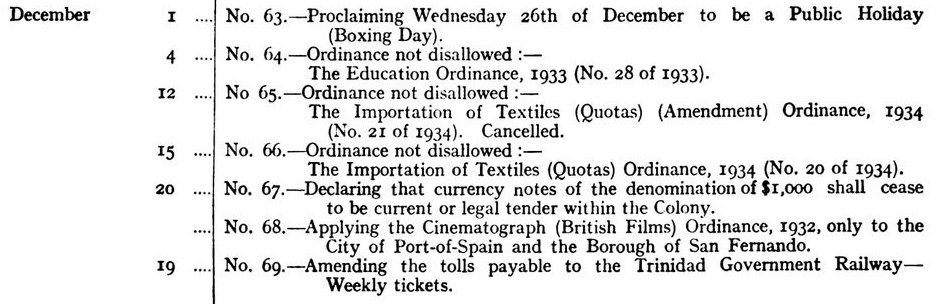
The Economic Survey of the Colonial Empire for 1933 says it was then proposed to demonetise them. A Proclamation of December 1934 (No. 67) declared that they should "cease to be current or legal tender within the Colony", and the Blue Book for 1934 says they "were demonetised in December, 1934".
Of the finished green pieces, Lyn Knight said in 2014 that the only other one known was a former Crown Agents example held at the British Library. A second has been sold since: the one ex the Amon Carter and Christensen Collections, offered by Lyn Knight on 20 March 2019 and by Stack's Bowers on 4 May 2023. Both houses say the Standard Catalog lists the type only as uniface proofs in black, and that the proofs pictured there carry hand artwork dated 29th August 1913.
Notes in circulation, 1914 to 1931
These are the figures the sources give. They are totals by value; no source on the pages gives the number of 1 or 2 dollar notes printed.
| Date | Government notes in circulation | Source |
|---|---|---|
| 31st March 1914 | 576,960 dollars | Blue Books |
| End of the financial year 1914 to 1915 | 636,960 dollars, of which 102,000 dollars in 1,000 dollar notes | Blue Book for 1914 to 1915, as quoted by Stack's Bowers (4 May 2023, lot 50769) |
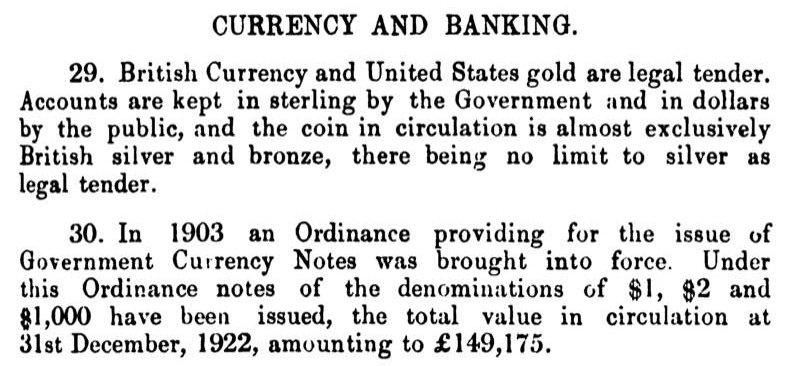
| End of 1919 | 1,000,040 dollars | Blue Books |
| End of 1920 | 1,450,040 dollars, the highest, of which 491,000 dollars in 1,000 dollar notes | Blue Books |
| 31st December 1922 | 149,175 pounds, in notes of 1, 2 and 1,000 dollars | Annual report on Trinidad and Tobago for 1922 |
| End of 1925 | 587,000 dollars | Blue Books |
| 31st December 1931 | 625,400 dollars, in notes of 1 and 2 dollars | Annual report for 1931 |
The designs of 1st January 1929
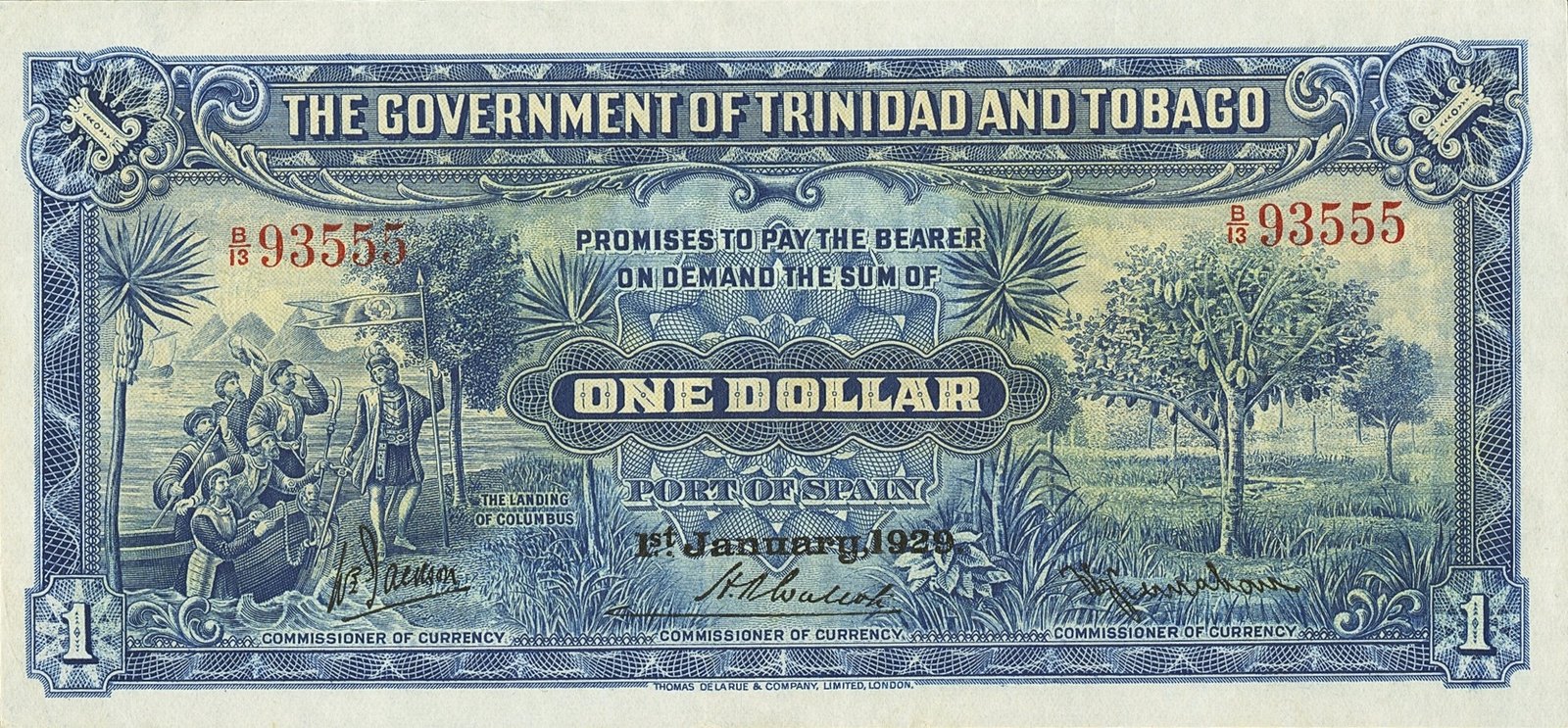
New 1 and 2 dollars dated 1st January 1929 were the last notes of the Board of 1903. The Year Book's local events say the new notes "of altered design" were in circulation in the week of 24th August 1929.
The 1 dollar of 1929 is signed by Jackson, Walcott and Kernahan and runs from B/1 to B/13. It was reprinted with the date of 1st January 1932, signed by Grier, Bayles and Kernahan, on B/14 to B/25. The 2 dollars of 1929, with the same three signatures, carries B/1 to B/6; its reprint of 1st May 1934, signed by Grier, dos Santos and George, carries B/9 to B/12. B/7 and B/8 have not been recorded on either date.
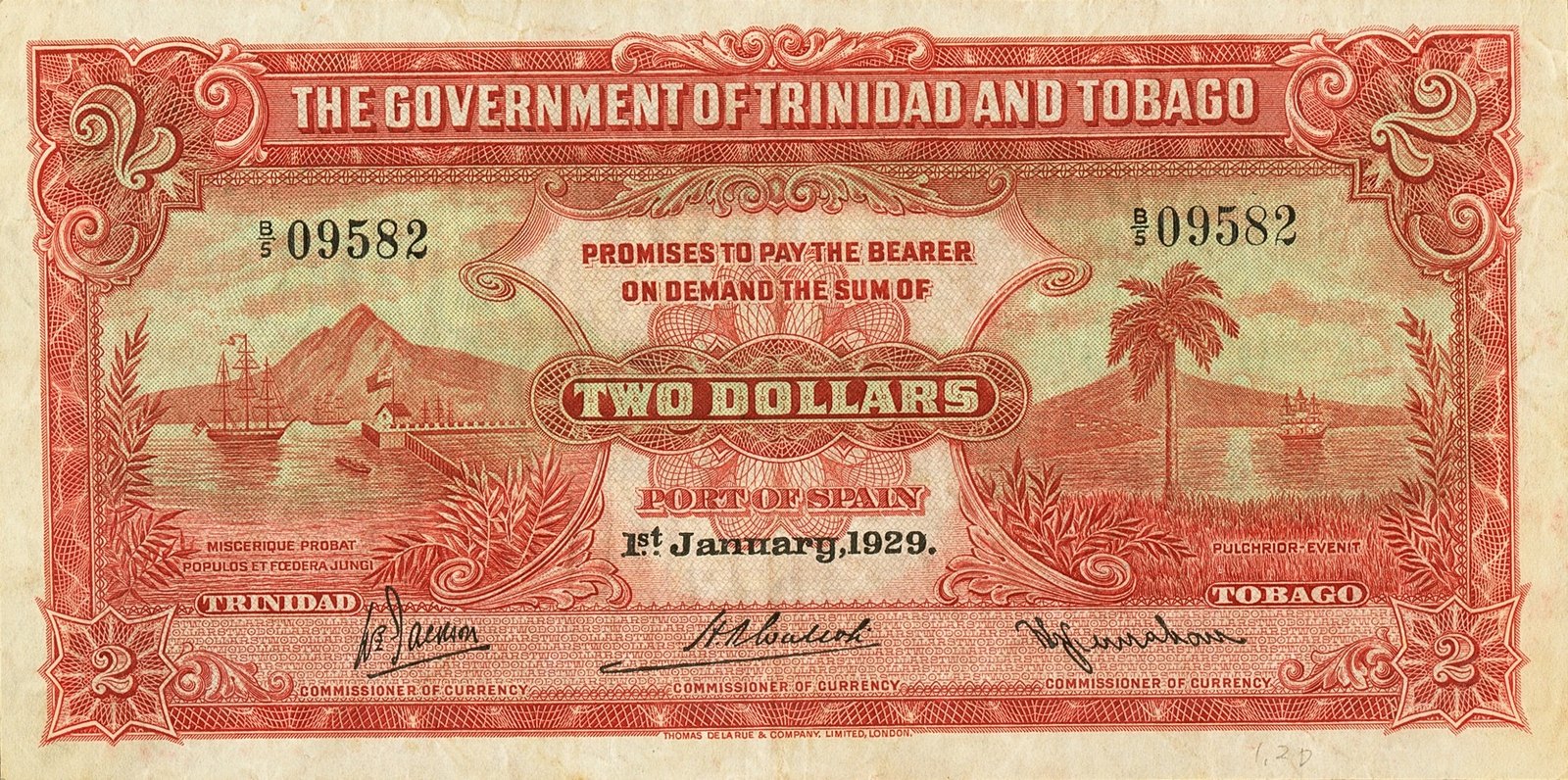
Heritage (17 October 2024, lot 24457) puts the 1929 printing of the 2 dollars at about 500,000 to 800,000 notes. The catalogue's page answers that the prefixes recorded for that date carry five-figure numbers and so hold at most 600,000.
The end of Series A and B
The Government Currency Notes Ordinance of 1934 put a new Board in place of the old one, and its notes run from the date of 1st September 1935. Proclamation No. 75 of 1935 ended the older notes (the Treasurer's notice in the Royal Gazette of 12th December 1935 refers to it as printed in the Royal Gazette of 19th September 1935): the 1 and 2 dollar notes of Series A and B ceased to be current and legal tender from 2nd January 1936. After that day they could be redeemed only at the Treasury, in exchange for Series C. The 1,000 dollars is not named in that Proclamation: it had gone a year earlier.
What is not known
- How many 1 and 2 dollar notes were printed in any year. The sources give values in circulation only.
- Whether the first notes were really signed by hand as well, as the Port of Spain Gazette said in 1906.
- How a De La Rue proof of the 1 dollar came to be described as from the American Bank Note Company archives.
- Whether any issued 1,000 dollars survives. None is recorded.
Sources
- Government Currency Notes Ordinance of 1903 (No. 16 of 1903); Ordinance No. 21 of 1913; Proclamation No. 67 of December 1934.
- Blue Books and Year Books of Trinidad and Tobago, as cited on the catalogue's pages; the Blue Book for 1934.
- Annual reports on Trinidad and Tobago for 1922 and 1931.
- Economic Survey of the Colonial Empire for 1933.
- Port of Spain Gazette, 21st June 1904, 2nd February 1906 and 22nd May 1913.
- Royal Gazette, 12th December 1935, p. 1312: the Treasurer's notice on Proclamation No. 75 of 1935.
- Government Currency Notes Ordinance in the revised edition (No. 244), and Ordinance No. 4 of 1905 (13th March 1905).
- Lyn Knight, 13 June 2014, lot 1467, and 20 March 2019, lot 45390.
- Stack's Bowers, 4 May 2023, lot 50769, and 8 May 2025, lot 50614.
- Heritage, 17 October 2024, lot 24457.
- Noonans, 27 May 2026, lot 548.
- Christoph Gärtner, 27 October 2015, lot 38596.


Member comments
Log in or register to post a comment.