Until 1928 every note of the Government of India was printed in England, by the Bank of England. Then the work moved to a new press at Nasik, in the Bombay Presidency. Sale descriptions often call a note a "Nasik printing" or a "Bank of England printing". The Controller of the Currency, who ran the note issue, wrote the move down as it happened, in three yearly reports. This article follows those three reports, with the paragraphs themselves, and sets them against the notes.
The source
The Report of the Controller of the Currency came out every year. We have read those for 1926-27, 1927-28 and 1928-29 in the copies scanned by the Gokhale Institute of Politics and Economics, Pune. Each has a paragraph headed "Printing of Currency Notes". The first and the third are signed by J. B. Taylor as Officiating Controller (18th June 1927 and 5th July 1929), the second by H. Denning as Controller (2nd June 1928): the two men whose signatures are on the notes of these years.
In short
| When | What | Report |
|---|---|---|
| February 1927 | the new pattern 100 rupees is first issued, from the Rangoon Currency Office | 1926-27 |
| June 1927 | the buildings of the press are "practically ready"; the plan is to give the Bank of England six months' notice on 1st January 1928 for notes up to 100 rupees | 1926-27 |
| 14th April 1928 | the Currency Note Printing Press at Nasik is opened | 1927-28, 1928-29 |
| from April 1928 | Nasik prints 5 rupee notes "of the existing pattern" | 1928-29 |
| September 1928 | the first consignment leaves Nasik | 1928-29 |
| 9th October 1928 | Nasik notes are first issued, from the Cawnpore Currency Office | 1928-29 |
| 1928-29 | 100 rupee notes are printed at Nasik "throughout the year" | 1928-29 |
| end of February 1929 | the 10 rupees in a new pattern, its "design and colouring" altered, is first issued, from the Lahore Currency Office | 1928-29 |
| July 1929 | a new and much smaller 50 rupees is being prepared, to be printed at Nasik | 1928-29 |
1927: the plan
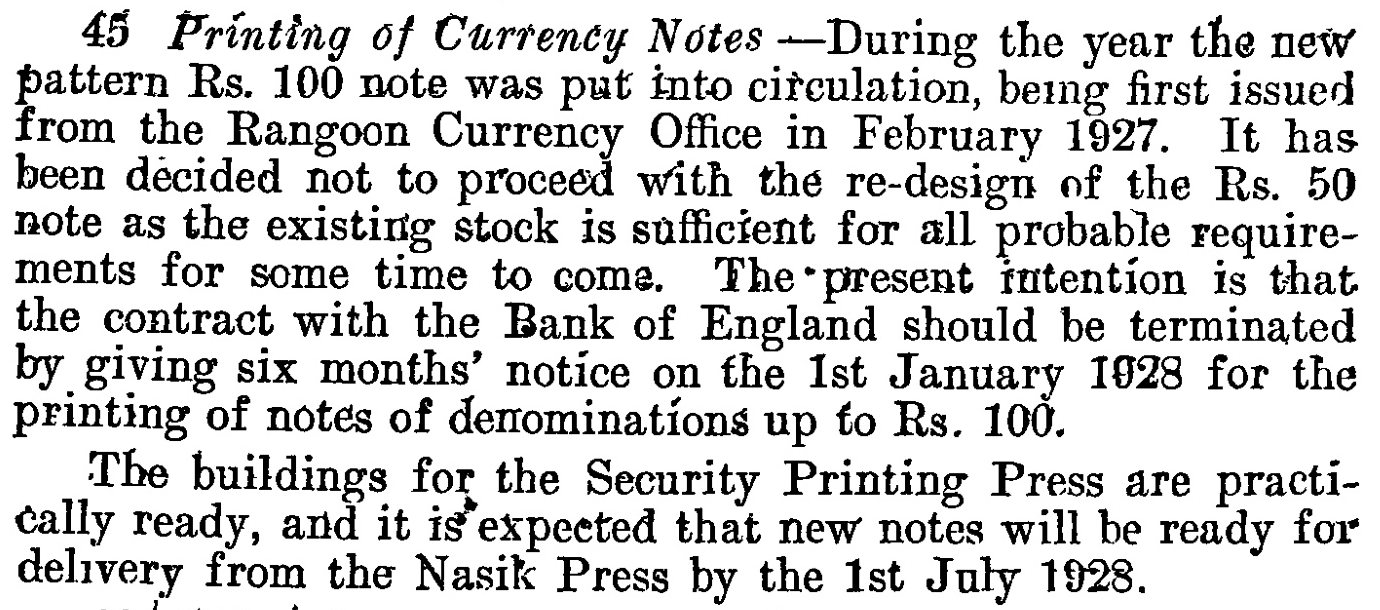
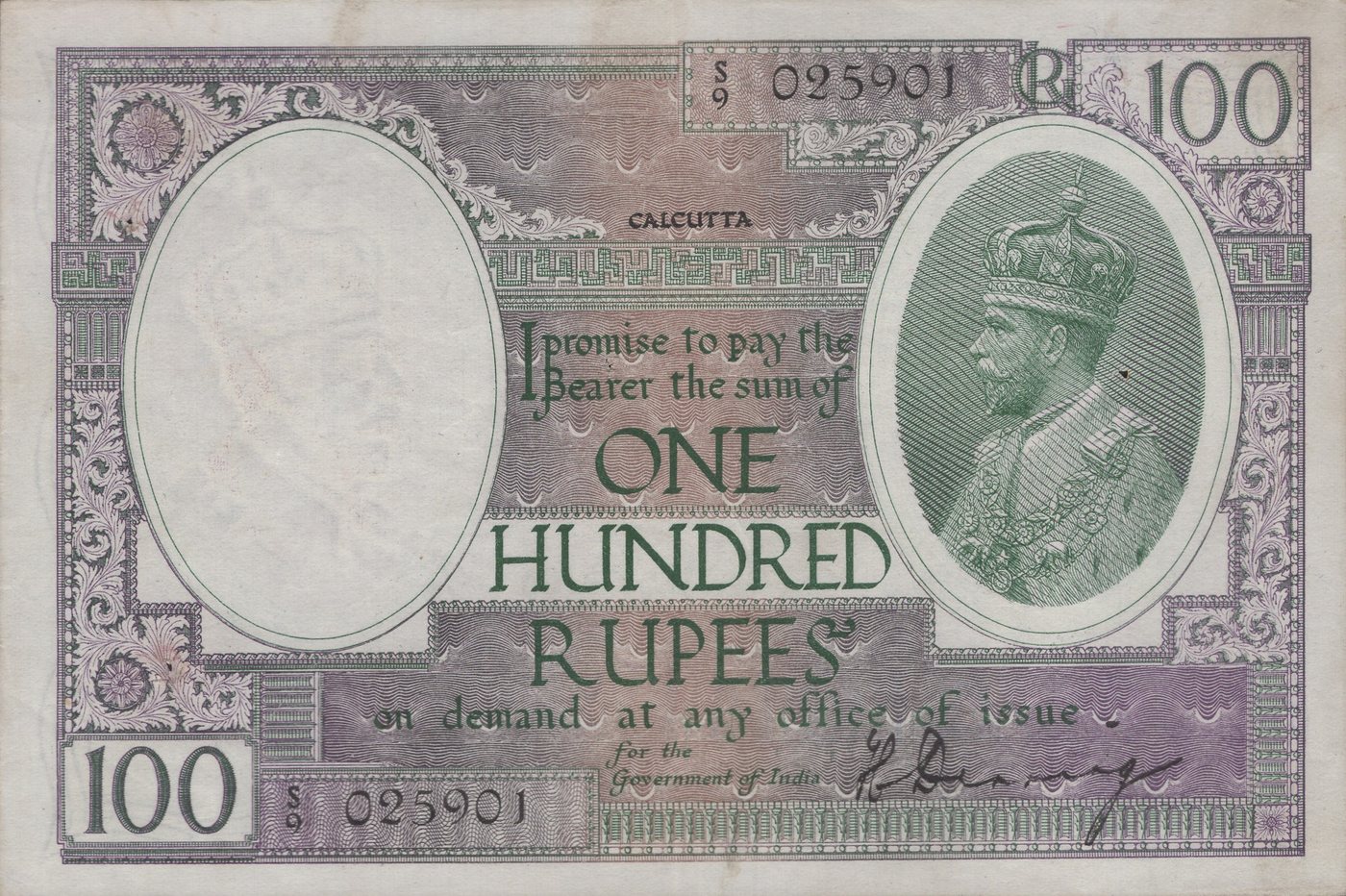
In June 1927 nothing had yet been printed in India. The paragraph records the last new note that came from England, the 100 rupees with the King's portrait, and says where it came out first: at Rangoon, in February 1927. It also drops the redesign of the 50 rupees, because enough of the old large notes were in stock.
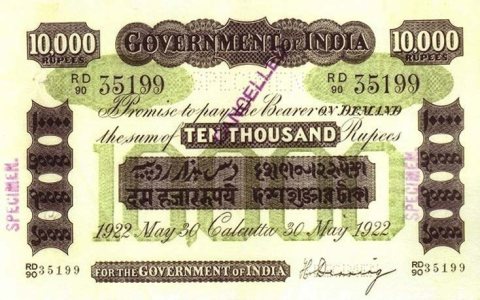
The words on the Bank of England are careful. The contract "should be terminated by giving six months' notice on the 1st January 1928", and only "for the printing of notes of denominations up to Rs. 100". The higher values were to go on coming from London.
1928: the press opens
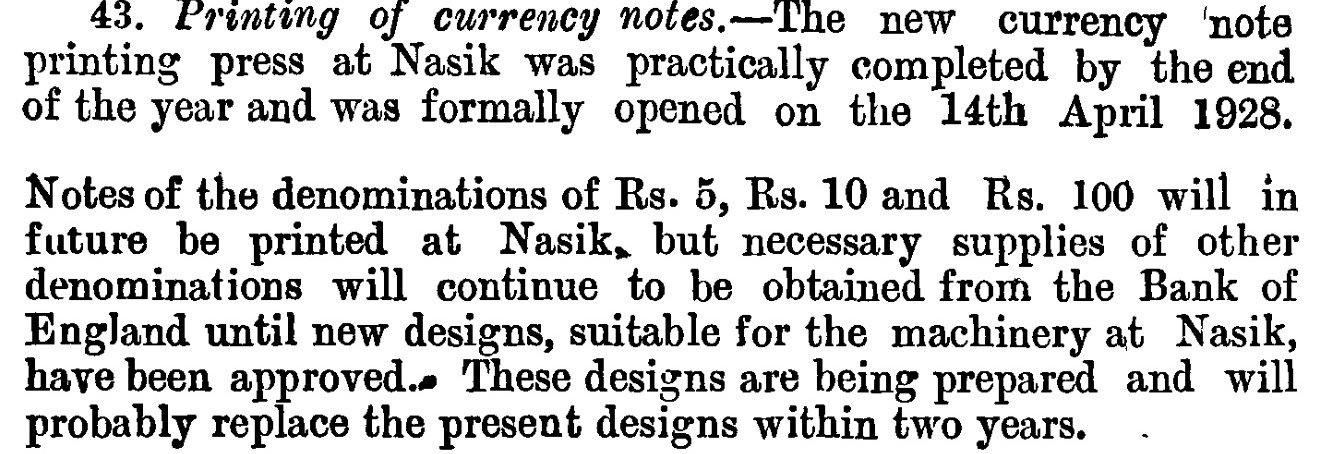
A year later the press was "formally opened on the 14th April 1928". The Controller names the three values it would print, 5, 10 and 100 rupees, and gives the reason the others stayed in London: new designs were needed, "suitable for the machinery at Nasik". They were expected within two years.
1929: the first Nasik notes
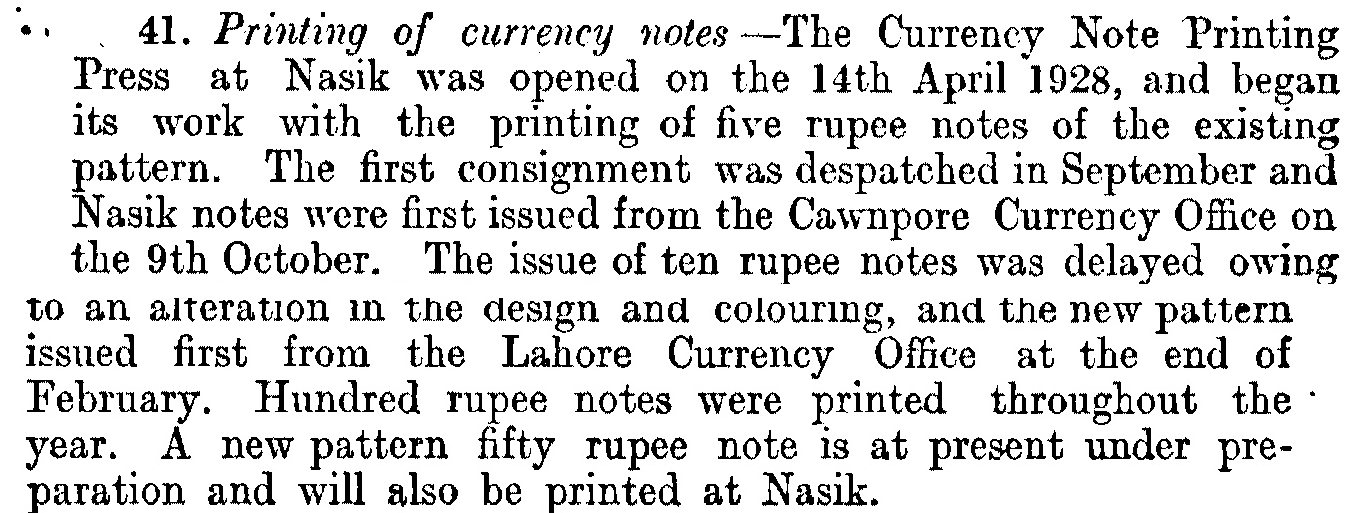
This is the paragraph that matters most to a collector. It says four things.
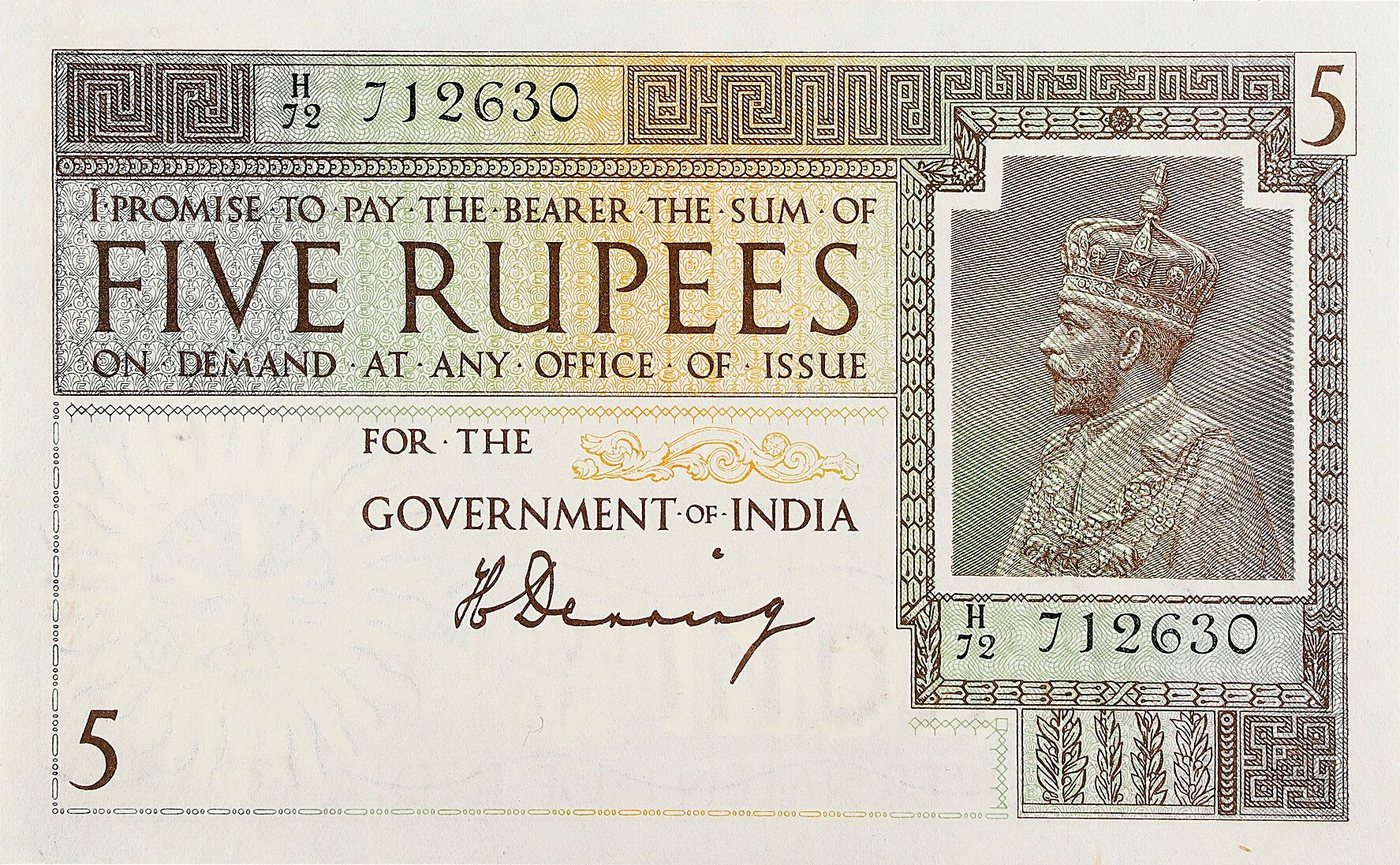
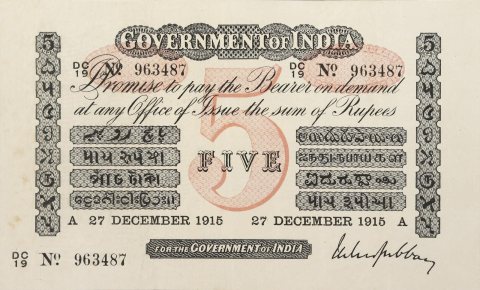
The first Nasik note was the 5 rupees, unchanged. The press "began its work with the printing of five rupee notes of the existing pattern": the 5 rupees of 1925. The first consignment was sent off in September 1928 and the notes went into circulation at Cawnpore on 9th October. Because the pattern was the existing one, a Nasik 5 rupees and a Bank of England 5 rupees are the same design. The report does not say how to tell them apart.
The 10 rupees came out late, and changed. "The issue of ten rupee notes was delayed owing to an alteration in the design and colouring, and the new pattern issued first from the Lahore Currency Office at the end of February." The report does not describe the new note. In the catalogue there is only one 10 rupees it can be: the blue note with the King's head in the watermark window, which follows the green and brown note with the star in the window. The two meet at the series G/45, and the specimens of the blue note are overprinted for the Currency Note Press.
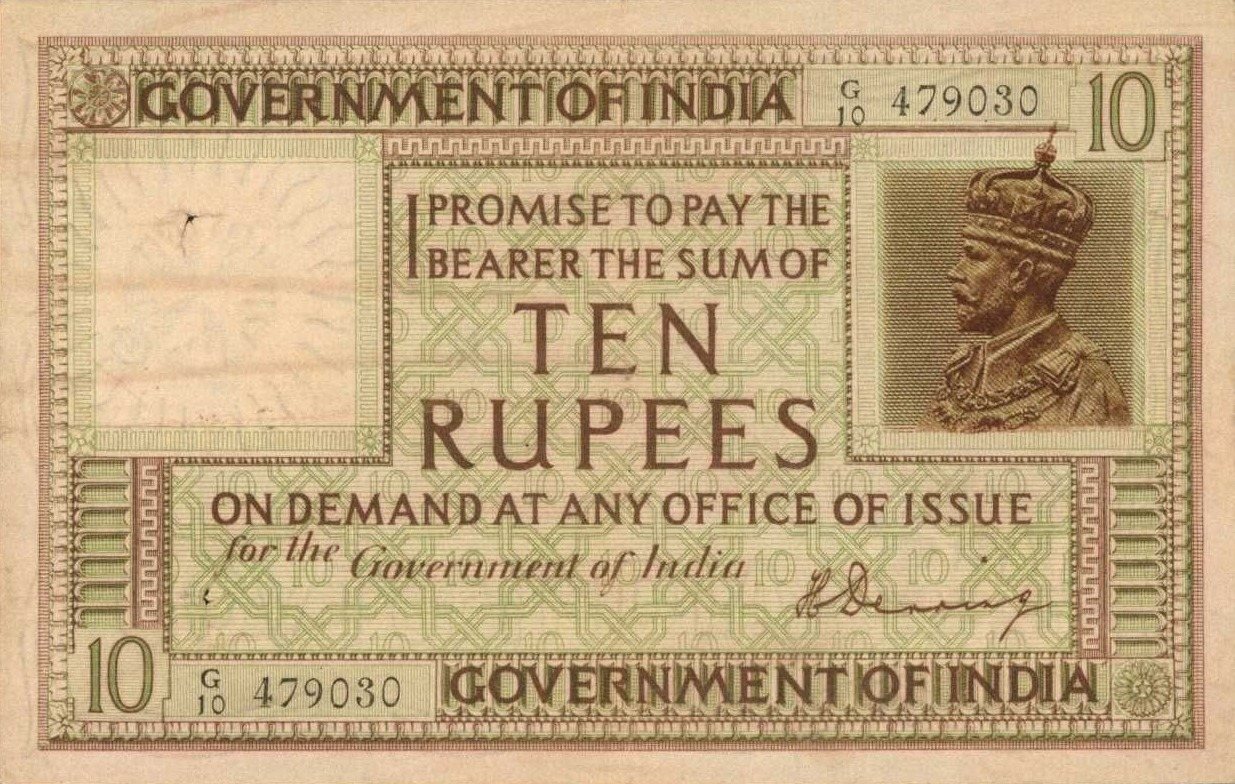
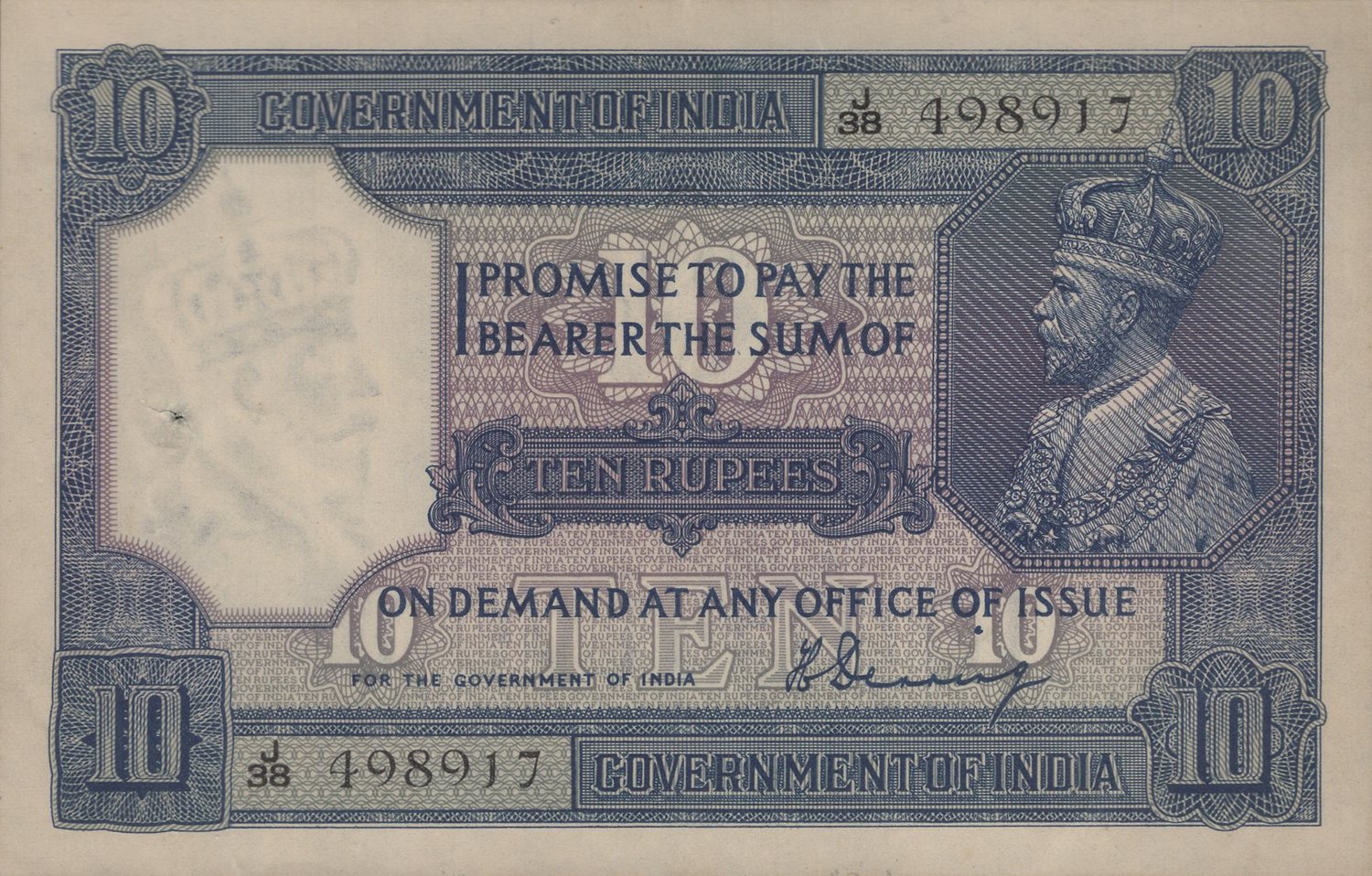
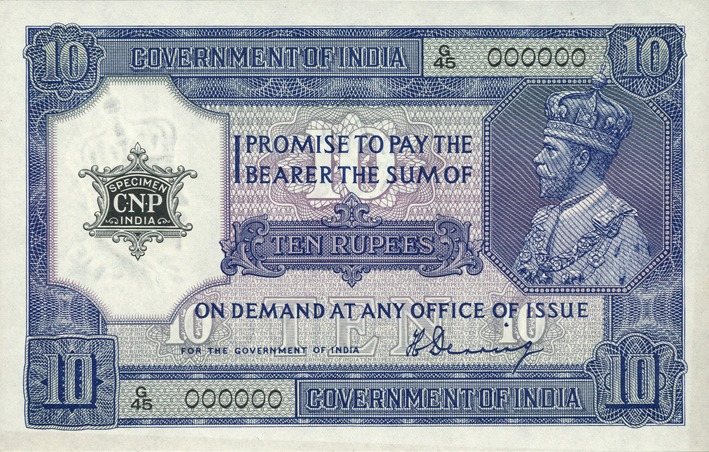
On the strength of this paragraph the catalogue now dates the blue 10 rupees from 1929, where it had 1925. The first notes are signed by Denning, the later ones by Taylor, which fits: Denning was Controller in June 1928 and Taylor was acting for the Controller by July 1929.
The 100 rupees was printed at Nasik all through 1928-29. The report gives no day for the first Nasik 100 rupees and no way to tell it from the notes printed in England since 1927. Our page on the note sets out what has been said about its two watermark papers and the colour of the office name; the reports settle none of it.
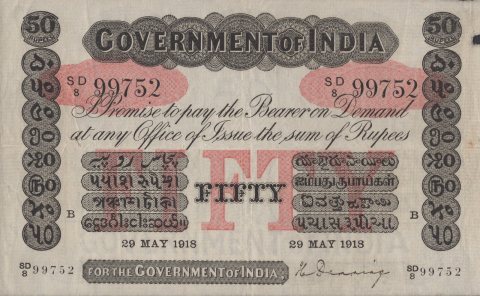
A new 50 rupees was on the way. Two paragraphs earlier the same report explains why: "The large size of the fifty rupee note and its superficial resemblance to the old pattern ten rupee note has led to a continued decrease in its popularity since the notes of the denominations above and below it have been reduced in size. A new pattern of a considerably smaller size is under preparation". That note is the 50 rupees of 1930, and the note it replaced is the large uniface 50 rupees, still in use in 1929.
What the reports do not say
- How a Nasik note differs from a Bank of England note of the same pattern: nothing on paper, watermark or series.
- Which series of the 5 and 100 rupees were the first from Nasik.
- The day the first Nasik 100 rupees was issued.
- Anything on the notes of 500, 1,000 and 10,000 rupees beyond the line that they would still come from the Bank of England until new designs were approved.
The report for 1925-26, which later writers quote on the Bank of England contract and which should have the first issue of the 5 rupees of 1925, is not among those we could read, and the reports from 1929-30 on, with the new 50 rupees and the new high values, are still to be found.
Member comments
Log in or register to post a comment.