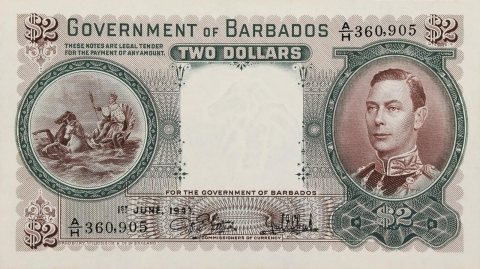
The Government notes of Barbados rested on one Act of 1937 and one set of Regulations of 1938, and ended under the laws of the British Caribbean Currency Board. This article gives what those laws said, as far as their text has been read, lists every law and notice that touched the notes from 1937 to 1969, and sets out the Commissioners of Currency who worked the Act, with the source and day for each. The issue itself is told in The Government of Barbados dollar notes, 1938 to 1955; the laws of the Board are told in full in The laws, agreements and regulations of the British Caribbean currency, 1944 to 1966.
The Act of 1937
The Government Currency Notes (Barbados) Act, 1937 is dated 23rd April 1937 and was printed in a supplement to the Official Gazette of Barbados of 10th June 1937. As read from the copy in the Johns Hopkins currency board archive, it says:
- The notes are issued by a Board of Commissioners of Currency: the Colonial Secretary, the Colonial Treasurer and one person named by the Governor. Any two Commissioners may act.
- The values, the design, the plates and the paper are those the Secretary of State approves.
- The notes are legal tender for any amount.
- They are issued at one dollar for 4 shillings 2 pence sterling paid to the Crown Agents.
- The Governor may demonetise any notes by proclamation; the holders are still to be paid by the Colonial Treasurer at any time.
- The Act comes into force on a day named by proclamation.
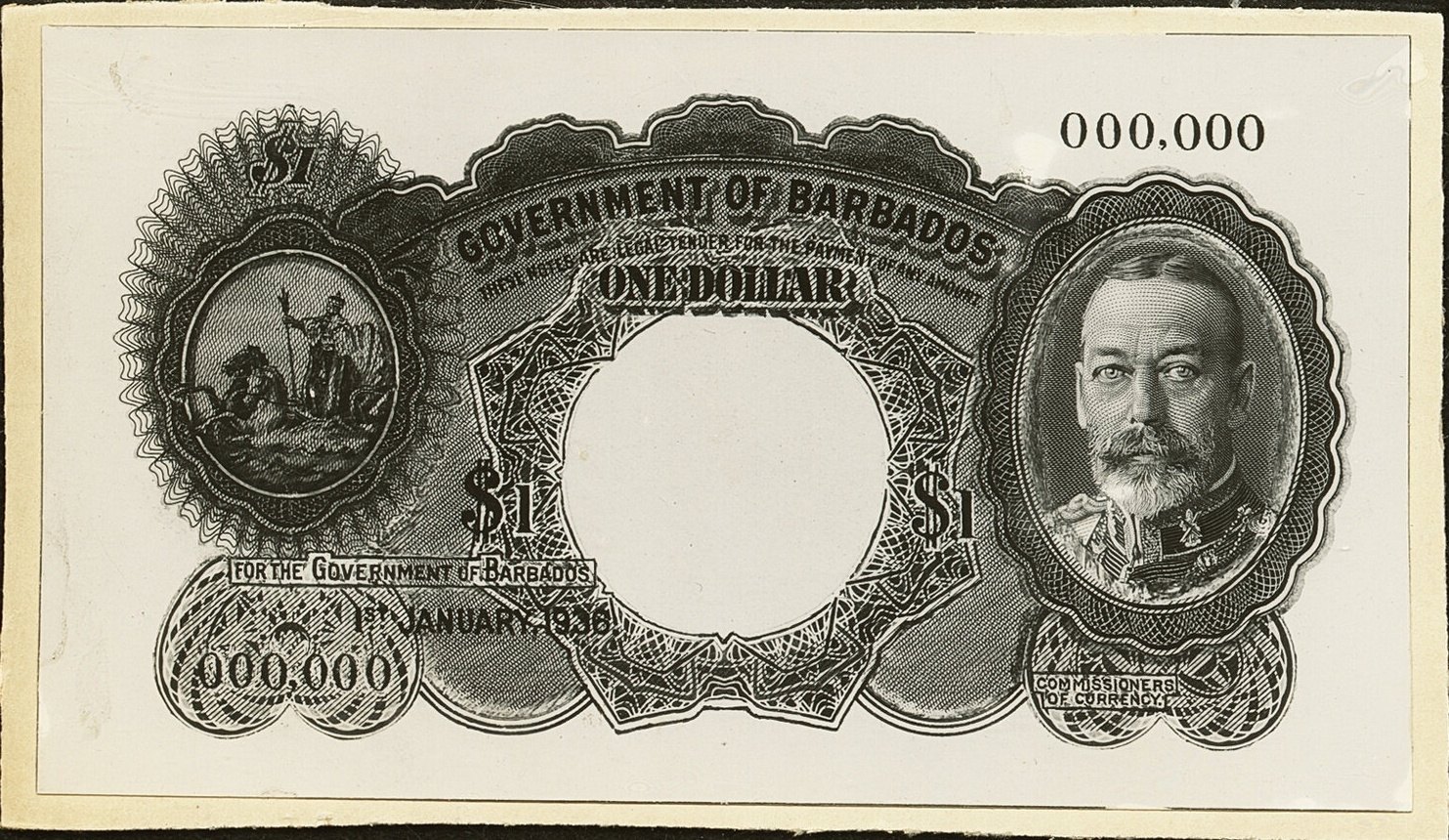
The working paper of Krus and Schuler on currency board accounts (2014), citing page 36 of the annual report on Barbados for 1938-39, gives 1st April 1938 as the day the Act came into force. The annual report for 1938 gives 8th April 1938 as the day the first notes, the 1 dollar and the 2 dollars, were issued.
The number of the Act is given two ways. The running head of the Gazette supplement reads Act 1937-12, read from the page heading only on a page photographed sideways; the working paper of Sidharth Sah on Trinidad and Barbados (appendix B, page 17) likewise calls it No. 12 of 1937. A notice of the Currency Board printed in the Sunday Advocate of 9th March 1952, read on the photograph of the page, cites "the Government Currency Notes Act, 1937 (1937-1)". Which is right the papers read do not settle.
The same notice shows one more section of the Act at work after 1951. Writing, stamping or printing advertisements on notes went against section 12 (2) of the Act of 1937, as applied by section 14 of the Currency Act, 1950 (1950-31), and was punishable by a fine of up to five pounds. It is signed by H. N. Armstrong, Senior Currency Officer of the British Caribbean Currency Board.
The Regulations of 1938
Regulations under section 14 of the Act were printed in the Official Gazette of Barbados in March 1938. The machine text of the copy read is clear for the limits on the stock of notes and poor for the later pages, so the other points are less sure than that one.
- The plates were prepared by a printer chosen by the Crown Agents and kept in their custody, and the notes were printed under their supervision.
- The Board's stock of unissued notes was not to pass 500,000 of the 1 dollar and 125,000 of the 2 dollars. Only these two values are named.
- Notes to be destroyed were cancelled by stamping or perforating before two Currency Officers, entered in a Register of cancelled and destroyed notes, and covered by a certificate of the numbers and value destroyed under each prefix letter.
What the Barbados Advocate reported of the destruction of worn notes in 1949 and 1950, and of notes signed in Bridgetown during the war, is in The Barbados Government notes in the Barbados Advocate, 1944 to 1952.
The laws and notices in order of time
| Date | Law or notice | What it did for the notes | Where read |
|---|---|---|---|
| 23rd April 1937 | Government Currency Notes (Barbados) Act, 1937 | set up the Board and the notes, as above | supplement to the Official Gazette, 10th June 1937 |
| March 1938 | Regulations under section 14 of the Act | plates, printing, stock of unissued notes, cancelling and destroying | Official Gazette of Barbados, March 1938 |
| 1st April 1938 | the Act in force | Krus and Schuler, citing the annual report for 1938-39, page 36 | |
| 8th April 1938 | first notes issued, 1 and 2 dollars | legal tender throughout the Colony | annual report on Barbados for 1938 |
| 16th August 1950 | Currency Act, 1950 (1950-31) | gave effect to the Agreement for a uniform currency, printed in its First Schedule; by section 2 the Barbados Board stopped issuing, the private banks could no longer issue in the island, and the Government notes in circulation counted as notes of the new Board and stayed legal tender until demonetised | the Act, in a copy whose machine text is rough on that page |
| 1st August 1951 | Proclamation bringing the Act of 1950 into force for notes | the Board's notes to circulate from 15th August 1951 | Barbados Advocate, 2nd August 1951 |
| 12th August 1952 | Board's notice | holders asked to change Government notes for Board notes at the three banks | Sunday Advocate, 17th August 1952 |
| 29th December 1954 | Board's notice 1222 | Government notes of Barbados, British Guiana and Trinidad and Tobago demonetised from 2nd January 1955, their value still to be claimed from the Board | Royal Gazette Extraordinary of Trinidad, 31st December 1954 |
| 1955 | legislation of Barbados | Jamaica notes made legal tender in Barbados | report on Barbados for 1954 and 1955, page 36 |
| 15th July 1966 | Notice No. 597 of the East Caribbean Currency Authority | the Board's notes no longer legal tender in Barbados and six other territories on and after 31st October 1966 | Official Gazette of Barbados, 25th July 1966, page 798 |
| 3rd April 1969 | account under Article 15 of the British Caribbean Currency Agreement, 1964 | the Board's notes handed in after 1st July 1967, claimed from the Crown Agents and destroyed | Official Gazette of Barbados, 21st April 1969, pages 372 to 374 |
The notice of 1954 is signed by W. V. Brown, Acting Executive Commissioner. The notice of 1966 is signed by G. M. Lambert, Managing Director of the Authority, and the account of 1969 by N. L. Smith, Acting Managing Director. The day from which Jamaica notes passed in the Board's territories, 1st October 1955, and the Currency Act, 1959 of Barbados are in the article on the Board's laws linked above.
Barbados's own proclamation ending its notes has not been found. The pages of the Official Gazette of Barbados held have none for 1953 to 1956, and the Advocate of 2nd August 1951 said only that the Governors would act when a few years had passed.
The Commissioners of Currency, 1938 to 1951
The Act named two of the three Commissioners by office and left the third to the Governor. The table gives each person who appears as a Commissioner, the office held, and the source and day of each mention. The abstracts are the Commissioners' half-yearly statements of the notes in circulation in the Official Gazette of Barbados, each signed by two of them.
| Name as printed | Office | Shown as a Commissioner | Source |
|---|---|---|---|
| G. D. Owen (George Douglas Owen) | Colonial Secretary from September 1931; Colonial Secretary of British Guiana in 1938 | signs the notes dated 3rd January 1938 | Colonial Office List, 1939; the Pick pages |
| D. E. W. Gittens (Darnley Erroll Wyndham Gittens) | Colonial Treasurer from 1935 | signs every abstract read, from the one for 30th September 1938 to the one signed on 11th April 1949; Commissioner in 1945; named in the staff lists of 1946 and 1948 to 1950 | abstracts; Barbados Advocate, 18th March 1952; Colonial Office Lists |
| A. P. G. Austin | not given | signs, with Gittens, the abstract for 30th September 1938 | Official Gazette, 8th December 1938, page 2335 |
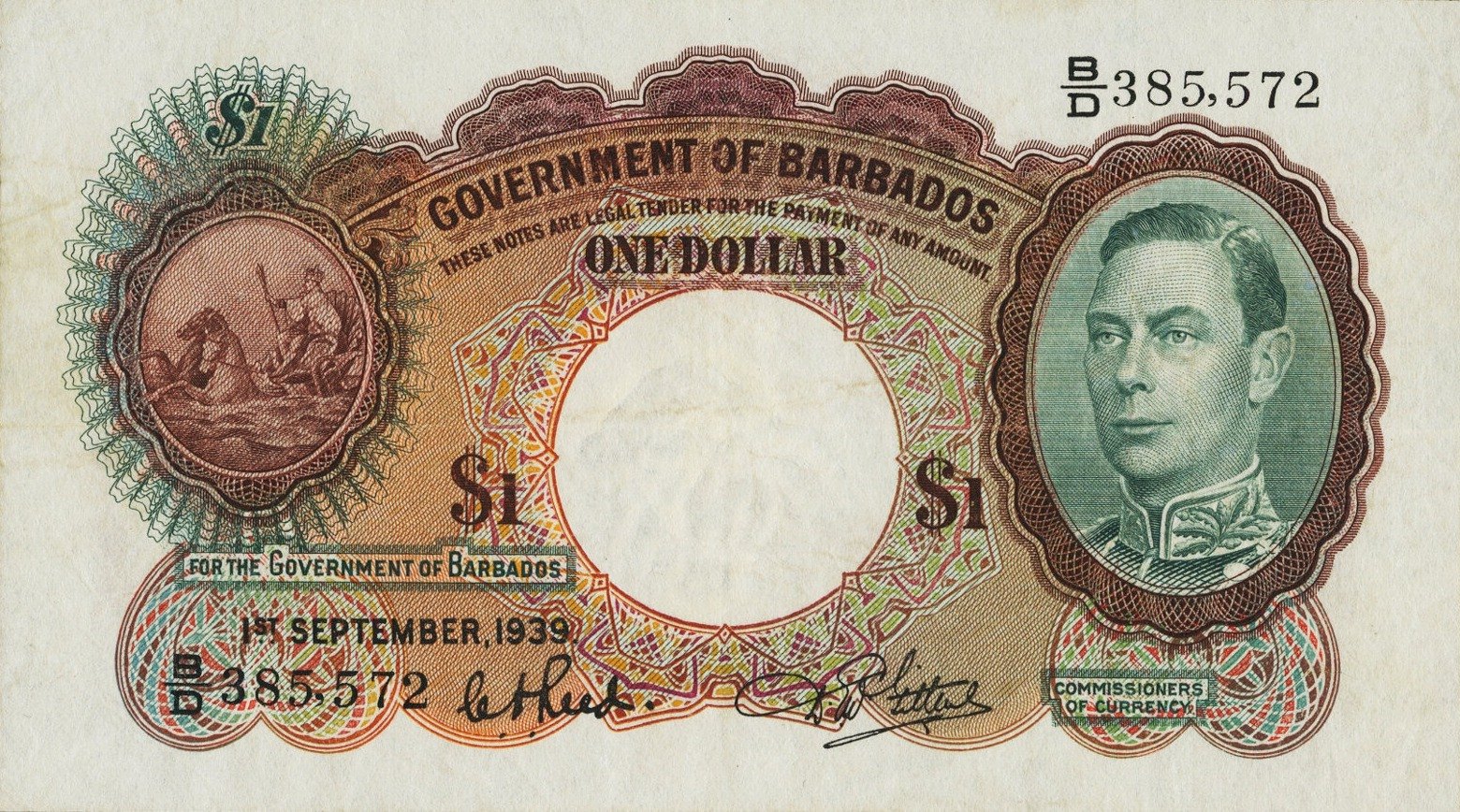
| C. A. Reed (Clinton Austin Reed) | Comptroller of Customs from 1932; acting Colonial Secretary at various times from 1934 to 1936 | signs, with Gittens, the abstract signed on 15th August 1939; signs the notes dated 1939 | Official Gazette, 31st August 1939, page 1640; Colonial Office List, 1939 |
| Cyril E. Stoute | Manager of the Government Savings Bank from 1932 | signs, with Gittens, the abstracts from the one signed on 9th December 1939 to the one signed on 12th November 1946; Commissioner in 1945; named in the staff list of 1946 | Official Gazette, 25th December 1939, page 2385, and the later abstracts to November 1946; Barbados Advocate, 18th March 1952; Dominions Office and Colonial Office List, 1935 |
| Jos. A. Roberts (J. A. Roberts) | 1st Grade Clerk of the Savings Bank in 1935; Manager of the Government Savings Bank in 1951 | signs, with Gittens, the abstracts signed on 25th January and 11th April 1949; named in the staff lists of 1948 to 1951; one of the two Commissioners on 27th July 1951 | abstracts of 1949; Colonial Office Lists; Barbados Advocate, 28th July 1951 |
| V. H. A. Chenery | Acting Colonial Treasurer on 27th April 1951 | named in the staff list of 1951 | Colonial Office List, 1951; Barbados Advocate, 28th April 1951 |
| W. D. Charlton (Walter D. Charlton) | Accountant General from 14th May 1951 | one of the two Commissioners on 27th July 1951 | Barbados Advocate, 28th July 1951 and 18th March 1952 |
The offices and years of service in the Colonial Office Lists were read in the text of the Lists. The abstracts and the newspaper pages were read on their photographs, except where the Advocate article says otherwise.
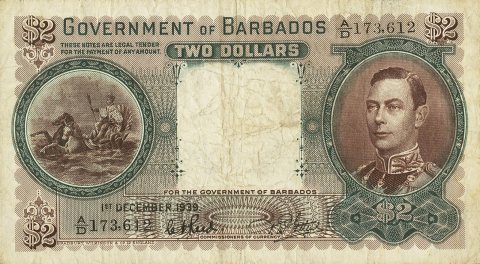
The abstract signed by Austin, and Stoute's name on an abstract a week after the date 1st December 1939 carried by notes signed by Reed and Gittens, are told in The Government of Barbados dollar notes, 1938 to 1955; the papers do not give Austin's office. Two more points. The abstracts of 1949 print Roberts's first name as Jos., where the Lists give only the initials J. A. And in 1951 two papers name different partners for Roberts: Chenery in the Colonial Office List, Charlton in the Advocate. No note bears the name of either; the last notes are dated 1st January 1949.
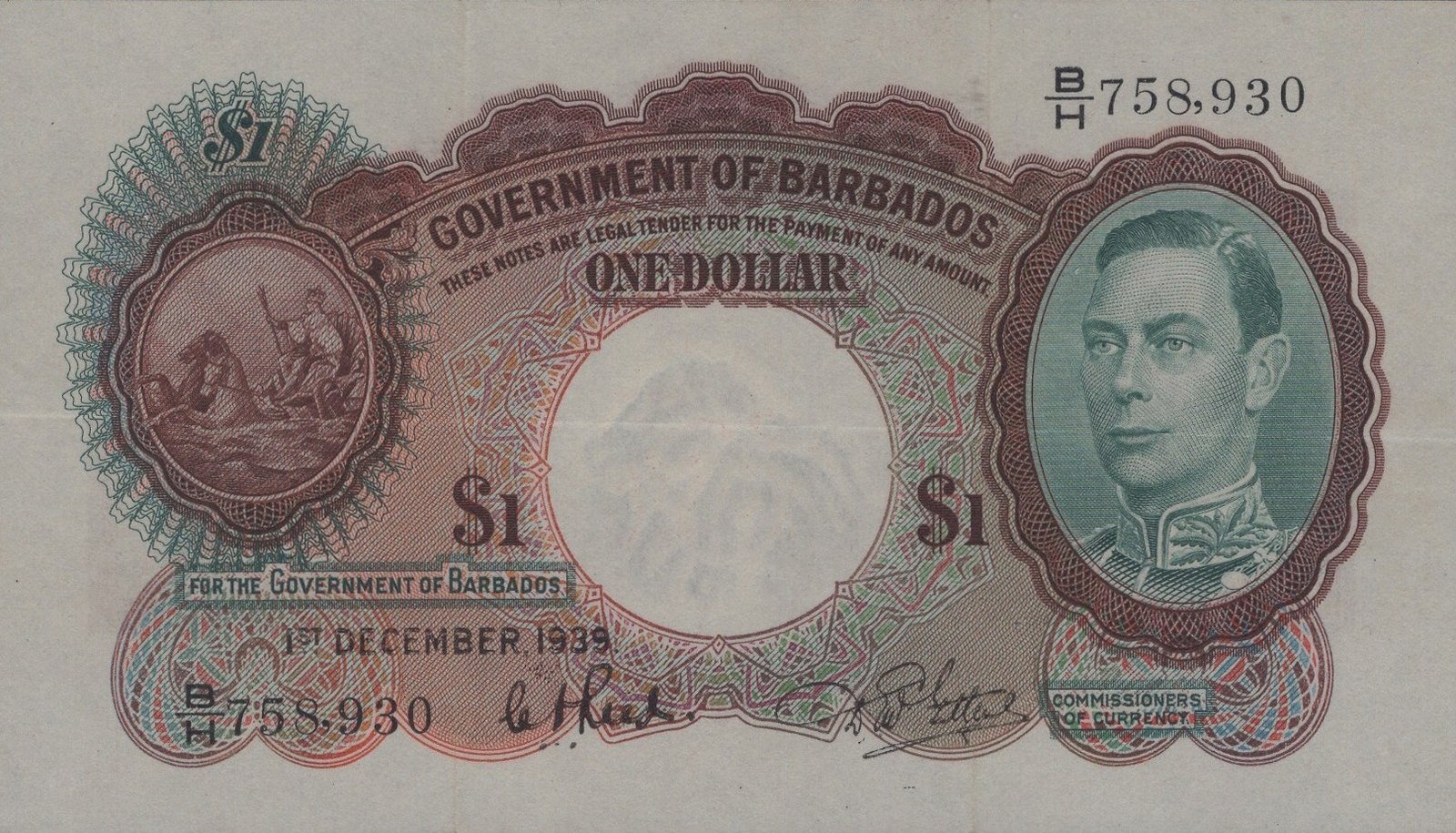
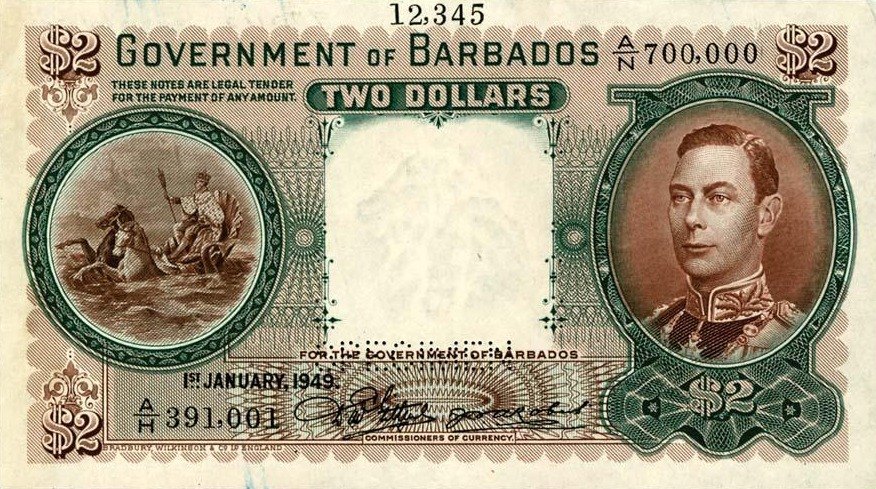
Two of the Commissioners named were officers of the Savings Bank: Stoute, its Manager, and Roberts, a clerk of the Savings Bank in 1935 and its Manager by 1951. The papers do not say in which capacity Austin and Reed sat on the Board.
After 1951: the member and the officer in Barbados
From 1951 the notes of Barbados were the Board's. The Barbados member of the Board was H. A. Cuke from its constitution on 28th November 1950, E. S. S. Burrowes, Financial Secretary of Barbados, from 19th February 1952, and then the Financial Secretary by office; Cuke had moved the second reading of the Currency Bill in the Legislative Council on 1st August 1950 (Barbados Advocate, 2nd August 1950, machine text only). The full list of members and officers is in The members, Executive Commissioners and currency officers of the British Caribbean Currency Board, 1950 to 1967.
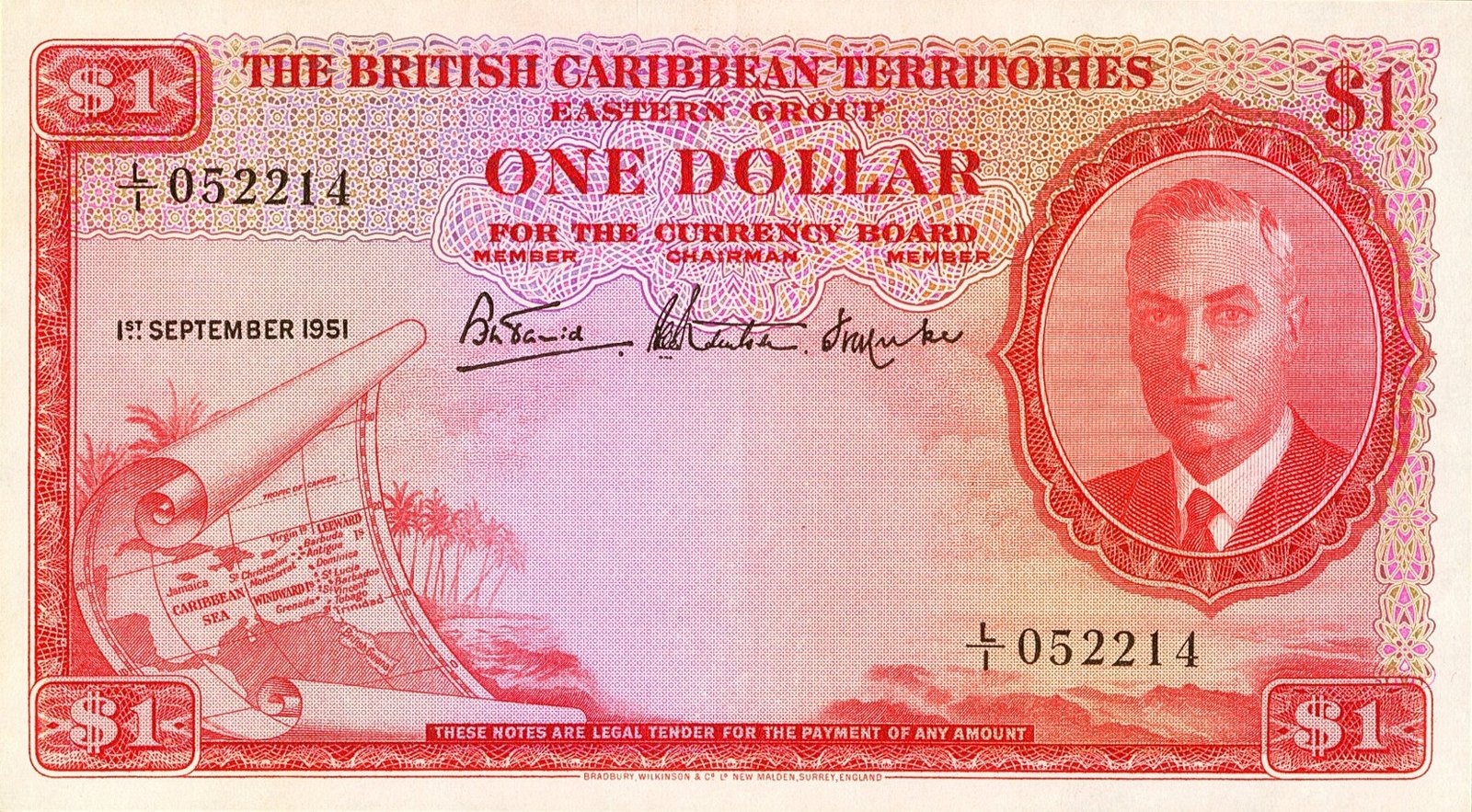
The Board's officer in Barbados was H. N. Armstrong, Senior Currency Officer at the Barbados Centre, who signed the Board's notices in Barbados in March and August 1952. The debates of the Legislative Council printed in the Official Gazette of Barbados of 21st January 1957, pages 384 and 385 and read in the machine text only, say that a Barbadian officer was seconded to the Board at no cost to the Government, and that the Board had asked for the post in Barbados, then of the status of Senior Clerk, to be put on the Executive Grade. The debate was on the Civil Establishment (General) (Amendment) No. 11 Order, 1955.
What the papers leave open
- The number of the Act of 1937: 1937-12 or 1937-1.
- The text of the Regulations of 1938 after the first page.
- The office of A. P. G. Austin, and whether Austin ever signed a note.
- The day Stoute became a Commissioner, which falls between 15th August and 9th December 1939 by the abstracts read.
- Barbados's own proclamation of 1954 or 1955 ending the Government notes.
- Who the two Commissioners were between May and August 1951, when the List and the Advocate differ.
Sources
- Government Currency Notes (Barbados) Act, 1937, 23rd April 1937, supplement to the Official Gazette of Barbados, 10th June 1937.
- Regulations under section 14 of the Act of 1937, Official Gazette of Barbados, March 1938.
- Abstracts of the Commissioners of Currency, Official Gazette of Barbados: 8th December 1938, page 2335; 31st August 1939, page 1640; 25th December 1939, page 2385; 14th November 1946, page 950; the abstracts signed on 25th January and 11th April 1949.
- Currency Act, 1950 (Barbados, 1950-31), 16th August 1950.
- Royal Gazette Extraordinary of Trinidad and Tobago, 31st December 1954, notice 1222.
- Official Gazette of Barbados: 21st January 1957, pages 384 and 385 (debates of the Legislative Council); 25th July 1966, page 798 (Notice No. 597); 21st April 1969, pages 372 to 374.
- Annual report on Barbados for 1938 (Currency); Colonial Office report on Barbados for 1954 and 1955, page 36.
- Colonial Office List, 1939 and 1946 to 1951; Dominions Office and Colonial Office List, 1935.
- The Barbados Advocate, 2nd August 1950, 28th April 1951, 28th July 1951, 2nd August 1951 and 18th March 1952; the Sunday Advocate, 9th March 1952, page 8, and 17th August 1952, page 15.
- Krus and Schuler, Currency Board Financial Statements, 2014, working paper 22 of the Johns Hopkins currency board archive, Barbados section.
- Sidharth Sah, working paper 49 of the Johns Hopkins currency board archive (Trinidad and Barbados), appendix B, page 17.
Member comments
Log in or register to post a comment.