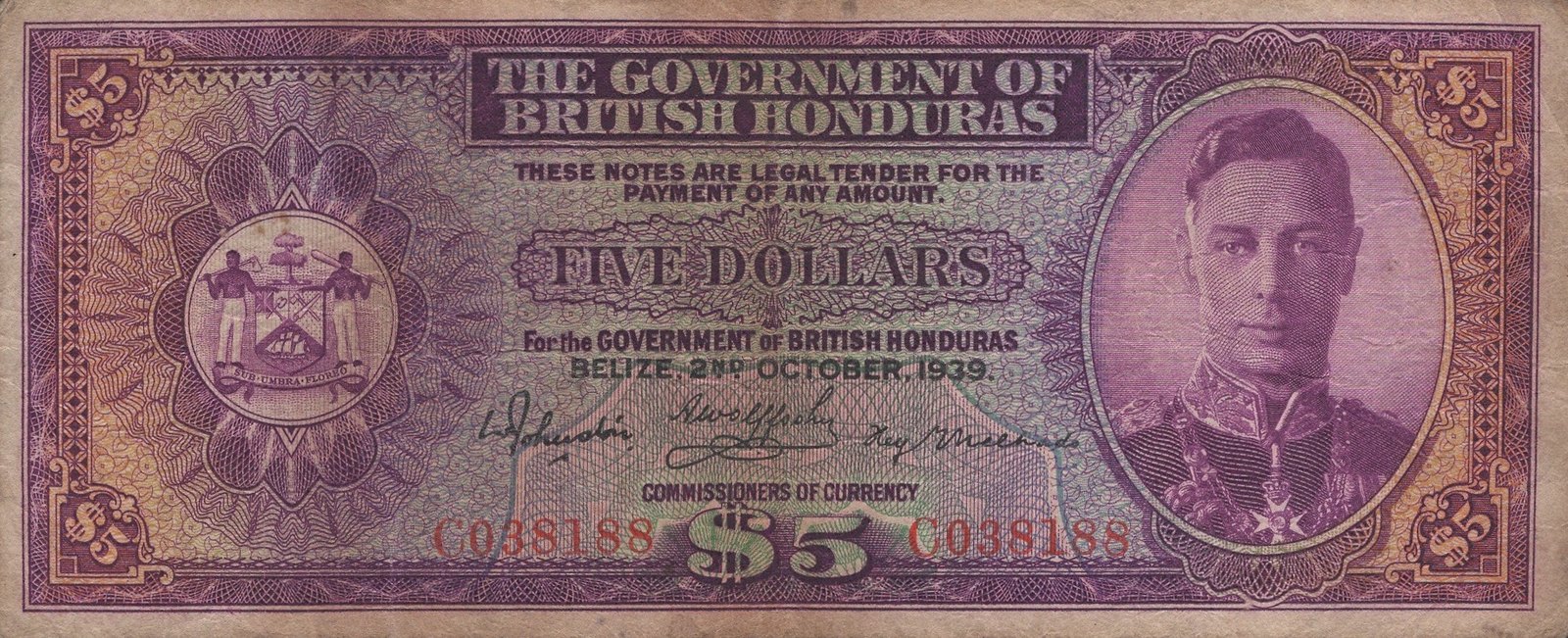
Twice a year the Board of Commissioners of Currency of British Honduras printed in the Gazette a statement of its note issue. Each statement counts the notes of each value three ways: issued, held in custody by the Board, and in circulation. Ten of these statements, from 30th June 1939 to 30th June 1950, are among the Gazette pages read for this catalogue, all on the page images. This article gives them in full, as printed. A shorter account of what they show for the first George VI notes is in the King George VI notes of 1939 to 1952.
The statements give numbers of notes and their value in dollars. The tables below give the numbers of notes, and the value only for the totals. No Gazette page for the years 1943 to 1948 was held, so there is a gap of seven years in the middle.
The old issue, 1939 and 1940
Until the notes with the portrait of King George VI came into use, the Board's statements show only the old notes, which the Board does not divide by date or design. They include two notes of 50 dollars and one of 100 dollars, and a small sum of "Provisional Notes in Circulation", 211 dollars, which no page held explains.
| Value | 30th June 1939: issued | in custody | in circulation | 31st December 1939: issued | in custody | in circulation | 30th June 1940: in circulation |
|---|---|---|---|---|---|---|---|
| 1 dollar | 64,908 | 19,411 | 45,497 | 57,804 | 5,384 | 52,420 | 23,159 |
| 2 dollars | 21,278 | 2,945 | 18,333 | 18,613 | 648 | 17,965 | 9,908 |
| 5 dollars | 33,164 | 5,786 | 27,378 | 29,056 | 941 | 28,115 | 15,200 |
| 10 dollars | 8,870 | 3,362 | 5,508 | 8,753 | 3,333 | 5,420 | 3,915 |
| 50 dollars | 2 | none | 2 | 2 | none | 2 | 2 |
| 100 dollars | 1 | none | 1 | 1 | none | 1 | 1 |
| Value of the old notes | 362,184 dollars | 87,851 dollars | 274,333 dollars | 328,040 dollars | not given | 283,325 dollars | 158,325 dollars |
| Provisional notes | 211 dollars | 211 dollars | 211 dollars | 211 dollars | 211 dollars |
The statement of 30th June 1939 is notice No. 493 of the Treasury, 30th August 1939; it gives 274,544 dollars in circulation with the provisional notes. The statement of 31st December 1939 is notice No. 265 of 11th May 1940, reprinted as No. 282 on 18th May 1940. It has two slips: its heading names "Ordinance No. 1 of 1939", where the reprint says 1937, and the value it prints for the 5 dollars in circulation, 145,575 dollars, does not agree with its own count of 28,115 notes. The annual reports for 1946 and 1950 give the notes in circulation on 31st December 1939 as 283,536 dollars.
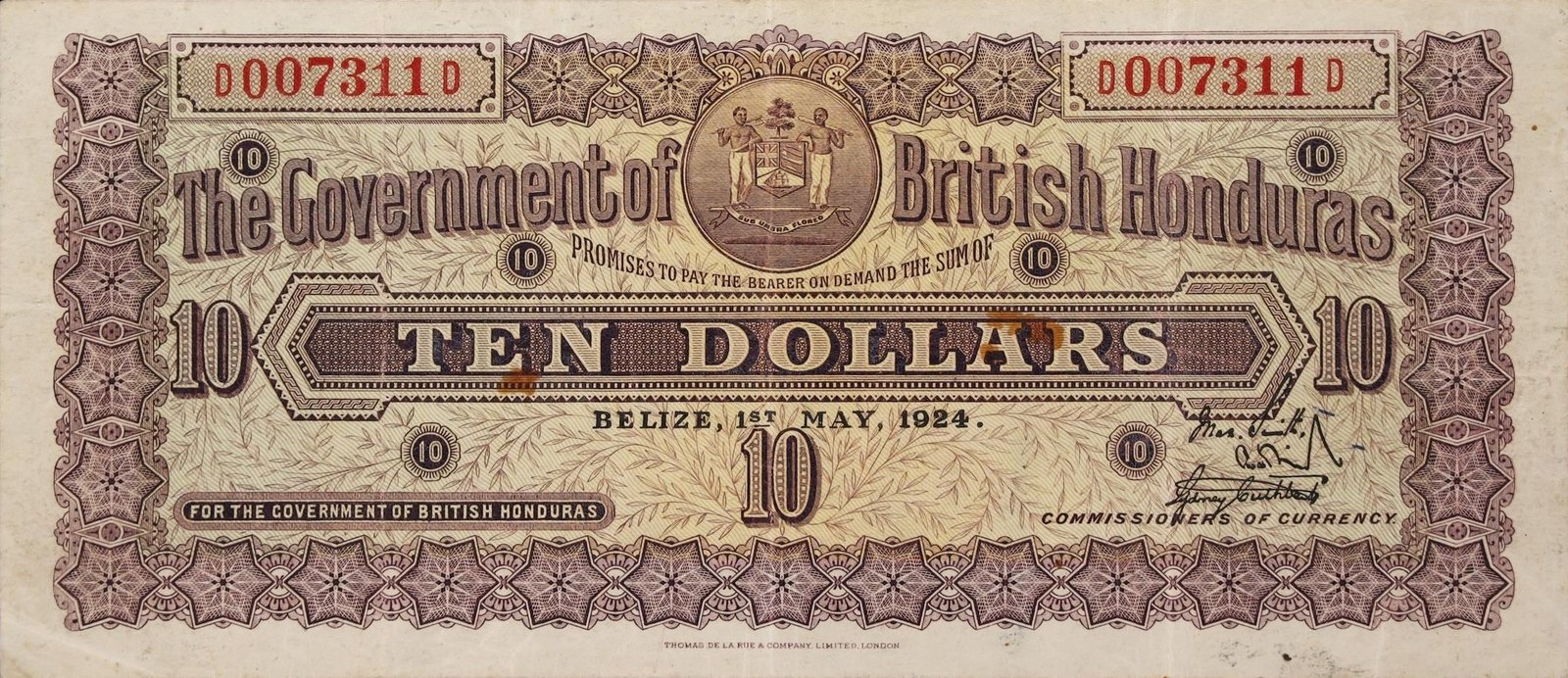
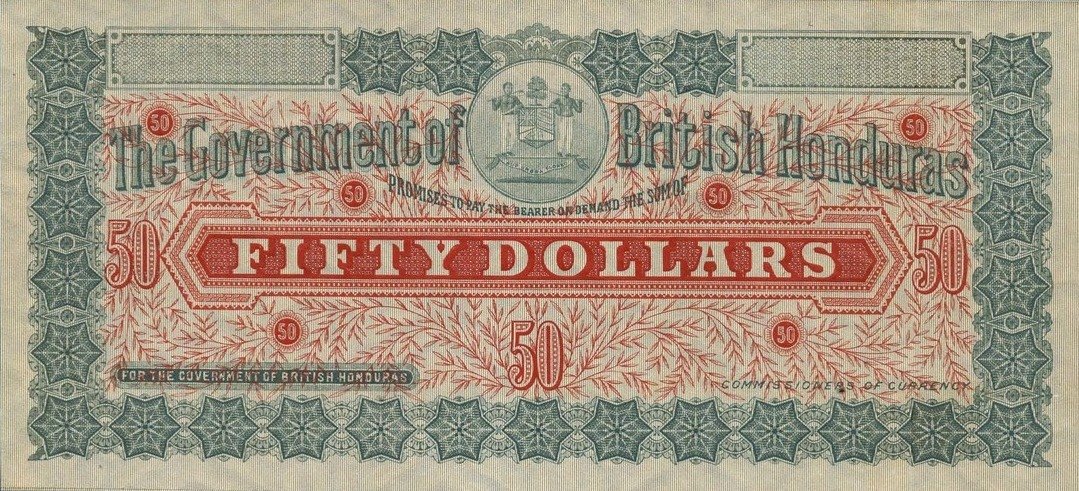
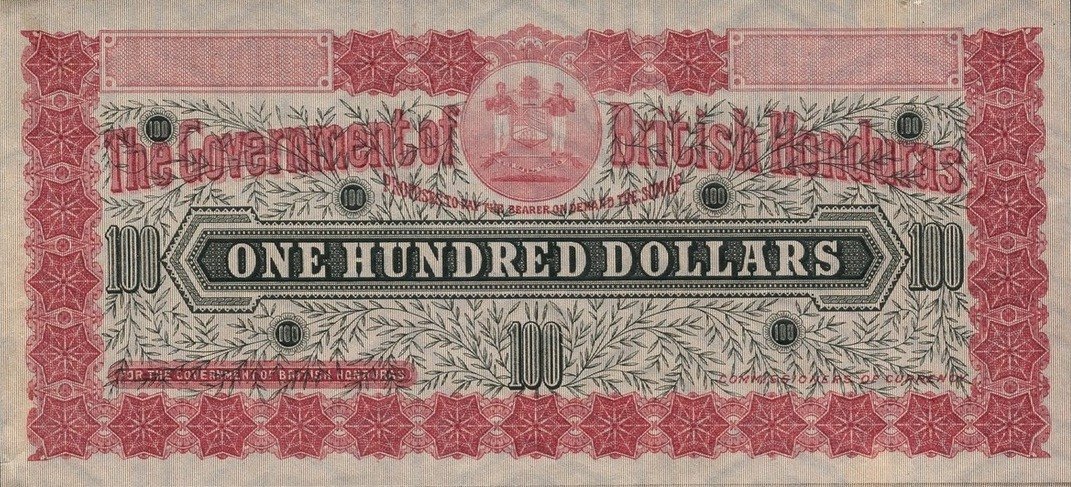
The statement of 30th June 1940 heads the old notes "Old Issue", "demonitised 1st May, 1940", under S. R. & O. 27/1939, and gives 158,536 dollars of old and provisional notes together. It shows them all in circulation and none in custody: these are the notes not yet handed in, two months after they ceased to be money. The two notes of 50 dollars and the one of 100 dollars were still out; the De La Rue notes of 1894 to 1928 set this beside the annual report for 1913, which says those values had been withdrawn. The Pick pages concerned are the 50 dollars and 100 dollars of 1924 and 1928 and their predecessors of 1895, the 50 dollars and 100 dollars. The statements cannot say which design those three notes were.
The George VI notes taken into issue, 1940 to 1942
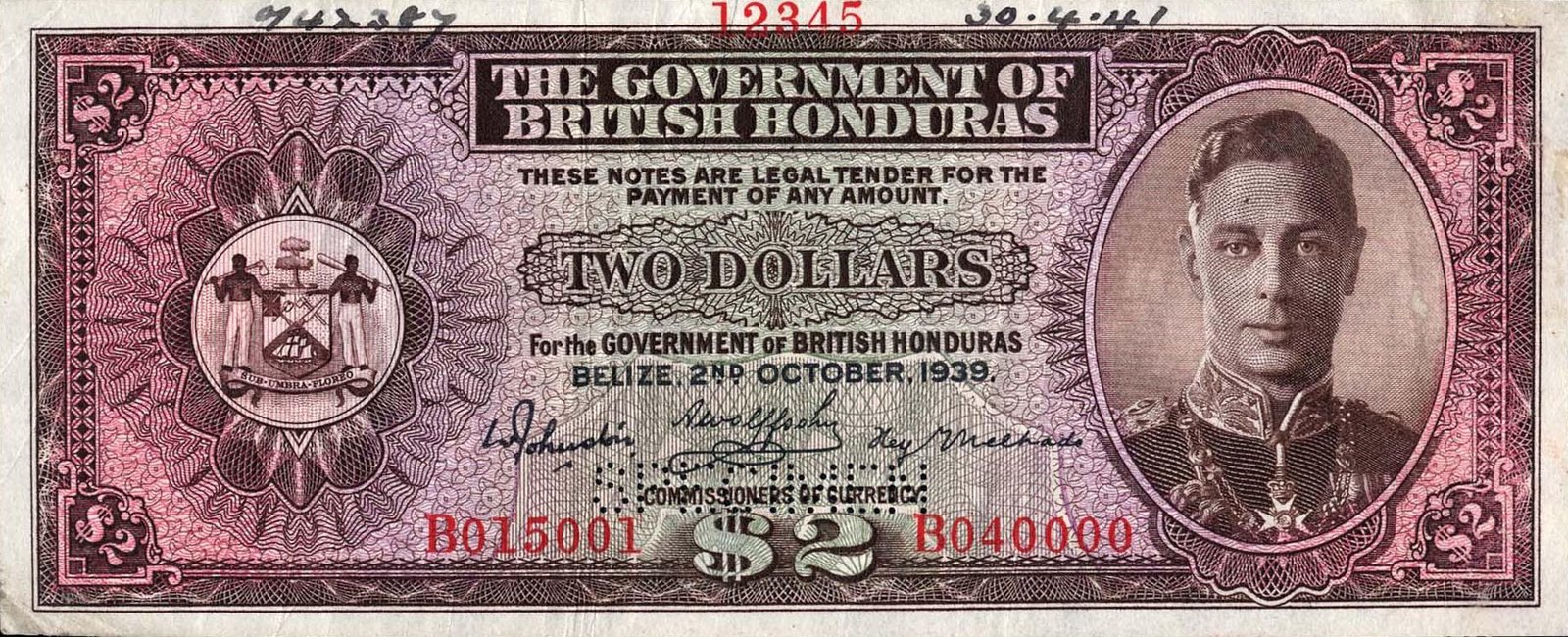
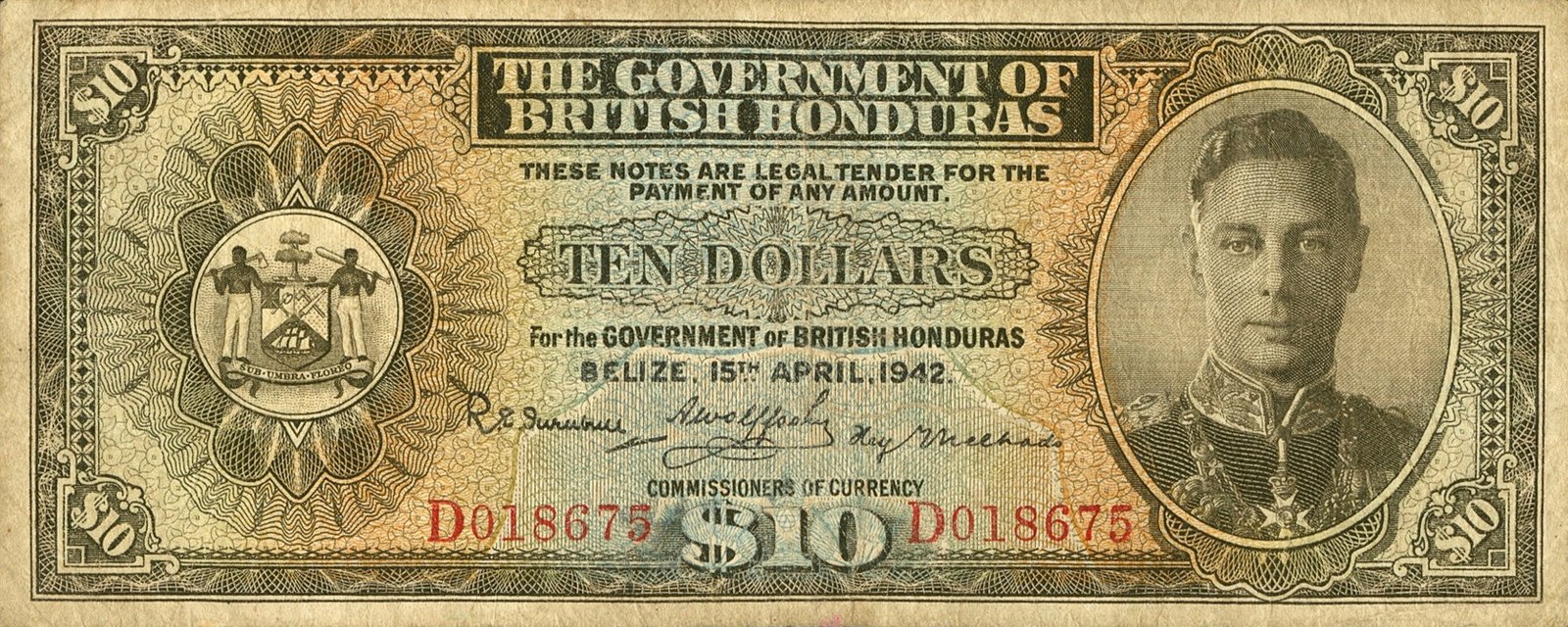
The notes dated 2nd October 1939 are not in the statement of 31st December 1939. They appear first in that of 30th June 1940. The counts the Board gives as issued are the ends of the printer's specimen ranges given on the Pick pages: A000,001 to A060,000 and A060,001 to A110,000 on the 1 dollar, B000,001 to B015,000 and B015,001 to B040,000 on the 2 dollars, C000,001 to C030,000 and C030,001 to C040,000 on the 5 dollars, and D000,001 to D006,000 on the 10 dollars.
| As at | Value | Issued | In custody | In circulation |
|---|---|---|---|---|
| 30th June 1940 | 1 dollar | 60,000 | 30,000 | 30,000 |
| 30th June 1940 | 2 dollars | 15,000 | 5,000 | 10,000 |
| 30th June 1940 | 5 dollars | 30,000 | 19,000 | 11,000 |
| 30th June 1940 | 10 dollars | 6,000 | 4,000 | 2,000 |
| 30th June 1940 | value | 300,000 dollars | 175,000 dollars | 125,000 dollars |
| 31st December 1940 | 1 dollar | 60,000 | 1,000 | 59,000 |
| 31st December 1940 | 2 dollars | 15,000 | none | 15,000 |
| 31st December 1940 | 5 dollars | 30,000 | 5,000 | 25,000 |
| 31st December 1940 | 10 dollars | 6,000 | 2,000 | 4,000 |
| 31st December 1940 | value | 300,000 dollars | 46,000 dollars | 254,000 dollars |
| 30th June 1941 | 1 dollar | 60,000 | none | 60,000 |
| 30th June 1941 | 2 dollars | 15,000 | none | 15,000 |
| 30th June 1941 | 5 dollars | 30,000 | 2,000 | 28,000 |
| 30th June 1941 | 10 dollars | 6,000 | 1,000 | 5,000 |
| 30th June 1941 | value | 300,000 dollars | 20,000 dollars | 280,000 dollars |
| 31st December 1941 | 1 dollar | 110,000 | 40,000 | 70,000 |
| 31st December 1941 | 2 dollars | 40,000 | 20,000 | 20,000 |
| 31st December 1941 | 5 dollars | 40,000 | 10,000 | 30,000 |
| 31st December 1941 | 10 dollars | 6,000 | none | 6,000 |
| 31st December 1941 | value | 450,000 dollars | 130,000 dollars | 320,000 dollars |
| 30th June 1942 | 1 dollar | 110,000 | 40,000 | 70,000 |
| 30th June 1942 | 2 dollars | 40,000 | 18,000 | 22,000 |
| 30th June 1942 | 5 dollars | 40,000 | none shown | 40,000 |
| 30th June 1942 | 10 dollars | 6,000 | none shown | 6,000 |
| 30th June 1942 | value | 450,000 dollars | 76,000 dollars | 374,000 dollars |
The notices are No. 474 of the Treasury, 17th August 1940 (Gazette 1940, p. 281); 21st February 1941, signed by R. E. Turnbull as Chairman (Gazette 1941, p. 98); No. 539, 21st August 1941; No. 125, 7th February 1942 (Gazette 1942, p. 71); and No. 693, 7th September 1942, again signed by Turnbull as Chairman (Gazette 1942, p. 390).
The statements show three things that the notes themselves do not:
- the first printing of 1939 was taken into issue in the first half of 1940, and the second printing of the 1, 2 and 5 dollars during the second half of 1941;
- the 10 dollars stayed at its first 6,000 notes to the last statement read, and by 31st December 1941 all of them were out;
- on 30th June 1942 the issue was unchanged since December 1941, so none of the notes dated 15th April 1942 had yet been taken into issue. When they were is not known: the next statement held is of 1949.
The statement of 31st December 1940 also gives the Note Security Fund: a face value of 377,183 dollars 7 cents, specie of 50,000 dollars included, and a market value of 356,946 dollars 31 cents. The investments were not copied.
The statements of 1949 and 1950
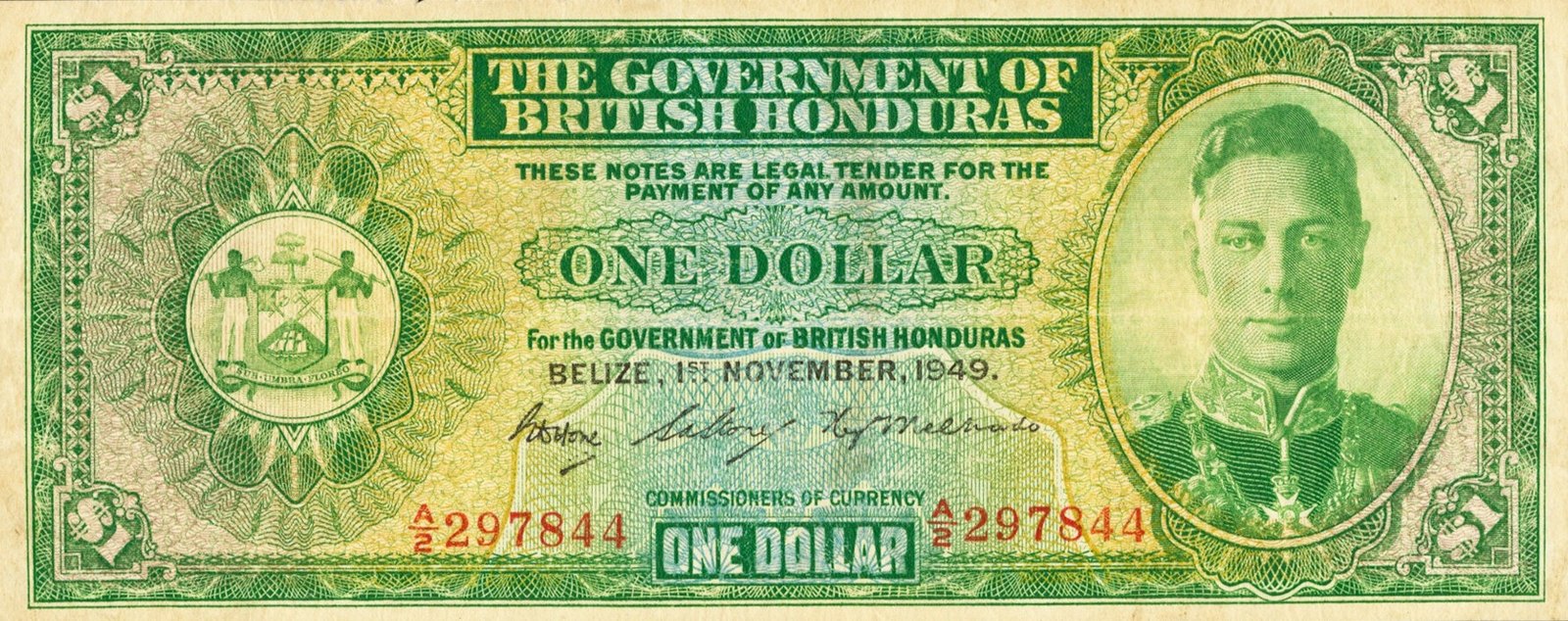
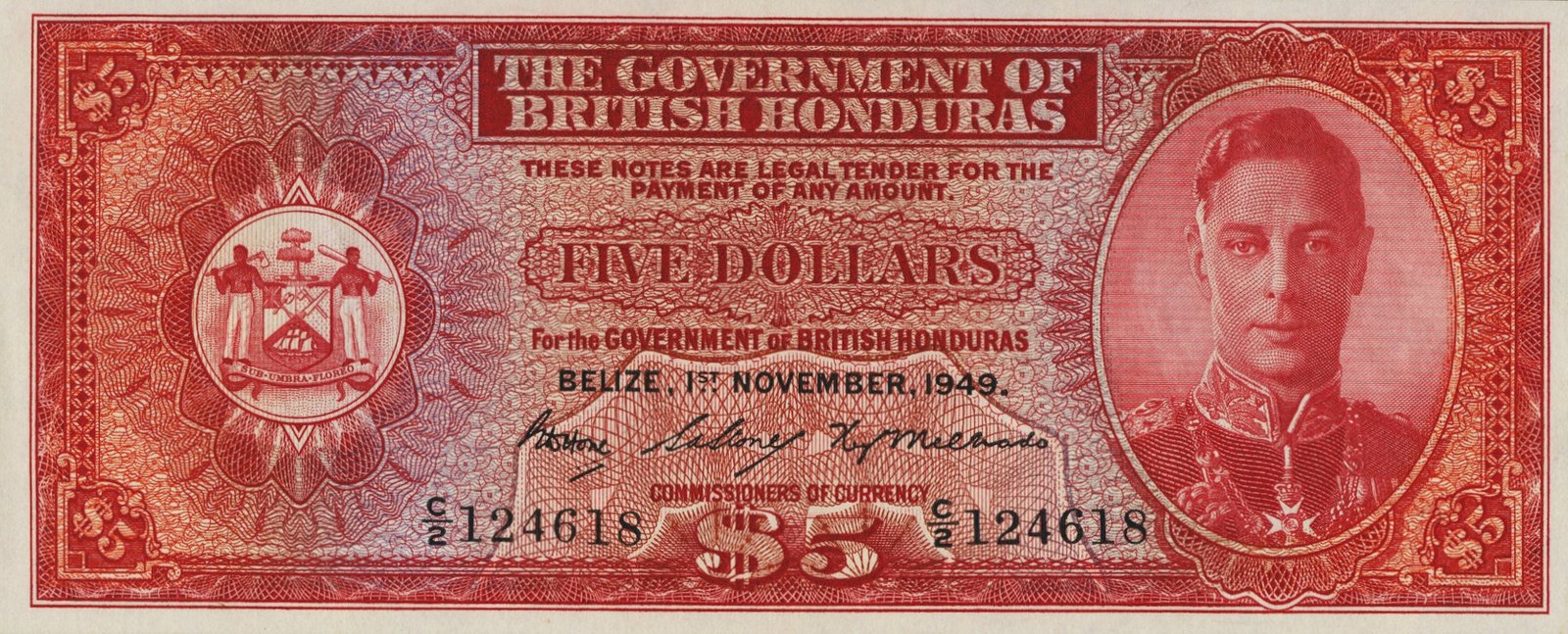
By 1949 the issue includes the notes of 1947, with their new colours. The notes dated 1st November 1949 reached the colony only in 1950, as the annual report for 1950 says, so they can be in the statement of 30th June 1950 at the earliest. The statements still show only four values: no 20 dollars, which agrees with the Pick page of the 20 dollars, whose first date is 1st December 1952.
| As at | Value | Issued | In custody | In circulation |
|---|---|---|---|---|
| 30th June 1949 | 1 dollar | 216,900 | 109,414 | 107,486 |
| 30th June 1949 | 2 dollars | 144,757 | 96,290 | 48,467 |
| 30th June 1949 | 5 dollars | 176,589 | 96,415 | 80,174 |
| 30th June 1949 | 10 dollars | 43,308 | 20,086 | 23,222 |
| 30th June 1949 | value | 1,822,439 dollars | 984,929 dollars | 837,510 dollars |
| 31st December 1949 | 1 dollar | 196,833 | 96,324 | 100,509 |
| 31st December 1949 | 2 dollars | 137,626 | 91,929 | 45,697 |
| 31st December 1949 | 5 dollars | 163,074 | 79,888 | 83,186 |
| 31st December 1949 | 10 dollars | 43,015 | 20,034 | 22,981 |
| 31st December 1949 | value | 1,717,605 dollars | 879,962 dollars | 837,643 dollars |
| 30th June 1950 | 1 dollar | 161,605 | 38,560 | 123,045 |
| 30th June 1950 | 2 dollars | 123,904 | 71,432 | 52,472 |
| 30th June 1950 | 5 dollars | 151,192 | 72,324 | 78,868 |
| 30th June 1950 | 10 dollars | 42,746 | 16,095 | 26,651 |
| 30th June 1950 | value | 1,592,833 dollars | 703,9?4 dollars | 888,839 dollars |
The statement of 30th June 1949 is dated at the Treasury on 26th November 1949 and printed in the Supplement to the Gazette of 18th February 1950, p. 12; that of 31st December 1949 is dated April 1950, Supplement p. 42, Gazette of 6th May 1950; that of 30th June 1950 is dated 25th August 1950, Supplement p. 135, Gazette of 30th September 1950. One digit of the value in custody on 30th June 1950 cannot be read on the page; it is written ? above. The value of the 10 dollars in circulation on 31st December 1949 is also partly unreadable, and is printed in the annual report for 1949 as 229,810 dollars.
The counts in circulation on 31st December 1949 are the same, note for note, as those the annual report for 1949 gives for the end of that year (see the King George VI notes). They also show that the notes in circulation hardly changed across the change in the dollar's value on 31st December 1949: 837,510 dollars in June 1949, 837,643 dollars in December and 888,839 dollars in June 1950. The column of notes issued, on the other hand, is no longer a round printing figure, and it falls at each statement, from 1,822,439 dollars to 1,592,833 dollars in a year. The statements do not say why, and no return of destroyed notes was among the pages held.
The notes of 1947 to 1952 are counted here together with the notes of 1939 and 1942 still out. No statement read divides the issue by date.
What the statements do not give
- No statement between 30th June 1942 and 30th June 1949 was held, so the day the notes of 1942 and of 1947 were taken into issue cannot be read from the Gazette. The annual report for 1947 says the new notes of 1947 were received in December 1947.
- What the "Provisional Notes in Circulation" of 211 dollars were. They stand unchanged from June 1939 to June 1940.
- Any return of notes destroyed, lost or stolen by number: none was found in the pages of 1938 to 1950.
- The text of the Proclamation that demonetised the old notes (Gazette 1939, p. 176), which is told in the laws behind the notes.
Sources
- The British Honduras Gazette, statements of the Board of Commissioners of Currency: 30th June 1939 (notice No. 493, 30th August 1939, p. 332); 31st December 1939 (No. 265, 11th May 1940, p. 159; reprinted No. 282, 18th May 1940, p. 166); 30th June 1940 (No. 474, 17th August 1940, p. 281); 31st December 1940 (21st February 1941, p. 98); 30th June 1941 (No. 539, 21st August 1941); 31st December 1941 (No. 125, 7th February 1942, p. 71); 30th June 1942 (No. 693, 7th September 1942, p. 390); 30th June 1949 (Supplement, 18th February 1950, p. 12); 31st December 1949 (Supplement, 6th May 1950, p. 42); 30th June 1950 (Supplement, 30th September 1950, p. 135).
- The annual reports on British Honduras for 1913, 1946, 1947, 1949 and 1950.
- The printer's specimen ranges, as the Pick pages P-20 to P-23 give them.
Member comments
Log in or register to post a comment.