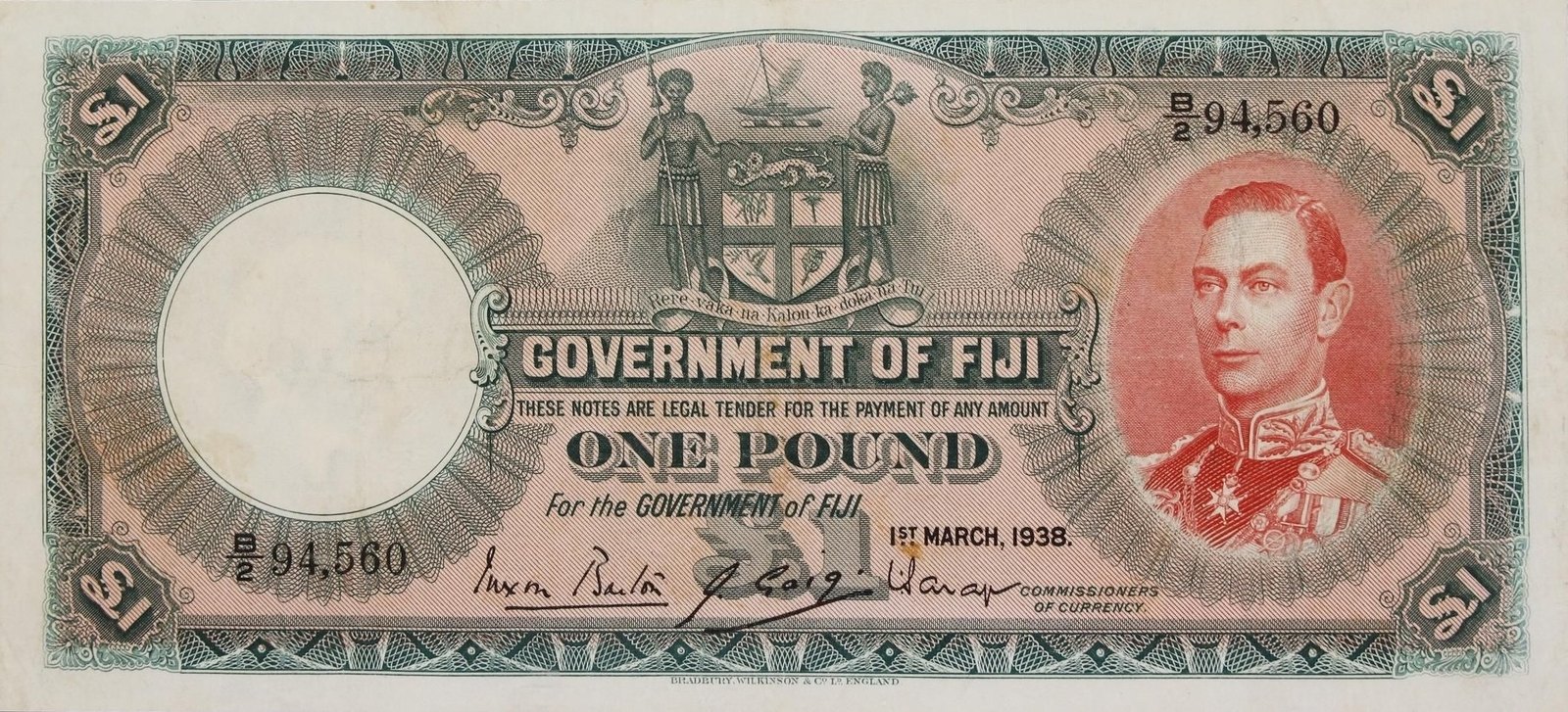
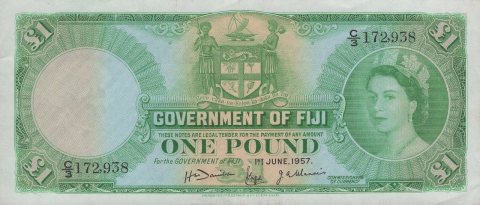
Every pound note of Fiji carries three signatures, and the date of a note is tested by the men who signed it. The first article on the notes of 1914 to 1933 uses that test on a few dates. This article gives the lists behind it: the statements and abstracts the Commissioners of Currency signed in the Fiji Royal Gazette, the appointments the Gazette printed, and the table that K. A. Rodgers and Carol Cantrell drew up in "Fiji's Commissioners of Currency I: 1914 - 1933" (IBNS Journal, volume 29, number 1, 1990).
Three seats
The Government Currency Notes Ordinance 1913 made three Commissioners: the Colonial Secretary, the Receiver-General and one other person named by the Governor. The Fiji Currency Notes Ordinance 1933 kept three, with the Colonial Treasurer in the second seat. By 1939 the abstracts in the Gazette are signed by the Financial Secretary and two nominated members, and they stay so until the Currency Board appears in 1967.
The signatures on a note stand in the same order. When an officer was away the one acting signed in that seat, as the titles in the Gazette show (Acting Colonial Secretary, Acting Colonial Treasurer, acting Financial Secretary).
1914 to 1933
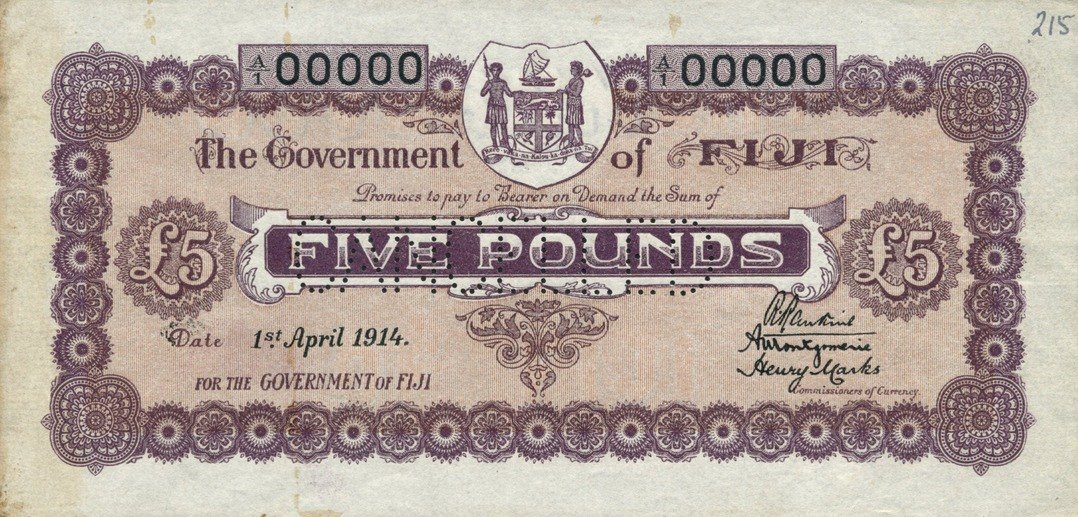
The first statement (Fiji Royal Gazette 1914, p. 885, for the period ending 10th December 1914) is signed by Eyre Hutson, Colonial Secretary, R. Rankine, Receiver-General, and Henry Marks, Nominated Commissioner. Rodgers and Cantrell print the first name as Huston.
| From | Commissioners | Source |
|---|---|---|
| 4th December 1914 | Hutson, Rankine, Marks | Rodgers and Cantrell, p. 6; Gazette 1914, p. 885 |
| 13th August 1915 | Rankine (acting Colonial Secretary) and Montgomerie (acting Receiver-General) first serve together | Rodgers and Cantrell, p. 6 |
| 11th October 1918 | Hutson, Rankine, Marks | Rodgers and Cantrell, p. 6 |
| 25th March 1922 | H. H. Rushton, Treasurer from 1st February 1922, becomes a Commissioner on arriving in the Colony | Gazette 1922, appointments (M.P. 1182/22) |
| 6th November 1922 to 19th January 1924 | Fell, Rushton, Marks | Rodgers and Cantrell, p. 7 |
| 9th July 1926 to 20th January 1927 | McOwan, Rushton, Marks | Rodgers and Cantrell, p. 7 |
| "12/1/27" as printed (the line stands between those of 8th July 1927 and 14th April 1928) | McOwan, Brabant, Marks | Rodgers and Cantrell, p. 7 |
| 18th April 1929 | Rushton, Brabant, Marks | Rodgers and Cantrell, p. 7 |
| May, June and August 1929 | H. H. Rushton (Acting Colonial Secretary), H. W. Harcourt (Acting Colonial Treasurer), Henry Marks | Gazette 1929, monthly abstracts of 10th May to 10th August |
| 22nd November 1929 | Seymour, Rushton, Marks | Rodgers and Cantrell, p. 7 |
| 10th December 1929 | A. W. Seymour, H. H. Rushton (Colonial Treasurer), Henry Marks | Gazette 1929, abstract |
| 26th December 1929 | Seymour, March, Marks | Rodgers and Cantrell, p. 7 |
| 1st February 1930 | Seymour, March, Boyd | Rodgers and Cantrell, p. 7 |
| 10th February 1930 | A. W. Seymour, E. J. March (Acting Colonial Treasurer), P. F. Boyd (Nominated Commissioner) | Gazette 1930, abstract |
| 31st December 1932 to 12th May 1933 | Wright, Craig, Hayward | Rodgers and Cantrell, p. 7 |
| 30th June 1933 | Wright, Chamberlain, Hayward | Rodgers and Cantrell, p. 7 |
| 10th August 1933 | A. W. Seymour (Colonial Secretary), K. S. J. Chamberlain (Acting Colonial Treasurer), W. Hayward (Nominated Member) | Gazette 1933, p. 277 |
| 31st December 1933 | A. A. Wright (Acting Colonial Secretary), J. Craig, P. F. Boyd | Gazette 1934, abstract |
Rodgers and Cantrell (p. 5) call the period from April 1921 to March 1922 and the months of October 1929 and January 1930 "particularly obscure and difficult to document", and say their dates are a general guide that need not agree with the dates printed on notes. Their table prints a line dated 20/1/27 (Seymour, Rushton, Marks) and one dated 8/7/27 (Seymour, Brabant, Marks) before the line dated 12/1/27, so that date does not stand in order of time as printed. Of the Gazette entries in the table above, the statement of 1914 and the abstract of 10th August 1933 were read on the page; the appointment notice of 1922, the abstracts of 1929 and the abstract at 31st December 1933 were taken from the machine-read text.
The nominated seat
Henry Marks signs the first statement of 1914 as Nominated Commissioner and is still in the third seat on the Gazette abstract of 10th December 1929; that of 10th February 1930 has Boyd. Rodgers and Cantrell (p. 6) say J. M. Hedstrom acted for Marks in 1917 to 1918, 1919 and 1921 to 1922. The Gazette bears this out and adds a period: Hedstrom signs the statements of February 1918, June to August 1919, April to September 1921, February 1922, and August to October 1922, after Marks had been given nine months' leave from 1st July 1922 (Gazette 1922, M.P. 2803/22). No row of the catalogue's pages for these notes carries Hedstrom's signature.
The annual report on Fiji for 1928 adds a detail on Boyd: P. F. Boyd, "formerly of Northern Rhodesia", was appointed Colonial Postmaster and arrived in the Colony in March 1928.
Where the lists and the notes meet
- 1st April 1914. The 5 pounds, 10 pounds and 20 pounds of this date carry Rankine, Montgomerie and Marks. Those two first sat together on 13th August 1915, so the notes were signed after their printed date.
- 4th December 1914. The catalogue's row for the 1 pound of this date gives Rankine, Montgomerie and Marks; no note or photograph stands behind the row. The Gazette statement of 10th December 1914 and the list of Rodgers and Cantrell both give Hutson, Rankine and Marks for that month. The two do not agree, and only a note of the date would settle it.
- 4th February 1923. The 5 shillings row of this date has no note and no signatures. The list gives Fell, Rushton and Marks for the day, but the Gazette has Marks given nine months' leave from 1st July 1922 and Hedstrom signing the statements of August to October 1922. The annual report for 1922 is signed "T. E. Fell, Colonial Secretary".
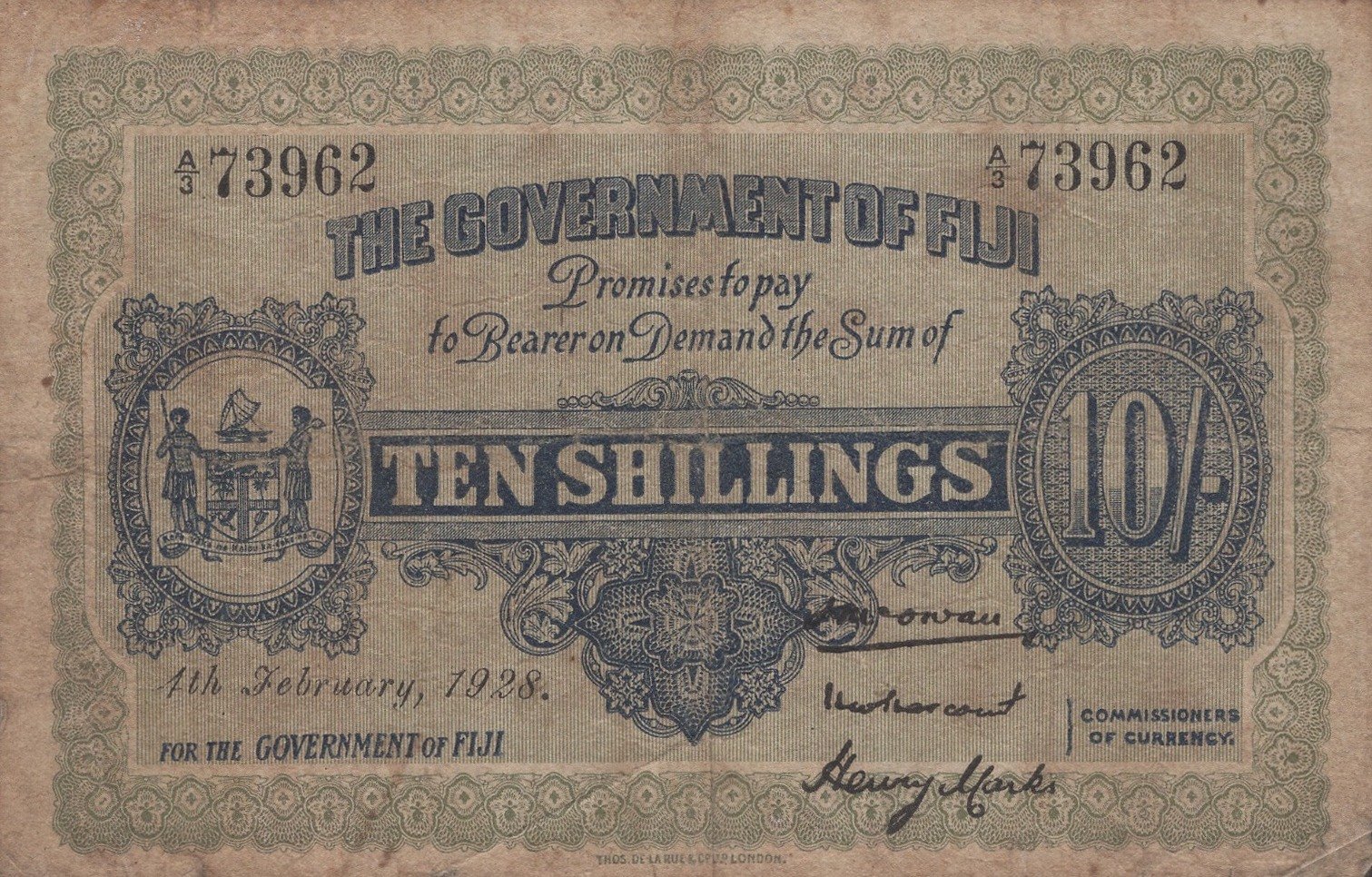
- 4th February 1928. Notes of this date carry McOwan, Harcourt and Marks. The list of Rodgers and Cantrell has Brabant as Receiver-General from 1927 to 1929, with Rushton acting at times, and does not name Harcourt at all. The notes show Harcourt, so the list is incomplete here.
- 1st July 1929. The 5 shillings of this date carries Rushton, Harcourt and Marks, exactly the three who signed the Gazette abstracts of May, June and August 1929.
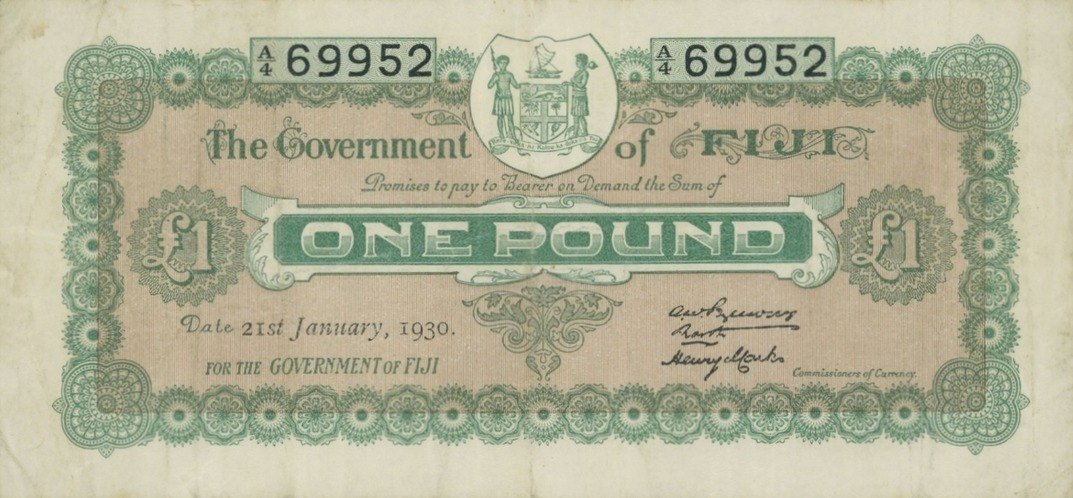
- 21st January 1930. The 1 pound of this date carries Seymour, Rushton and Marks, the Commissioners of 22nd November to 26th December 1929. By the list March had replaced Rushton before the printed date.
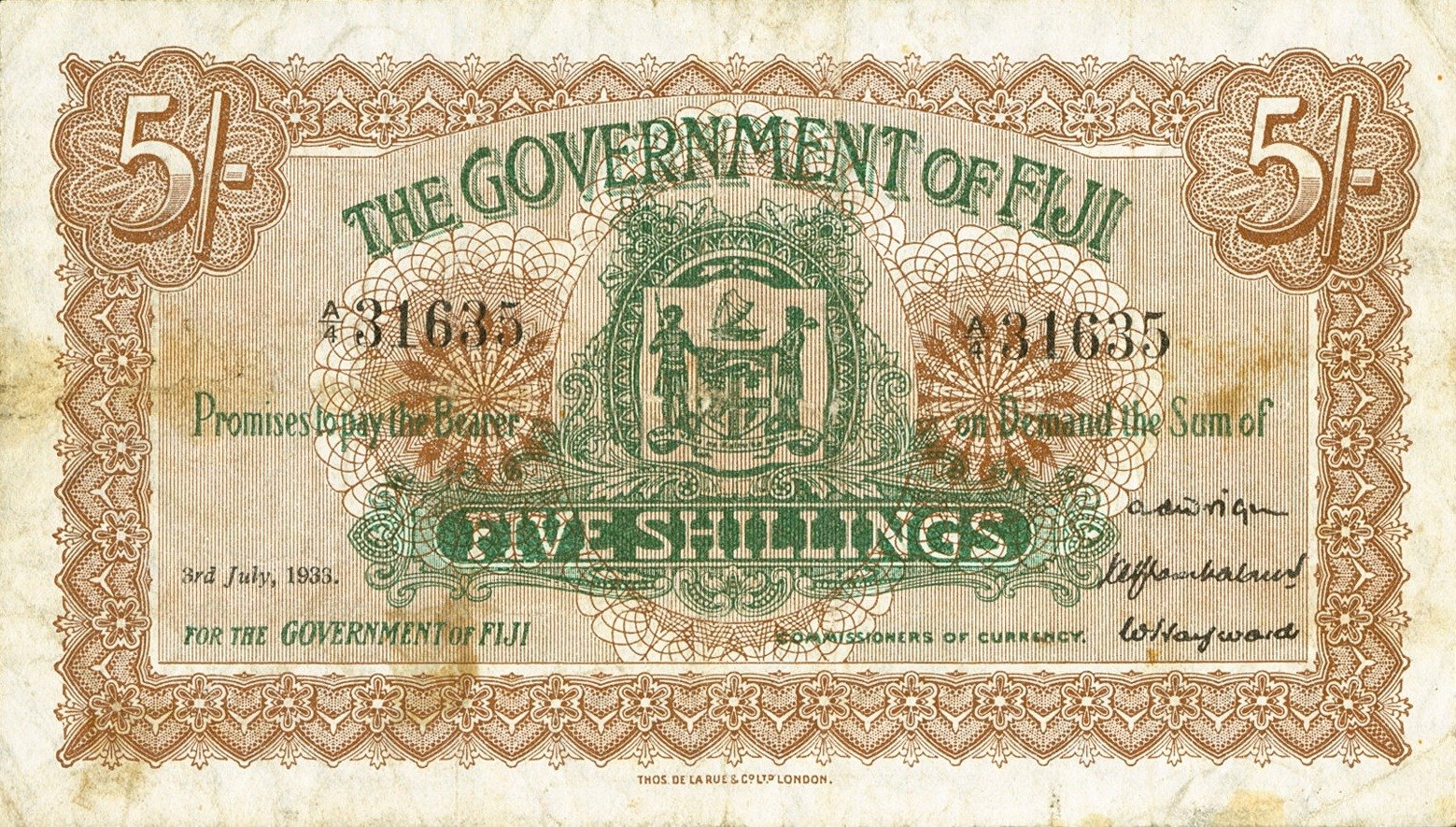
- April and July 1933. The 5 shillings of 20th April 1933 carries Wright, Craig and Hayward and that of 3rd July 1933 Wright, Chamberlain and Hayward, as the list has them.
1937 to 1944
From 1933 the Commissioners published an abstract every half year.
| Abstract | Signed by | Source |
|---|---|---|
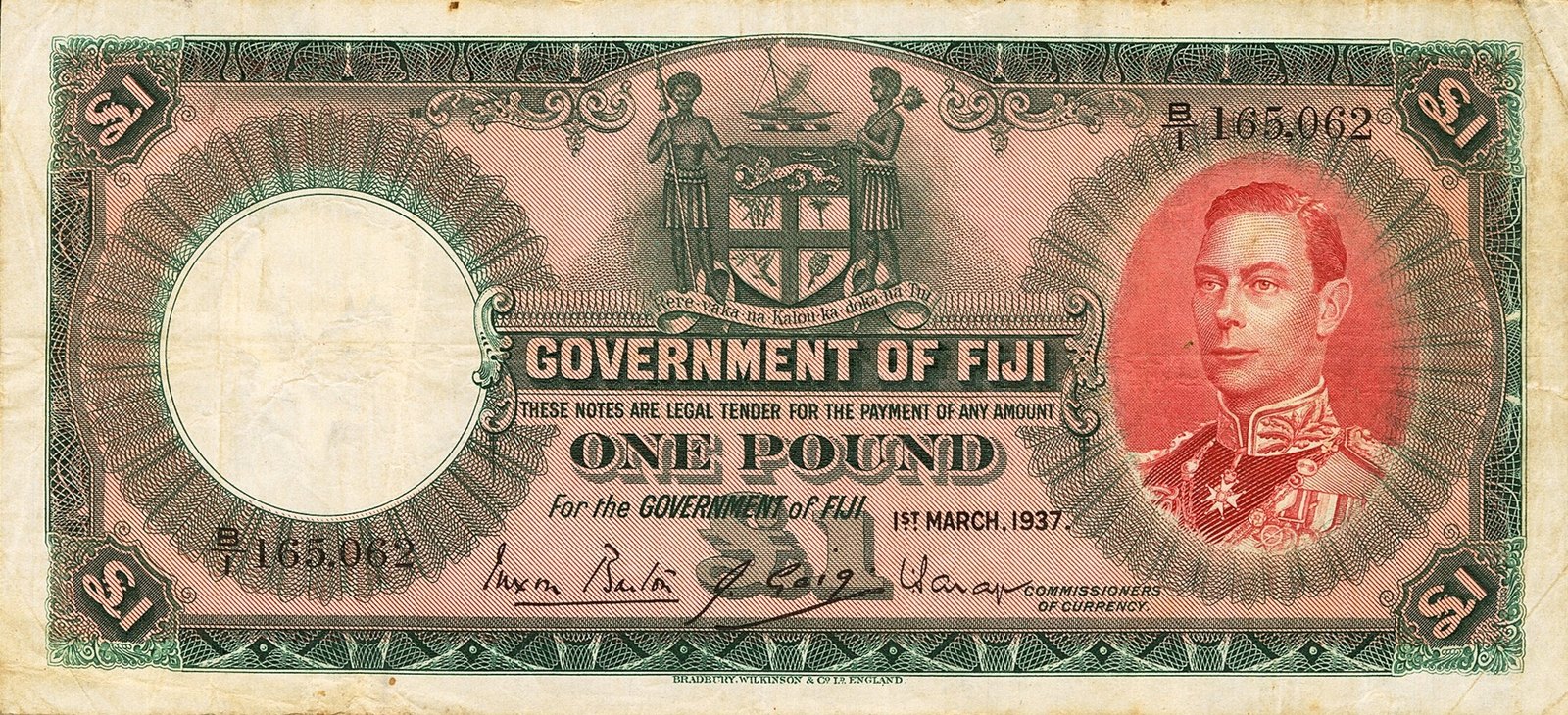
| at 30th June 1937 | Juxon Barton; A. Savage, Acting Colonial Treasurer; W. Hayward, Nominated Member | Gazette 1937 |
| at 31st December 1937, signed 21st April 1938 | Juxon Barton, Colonial Secretary; J. Craig, Colonial Treasurer; L. Savage, Nominated Member | Gazette 1938 |
| 16th November 1939 | Robertson, Financial Secretary; Hayward and R. B. Ackland, Nominated Members | Gazette 1939 |
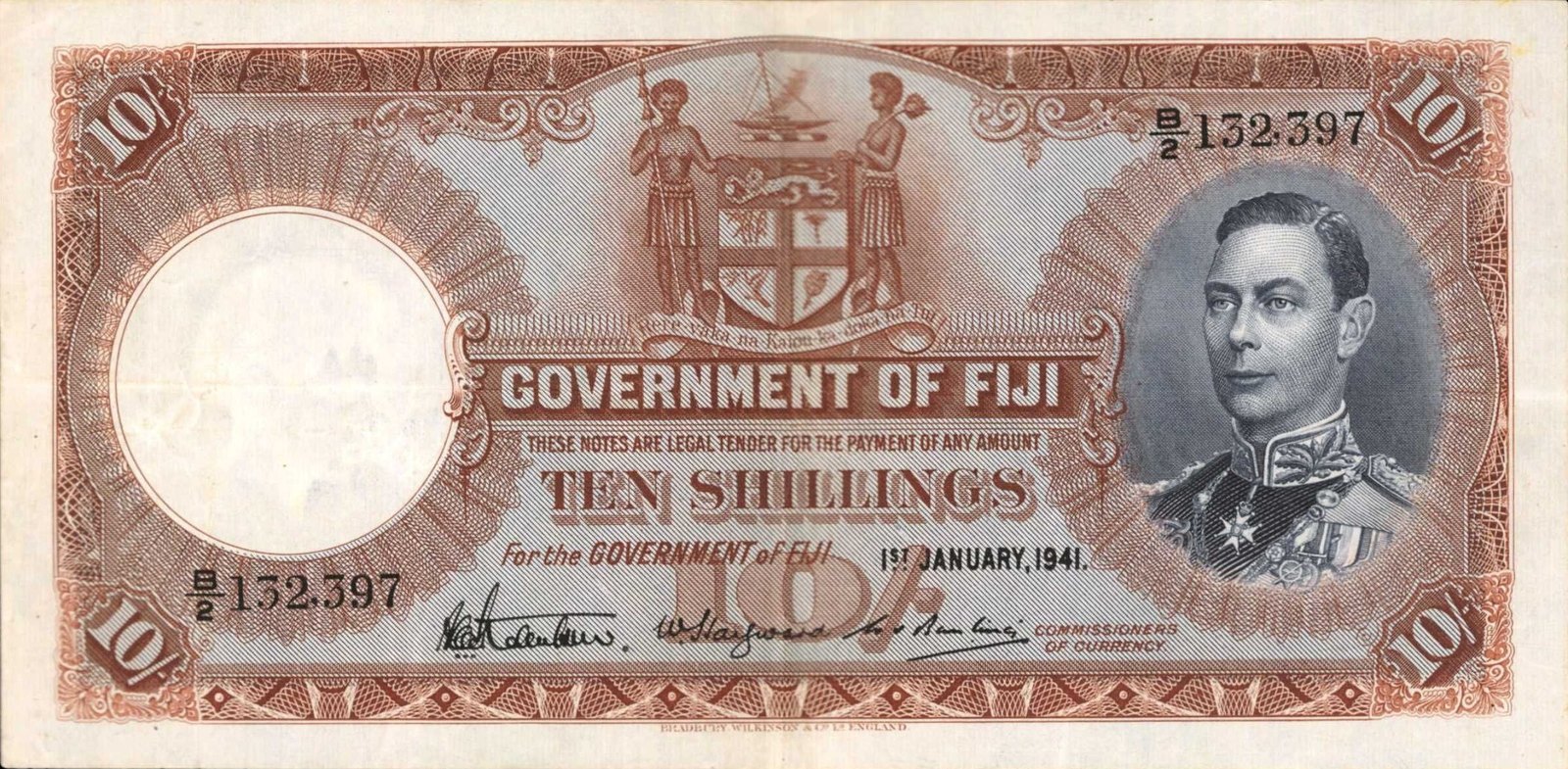
| at 31st December 1940 | Robertson, Hayward, W. V. Banting | Gazette 1941 |
| 21st March and 15th July 1942 | Robertson, W. F. Hayward, Banting | Gazette 1942 |
| at 31st December 1942 | Robertson and Banting only | Gazette |
| 15th July 1943 | Robertson, W. F. Hayward, Banting | Gazette 1944 |
| 1st August 1944 | Robertson, Banting, H. J. S. Allen | Gazette 1944 |
The initial of Savage differs between the abstracts of 1937 and 1938. The first was taken from the machine-read text and not checked on the page, so whether there were two men or one is open. Of the other entries, the abstract at 31st December 1937 and that of 15th July 1943 were read on the page; the rest of this table comes from the machine-read signature blocks. The notes of 1937 and 1938, such as the 5 shillings and the 10 shillings, carry Barton, Craig and Savage.
Three points come out of this table.
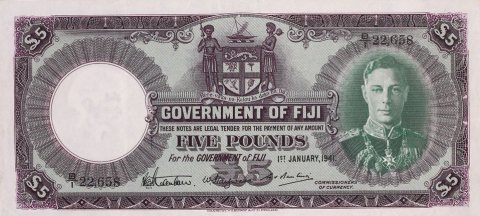
Banting. K. A. Rodgers, in "Fiji's World War II Currencies: the Official Records", Part I (IBNS Journal, volume 36, number 2, 1997, p. 39), says an order of 3rd November 1941 asked for notes dated 1st January 1941 and signed Robertson, Hayward and Banting, "although Banting did not replace Ackland until May". The date on those notes is older than the third signature could be.
Allen. The 20 pounds and other notes dated 1st July 1943 carry Robertson, Banting and Allen. The abstract of 15th July 1943 is still signed by Hayward, and Allen first signs one on 1st August 1944. A statement and a note of the same month need not carry the same names.
Martin. The 1 penny and the 1 shilling of 1st September 1942 are signed by Robertson, Banting and Martin. No statement or abstract of 1942 to 1944 that was read is signed by Martin. W. T. Martin appears in the Gazette of 1942 only as Comptroller of Customs. In what capacity Martin signed the two small notes is not shown by the Gazette.
1944 to 1966
The abstracts are signed by the Financial Secretary, or the officer acting, and two nominated members. By the date of the position shown:
| Position at | Signed by |
|---|---|
| December 1944 | Nightingale (acting), Banting, Allen |
| December 1945 | Nightingale (acting), Donovan, Hayward |
| June and December 1946 | Banting (acting Financial Secretary), Donovan, A. R. Smith |
| June and December 1947 | Taylor, A. R. Smith, Donovan |
| June 1948 | Taylor, Banting, Davis |
| June and December 1949 | Nightingale (acting), Banting, A. R. Smith |
| June 1950 | Taylor, Donovan, A. R. Smith |
| December 1950 | A. R. Smith (acting Financial Secretary), Donovan, Davis |
| June 1951 | Nightingale (acting), Donovan, A. R. Smith |
| December 1951 | Davidson, Donovan, A. R. Smith |
| December 1952 | Bevington (acting), A. R. Smith, Griffiths |
| June 1953 to June 1954 | Davidson, Donovan, Davis |
| December 1954 | Major (acting), Davis, Griffiths |
| June 1955 | Major (acting), Griffiths, Emery |
| December 1955 to December 1956 | Davidson, Griffiths, Marais |
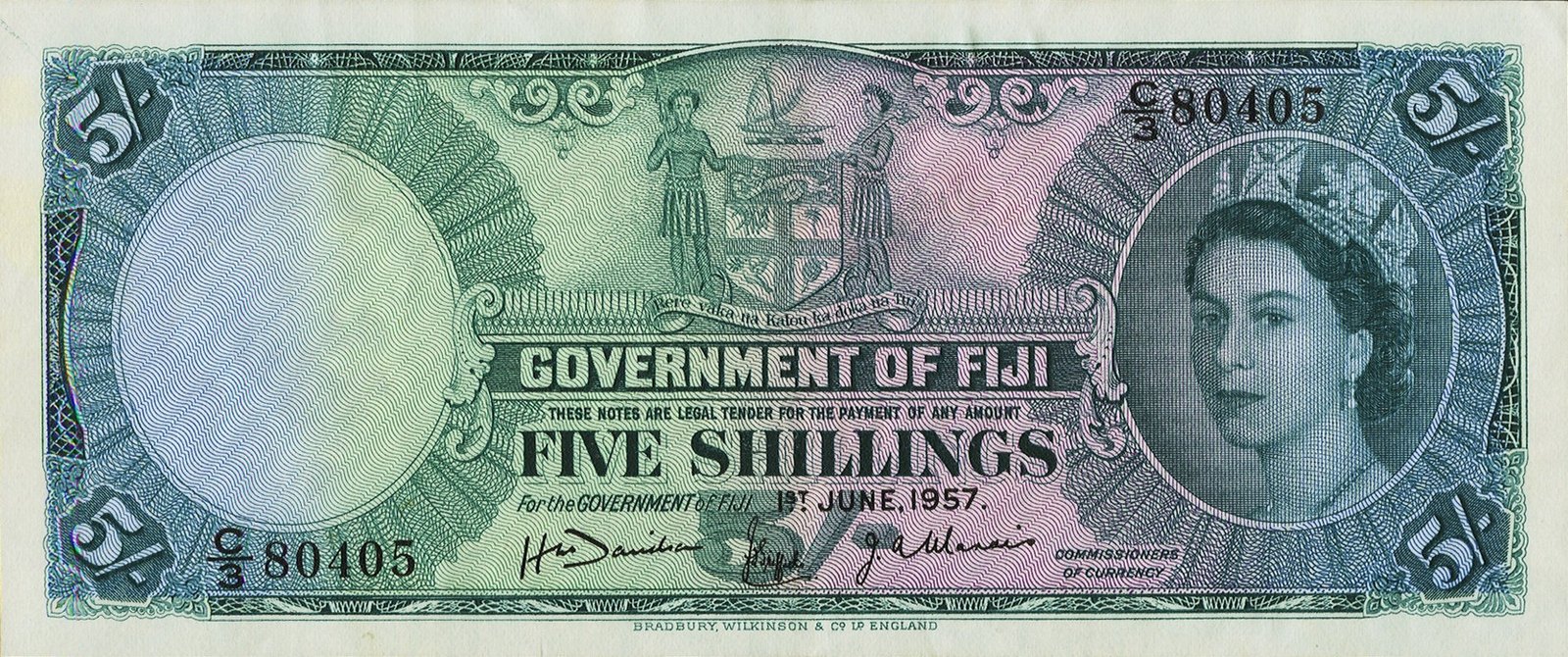
| June 1957 | Davidson, Edmunds, Ragg |
| December 1957 | Davidson, Griffiths, Marais |
| June 1958 to June 1959 | Bevington, Griffiths, Marais |
| December 1959 | Ritchie (acting), Griffiths, Edmunds |
| June 1960 to December 1961 | Ritchie (acting) or Bevington; Griffiths or B. J. Smith; Cruickshank |
| 1962 to 1966 | Ritchie, Griffiths, Cruickshank (B. J. Smith for Griffiths in June 1964) |
| December 1966 | Cole (acting), Griffiths, Cruickshank |
One of these was checked on the page (the abstract signed on 17th April 1956 by Davidson, Griffiths and Marais); the rest come from the machine-read signature blocks.
Set beside the notes, the names agree period by period: Taylor, Banting and Smith on notes of 1948 to 1950, Taylor, Donovan and Smith in 1951, Davidson, Griffiths and Marais on the 5 shillings of 1957, Bevington, Griffiths and Marais in 1958 and 1959, and Bevington or Ritchie with Griffiths and Cruickshank from 1960. By the same comparison Nightingale, Major, Cole, Edmunds, Ragg, Emery and B. J. Smith signed abstracts and appear on no note.
The Currency Board, 1967 to 1973
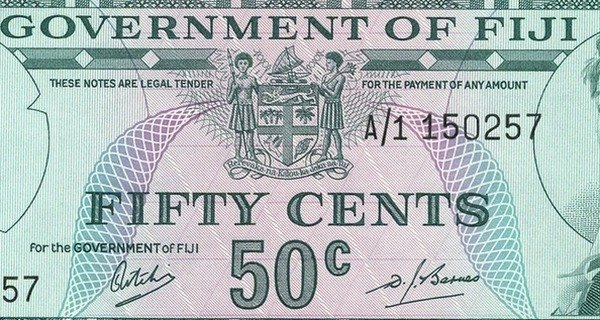
The abstract at 30th June 1967 is the first headed THE CURRENCY BOARD. It is signed by H. P. Ritchie, Financial Secretary, with J. F. Griffiths and D. J. Barnes as nominated members. In 1968 Ritchie signs as Minister of Finance and Chairman, with D. J. Barnes and H. P. Smith. Ritchie and Barnes are the two signatures on the dollar notes of 1969, such as the 50 cents.
| Chairman | Signs in the Gazette | Source |
|---|---|---|
| H. P. Ritchie | the abstract at 30th June 1969 | Gazette 1969 |
| W. M. Barrett, Minister of Finance and Chairman | 25th June 1970, 16th December 1970, 6th August 1971 | Gazette 1970, pp. 16 to 18 and 28 of the extract; Gazette 1971 |
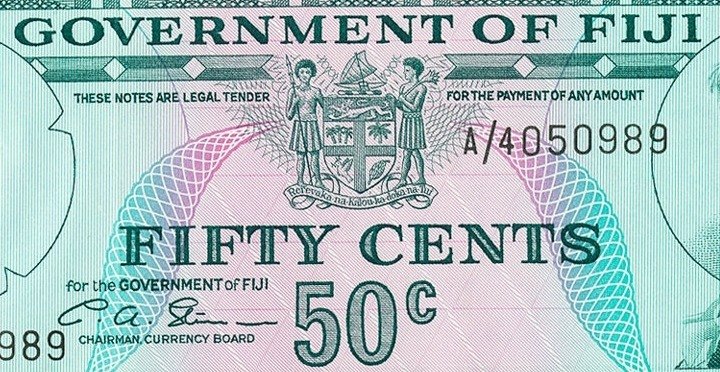
| C. A. Stinson, Minister of Finance and Chairman | 11th May 1972 (the accounts for 1971), 12th January 1973, 1st March 1973, and the accounts to 30th June 1973 | Gazette 1973 and 1974 |
The change from Barrett to Stinson therefore falls between August 1971 and May 1972. Each signed the Currency Board notes alone, as on the 50 cents of 1971. The Central Monetary Authority took over the Board's assets and liabilities on 1st July 1973.
What the lists cannot do
A statement shows who sat on the day it was signed. A note shows whose signatures the printer was given, on a date chosen for the printing. The two usually agree, and several times above they do not: in 1914, 1930, 1941 and 1943. The lists therefore support a date; they do not prove that a note of that date exists. The article Fiji's first government notes, 1914 to 1933: a census says which dates have a note behind them.
Rodgers and Cantrell numbered their article "I". No second part, for the years after 1933, was among the journals read.
Sources
- Fiji Royal Gazette: the statements and abstracts of the Commissioners of Currency, 1914 to 1966, and of the Currency Board, 1967 to 1973; the appointments and leave notices of 1922 (M.P. 1182/22 and M.P. 2803/22).
- K. A. Rodgers and Carol Cantrell, "Fiji's Commissioners of Currency I: 1914 - 1933", IBNS Journal, volume 29, number 1 (1990), pp. 4 to 7.
- K. A. Rodgers, "Fiji's World War II Currencies: the Official Records", Part I, IBNS Journal, volume 36, number 2 (1997), p. 39.
- The Government Currency Notes Ordinance 1913 (No. XXX of 1913) and the Fiji Currency Notes Ordinance 1933 (No. 6 of 1933).
- Colonial Reports, Annual: Fiji, 1922 (No. 1171, p. 31) and 1928 (No. 1453).
- The Pick pages of this catalogue for the signatures on the notes.
Member comments
Log in or register to post a comment.