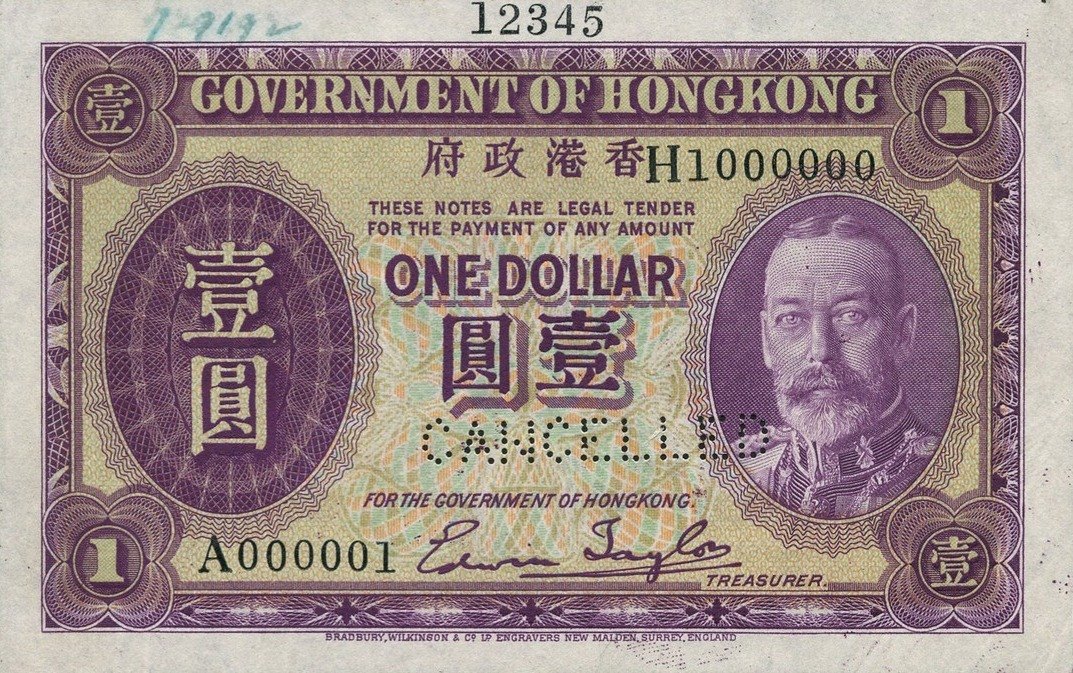
The Government of Hong Kong issued its first note, a 1 dollar, in November 1935. The question of a Government 1 dollar is much older than that. This article follows it from 1872 to 1935 through the official books and reports that were read for this catalogue: Chalmers' History of Currency in the British Colonies (1893), the study Money in British East Asia (1957), the report of the Hong Kong Currency Commission of 1931 as printed in G. B. Endacott's An Eastern Entrepot (1964), the colony's annual reports, the Blue Books and the Economic Surveys of the Colonial Empire. The banks' notes come into it only where they explain why the Government waited so long.
A bank's 1 dollar, 1872
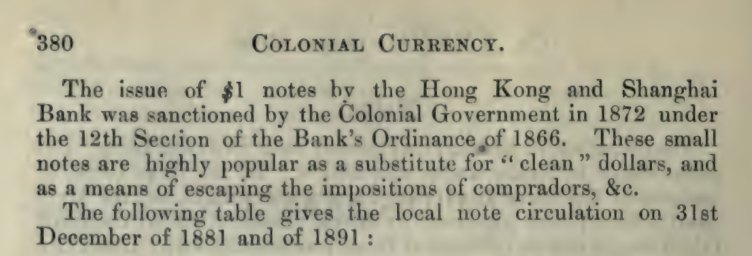
Before 1935 the paper money of Hong Kong was the notes of the banks. Chalmers, writing in 1893 (chapter XXXVII, pp. 379 to 380), says plainly: "There has never been a Government issue in Hong Kong, but notes issued by banks are in circulation." The banks' notes were of 5 dollars and upwards, with one exception. In 1872 the Hongkong and Shanghai Bank was allowed to issue notes of 1 dollar.
The two books explain that permission differently. Chalmers says the issue of 1 dollar notes by the bank was sanctioned by the Colonial Government in 1872 under the 12th section of the bank's Ordinance of 1866. Money in British East Asia (pp. 103 to 104, and a footnote on p. 7) says the Governor used the emergency powers of the office to let the bank issue a limited amount of 1 dollar notes to relieve a shortage of currency, and that 226,000 dollars of them were in fact issued. Both agree on the year and on the bank.
Money in British East Asia says the bank withdrew its 1 dollar issue only in 1935, the year the Government's note came. William S. Barrett's preview of the Spink sale in Hong Kong of 20th January 2007, in Bank Note Reporter of January 2007 (pp. 77 to 79), describes the large 1 dollar notes of the bank in the sale, dated from 1873 to 1889 (the large size, it says, was replaced by very small notes in 1889), a 1 dollar of 1899 and a small 1 dollar of about 1904 printed as a trial in orange. K. O. Mao, in the IBNS Journal of Christmas 1963 (vol. 3 no. 3, p. 13), wrote instead that the bank's 1 dollar issue of 1872 "was soon stopped". Mao's statement differs from the study of 1957 and from the dates of the notes in the Spink preview. Money in British East Asia also records a later official view of the bank's note: the Colonial Treasurer called the bank's 1 dollar issue a mistake in 1911.
Approved in 1884, not used
The idea of a Government 1 dollar first appears in the 1880s. Money in British East Asia says that in 1884 Lord Derby informed the Governor that the principle of Government 1 dollar notes with full backing in specie had been approved. Chalmers adds in a footnote on p. 379 that "some few years back" a proposal for 1 dollar notes of the Colonial Government had been considered and then dropped. Neither book says whether the two refer to the same proposal. In the words of Money in British East Asia, the Hong Kong Government "did not find it necessary to make use of this authority until 1935".
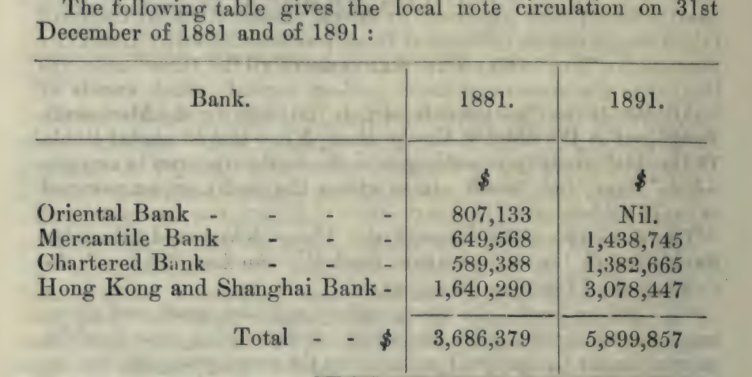
How much paper the banks had out at the time is given by Chalmers (p. 380, read on the page image): 3,686,379 dollars of bank notes in local circulation on 31st December 1881 and 5,899,857 dollars on 31st December 1891.
The proposal of 1908
The second attempt came in 1908. The report of the Hong Kong Currency Commission of 1931, printed by Endacott (pp. 225 to 229, read in the text only), tells the history of what it calls the so-called premium on notes. When the premium rose to 35 per cent in 1908 a remedy was suggested: an unlimited Government note issue, as had been tried in the Straits Settlements. At the suggestion of the Secretary of State for the Colonies the project was abandoned.
The Straits example was close at hand. Money in British East Asia (p. 7) notes that the first 1 dollar currency notes of the Straits Settlements were issued in 1906, and that in Hong Kong the first such notes came only in 1935.
In 1913 the colony moved against other paper instead. The annual report for 1913 records an Ordinance, No. 13 of 1913, prohibiting the circulation of bank notes other than those authorised, and gives the notes of the three authorised banks in circulation at the end of 1913 as 24,551,752 dollars.
Nil in the Blue Books, 1914 to 1934
The Blue Books of these years have a line for the paper money of the Colonial Government. From 1914 to 1934 it reads "Nil" in every year read (in the text only; the currency page of 1923 is missing from the text, and no figure for 1918 is given). In the same years the banks' notes rose from 30,862,727 dollars at the end of 1914 to 157,583,718 dollars at the end of 1933.
Two sources of the early 1930s give the size of the banks' issue at the end of 1931 a little differently. The annual report for 1931 (No. 1585, p. 28) gives 154,631,822 dollars; the Blue Book for 1931 gives 154,681,882. Both were read in the text only, and one of the two may be a slip of the scan. The Economic Survey of the Colonial Empire for 1932 declined to give a figure at all: the notes and coin of the colony circulated over a wide area of China, it said, so the amount in circulation could not be estimated. The annual report for 1934 (No. 1706, p. 34) gives 153,601,407 dollars of bank notes issued at the end of 1934, of which 12,000,000 dollars were fiduciary issues, redeemable in legal tender dollars at the banks' offices in Hong Kong.
The Currency Commission of 1931
In April 1931 a Currency Commission under the chairmanship of W. Clegg, sent out by the Colonial Office, visited the colony to report on its currency problems (annual report for 1931). Its report was published in May 1931 as Cmd. 3932. One of its members was P. H. Ezechiel, Crown Agent for the Colonies and chairman of the Palestine Currency Board, whose record of service in the Colonial Office List of 1935 names Ezechiel as a member of the Hong Kong currency commission of 1931.
The Commission was asked about a Government note and said no. Its answer, as Endacott prints it:
The Economic Survey of the Colonial Empire for 1933 refers to the report of the Commission. The annual report for 1931 describes the currency of that year: based on silver, under the Order in Council of 2nd February 1895, with the banks' notes beside the coin.
The turn of November 1935
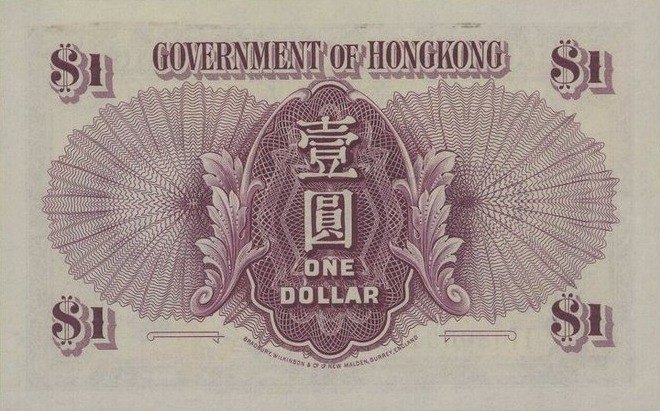
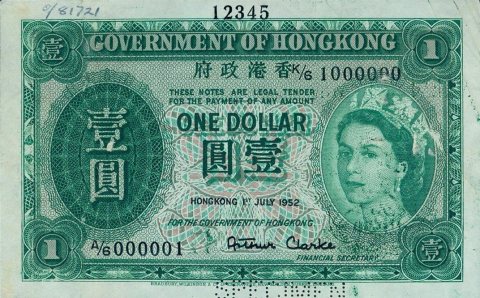
Four years later silver forced the matter. Hong Kong left the silver standard on 9th November 1935, and the Legislative Council passed the Dollar Currency Notes Ordinance (No. 42 of 1935) the same day. The Bill, the note it created and the 1 dollar of 1935 itself are told in The Government of Hong Kong's own notes, 1935 to 1995. Three things in the sources of 1935 show how far the Government still meant its note as a stopgap.
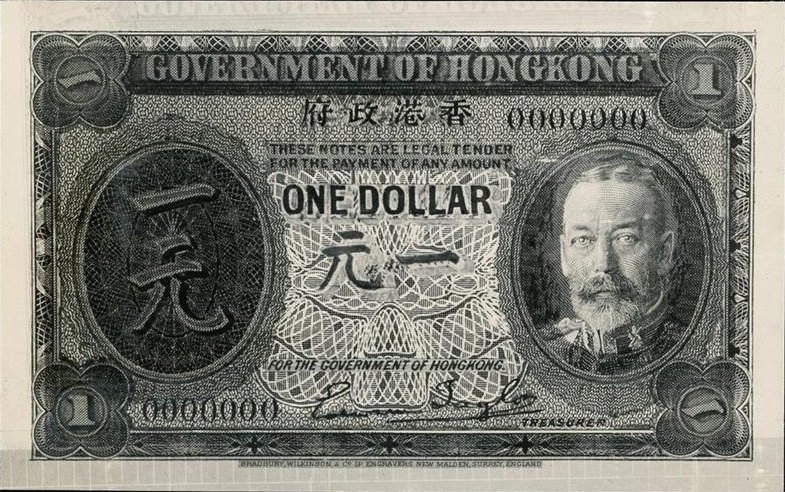
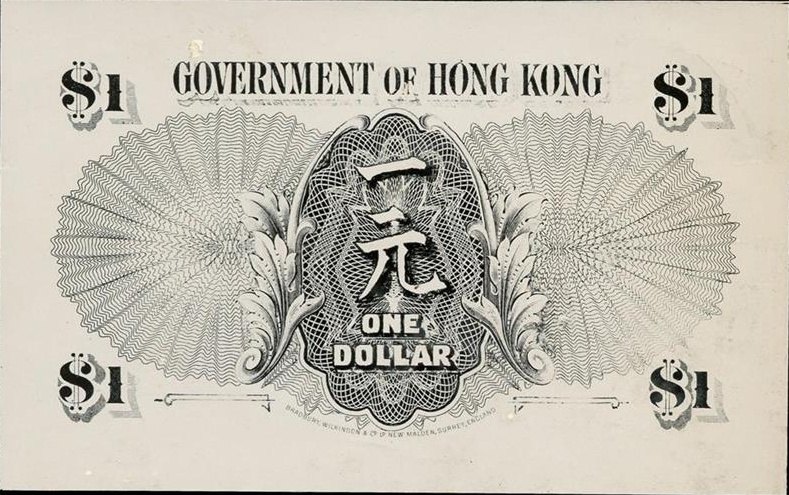
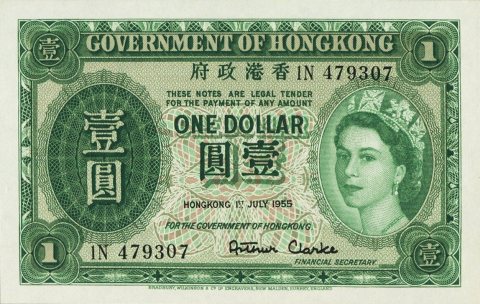
First, the Objects and Reasons of the Bill said the Government notes were to replace the silver dollar coins and not the banks' notes, and that arrangements had been made for the banks to supply 1 dollar notes in their place. Second, the Economic Survey of the Colonial Empire for 1935 (p. 176, read on the page image) says of the Government 1 dollar notes, of which 1,300,000 dollars had been issued to prevent a shortage at the start of the new system: "These may ultimately be replaced by $1 bank notes." Third, and against both, Money in British East Asia says that in 1935 the Hongkong and Shanghai Bank withdrew its own 1 dollar issue. The sources read here do not explain the difference. What is certain is the outcome: the Government's 1 dollar stayed, and the Government issued it until December 1960.
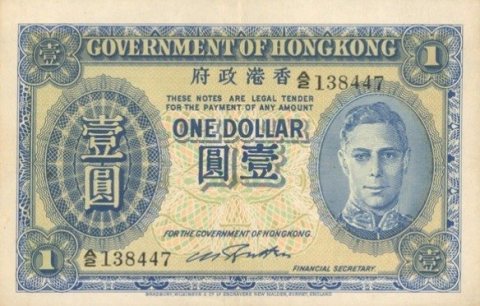
The second law of 1935, the Currency Ordinance No. 54 of 1935, set up the Exchange Fund and made the banks' notes full legal tender. Endacott prints it as Document 39 (pp. 233 to 235, read in the text only): passed by the Legislative Council on 5th December 1935 and dated 6th December. It is signed by H. R. Butters as Deputy Clerk of the Councils. Butters later became Financial Secretary, and the signature of Butters is on the blue 1 dollar and on the 1 cent, 5 cents and 10 cents of 1945.
What the sources leave open
None of the sources read here gives the papers of 1884 or of 1908 themselves: the approval of Lord Derby and the advice of the Secretary of State are known only from the study of 1957 and the Commission's report of 1931. The date and the papers of the proposal that Chalmers says was dropped "some few years back" are not given. Why the bank withdrew its 1 dollar in 1935, when the Government's own Bill expected the banks to take over the value, is not explained in any of them.
Sources
- Robert Chalmers, A History of Currency in the British Colonies (London, 1893), chapter XXXVII, pp. 379 to 380.
- Money in British East Asia (London, 1957), p. 7 and its footnote, pp. 103 to 104.
- G. B. Endacott, An Eastern Entrepot (1964): the Report of the Hong Kong Currency Commission, 1931, pp. 225 to 229; Document 39, the Currency Ordinance No. 54 of 1935, pp. 233 to 235.
- Colonial Reports, Annual: Hong Kong for 1913, for 1931 (No. 1585) and for 1934 (No. 1706).
- Hong Kong Blue Books for 1914 to 1934, the currency return.
- An Economic Survey of the Colonial Empire for 1932, 1933 and 1935.
- The Dominions Office and Colonial Office List, 1935, record of service of P. H. Ezechiel.
- Report of the sitting of the Legislative Council of Hong Kong of 9th November 1935, the Objects and Reasons of the Dollar Currency Notes Bill.
- K. O. Mao, "A Short Account of Hong Kong's Currency", IBNS Journal, Christmas 1963 (vol. 3 no. 3), pp. 12 to 14.
- William S. Barrett, "Spink takes auction to Hong Kong Jan. 20", Bank Note Reporter, January 2007, pp. 77 to 79.
Member comments
Log in or register to post a comment.