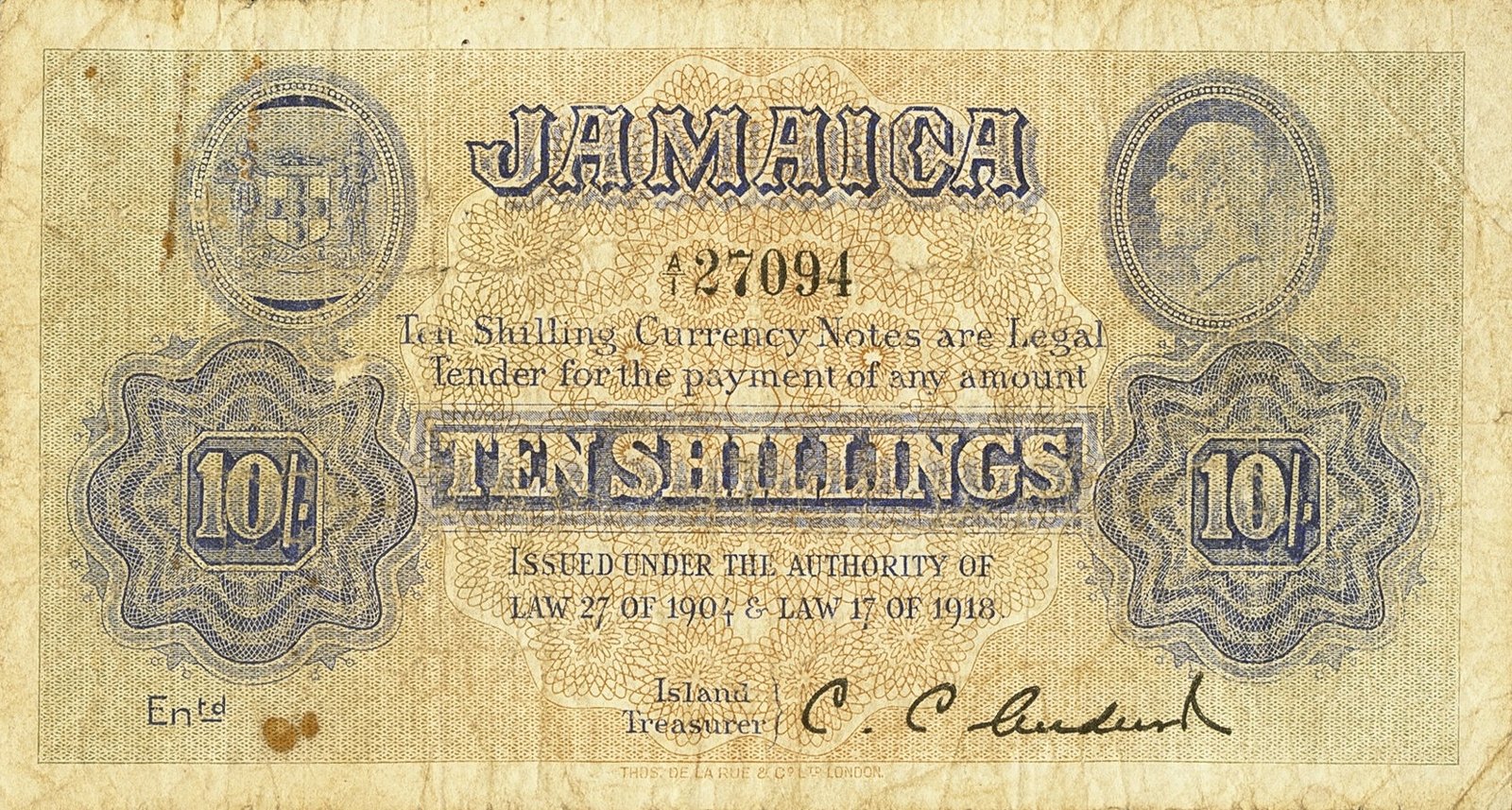
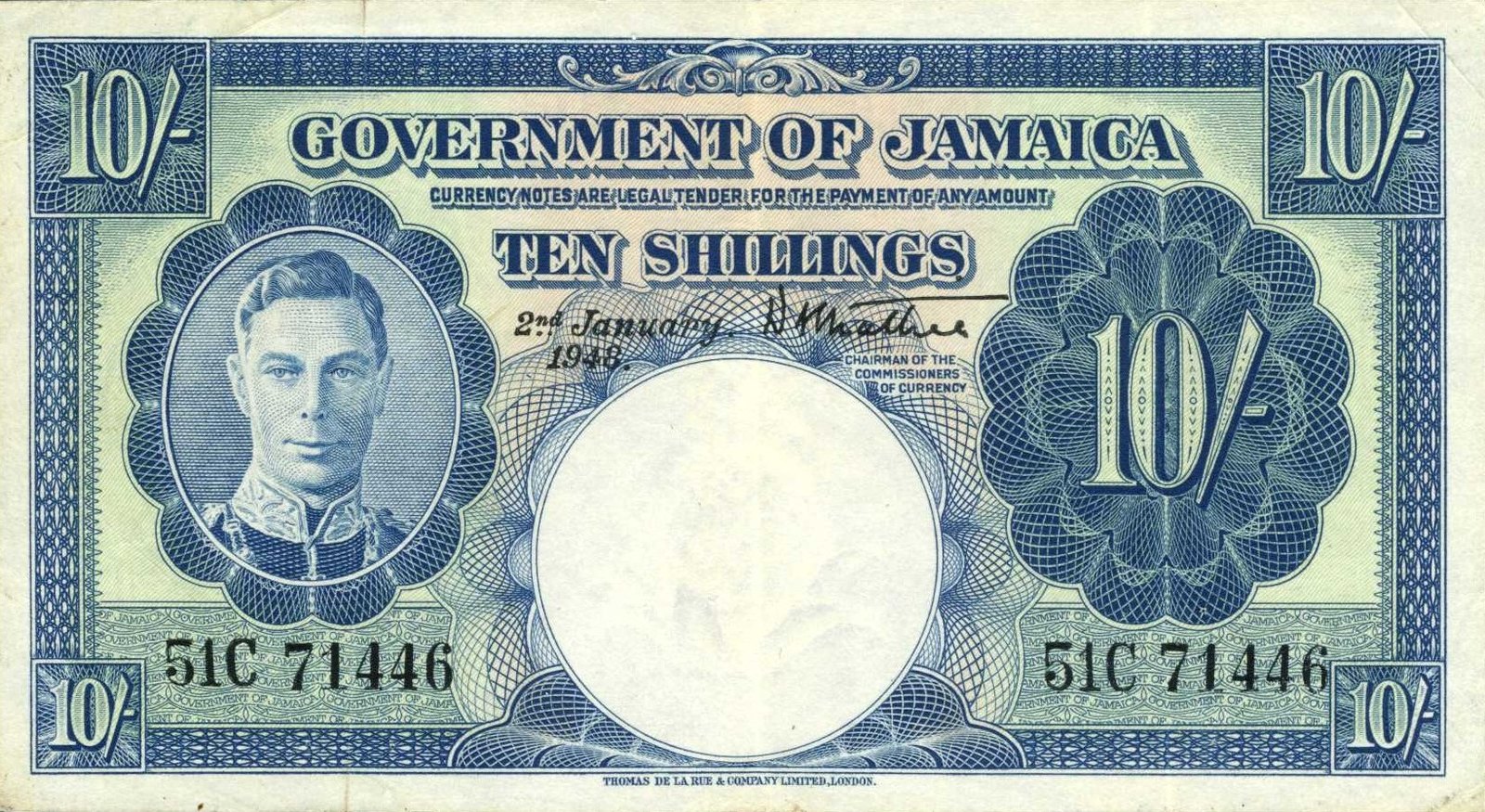
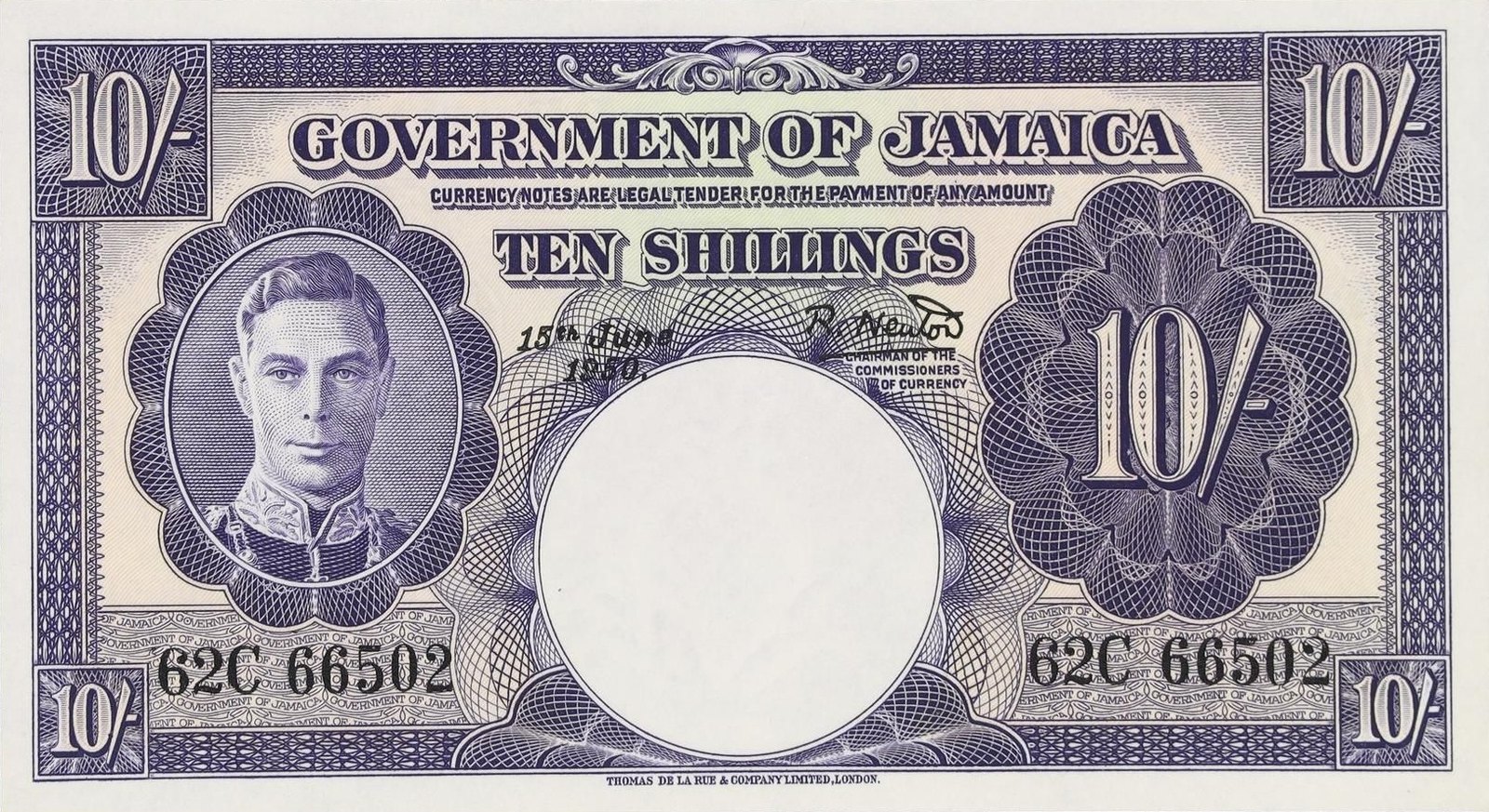
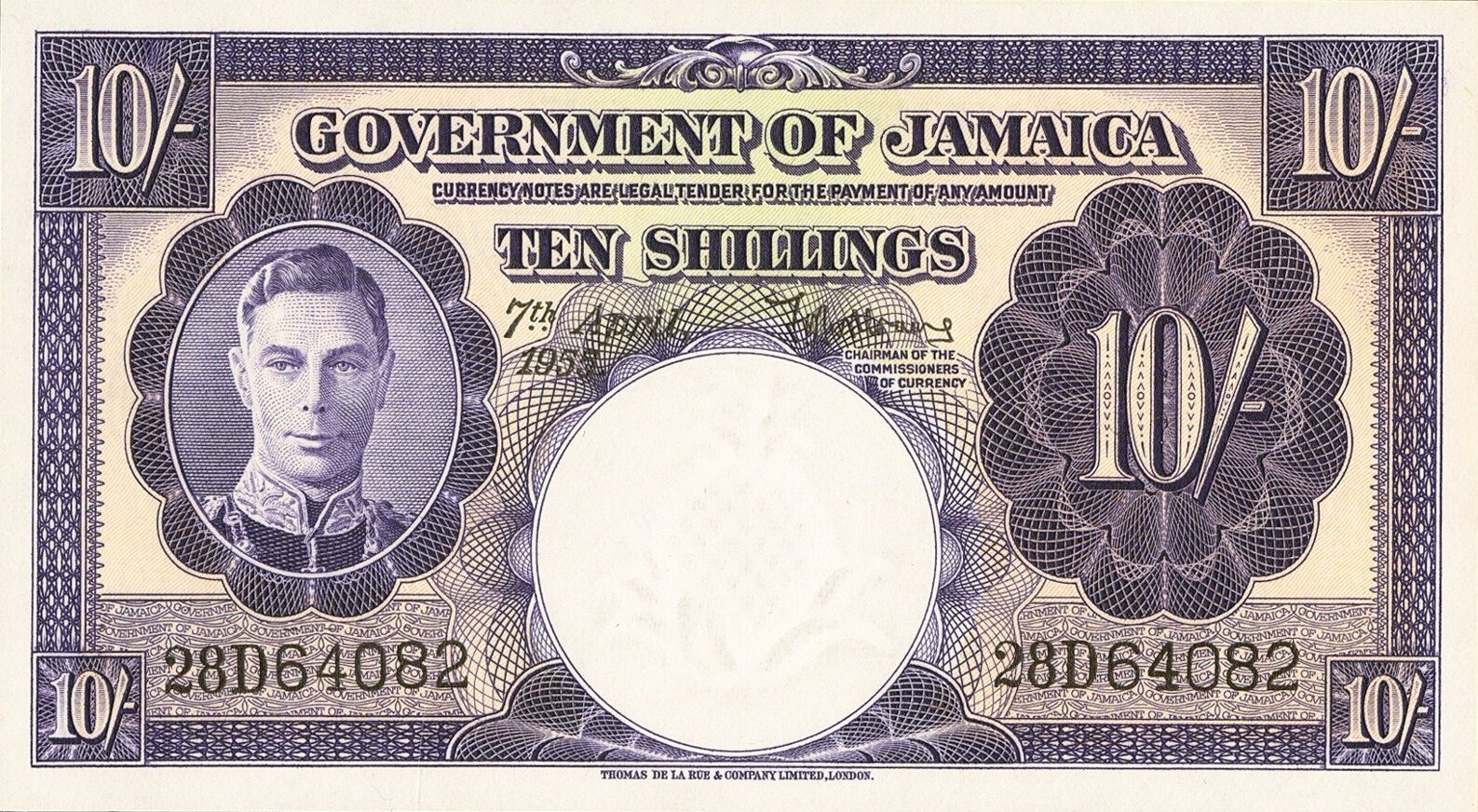
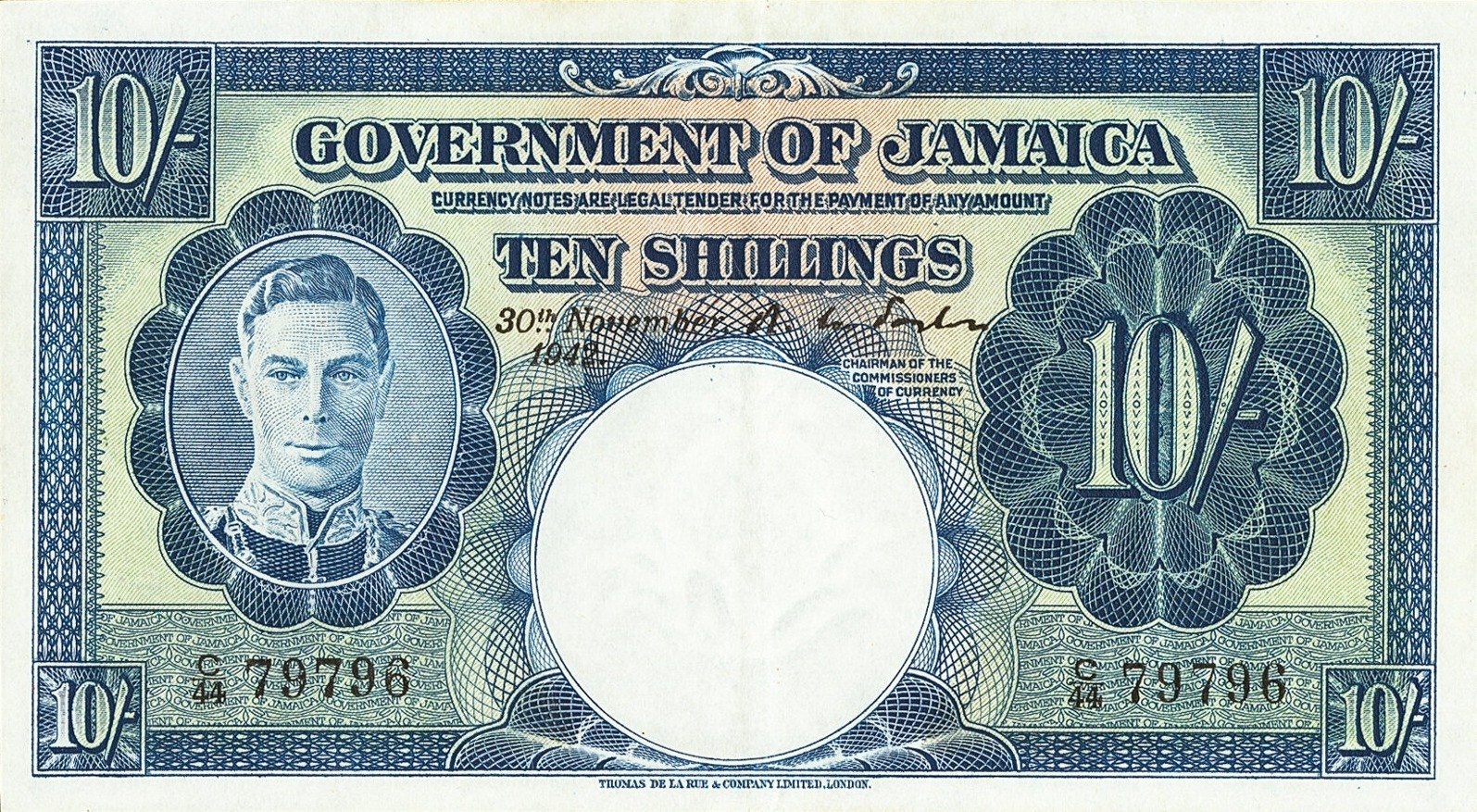
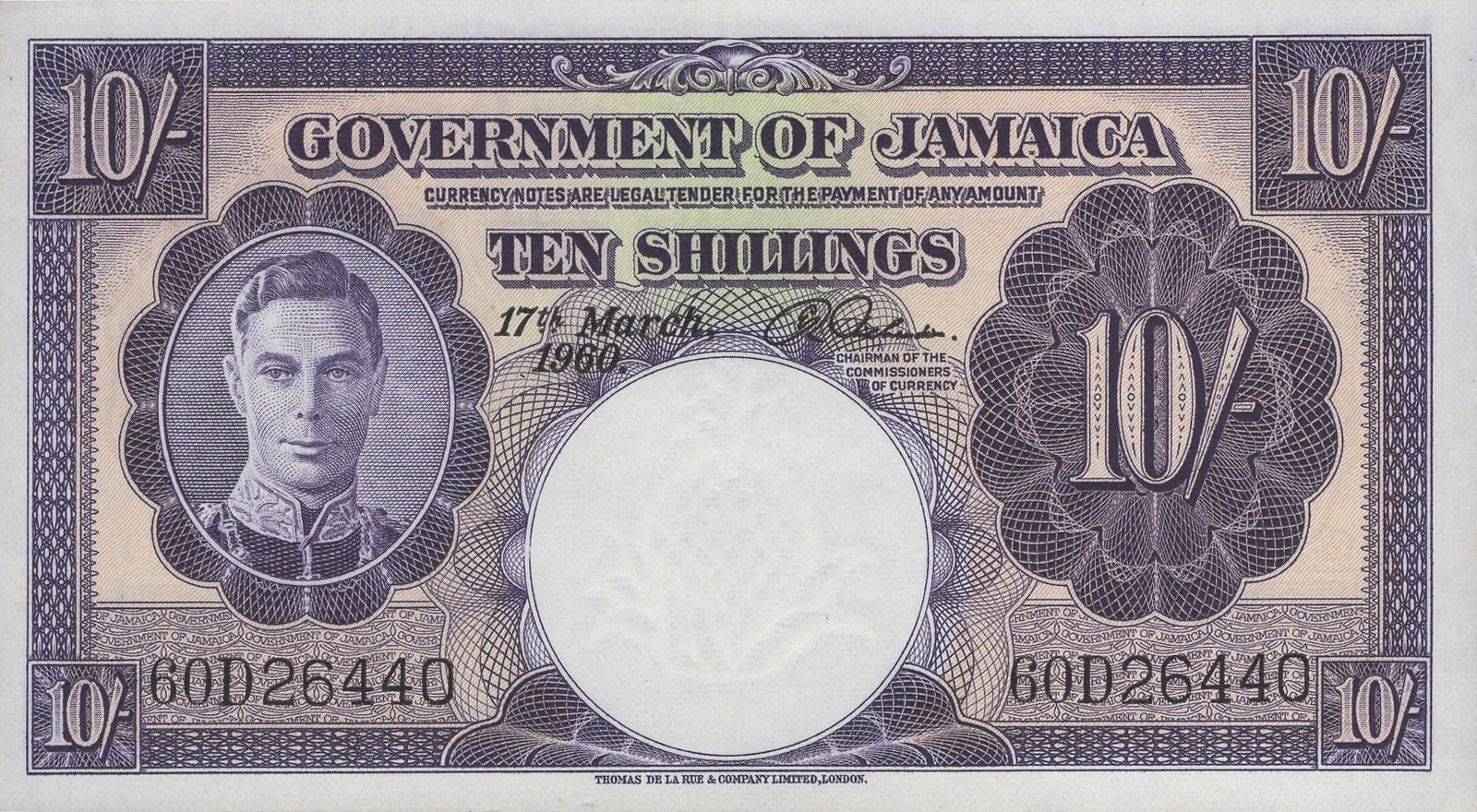
The Government notes of Jamaica carry one signature, that of the Treasurer, later the Financial Secretary, as head of the Board of Commissioners of Currency. The terms of the signers are set out in The notes of the Government of Jamaica and the Bank of Jamaica, 1920 to 1970. This article is about the rest of the Board: what the laws said of it, the officers who chaired it while acting and signed no known note, the other Commissioners named in the Handbook of Jamaica, the staff who did the work, and the places where the official lists disagree with each other. Almost all of it was read in the text of the scans only; the source of each line is given.
What the laws said of the Board
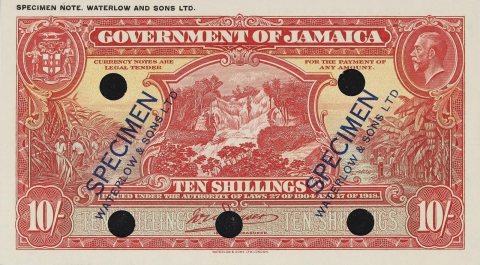
The Currency Note Law, 1904 (Law 27 of 1904, dated 22nd September 1904) set up a Board of Commissioners of Currency of three: the Colonial Secretary, the Treasurer and one non-official member named by the Governor. It allowed notes of 10 shillings only, in a form and with signatures, or facsimiles of signatures, approved by the Secretary of State, and it was to come into force only after a proclamation that the Crown would not disallow it. This is how the copy of the Law in the Johns Hopkins currency board archive reads.
Law 17 of 1918 (assented to on 19th September 1918) changed the Board to three persons appointed by the Governor, at least two of them holding office under the Crown, and allowed notes of any value the Secretary of State approved. The Handbook of Jamaica for 1919 describes it as the law that "amends the Currency Note Law and establishes a Board of Commissioners for the purposes of the Law".
In practice the Island Treasurer headed the Board. The Blue Books of 1920 to 1924 list the Commissioners of Currency, with a Currency Notes Branch staffed from 1st April 1920, and give the Treasurer the title "Manager"; the Blue Book for 1922 has "Manager, Richard Nosworthy, 10.1.22". Later Blue Books and the Handbooks call the head of the Board the Chairman. The Handbooks of 1947-48 and 1949-50 say the Financial Secretary and Treasurer was Chairman.
The Chairmen, and those who acted
The Blue Books list the Treasury staff each year, with footnotes for leave and acting appointments. Read together they show how often the chair passed for a while to another officer.
| Officer | In the chair | Source |
|---|---|---|
| Charles Campbell Anderson | Treasurer from 1st April 1912 (first appointed 1st May 1909); also Manager of the Government Savings Bank; on leave from 10th June 1921; died 22nd October 1921 | Blue Book for 1921 |
| Walter Mortimer Fraser, Deputy Treasurer | acting Treasurer 20th June to 31st December 1921 | Blue Book for 1921 |
| Richard Nosworthy | promoted Treasurer 10th January 1922; seconded as Acting Administrator of Dominica from 17th June 1922; Collector General from 10th January 1924 | Blue Books for 1922 and 1924 |
| Fraser | acting 1st to 9th January 1922 and 5th August to 9th November 1922 | Blue Book for 1922 |
| Walter Belinfante Isaacs | acting Treasurer, and Manager of the Commissioners, 1st January to 30th April 1923 | Blue Book for 1923 |
| Fraser | acting 1st May to 6th September 1923 | Blue Book for 1923 |
| Isaacs | appointed Treasurer from 10th January 1924; retired 31st March 1925 | Blue Books for 1924 and 1925 |
| Fraser | acting 7th July to 6th September and 6th November to 5th December 1924; acting Treasurer from 1st April to 31st December 1925 | Blue Books for 1924 and 1925 |
| Fraser | Treasurer, with the date 1.4.25, in the Blue Books for 1927 to 1933 | Blue Books for 1927 to 1933 |
| Charles Goldie Clinton Kerr, Deputy Treasurer from 1st April 1925 | acting Treasurer and Chairman of the Commissioners of Currency 5th September to 4th October 1932 | Blue Book for 1932 |
| Kerr | acting Island Treasurer 1st August to 11th December 1934 | Blue Book for 1934 |
| Arthur Harris Hodges | Treasurer from 27th November 1934 (in the service from 1902); still Treasurer in the Blue Book for 1938 | Blue Books for 1934 to 1938 |
| Robert Walter Taylor | Financial Secretary and Treasurer from 8th January 1942 (first appointed 1936) | Blue Book for 1945 |
| Sir Norman Strathie, K.C.I.E. | appointed in Jamaica 19th November 1946 | Handbook of Jamaica for 1947-48 |
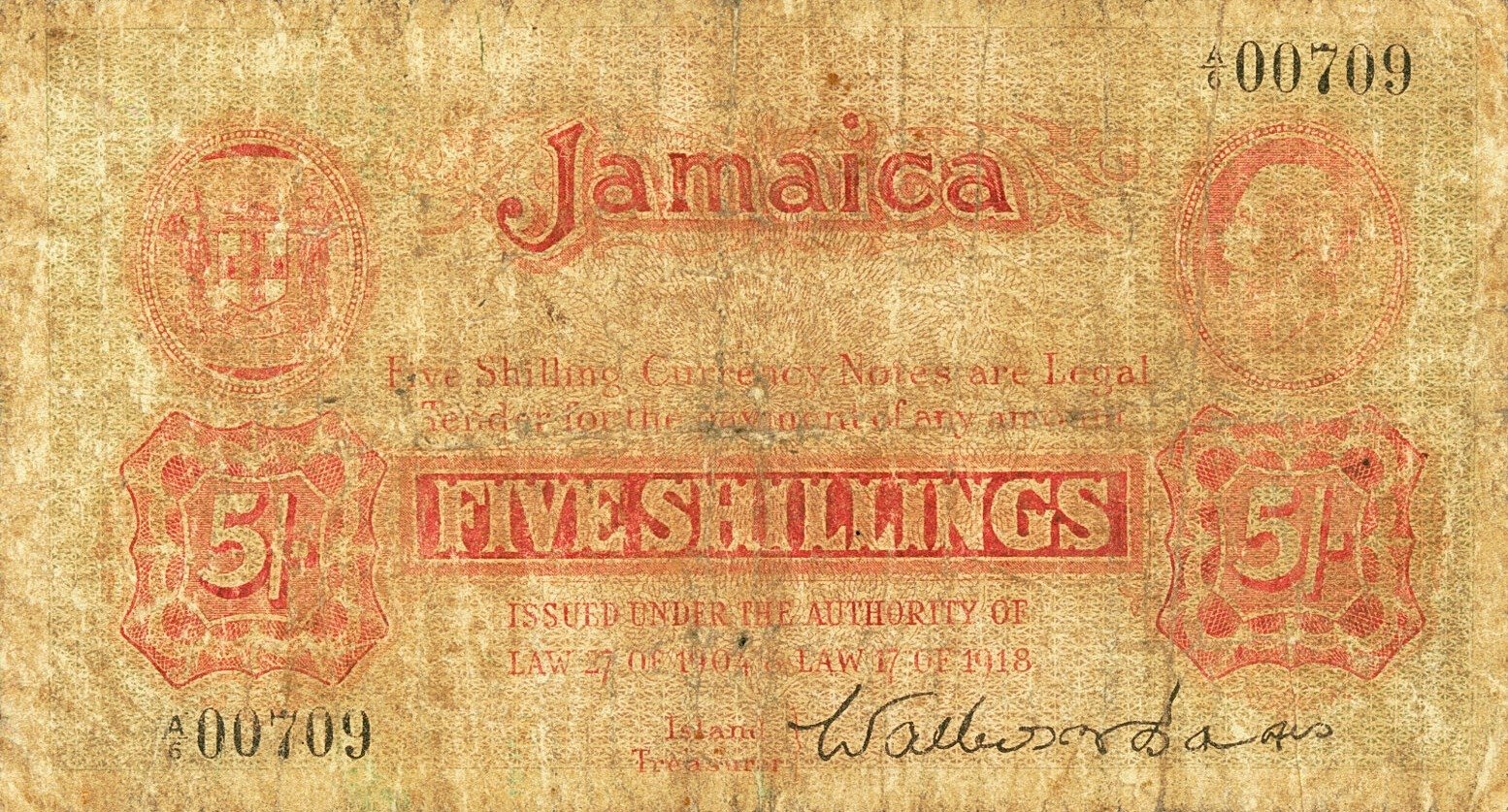
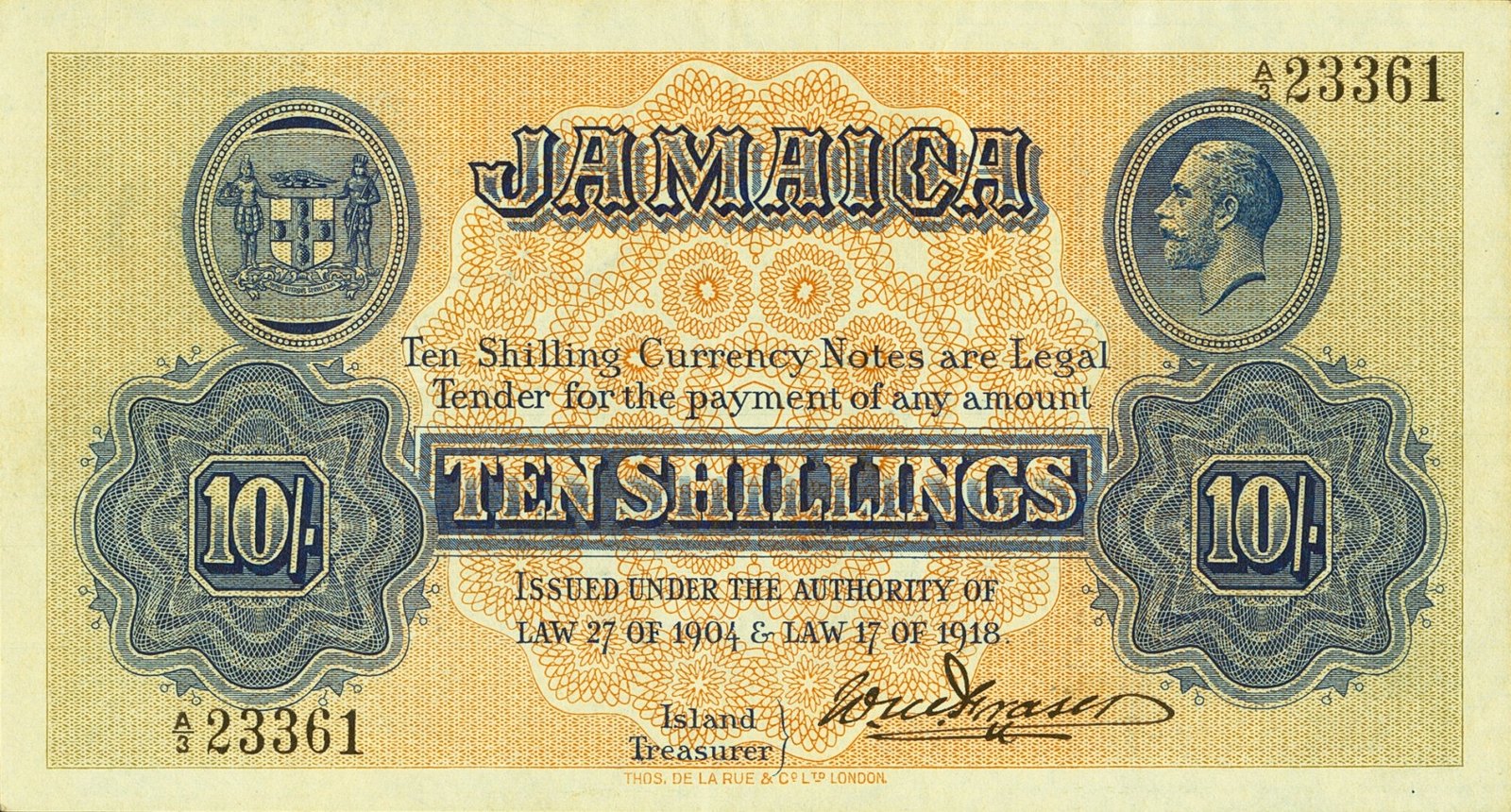
Nosworthy and Kerr chaired the Board, but no note with the signature of either is recorded on the Pick pages. On the 5 shillings of 1920 and the 10 shillings of 1920 the signatures go from Anderson to Isaacs and Fraser. The Blue Book for 1922 shows Nosworthy seconded to Dominica from June of that year, and Fraser acting in the chair for part of it.
Where the lists disagree
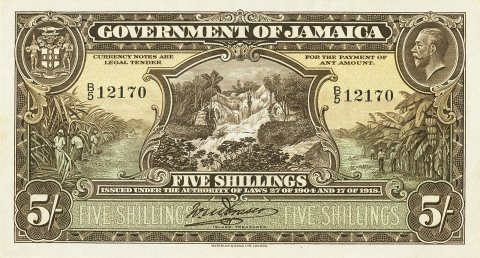
The Blue Books give Fraser as Treasurer from 1st April 1925 in every year from 1927 to 1933, except the Blue Book for 1931, whose text reads 1.4.26. The Colonial Office List for 1930, in its record of services, has "dep. treas., 1st Apr., 1921; treas., 1st Apr., 1928". The Handbook of Jamaica for 1926 calls Fraser Acting Island Treasurer and Chairman, and the Handbook for 1927 names Fraser as Island Treasurer in the Board list while its Treasury list still shows the Treasurer's post as vacant. Fraser may have been substantive from 1925 or only from 1928; the sources read do not settle it, and the text of the 1930 List may simply be misread. Either way Fraser chaired the Board from 1925 and signed the notes of these years, the Waterlow 5 shillings and 10 shillings of 1931 among them.
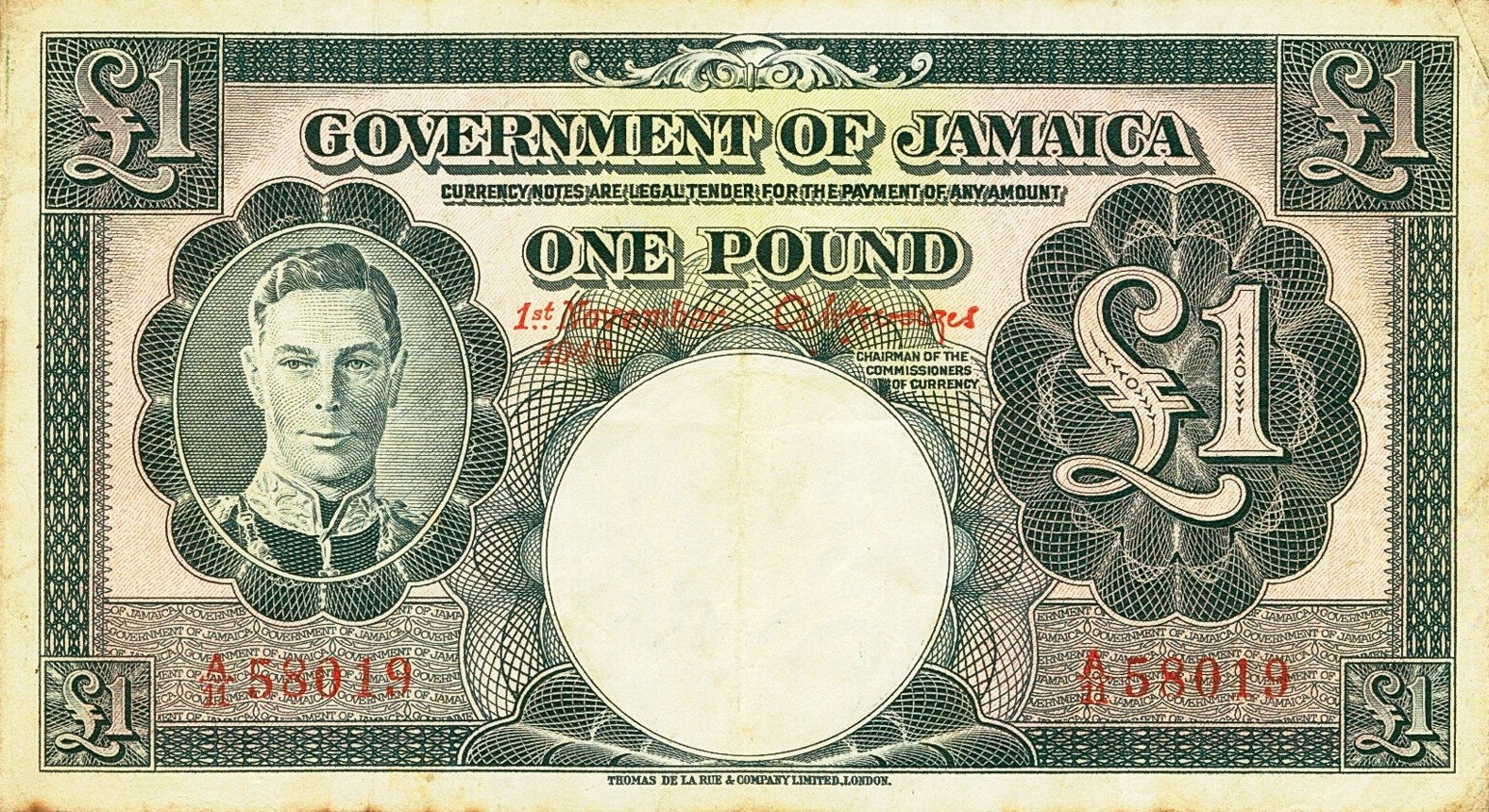
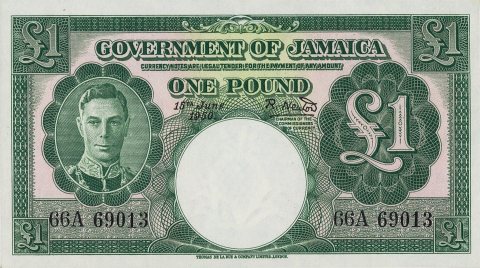
For Hodges the Blue Book for 1934 gives the day, 27th November 1934; the Dominions Office and Colonial Office List for 1935 gives the year only, and the Colonial Office List for 1940 still shows Hodges as Treasurer, which fits the 1 pound of 1st November 1940 signed by Hodges.
For the later Chairmen the Colonial Office Lists of 1950, 1959 and 1962 give years only: Strathie "fin. sec. and treas., J'ca., 1946-49"; Robert Newton Financial Secretary 1949, Colonial Secretary of Mauritius 1953; Frank Denry Clement Williams Financial Secretary 1954, to the Federation of Nigeria 1956; E. R. Richardson Financial Secretary 1956. The Pick pages spell Richardson's first name Edgerton. The Treasury list of the Blue Book for 1945, where Richardson appears as Assistant Treasurer from 1944, was read in the text only: one reading of the line gives "Egerton", another has the name cut at the start ("...en Rudolph Richardson"). Both spellings are given here; neither is settled.
The other Commissioners
The Handbook of Jamaica prints the Board each year. The Collector General, or an acting one, is in every list given here apart from that of 1922, and one member, Roxburgh, is named in the lists of 1921, 1923, 1926 to 1932 and 1936 to 1939.
| Handbook | Chairman | Other Commissioners | Secretary |
|---|---|---|---|
| 1921 | C. C. Anderson, Island Treasurer | Robert Johnstone, C.M.G., Collector General; T. Laurence Roxburgh, C.M.G. | J. R. Lewis |
| 1922 | vacant | ||
| 1923 | R. Nosworthy, Island Treasurer | Robert Johnstone, C.M.G., Collector General; T. Laurence Roxburgh, C.M.G. | J. R. Lewis |
| 1924 | R. Nosworthy, Island Treasurer | among them W. B. Isaacs, Acting Collector General | J. R. Lewis |
| 1926 | W. M. Fraser, Acting Island Treasurer | R. Nosworthy, Collector General; T. Laurence Roxburgh | John R. Lewis |
| 1927 | W. M. Fraser, Island Treasurer | C. H. Vidal-Hall, Acting Collector General; T. Laurence Roxburgh | John R. Lewis |
| 1930 | W. M. Fraser | E. S. Murray, Acting Collector General; Sir Thomas Roxburgh, Kt. | John R. Lewis |
| 1931 | W. M. Fraser | E. S. Murray, Collector General; Sir Thomas Roxburgh | John R. Lewis |
| 1932 | W. M. Fraser | W. Johnston, Collector General; Sir Thomas Roxburgh | John R. Lewis |
| 1936, 1937-38 and 1939 | A. H. Hodges | M. H. Hawkes, Collector General; Sir Thomas Roxburgh, Kt., C.M.G. | J. R. Lewis |
| 1947-48 | the Financial Secretary and Treasurer | the Collector General; Sir Noel Livingston |
Nosworthy, who had chaired the Board as Treasurer, sat on it again in 1926 as Collector General.
The staff: Secretary and Currency Officer
John Richard Lewis is named as Secretary to the Commissioners in every Handbook from 1921 to 1939. The Blue Book for 1945 gives Lewis as Currency Officer from 1st April 1943, first appointed to the public service on 11th July 1910, with Miss Elsie Mary Sanguinetti as Assistant Currency Officer from the same day. The Handbook for 1947-48 still names Lewis as Currency Officer. The Handbook for 1949-50 names L. J. MacPherson as Currency Officer, H. B. Cole as Deputy and Miss E. M. Sanguinetti as Assistant.
The careers behind the signatures
The records of services in the Colonial Office Lists show where the Chairmen came from.
- Fraser, born 1865, entered the Public Works Department of Jamaica as a third-class clerk on 1st February 1886, became chief clerk and accountant of the Treasury on 1st July 1920 and Deputy Treasurer on 1st April 1921 (Colonial Office List for 1930). In the Blue Book for 1934 Fraser appears as Manager of the Government Savings Bank.
- Hodges, born 1884, entered the Accountant-General's department of the General Post Office in London in 1901, was assistant treasurer of Nigeria from 1910, Deputy Treasurer of Nigeria from 1924 and acting Treasurer there in 1925, 1927, 1928, 1931 and 1933, then Treasurer of Jamaica in 1934 (Dominions Office and Colonial Office List for 1935).
- Taylor had been Treasurer of Somaliland from 11th July 1915 (Colonial Office List for 1918); no record of the Jamaica years was found.
- Richardson entered the public service on 15th May 1933 (Handbook for 1947-48) and rose through the constabulary department, the Treasury (clerk 1939, assistant treasurer 1944), assistant secretary 1947, permanent secretary 1953 and under-secretary for finance 1955, before becoming Financial Secretary in 1956 (Colonial Office List for 1962).
No record of services was found for Anderson, Isaacs or Nosworthy; the Blue Books and Handbooks give their posts instead.
Sources
- Law 27 of 1904 (the Currency Note Law, 1904) and Law 17 of 1918, as held in the Johns Hopkins currency board archive (Jamaica Currency Board Constitution, 1904, and Constitution Amendment, 1918).
- The Blue Books of Jamaica for 1921 to 1925, 1927 to 1934, 1938 and 1945, Civil Establishment, Public Treasury and Commissioners of Currency.
- The Handbook of Jamaica for 1919, 1921 to 1924, 1926, 1927, 1930 to 1932, 1936, 1937-38, 1939, 1947-48 and 1949-50.
- The Colonial Office List for 1918, 1930, 1940, 1950, 1959 and 1962, and the Dominions Office and Colonial Office List for 1935, records of services.
Member comments
Log in or register to post a comment.