Three kinds of piece turn up among the notes of Burma on which the sources disagree or say little: quarters cut from 100 rupee notes, notes with a CLAIMS BY POST handstamp, and a 1,000 rupees with the 1937 overprint. This article puts together what the Pick pages say of each, source by source, with two house descriptions. None of the three is settled. The issues themselves are told in Legal tender in Burma only.
The quarter-cut 100 rupees
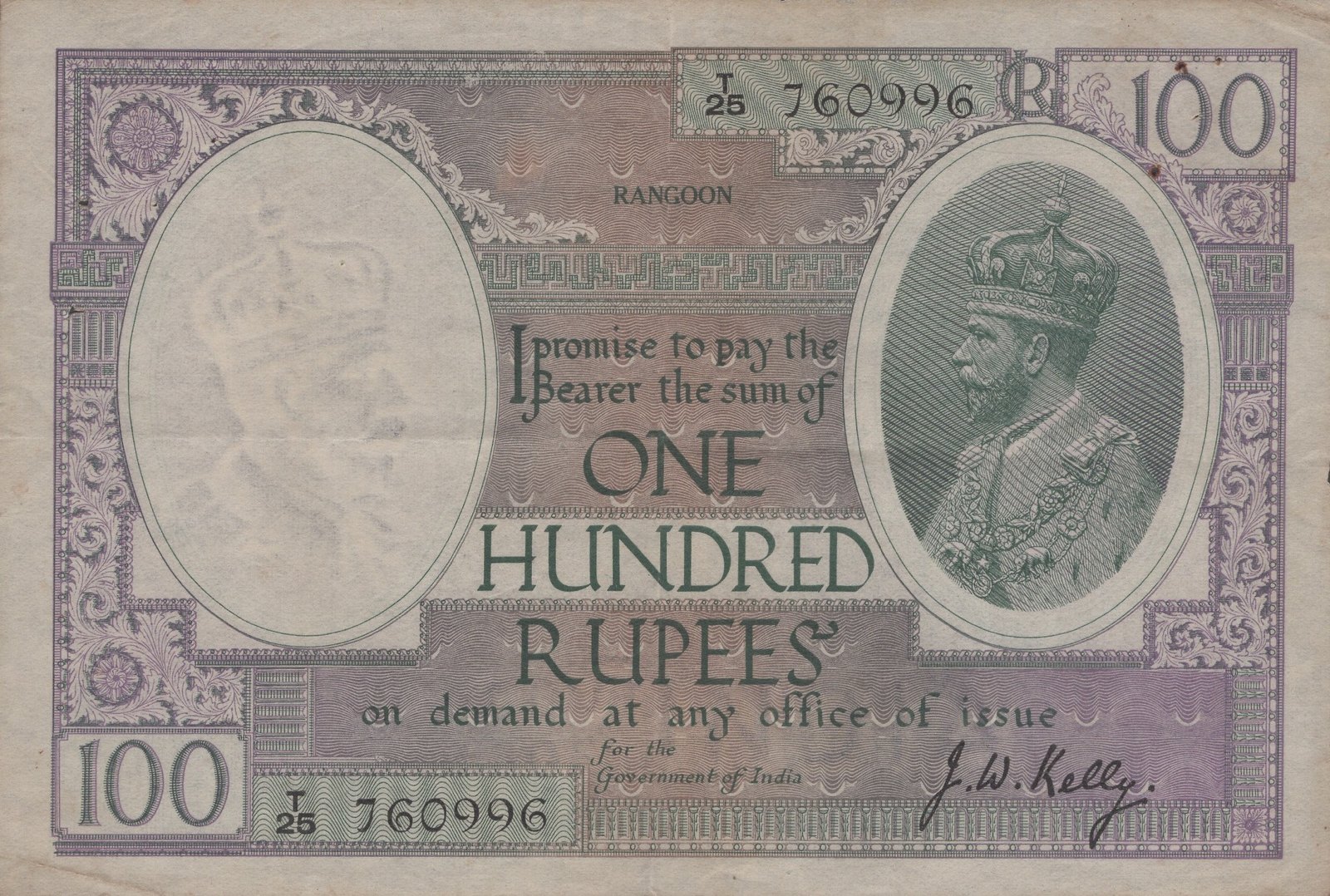
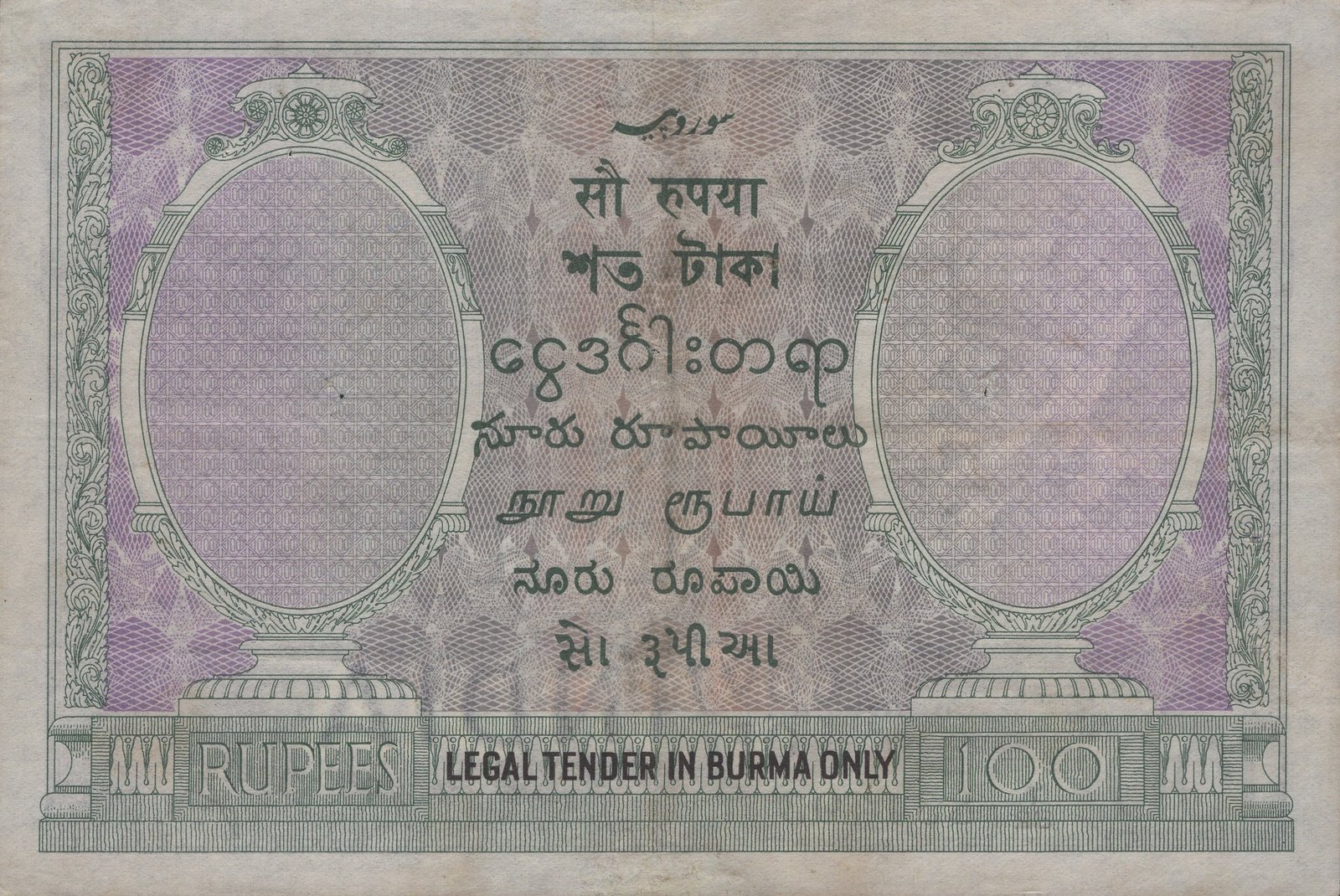
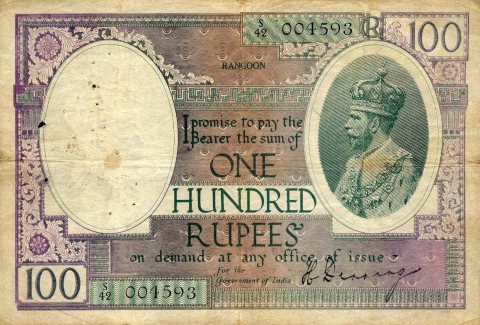
Quarter-cut pieces of the 100 rupees are known. Each is the lower-left quarter of a note, kept as a treasury accounting record rather than as currency. Some carry treasury date stamps or Japanese chop marks. They come from two kinds of note: the Rangoon 100 rupees of 1927 to 1937 and the same note with the 1937 overprint.
Why they were cut: two accounts
Sources mention that the quarter was cut when a black-overprint note was exchanged for a red one in 1937, that a handstamp on its back gives a letter and the exchange date, and that the other three quarters were destroyed. On the T/32 pieces recorded the dates run from 7 September to November 1937.
Other sources say the corner was kept when the notes were exchanged for the Reserve Bank's Burma notes of 1938 to 1939. Sources also list a T/25 piece date-stamped 15 June 1937, before those notes appeared, so not every corner can come from that exchange.
The ruling of May 1946
Sources mention that in May 1946 the Reserve Bank of India ruled 56 such quarters, presented for ex-prisoners of war from Burma, not payable, as parts of cancelled 100 rupee notes. Sources mention a typed list of 1946 giving the 56 pieces on two prefixes: T/1, 13 pieces numbered about 201757 to 211947, and S/62, 43 pieces numbered about 632962 to 879363. The list names no office. A lower-left quarter does not show the office name, and no whole S/62 note is recorded from any office.
Placing a quarter
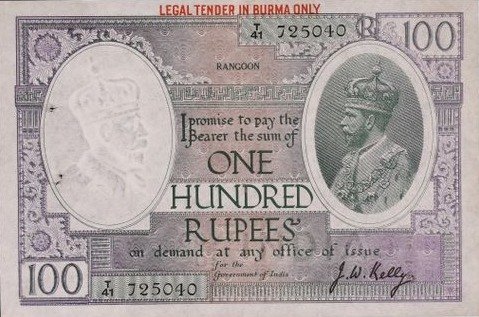
A quarter from a black-overprint note shows the end of the overprint on its back. A quarter from a red-overprint note shows no overprint, so only its serial number can place it: T/41 100001 and above, or T/47 000001 to T/47 606000, is the red overprint. On T/32 the notes numbered from 700001 carry the overprint; the one T/32 note recorded without it is T/32 125740.
Notes stamped CLAIMS BY POST
Two Pick pages record a handstamp CLAIMS BY POST.
- On the 100 rupees of 1939 a group of notes numbered between A/2 496111 and A/2 496184 carries TAUNGGYI and CLAIMS BY POST handstamps. Most have a handwritten case number in the watermark area, which reads Case no 1/1960 where it can be read.
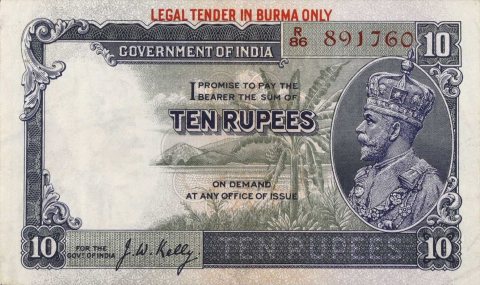
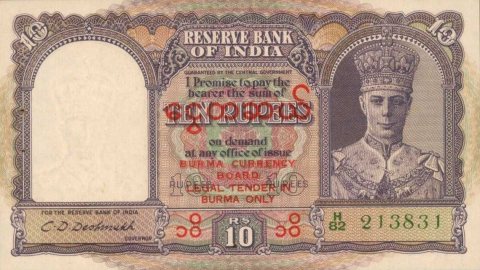
- On the 10 rupees of 1945 the note C/81 532618 carries a blue rectangular CLAIMS BY POST handstamp, with traces of paper glued to its torn left edge and rust marks from a pin.
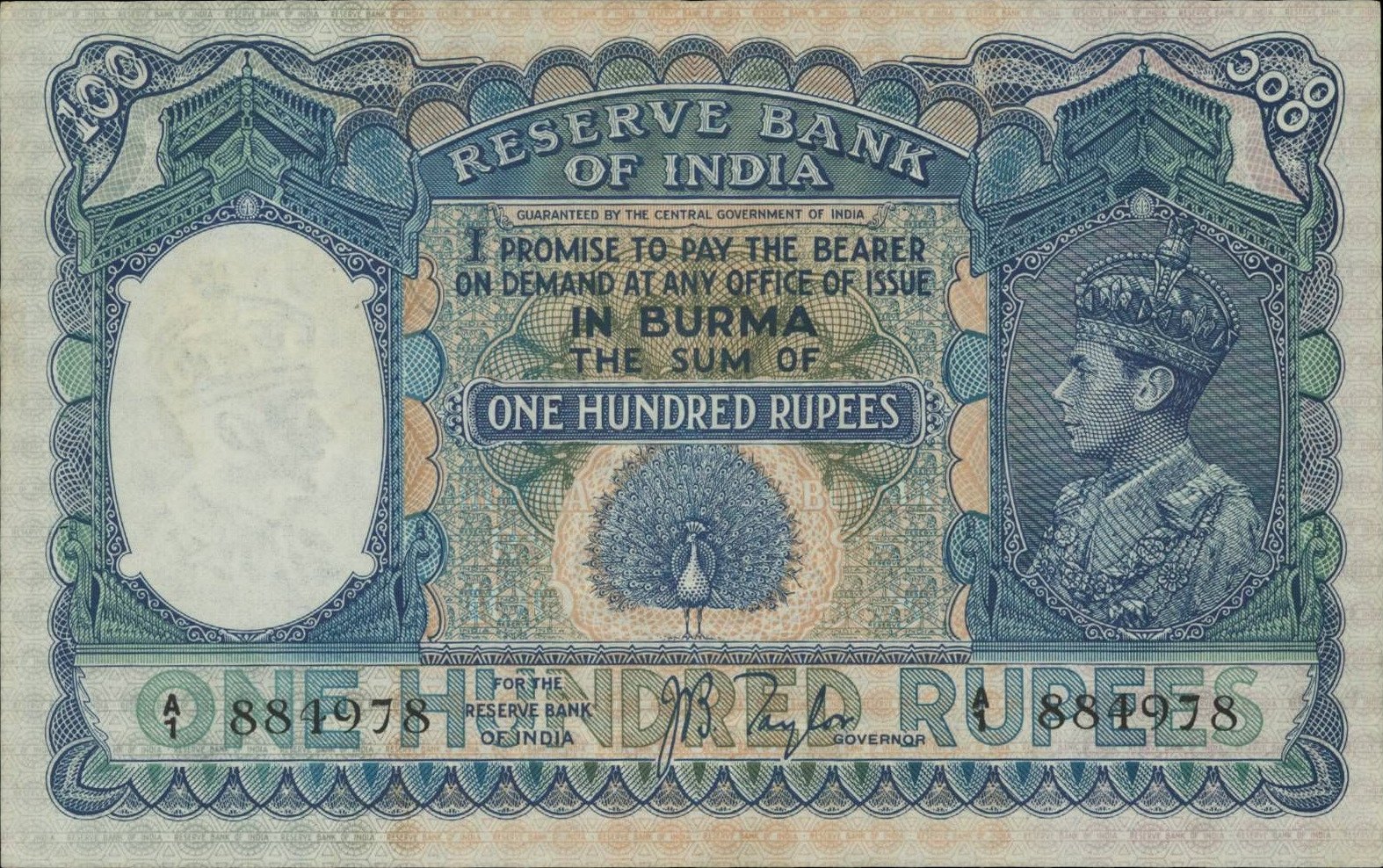
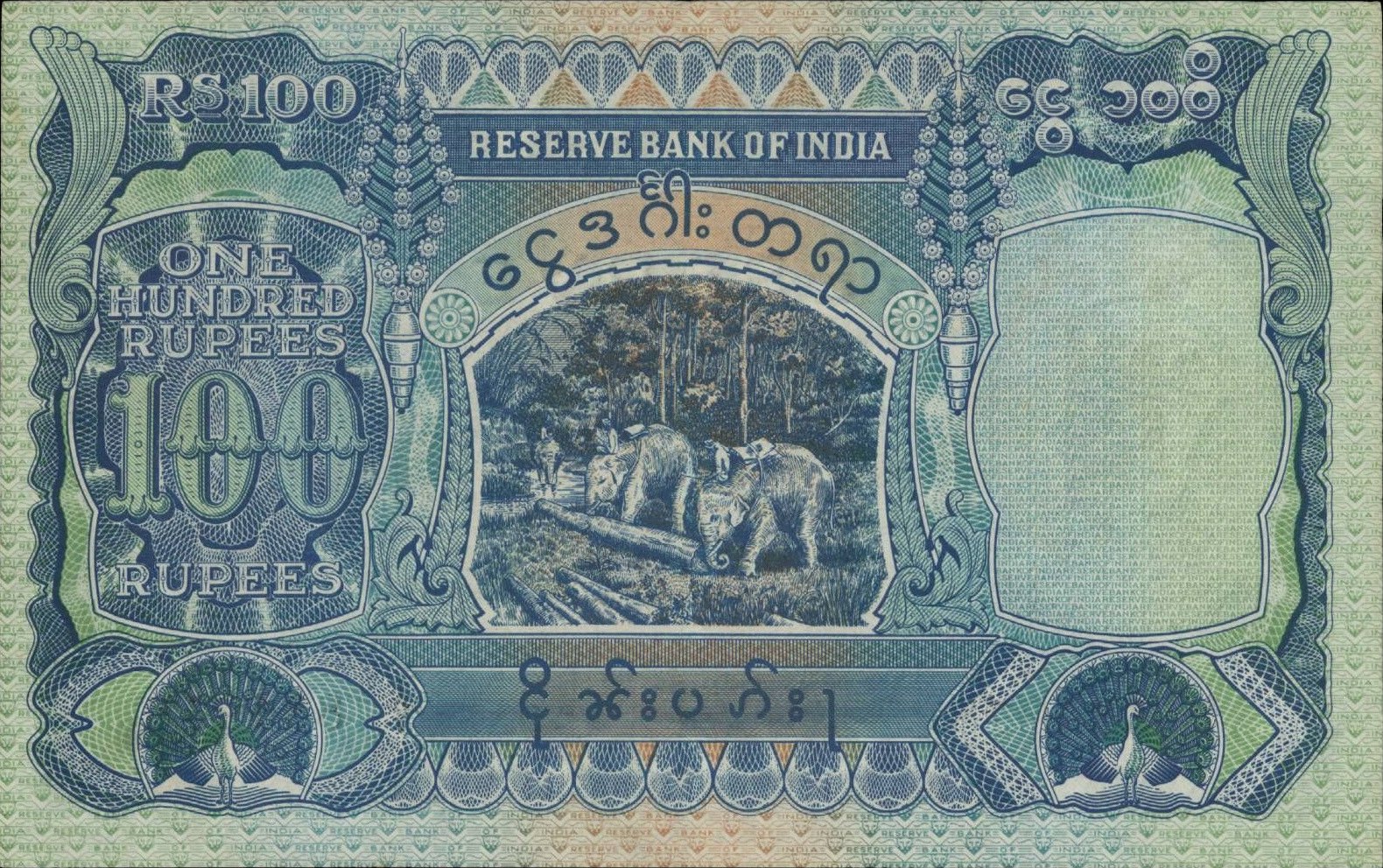
Sources suggest the mark was put on notes posted to the bank for exchange after withdrawal. Both notes ceased to be legal tender on 1 June 1950. The Burma Currency Board's report for the year to 30th September 1951 says the notes could be exchanged freely until 15th January 1952 and after that only by a specific government order. No source read here says what became of these claims, or ties the case number of 1960 to such an order. One note of the Taunggyi group, A/2 496167, was in Spink's sale of 12 January 2024 (lot 58); the house's description calls it perforated and with an ink stamp.
A different mark is found on the 100 rupees of 1947: sources mention notes with purple handstamps of Burmese traders, in Burmese and sometimes also in English. These are private advertisements, not official overprints.
The 1,000 rupees with the 1937 overprint
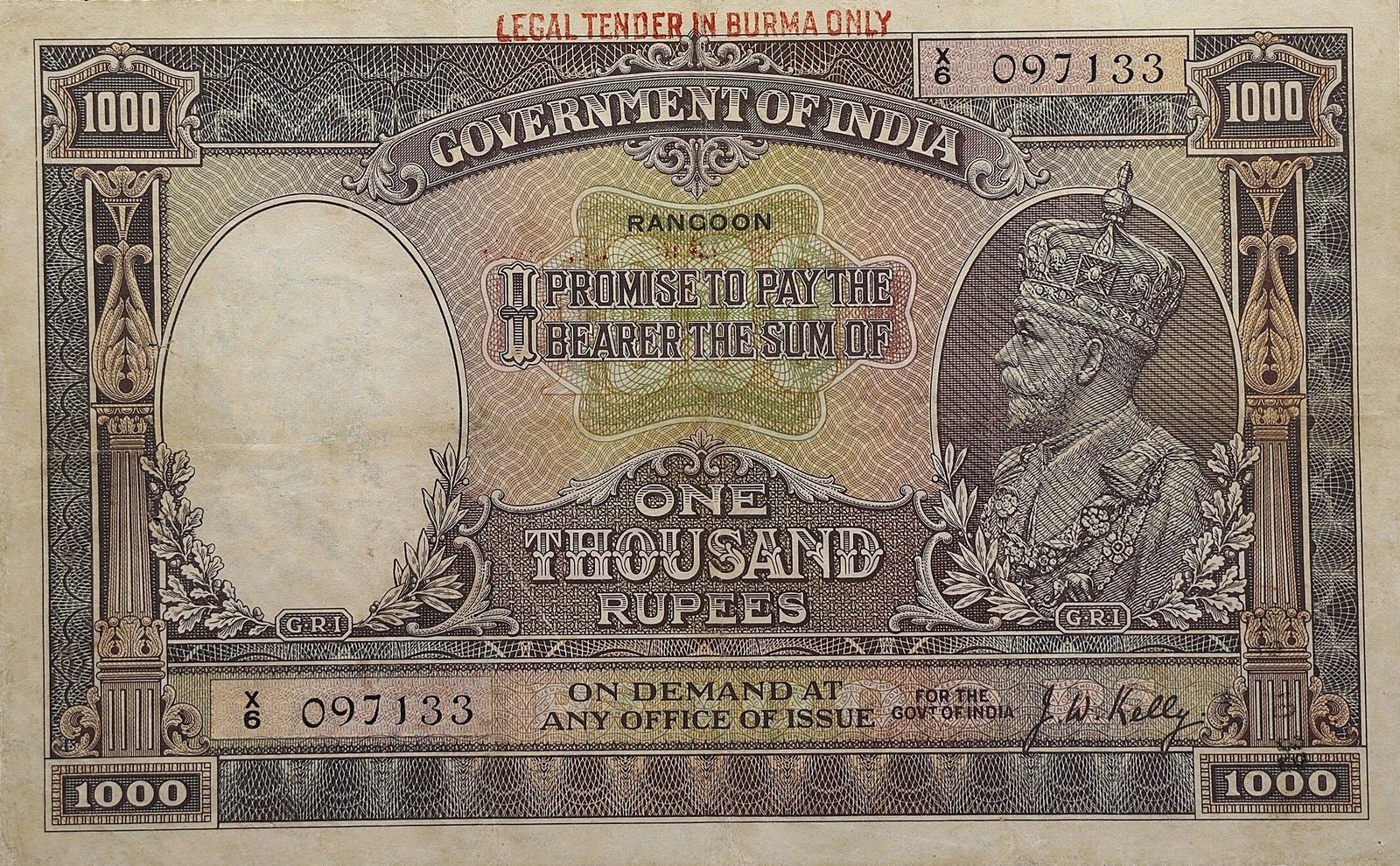
The 1,000 rupees of 1937 is a Rangoon-office India 1,000 rupees signed by Kelly, serial prefix X/6, with the Burma legal tender overprint. Not every source lists it, and the sources divide.
Against. Sources mention that no genuine Burma overprint exists on the 1,000 rupees and that the examples which surfaced in the mid-2000s are contemporary forgeries. They cite a Reserve Bank of India letter of 23 November 1970 stating that no notes above 100 rupees were overprinted for Burma.
For. Other sources list the note, with numbers X/6 090001 to X/6 100000, and say it was hand-stamped in the bank's own offices because of demand for the denomination before the Burma notes of 1938 to 1939 arrived. These sources point out that the 1970 letter is headed as concerning the British Military Administration of Burma notes and speaks of the Military Administration and Burma Currency Board overprints made at the India Security Press. They read it as not covering the 1937 issue.
An example was in Stack's Bowers' sale of 29 September 2023 (lot 50055), in a PMG holder graded Very Fine 25 Net with the comments "Restoration, Spindle Holes, Ink Stamps". The house's description says it was the first Burma example the house had met and gives it the Jhunjhunwalla number 5.3A.1. The house treats the overprint as genuine; the description does not discuss the 1970 letter.
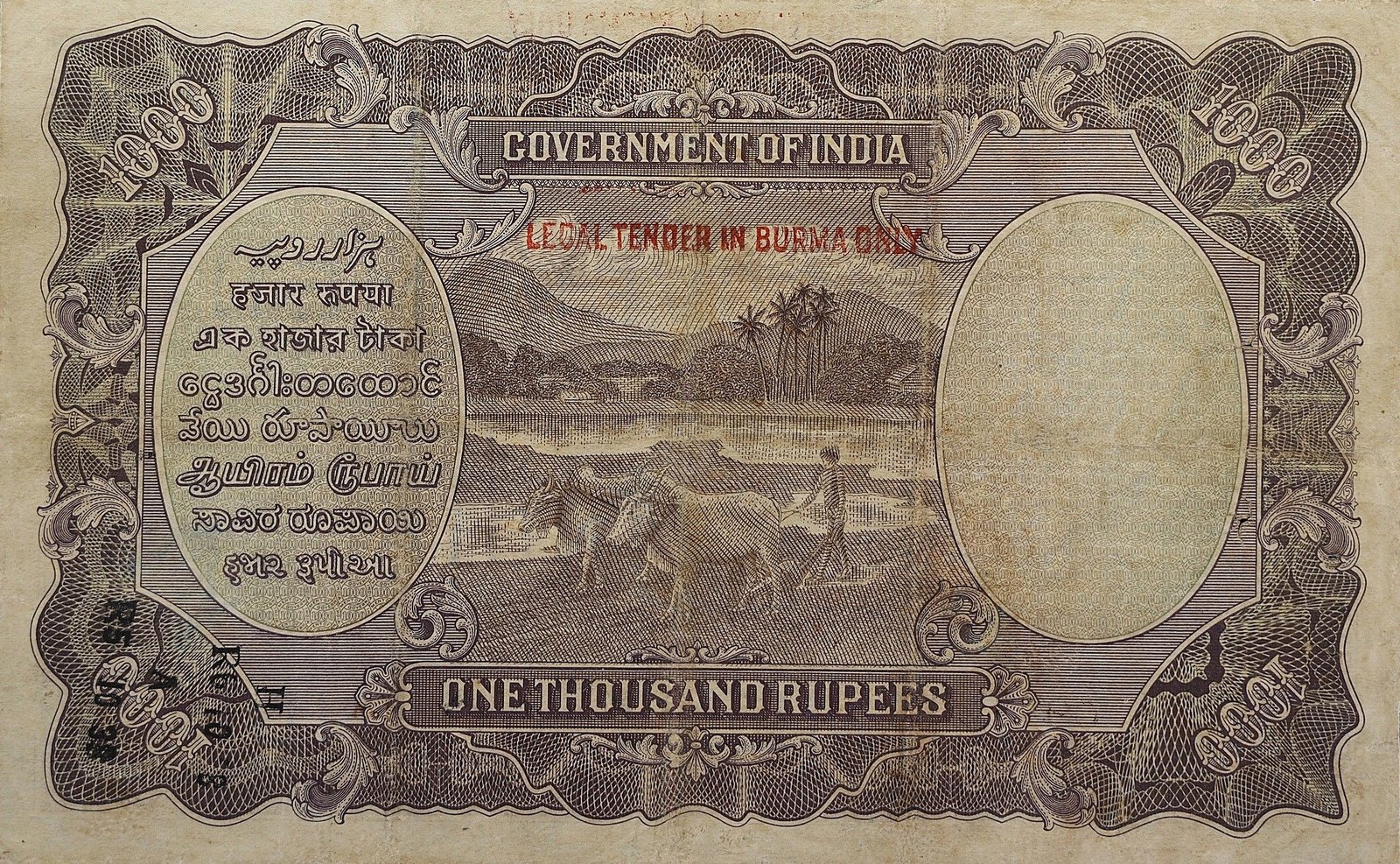
The Pick page leaves the question open, and so does this article.
Sources
- The Pick pages of Burma P-3, P-A8, P-6, P-28, P-33 and P-NL, and the sources they name: a typed list of 1946, a Reserve Bank of India ruling of May 1946 and a Reserve Bank of India letter of 23 November 1970. The pages do not name who published these.
- Burma Currency Board, report for the year to 30th September 1951, for the exchange limits after 1 June 1950.
- Spink, 12 January 2024, lot 58.
- Stack's Bowers, 29 September 2023, lot 50055.
Member comments
Log in or register to post a comment.