Between 1918 and 1922 East Africa changed its money twice: from the Indian rupee to the florin in 1920, and from the florin to the shilling on 1st January 1922. This article sets out the Orders, Proclamations and notices behind each step, the notes each step produced, how many were shipped, and how the rupee and florin notes ceased to be legal tender at the end of 1931. It is drawn from the catalogue's note pages, which rest on the Official Gazettes of the three territories, the Kenya and Uganda Blue Books, the annual reports on Kenya and the reports to the League of Nations on Tanganyika.
Indian 1 rupee notes, 1918 to 1921
Before 1920 the East Africa Protectorate had no 1 rupee note of its own. The lowest of the Protectorate's rupee notes was the 5 rupees. Government of India 1 rupee notes filled the gap. The East Africa and Uganda (Currency) Order, 1918, was made on 13th April 1918 and made these notes legal tender from 15th May 1918; the Uganda Official Gazette records that it came into force in Uganda on that day.
In occupied German East Africa the Indian 1 rupee notes were made legal tender by Proclamation No. 5 of 1918. The report to the League of Nations on Tanganyika for 1920 says they were issued from January 1919 only to pay off military porters, and that 2 lakhs of the 8 lakhs imported were so used.
The import of the Indian notes into the Protectorate was prohibited on 19th July 1920, and Uganda declared them no longer legal tender in 1921 (Uganda Blue Book for 1921).
The Board's 1 rupee note of 7th April 1920
The Central Bank of Kenya's page on the history of the currency says that a decision was made in December 1919 to replace the Mombasa Currency Board with a London based East African Currency Board. The new Board's first note was the 1 rupee of 7th April 1920, signed by its three members and printed by Thomas de la Rue and Company, with the prefixes A/1 to A/9.
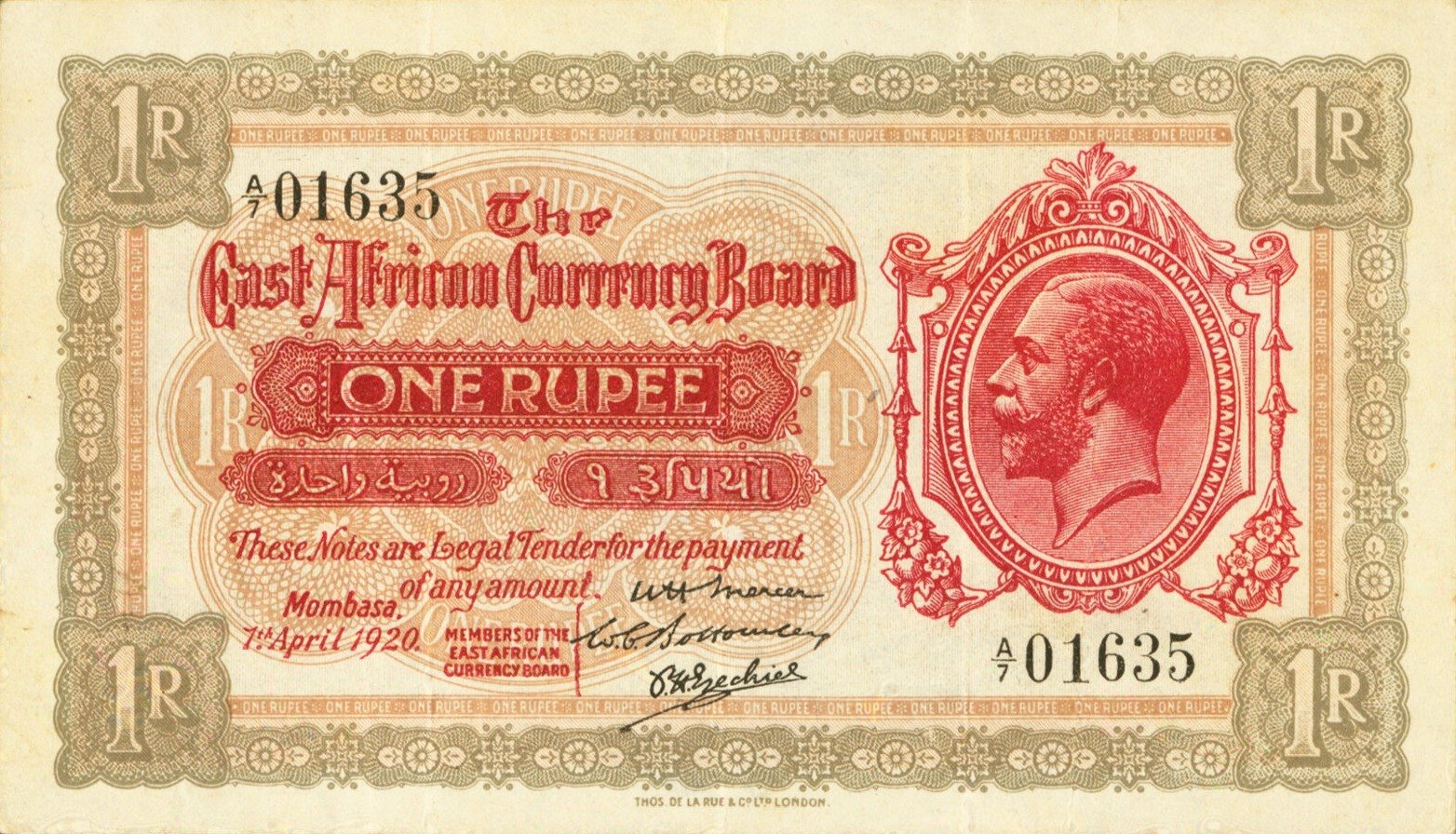
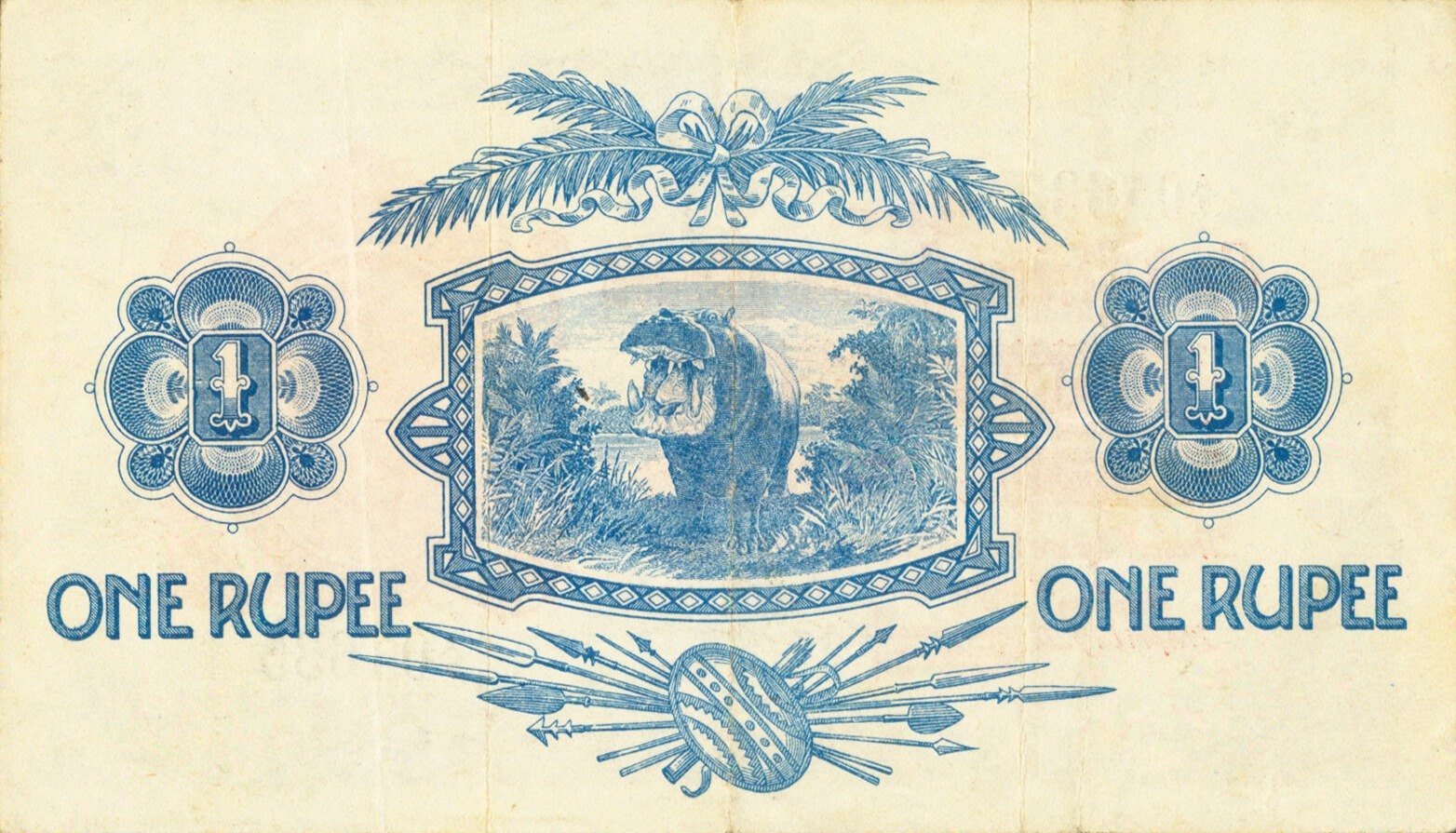
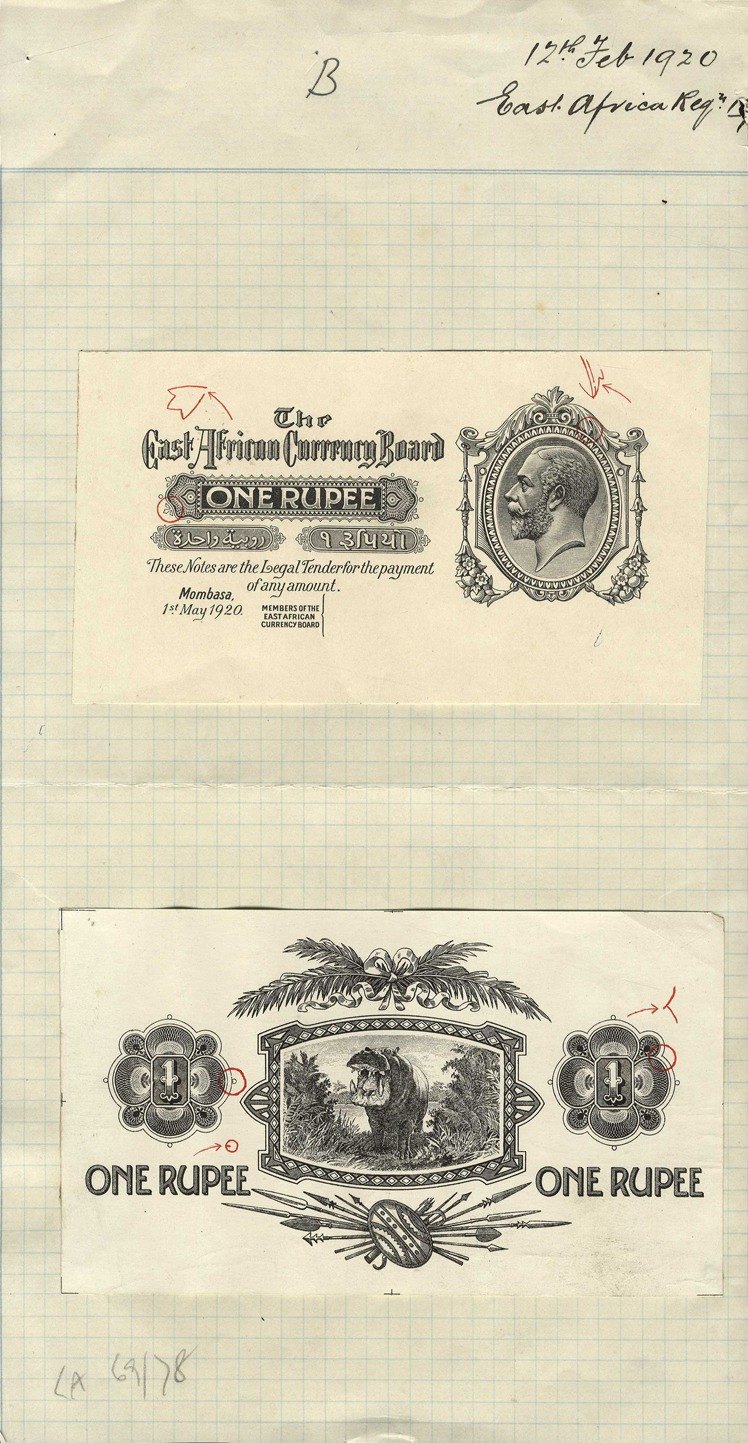
Proclamation No. 52 of 11th May 1920 made the note legal tender for any amount in the East Africa Protectorate. Unlike the Protectorate's own notes it gave no right to payment in coin. Only one printing was made, 2,400,000 notes, all sent to East Africa; the change to the florin stopped any further printing. The stage proof and the die proofs of the 1 rupee already carry the date 1st May 1920, the date of the florin notes, which no issued 1 rupee is recorded with.
The florin Order of 26th April 1920
The florin currency was set up for Kenya and Uganda by the East Africa and Uganda Order in Council of 26th April 1920, which came into force in the East Africa Protectorate on 21st July 1920 (Proclamation No. 80). One florin was worth 2 shillings sterling. The Indian rupee stayed current at the same value until it could be replaced, and contracts in rupees were read as florins.
In East Africa the Board worked through a Currency Officer, at first F. W. Major at Mombasa, who by 19th August 1920 gave sterling drafts on London at ten florins to the pound (General Notice No. 942 of 1920). An F. W. Major had signed the statement of the Protectorate's Currency Commissioners of 28th June 1912 as one of the three.
Silver rupees ceased to be legal tender at midnight on 22nd June 1921 and were exchanged at the banks for 1 florin notes until 22nd July 1921 (Proclamation No. 74 of 1921). Kenya's annual report for 1921 dates the Proclamation 7th June 1921 and names the coins it demonetised: the rupee of the Imperial British East Africa Company and the rupee, half rupee and quarter rupee of British India.
In Tanganyika the German rupee was rated at one florin. The report to the League of Nations on Tanganyika for 1920 says the banks gave up 11 lakhs (1,100,000) of German rupee coins in exchange for the same sum in the new 1 florin notes.
Taking in the old rupees cost the Board money. In the House of Commons on 11 November 1936 Mr. Ormsby-Gore, answering a question put to the Secretary of State for the Colonies, said that the Board's losses of 1920 to 1923 included £916,310 from taking over Indian rupees at 2 shillings and £610,024 from redeeming the rupees issued by the German Government in Tanganyika, and that the Board in 1920 took over the East Africa Protectorate Note Guarantee Fund and was faced with a liability of £203,200 on that account.
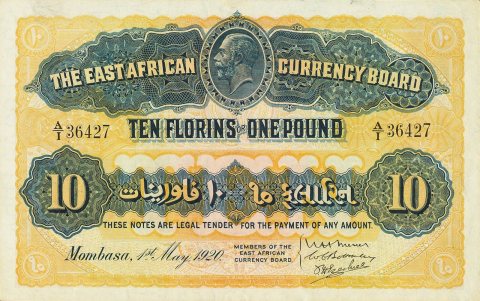
The florin notes of 1st May 1920
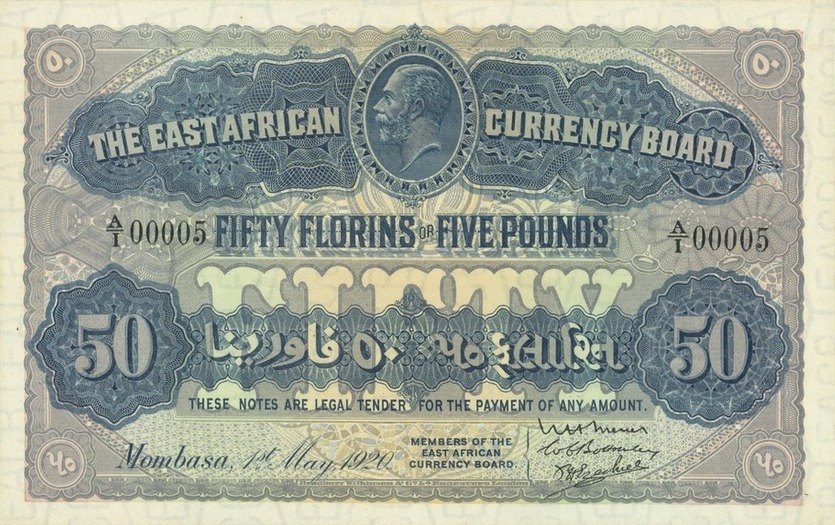
All the florin notes are dated 1st May 1920. The 1 florin repeats the design of the 1 rupee with the value in florins and the same three signatures. Sources mention that its Arabic text gives the value as 2 shillings rather than one florin, and that the third script is Gujarati. The catalogue gives Thomas de la Rue as the printer of the 1 florin and Bradbury Wilkinson and Company as the printer of the 5 florins and every higher value.
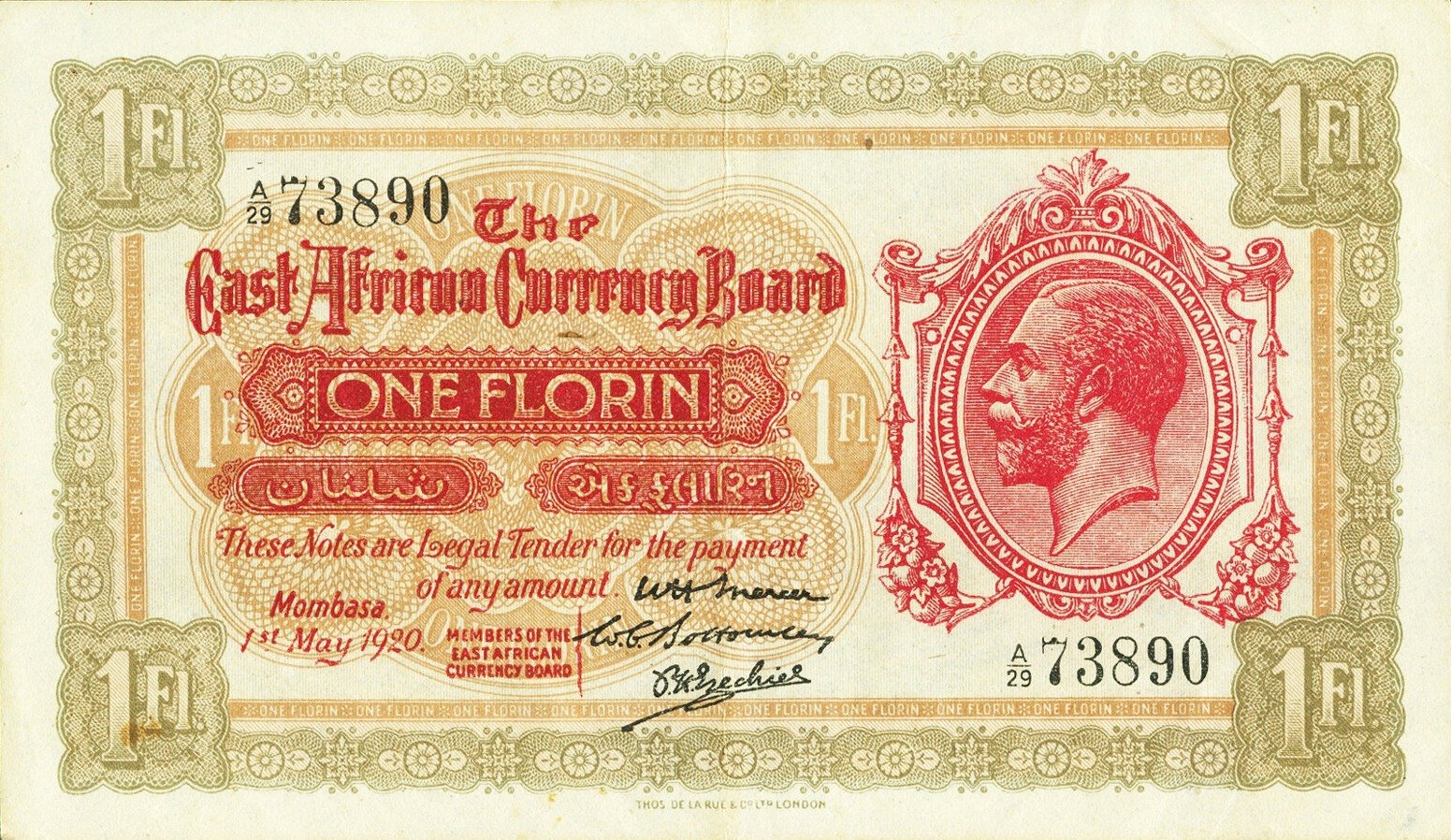
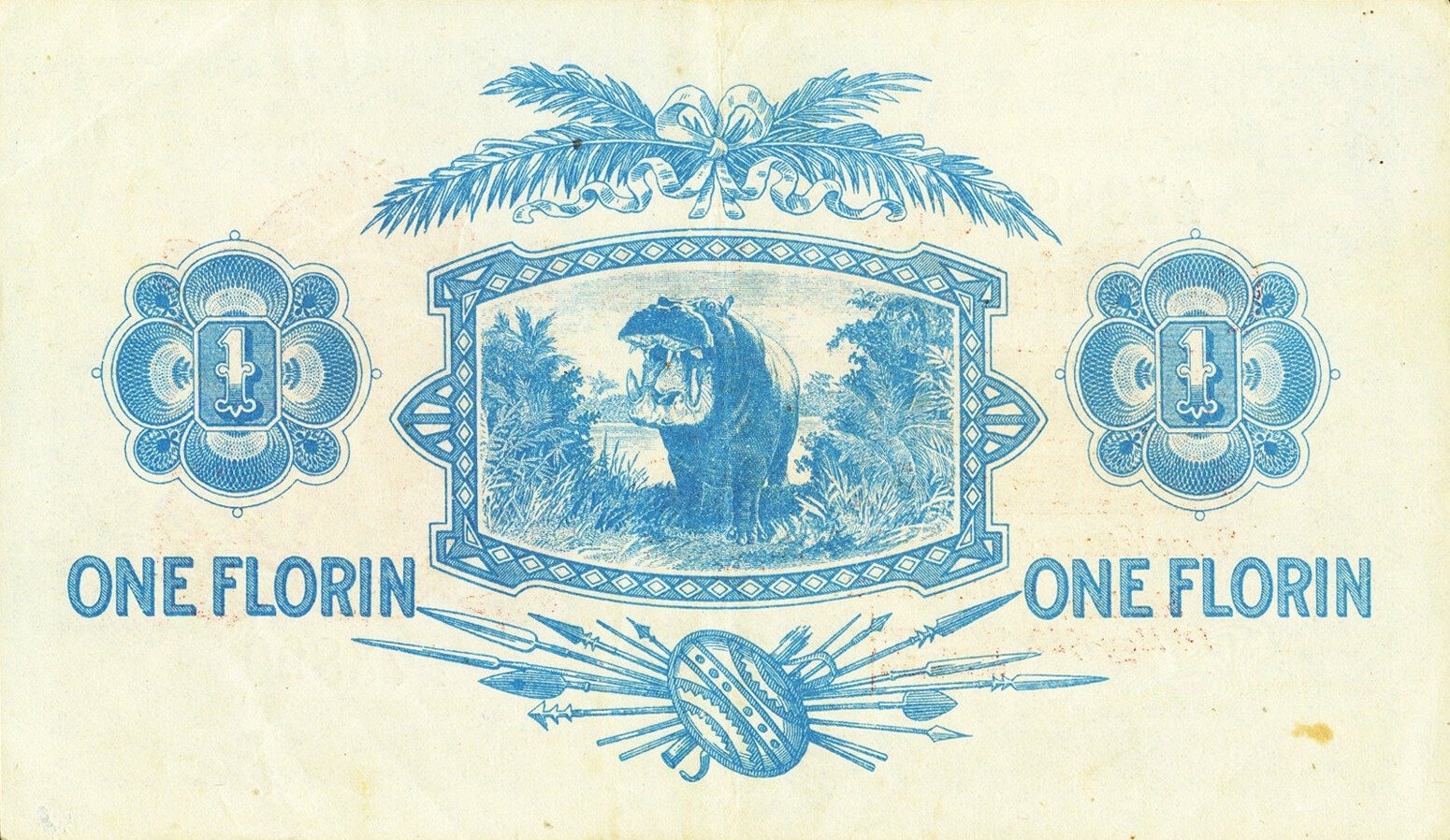
The specimens of the higher values print the number range of the issue, and the Board's figures say where the notes were on 30th June 1921.
| Note | Number range or prefixes | Where the notes were on 30th June 1921 |
|---|---|---|
| 1 florin | issued notes recorded from A/4 to B/36 | 13,600,000 shipped: 12,200,000 to Mombasa and 1,400,000 to Dar-es-Salaam |
| 5 florins | A/1 00001 to B/10 100000 | all 2,000,000 shipped to Mombasa |
| 10 florins = 1 pound | A/1 00001 to A/1 100000 | not given on the page |
| 20 florins = 2 pounds | A/1 00001 to A/1 100000 | all 100,000 shipped to Mombasa |
| 50 florins = 5 pounds | A/1 00001 to A/1 20000 | all 20,000 shipped to Mombasa |
| 100 florins = 10 pounds | specimens and proofs only | the 10,000 printed still held by the Board in England |
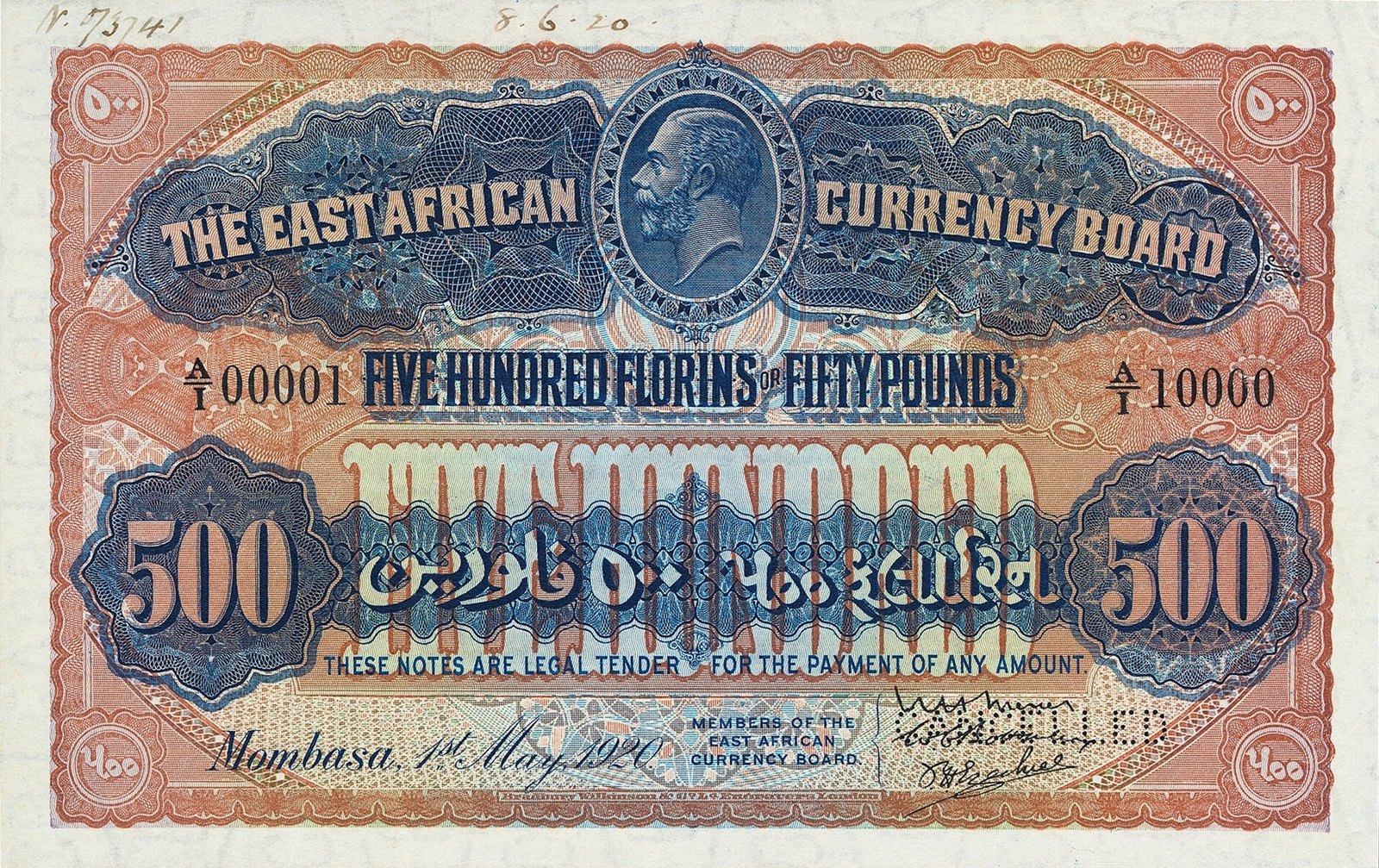
| 500 florins = 50 pounds | specimens and proofs only | the 10,000 printed still held by the Board in England |
The 13,600,000 notes of 1 florin make 136 prefixes of 100,000, which fits the highest prefix recorded, B/36. The 1 florin specimens carry the A/1 prefix with an all-zero serial number, and one issued note, A/62, is known with a CANCELLED perforation.
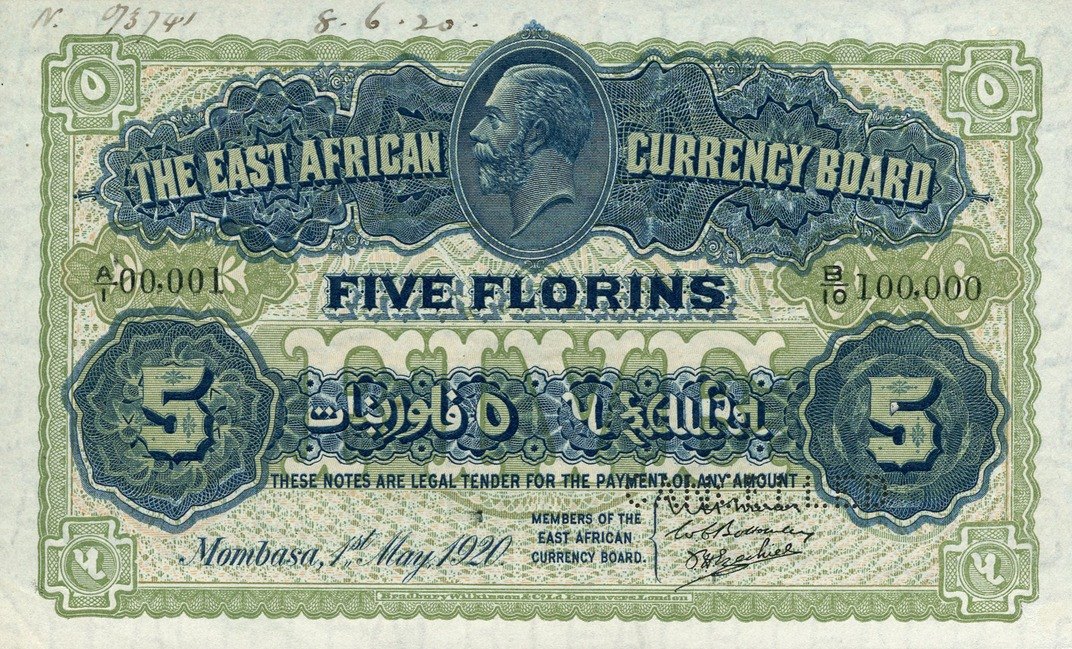
No issued note of 100 or 500 florins has been seen. When the florin notes were demonetised at the end of 1931, the lists published in the Tanganyika Territory Gazette in April 1931 named florin notes of 1, 5, 10, 20 and 50 florins only.
The change to the shilling, 1921
The florin lasted less than two years. The Secretary of State for the Colonies told the House of Commons on 30th May 1921 that, on the advice of a currency committee appointed in Kenya in February 1921, the standard coin would be a shilling, half a florin, instead of the florin, to avoid too abrupt changes in local prices, and that rupee contracts would be read at two shillings to the rupee.
The Kenya and Uganda (Currency) Order, 1921, of 10th August 1921, came into force in Kenya on 1st January 1922 (Proclamation No. 177 of 16th December 1921). The florin was the standard until 31st December 1921. In Tanganyika the Metallic Currency Ordinance, 1921 made the shilling the standard coin from the same day (report to the League of Nations on Tanganyika for 1922).
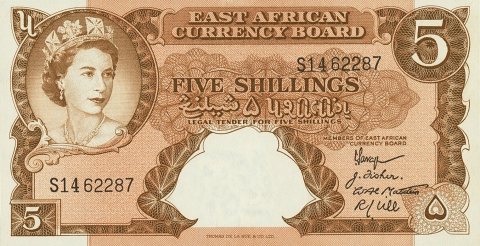
The first shilling notes are dated Mombasa, 15th December 1921: the 5 shillings, 10 shillings, 20 shillings, 100 shillings, 200 shillings, 1,000 shillings and 10,000 shillings. They are followed up in The notes of East Africa, 1905 to 1967.
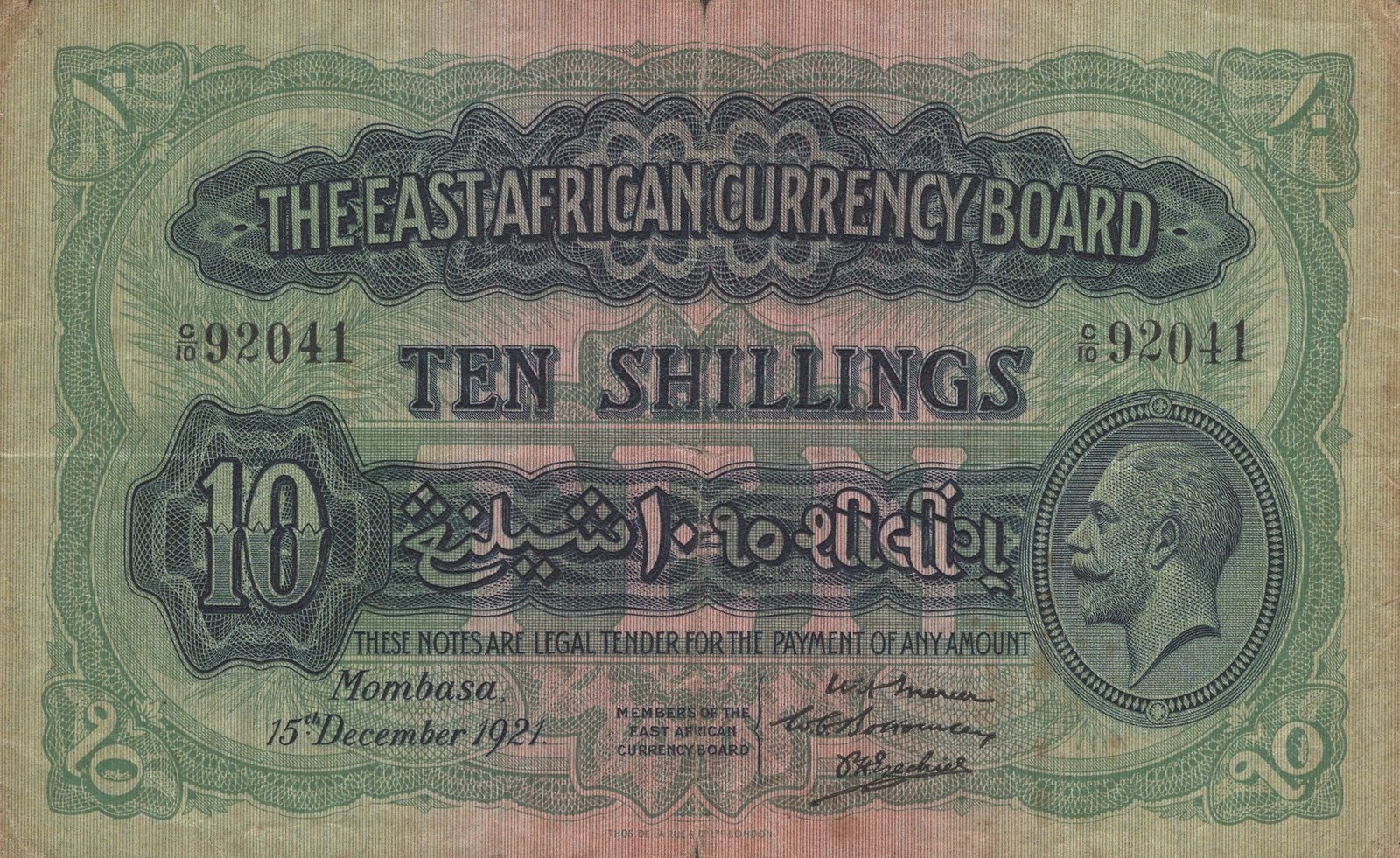
The Board's figures in the Official Gazette put its rupee and florin notes in circulation at 20,284,808 rupees or florins on 31st December 1921, the last day of the florin, and at 10,019,236 six months later, beside 7,074,820 shillings of the new shilling notes.
The end of legal tender, 1930 to 1932
Under the Kenya and Uganda (Currency) Order, 1921, the rupee and florin notes stayed legal tender from 1st January 1922 at two shillings to the rupee or florin, until a Proclamation should declare otherwise.
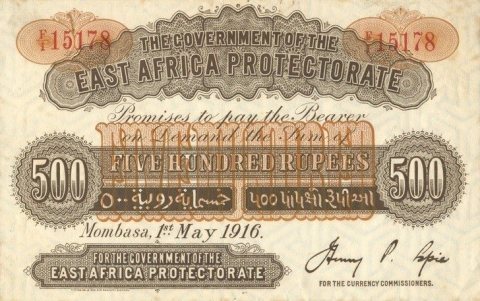
That Proclamation was No. 102 of 26th November 1930. It declared that certain coins and notes would cease to be legal tender in the Colony from midnight on Thursday 31st December 1931 (Kenya Blue Book for 1930). A notice of 15th April 1931 in the Tanganyika Territory Gazette (General Notice No. 439) lists them: the East Africa Protectorate notes of 5, 10, 20, 50, 100 and 500 rupees, the Board's 1 rupee note and its florin notes of 1, 5, 10, 20 and 50 florins, with the rupee and florin coins.
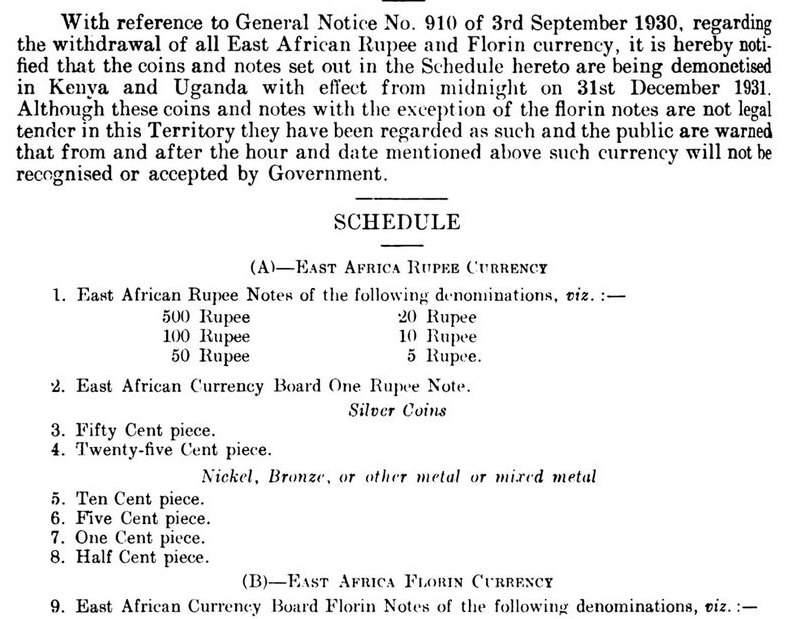
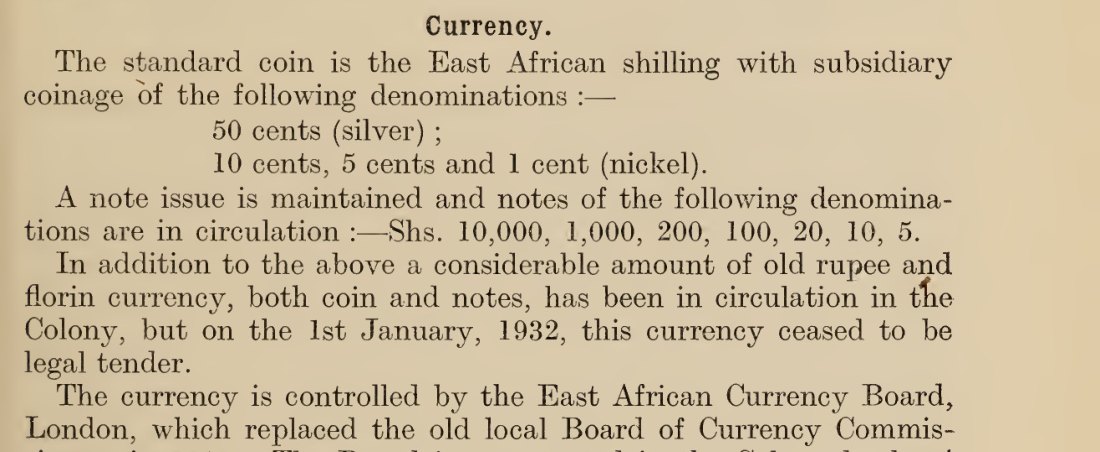
In Tanganyika, where of these notes only the florin notes had been legal tender, Proclamation No. 5 of 15th April 1931 ended them from the same midnight. The old notes and coins were exchanged there at banks and Government Treasuries from 1st January to 31st December 1931, at two shillings to the rupee or florin (General Notice No. 910 of 3rd September 1930). The annual report on Kenya for 1932 says that the old rupee and florin currency, both coin and notes, ceased to be legal tender on 1st January 1932.
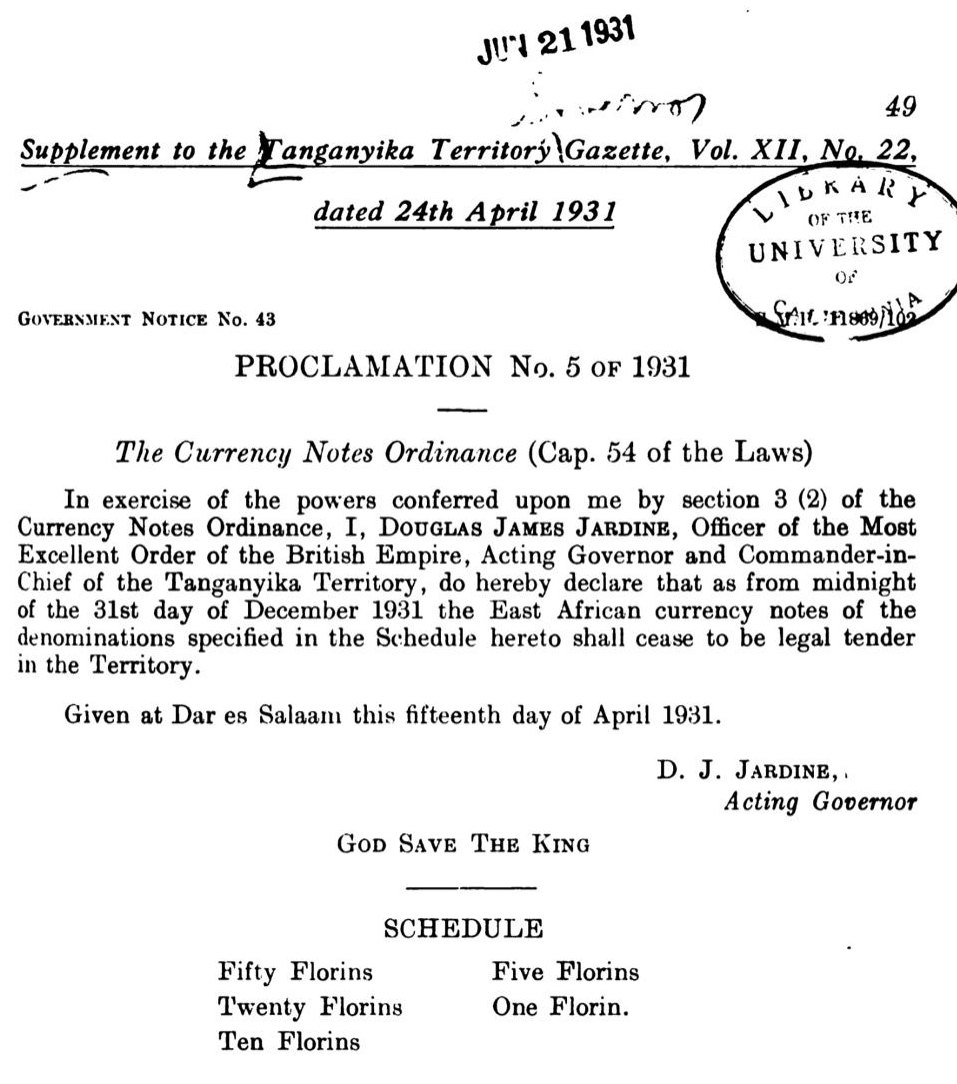
The Protectorate notes the notice covers are on these pages of the catalogue:
- 5 rupees: 1905 and 1916 to 1918
- 10 rupees: 1905 and 1912 to 1918
- 20 rupees: 1905 and 1912 to 1918
- 50 rupees: 1905 and 1912 to 1919
- 100 rupees: 1905 and 1912 to 1919
- 500 rupees: 1905 and 1912 to 1919
The notice does not name the 1,000 rupees, which is recorded only as a proof, or the 100 and 500 florins.
How many florin notes survive, as the houses put it
The auction houses' descriptions give their own counts and guesses. Each is that house's statement.
- 5 florins. Heritage (18 September 2020, lot 28216) says fewer than 400,000 were issued and that almost all were redeemed from late 1921 or early 1922. The Board's figures give 2,000,000 notes shipped to Mombasa, and no figure for the notes issued has been found.
- 10 florins. Heritage (24 April 2020, lot 26088) says only five-digit serial numbers with the A/1 prefix are known.
- 20 florins. Heritage (20 October 2022, lot 25139) says only a few are known in private hands. Heritage (21 January 2021, lot 28204) says a very small number were saved as presentation pieces, each with a serial number close to the others.
- 50 florins. Stack's Bowers (17 January 2025, lot 20276), describing A/1 00001, perforated CANCELLED, says a small group of low-numbered notes was saved. Heritage (18 September 2020, lot 28218) sold the note numbered 00011.
- 500 florins. Heritage (30 April 2021, lot 28231), describing a specimen with the printed range A/1 00001 to A/1 10000, says it is not confirmed that any of these notes was issued.
Heritage's descriptions of the 5, 50 and 500 florins credit the designs to Thomas de la Rue. The catalogue's pages give Bradbury Wilkinson as the printer of those values. The two statements are left side by side here.
Not settled
- How many 5 florins notes were issued: the house says fewer than 400,000, the Board shipped 2,000,000.
- How many 10 florins notes were shipped by 30th June 1921: the page gives the printed range only.
- Whether any note of 100 or 500 florins left England. None has been seen, and the notice of April 1931 names neither value.
Sources
- East Africa and Uganda (Currency) Order, 1918, and the Uganda Official Gazette.
- Proclamations No. 52 and No. 80 of 1920, No. 74 and No. 177 of 1921 and No. 102 of 1930; General Notice No. 942 of 1920; the Board's figures in the Official Gazette of Kenya.
- East Africa and Uganda Order in Council of 26th April 1920; Kenya and Uganda (Currency) Order, 1921.
- Proclamation No. 5 of 1918 for occupied German East Africa.
- Tanganyika Territory Gazette: Proclamation No. 5 of 15th April 1931, General Notice No. 439 of 15th April 1931 and General Notice No. 910 of 3rd September 1930.
- Reports to the League of Nations on Tanganyika for 1920 and 1922.
- Annual reports on Kenya for 1921 and 1932; Kenya Blue Book for 1930; Uganda Blue Book for 1921.
- The statement of the Secretary of State for the Colonies in the House of Commons, 30th May 1921.
- House of Commons Debates, 11 November 1936, volume 317, columns 851 to 852.
- Central Bank of Kenya, "Currency History", centralbank.go.ke.
- Heritage Auctions, 24 April 2020, lot 26088; 18 September 2020, lots 28216 and 28218; 21 January 2021, lot 28204; 30 April 2021, lot 28231; 20 October 2022, lot 25139.
- Stack's Bowers, 17 January 2025, lot 20276.
Member comments
Log in or register to post a comment.