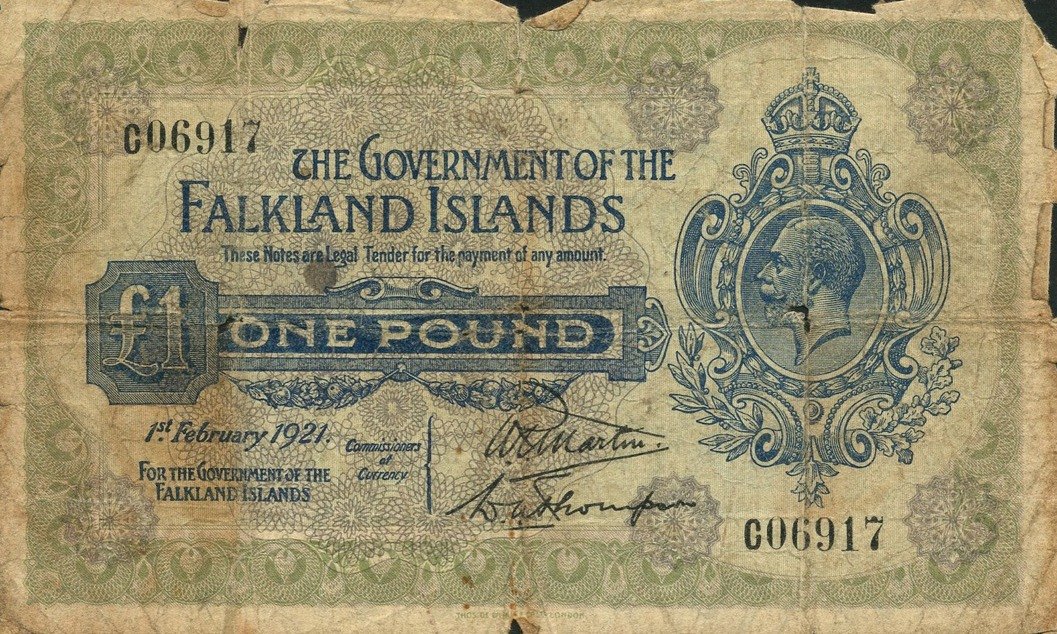
Every note of the Falkland Islands is signed by a Commissioner of Currency, or by several. This article follows the office from 1921 to 2021: the board of three that signed the notes of King George V, the single Commissioner who was the Treasurer from 1931 to 1987, and the boards of two or three appointed under the Currency Ordinance 1987. It rests on the Falkland Islands Gazette (its monthly abstracts of the Currency Note Fund, its appointment notices and its yearly index) and on the Blue Books and Colonial Reports, all in the Jane Cameron National Archives in Stanley, as they were read for the catalogue in November 2026. The board of 1899 to 1920 is set out month by month in the article on the first notes, and the laws that made each change in the article on the currency laws.
Most of what follows was read in the text layer of the scanned Gazettes, not on the page images; the scans themselves are no longer on this computer. A name or a day that rests on a faint reading is marked as such.
Who could be a Commissioner
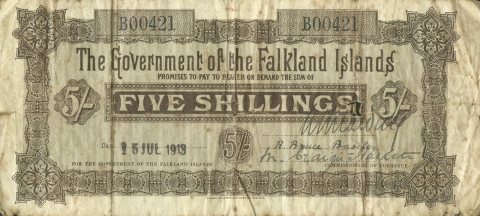
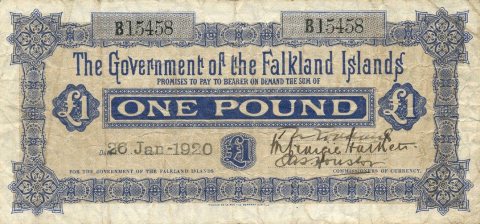
The Order in Council of 7 March 1899 set up a board. The Colonial Report for 1905 describes it as the Colonial Secretary, the Treasurer and one other person named by the Governor. Yao's working paper on the Falkland Islands for the Johns Hopkins Institute for Applied Economics (Studies in Applied Economics No. 320, p. 3) adds that there were to be no more than three Commissioners, unpaid and appointed by the Governor. In practice the third seat went to an unofficial member: J. J. Felton, then W. A. Harding, James Houston and H. H. R. Gresham.
The Currency Notes Ordinance 1930 ended the board. Its section 3, as the Gazette for 1930 prints it, makes "the person for the time being lawfully discharging the duties of Treasurer" the Commissioner of Currency. An acting Treasurer was therefore the Commissioner. The Ordinance came into force on 19 May 1931.
The Currency Ordinance 1987, in force from 1 July 1987, returned to a board: not less than two and not more than three Commissioners, one of them the Financial Secretary, any two of whom may act together (section 5, Gazette for 1987).
The board of the George V notes, 1921 to 1931
The signatures under the Gazette's monthly abstracts give the board. The table joins two readings of the Gazette: for 1921 to 1924 it gives the months in which the abstracts were signed, and from December 1924 the date of each abstract.
| Abstracts | Signed by |
|---|---|
| signed 8 March 1921 (for late 1920) | M. Craigie-Halkett, R. B. Baseley, W. A. Harding |
| signed January to July 1921 | W. A. Thompson, M. Craigie-Halkett, W. A. Harding |
| signed November 1923 to January 1924 | W. A. Thompson, G. R. L. Brown, H. H. R. Gresham |
| signed February to April 1924 | M. C. Craigie-Halkett, G. R. L. Brown, H. H. R. Gresham |
| signed June to November 1924 | H. Henniker-Heaton, M. C. Craigie-Halkett, H. H. R. Gresham |
| 10 December 1924 and 10 January 1925 | H. Henniker-Heaton, W. A. Thompson, H. H. R. Gresham |
| 10 July to 10 October 1925 | W. A. Thompson, G. R. L. Brown |
| 10 December 1925 | A. E. Beattie, W. A. Thompson, H. H. R. Gresham |
| 10 January 1926 | A. E. Beattie, W. A. Thompson |
| 10 February to 10 April 1926 | A. E. Beattie, W. A. Thompson, M. Craigie-Halkett |
| 10 May to 10 September 1926 | M. Craigie-Halkett, G. R. L. Brown, H. H. R. Gresham (10 August: the first two only) |
| 10 October 1926 to 10 May 1928 | J. M. Ellis, M. Craigie-Halkett, H. H. R. Gresham |
| 10 April 1929 | J. M. Ellis, H. C. Ley |
| 10 May 1929 | G. R. L. Brown, H. C. Ley |
| 10 August to 10 December 1929 | G. R. L. Brown, M. Craigie-Halkett |
| 10 January 1930 to 10 January 1931 | J. M. Ellis, M. Craigie-Halkett |
| 10 February 1931 | M. Craigie-Halkett, Commissioner of Currency, alone |
The appointment notices explain the changes. Thompson, the Treasurer since 1901, was named Acting Colonial Secretary from 4 March 1921, with Craigie-Halkett acting as Treasurer; the Blue Book for 1921 gives that arrangement as lasting from 4 March to 10 August 1921. Herbert Henniker-Heaton became Colonial Secretary with effect from 11 August 1921. Gresham was made a Commissioner from 6 April 1923. Craigie-Halkett acted as Treasurer again from 31 January 1924, while Thompson was on leave until 3 October 1924, and on 10 January 1925 E. B. Binnie was named Officer-in-charge of the Treasury during the Treasurer's absence from headquarters; Binnie signs no abstract that was seen.
In 1926 the board changed three times. Craigie-Halkett was made a Commissioner "with effect from the 14th January, 1926, vice the Honourable H. H. R. Gresham, resigned"; Gresham was appointed again from 10 May 1926; Thompson went on three months' leave from 5 May 1926; and a notice of 27 November 1926 made Craigie-Halkett the substantive Treasurer with effect from 5 August 1926. The Blue Book for 1927 gives Lieutenant-Colonel A. E. Beattie as Colonial Secretary from 4 November 1925 and J. M. Ellis as Colonial Secretary with the date 23 September 1926. No notice making Ellis a Commissioner was found; the reader of the Gazette took it that Ellis sat as Colonial Secretary. H. C. Ley, First Clerk, was named to act as Treasurer from 9 June 1928, which is why Ley signs in April and May 1929; the acting appointment ended by a notice of 25 May 1929.
What the board tells about the notes
The catalogue gives the notes of 1 February 1921 the signatures of Martin and Thompson. The Gazette has W. P. Martin arriving on 31 March 1920 and taking over the government when St. Johnston left; the Blue Book for 1920 gives Martin as Colonial Secretary from 1 April 1920. Thompson was back from leave on 25 December 1920. Both therefore held office on the printed date. The notes went into circulation only from 17 October 1921 (the 1 pound and the 5 pounds) and 4 November 1921 (the 10 shillings). By then Martin had gone on leave, on 3 March 1921 as the Blue Book for 1921 has it (the year is faint on the page), and Henniker-Heaton was Colonial Secretary. The printed date, not the day of issue, matches the signatures.
On 10 January 1927 the board was Ellis, Craigie-Halkett and Gresham. The notes of that date carry the first two, the Colonial Secretary and the Treasurer; Gresham, the third member, does not sign the notes.
One Commissioner: the Treasurers of 1931 to 1987
From 19 May 1931 the Commissioner was whoever was doing the Treasurer's work.
| From | Who | Office | Source in the Gazette (unless stated) |
|---|---|---|---|
| 5 August 1926 | M. C. Craigie-Halkett | Treasurer; sole Commissioner from 19 May 1931 | notice of 27 November 1926 |
| 30 April 1932 | G. R. L. Brown | to act as Treasurer during Craigie-Halkett's leave (the Blue Book for 1932: to 7 December 1932) | Gazette for 1932 |
| 1 January 1935 | M. C. Craigie-Halkett | Colonial Secretary | Blue Book for 1935 |
| 26 October 1935 | Captain M. J. Stewart | Treasurer and Collector of Customs | Gazette for 1935 |
| 20 May 1938 | W. D. A. Jones, Chief Clerk | Officer-in-Charge, Treasury, during Stewart's leave | Gazette for 1938 |
| 23 September 1939 | M. C. Craigie-Halkett | Colonial Secretary, to act as Colonial Treasurer (unpaid) | Gazette for 1939 |
| 1940 | G. H. Frith | Financial Secretary | index of the Gazette, 1940 |
| 1940 | A. W. Cardinall | to act as Financial Secretary | index of the Gazette, 1940 |
| 28 June 1941 | R. King-Prime | Officer-in-Charge of the Treasury and Customs Department | Gazette for 1941 |
| 28 October 1945 | E. F. Lellman | Officer-in-Charge and Acting Supervisor and Accountant, Treasury; indexed in 1946 as Acting Commissioner of Currency | Gazette for 1946 |
| 1946 | A. B. Mathews | Colonial Secretary and Financial Secretary | index of the Gazette, 1946 |
| 10 October 1949 | R. S. Boumphrey, Auditor | to act as Officer-in-Charge, Treasury | Gazette for 1949 |
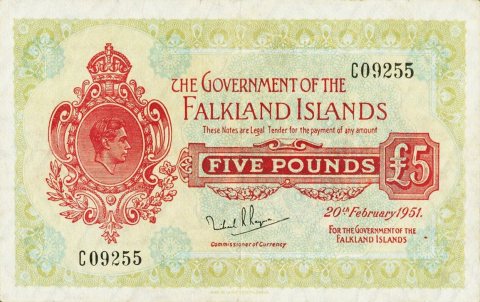
| 1950 and early 1951 | M. R. Raymer | Colonial Secretary, holding the office of Treasurer as well | Governor's addresses, Gazettes for 1950 and 1951 |
| 1 March 1952 | J. E. Briscoe | Treasurer | Gazette for 1952 |
| 21 June 1952 to 9 May 1953 | E. F. Lellman | Acting Colonial Treasurer | Gazette for 1953 |
| 15 November 1955 to 18 March 1957 | E. F. Lellman | Acting Colonial Treasurer | Gazette for 1957 |
| 21 March 1957 | L. C. Gleadell | assumed duty; Acting Colonial Treasurer in 1957 and 1958 | Gazettes for 1957 and 1958 |
| 19 June 1959 | L. C. Gleadell | Colonial Treasurer | Gazette for 1959 |
| 14 February 1972 | H. T. Rowlands | Colonial Treasurer; the title was Financial Secretary by 1973 | Gazettes for 1972 and 1973 |
| 7 January 1989 | J. H. Buckland-James | Financial Secretary | Gazette for 1989 |
Several clerks signed abstracts in these years "for Commissioner of Currency": A. W. Beardmore in 1933, 1935 and 1937, A. G. Nelson Jones in 1934, W. D. A. Jones from 1938 to 1940, and King-Prime "for Financial Secretary" in 1941.
The acting terms of the later Treasurers are many. Lellman signed the Note Security Fund report of 10 December 1956 as Commissioner of Currency. Rowlands acted as Colonial Treasurer while Gleadell was on unpaid leave from 15 July to 11 November 1960, and signed a report on 28 November 1960 as "Acting Commissioner of Currency". Rowlands acted again in October 1964, during Gleadell's leave of 1 June to 16 December 1964; from 30 May to 5 November 1966, when Gleadell was Acting Colonial Secretary; in 1968; from 10 November to 12 December 1970; from 9 to 25 January 1971; and in July 1971. P. G. Summers was Acting Financial Secretary from 1 July to 14 October 1974 and from 29 July to 13 October 1977, and D. F. Howatt in July 1984.
The yearly index of the Gazette has one entry that does not fit: "Jones, J. A., Colonial Treasurer", 1969, p. 47. The Gazette itself has Gleadell signing as Colonial Treasurer from 1959 to 1972, and J. A. Jones made the Currency Notes (Amendment) Rules of 25 November 1970 as Acting Governor; the reading of the Colonial Reports puts J. A. Jones in the Colonial Secretary's place in 1970. The entry was not checked against the page.
The holder on each date printed on the notes
The readers of the Gazette compared each date in the catalogue with these terms. On every date the Commissioner was the substantive holder whose name the catalogue gives:
| Date on the notes | Commissioner on that date |
|---|---|
| 10 February 1932 | M. C. Craigie-Halkett, Treasurer (Brown's acting term began on 30 April 1932) |
| 19 May 1938 | M. J. Stewart, on the last day before the leave that began on 20 May 1938 |
| 20 February 1951 | M. R. Raymer, Colonial Secretary holding the Treasurer's office |
| 10 April 1960, 2 January 1967, 25 September 1969 | L. C. Gleadell |
| 20 February 1974 to 1 September 1986 | H. T. Rowlands |
| 1 July 1990 | J. H. Buckland-James |
Summers' two acting terms and Howatt's of July 1984 do not cover any printed date. The notes concerned are the 10 shillings of 1932, the 10 shillings and 1 pound of 1938, the 5 pounds of 1951, the 10 shillings, 1 pound, 5 pounds, 50 pence and 10 pounds of 1960 to 1982, and the notes of the 1983 design.
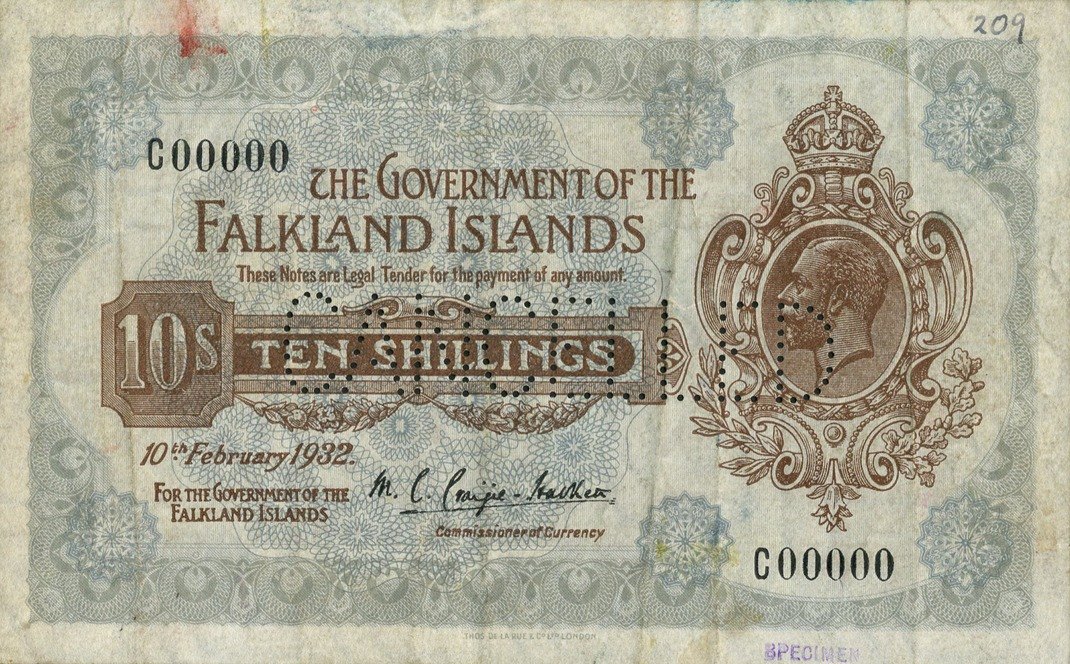
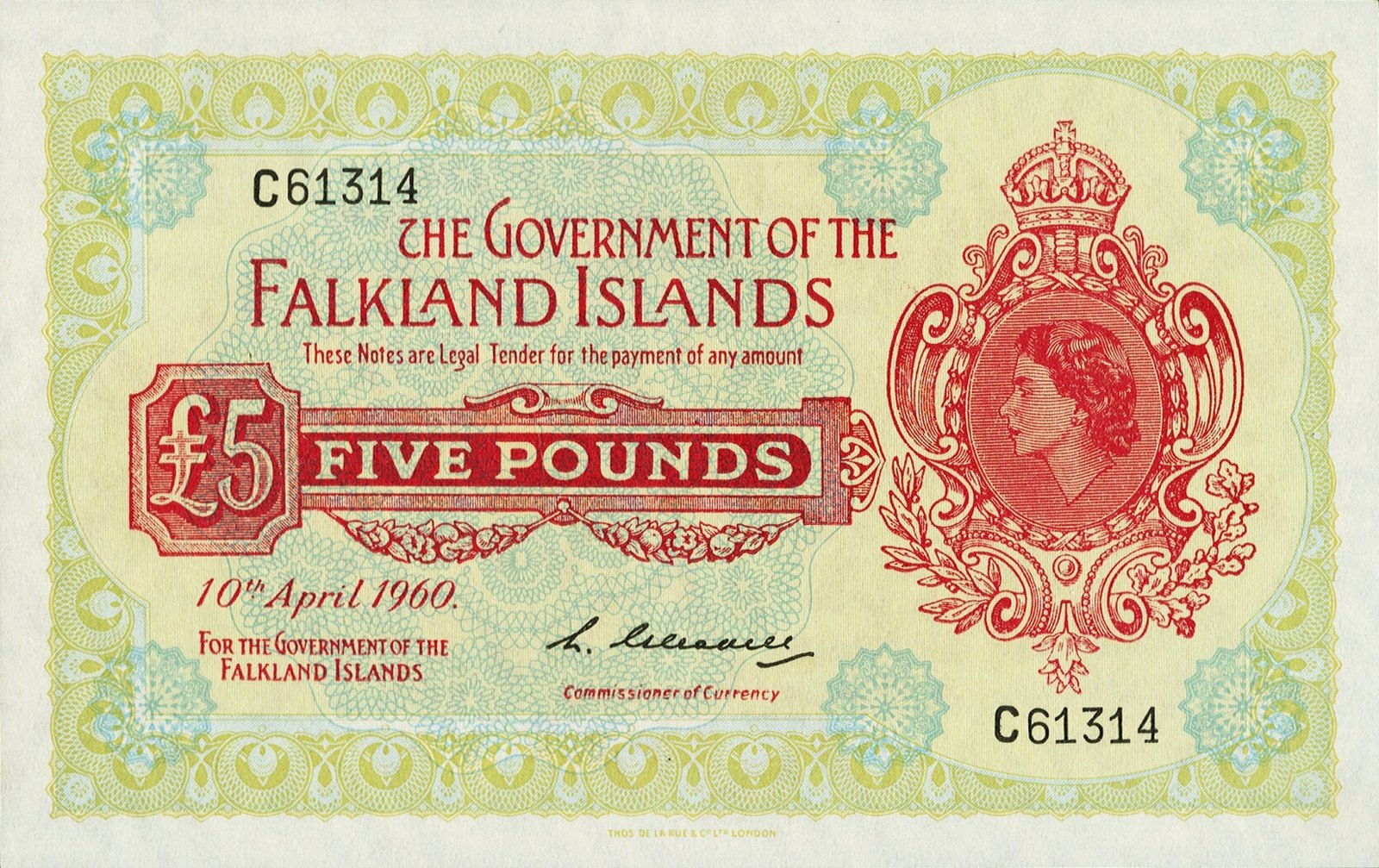
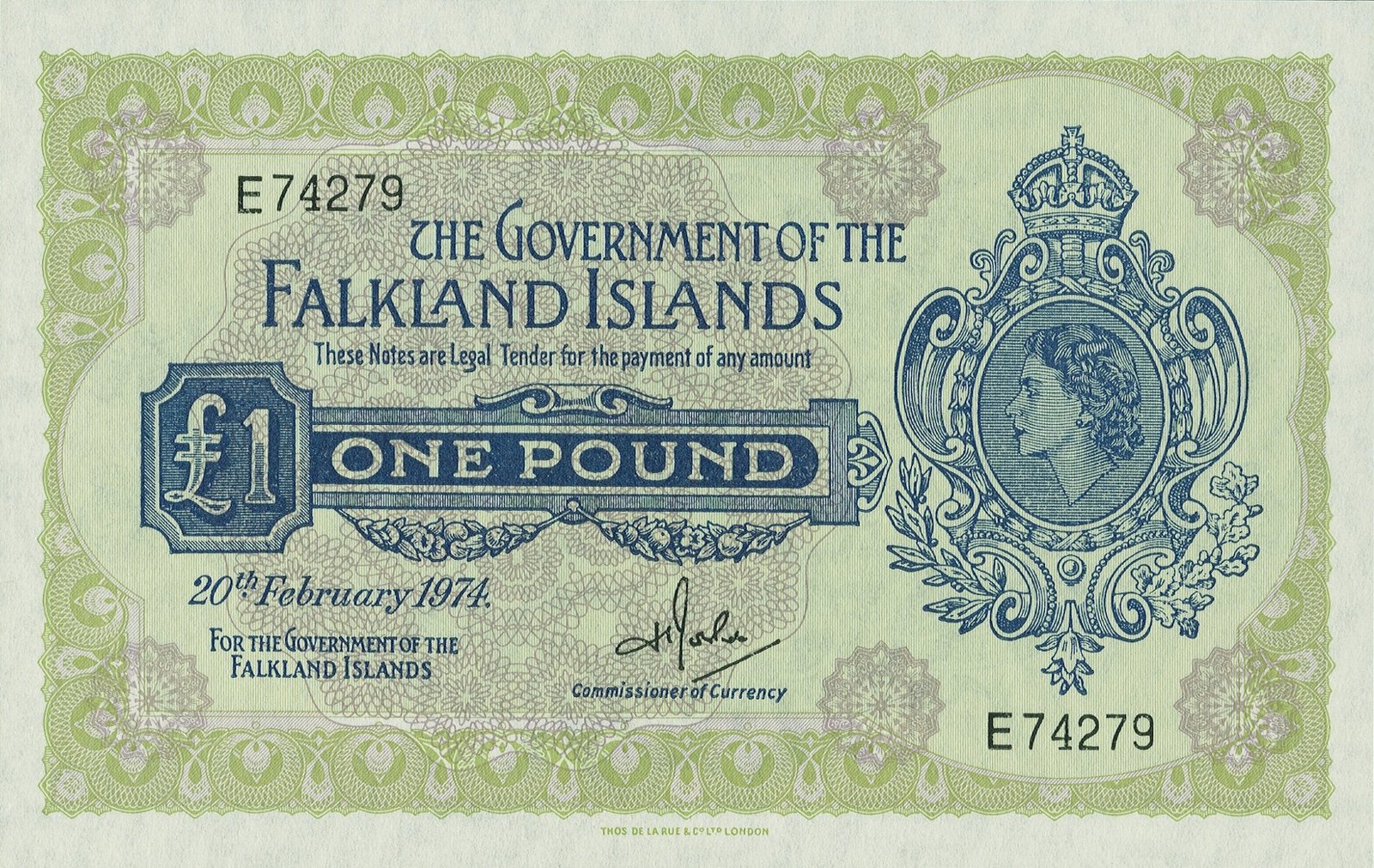
Rowlands still signed as Financial Secretary on 14 November 1988, and the catalogue gives Rowlands' signature on every note dated from 1974 to 1986. The Commissioner's name is also on a few notes in ink: the catalogue pages of the 5 pounds of 1983 and the 1 pound of 1984 record notes signed by hand by the Commissioner beside the printed signature.
The boards under the Currency Ordinance 1987
Notice No. 4 of 5 February 1988 named the holders of the offices of Government Secretary and of Superintendent of Posts and Telecommunications as Commissioners beside the Financial Secretary. Notice No. 33 of 22 June 1990, when the post of Government Secretary was abolished, put the Senior Assistant Secretary in its place. From 1 July 1992 the Commissioners were again the Financial Secretary, the Government Secretary and the Superintendent of Posts and Telecommunications (Gazette for 1992, p. 48).
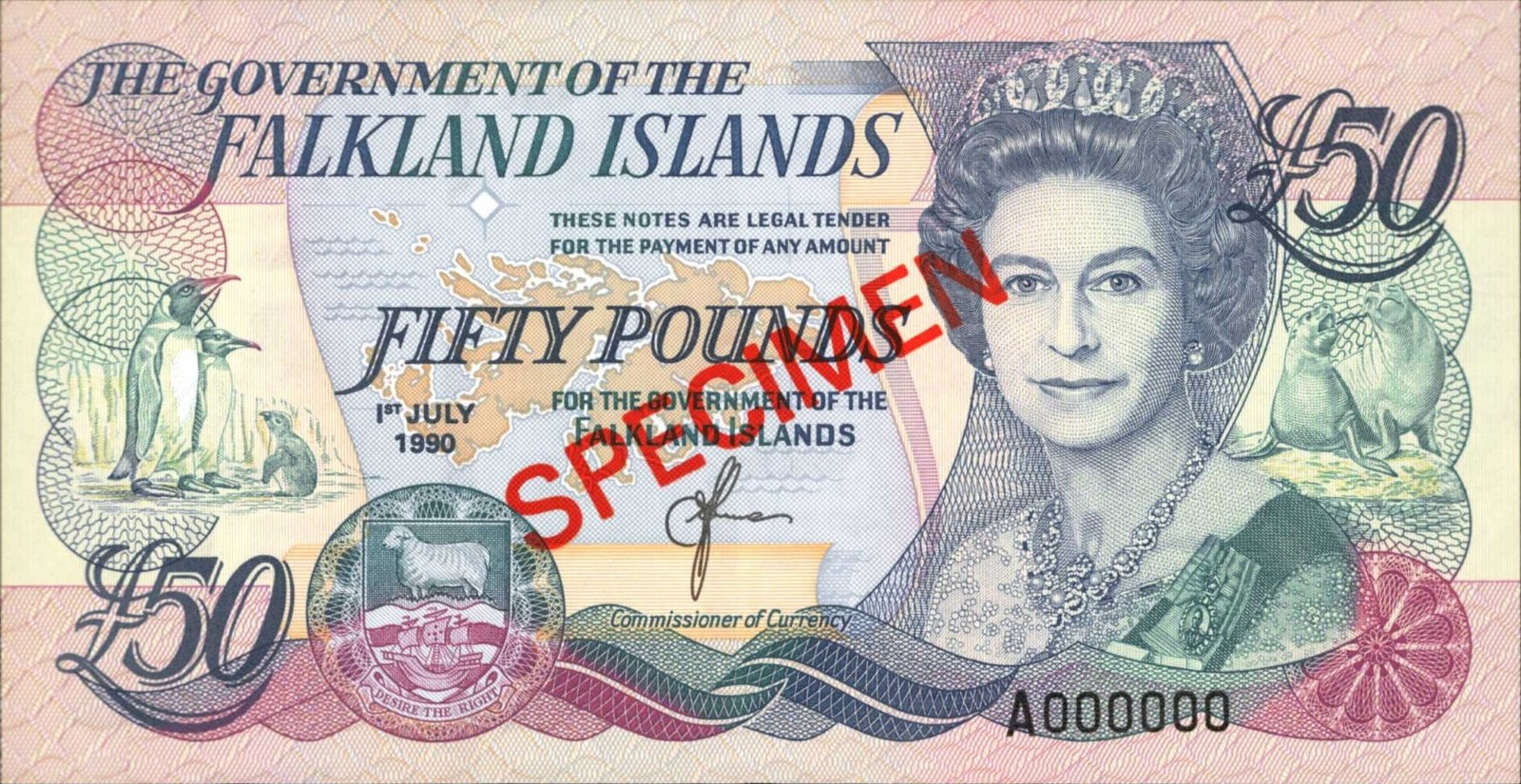
The 50 pounds of 1 July 1990 carries one signature. The Currency Notes (Validation) Bill of December 1990 says that these notes bear "the facsimile of the signature of one only of the Commissioners", and the Validation Ordinance of 1991 made them valid. The catalogue gives the signature as that of Buckland-James, the Financial Secretary.
From 2000 the Gazette names the Commissioners in person.
| Date | Change, or the Commissioners who signed a notice | Gazette |
|---|---|---|
| 31 March 2000 | Mrs Moira Cameron Eccles, Postmaster, appointed a Commissioner (Notice No. 18) | 2000, p. 13 |
| 25 January 2008 | signed M. C. Eccles, D. F. Howatt and P. T. King | 2008, p. 4 |
| 12 August 2008 | Derek Frank Howatt, Financial Secretary, retires | 2008, p. 61 |
| 4 November 2008 | signed M. C. Eccles, K. Padgett and P. T. King | 2008, p. 73 |
| 2010, day not read | a notice signed M. C. Eccles and K. Padgett only | 2010, p. 23 |
| 5 April 2010 | Linda Margaret Lyse appointed a Commissioner (Notice No. 39) | 2010, p. 22 |
| 11 April and 24 November 2011 | signed M. C. Eccles, K. Padgett and L. M. Lyse | 2011, pp. 16 and 206 |
| 22 August 2012 | signed M. C. Eccles, N. J. Granger and L. M. Lyse | 2012, p. 67 |
| 1 September 2014 | Jody May Aldridge appointed, after Eccles' post ended on 31 July 2014 | 2014, pp. 90 and 92 |
| 1 April 2016 | Donna Louise Henry appointed, after Lyse's contract ended | 2016, p. 59 |
| 2 November 2016 | signed J. M. Aldridge, D. L. Henry and L. Morrison | 2016, p. 1918 |
| 2 June 2018 | Notice No. 56: Commissioners named by office, the Deputy Head of Tax from 21 May 2017 and the Head of Communications from 16 March 2018 | 2018, p. 574 |
| 1 November 2019 | the offices of Head of Finance and of Exchequer Supervisor added | 2019, p. 1000; 2020, p. 24 |
The Currency Notes Regulations Order 2004 gives the signatures of the 5 pounds of 14 June 2005 as "D F Howatt; P T King; M C Eccles", and the Currency Notes Order 2010 those of the 10 pounds and 20 pounds of 1 January 2011 as "K Padgett; M C Eccles; L M Lyse". The catalogue's rows list the 2011 signers in the order Lyse, Padgett and Eccles; which order the notes print was not checked.
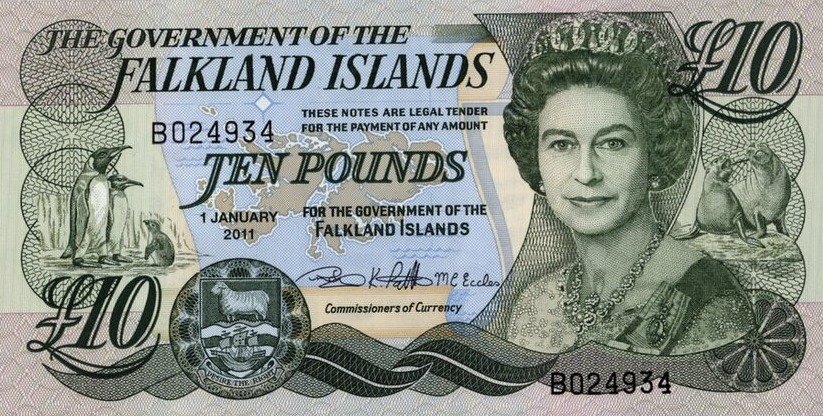
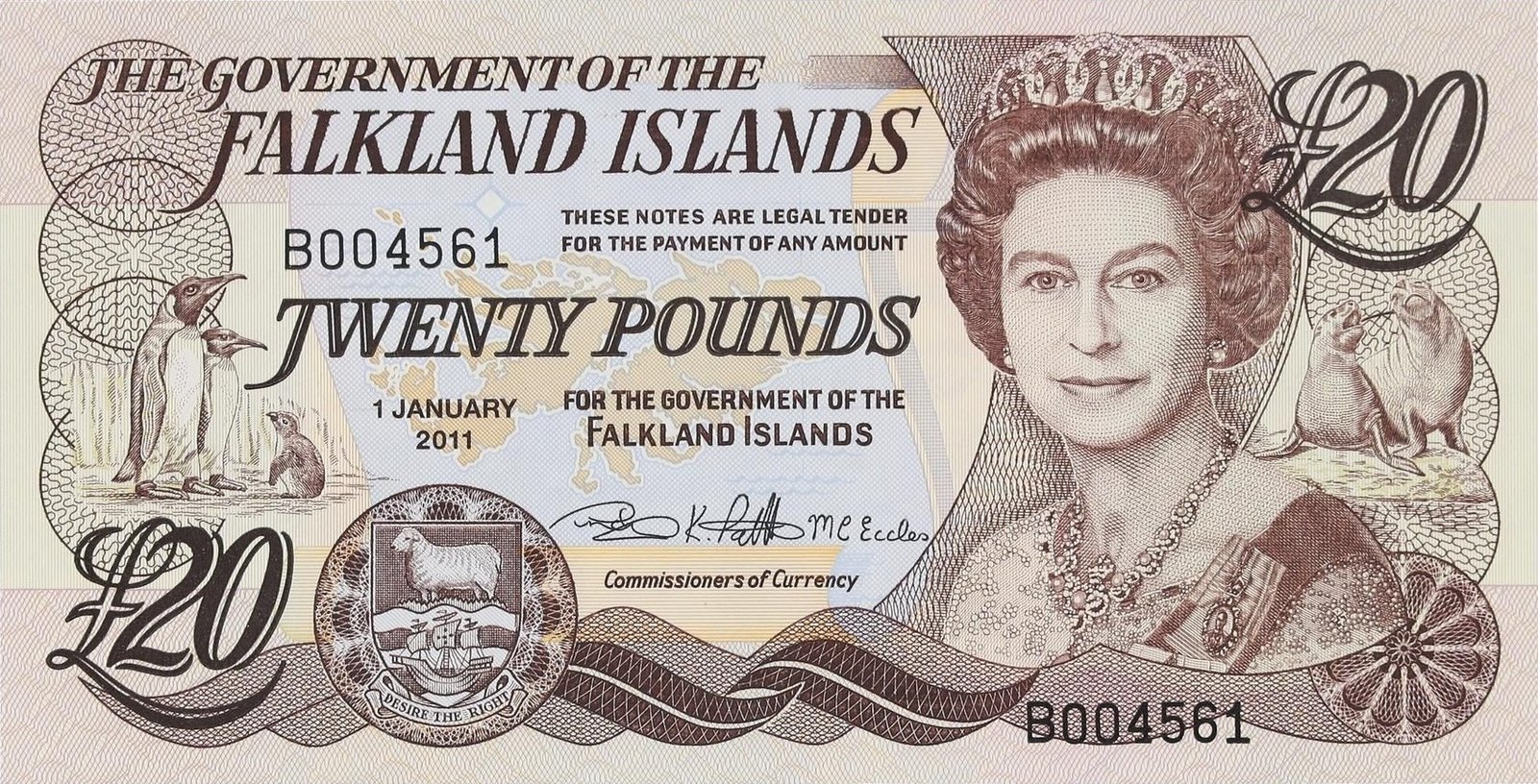
The Gazette records the offices behind these names. Howatt signs as Financial Secretary in the notices from mid 1991 to 1995 and again from 2003 to 2008; Peter Thomas King was Principal Immigration Officer from 2006 to 2009 and Government Secretary when the post ended in 2009; the office King held in 2004 and 2005 is not stated in the notices found. Keith Padgett was Deputy Financial Secretary from 2001, Financial Secretary from 2008, then Director of Finance and Director of Corporate Resources, and Chief Executive from 2012. Linda Margaret Lyse was an Accounting Officer of the Treasury. Nicola Jane Granger became Financial Secretary in 2012.
What is not known
- No appointment notice was found for Ellis, for Padgett or for Granger as Commissioners; they appear first as signers.
- Who served between August 1921 and October 1923: no abstract of those months was read.
- The Treasurer from January to October 1935 is not shown on the Blue Book page read.
- When Briscoe's term as Treasurer ended.
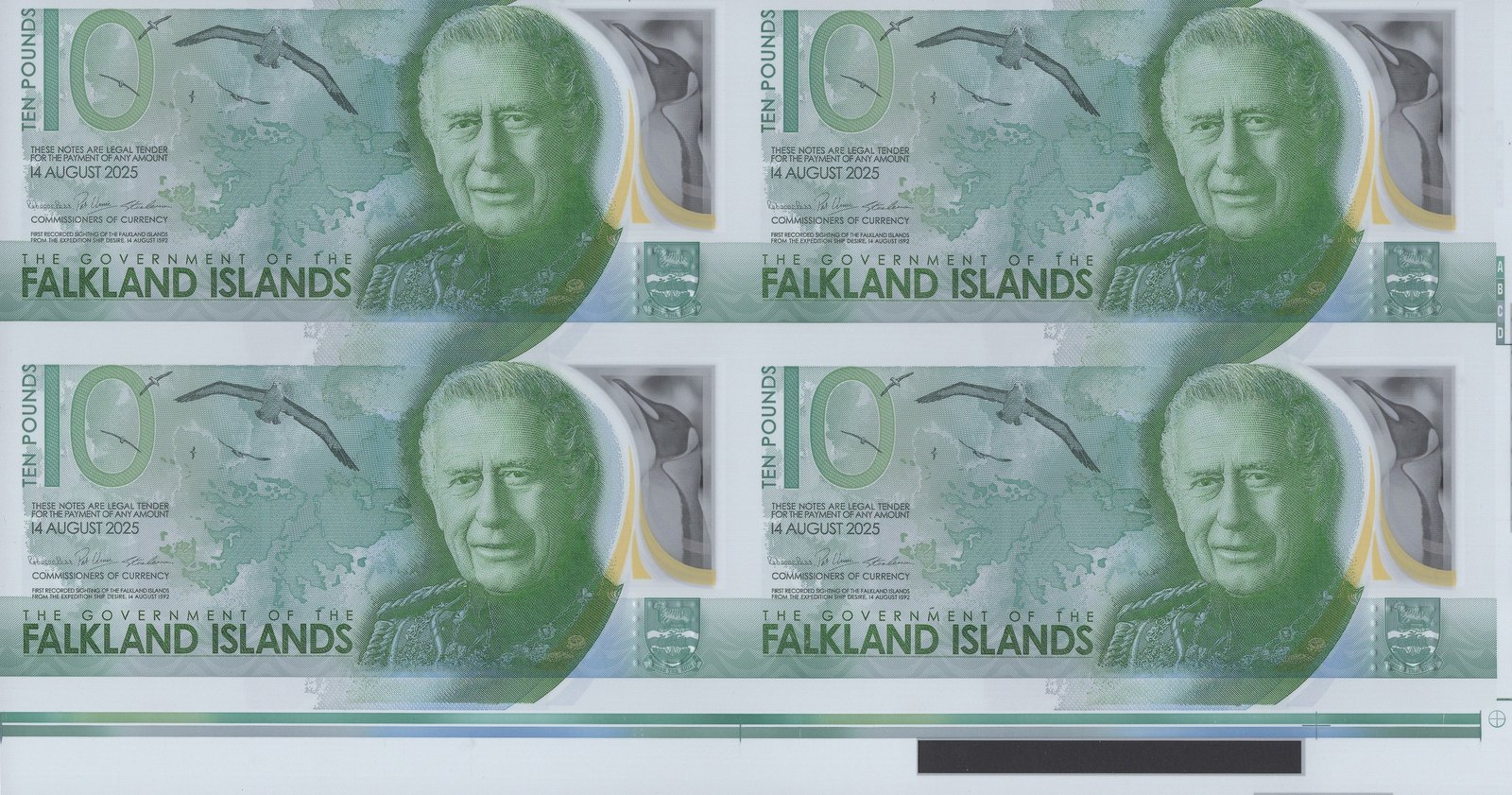
- The Commissioners of the polymer notes of 14 August 2025. The catalogue gives the signatures as Ross, Clunie and Cannon; the Gazettes read end in 2021.
Sources
- The Falkland Islands Gazette, 1920 to 2021: the monthly abstracts of the Currency Note Fund, the reports on the Note Security Fund, appointment and acting notices, Notices No. 4 of 1988, No. 33 of 1990, No. 18 of 2000, No. 39 of 2010 and No. 56 of 2018, and the general index of the Gazette, 1850 to 1998; Jane Cameron National Archives, Stanley.
- Blue Books of the Falkland Islands for 1920, 1921, 1927, 1932 and 1935 (lists of the Executive Council).
- Colonial Report on the Falkland Islands for 1905; Colonial Reports of 1966 to 1975 (for 1970).
- Falkland Islands Currency Notes Ordinance 1930; Currency Ordinance 1987; Currency Notes (Validation) Bill 1990; Currency Notes Regulations Order 2004; Currency Notes Order 2010, all as printed in the Gazette.
- Yao, working paper on the Falkland Islands, Studies in Applied Economics No. 320, Johns Hopkins Institute for Applied Economics, p. 3.
Member comments
Log in or register to post a comment.